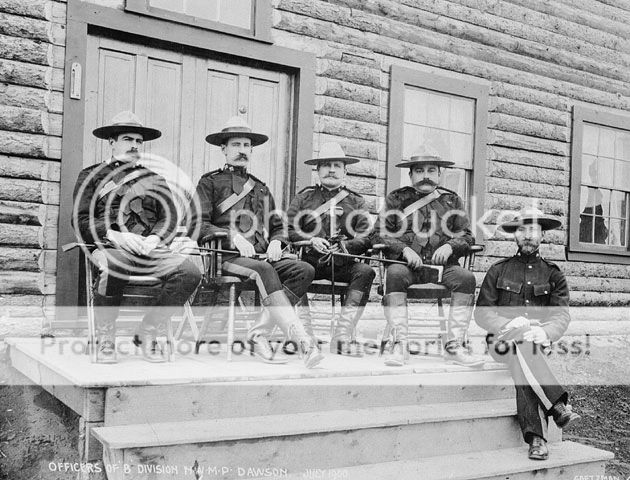
The photo you show is reproduced in Osprey Publishing Men-at-Arms Series No. 197 -
"The Royal Canadian Mounted Police, 1873-1987" with the following caption -
This type of garment (referred to in the British Army as a "patrol jacket" - and actually in fairly universal use by officers on campaign and for "undress wear .... not just in the cavalry) was termed by the NWMP Dress Regulations as their "undress tunic". This detail from a colour plate from the same Osprey volume shows the officer's version worn by a Superintendent, on the left, and the NCO's undress tunic worn by a Sergean-Major -
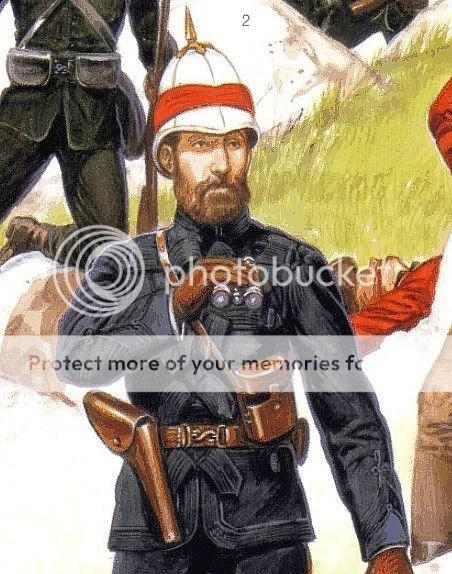
From another Osprey Men-At-Arms number on the First Anglo-Boer War (1880-81) depicting British General Sir George Colley wearing such a patrol jacket on campaign -
(Colley was killed during the disastrous British defeat at the Battle of Majuba Hill, 27 February 1881.)
As already noted, the peaked stetson was in common use from at least the early 1890's, although not officially adopted as the Force's
dress headgear until 1904. However, it had already become sufficiently iconic that it was the
only headwear used by the official NWMP contingent sent to London for Queen Victoria's Diamond Jubilee (commemorating the 60th year of her reign) in 1897 -
(Clearly the stetson was already a standardized item for issue in the Force .... it simply wasn't formally adopted as the
dress headgear until later.)