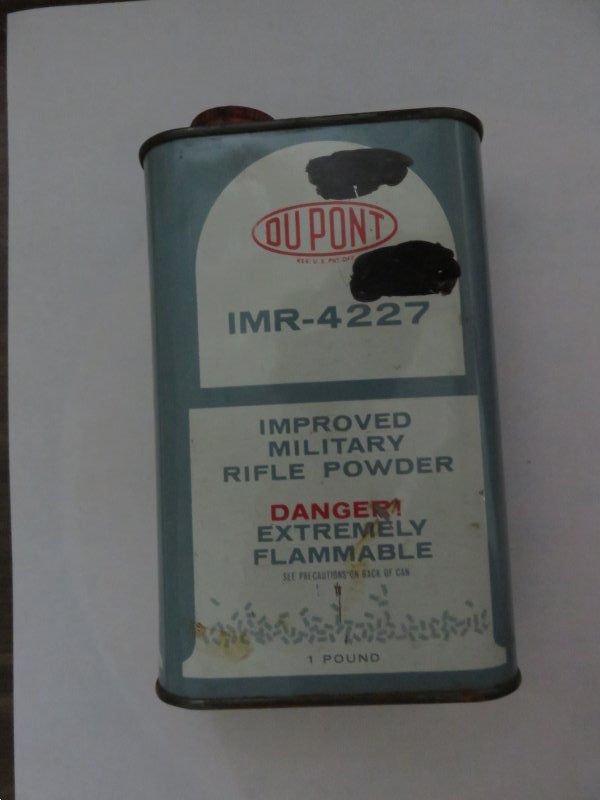
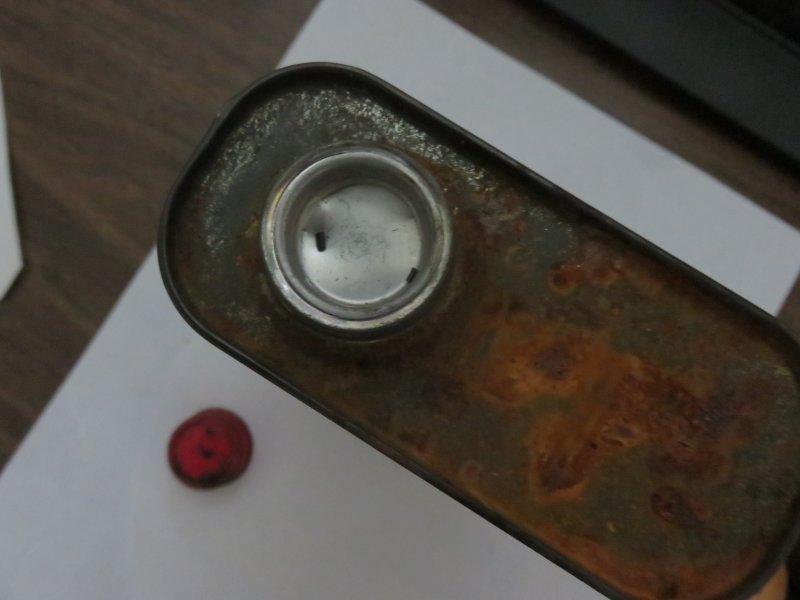
The small holes in the seal suggests that it was punched to pry the seal out. Top of the can is rusty. Look carefully inside ( with a flashlight, not a match), if there is any rust inside I would chuck it.
This X2. I've had a few powders go bad. Mostly surplus bulk powders but the odd can of commercial grade.
I picked up a case of IMR 4064 all packed in 1 pound tins. The tins all looked new and I know had never been opened. The box they came in was still glued shut.
I was going to pour all of them together into one keg to blend them with another batch of IMR 4064 I had on hand. Understand, I bought this stuff on sale from Marshall Wells when they were sold off which was back in the early eighties. I stored that powder for close to thirty years. It was one of the first batches to have "paper" seals glued to the can. The first couple of cans looked OK, no rust, inside or out so they were added to the mix. The next can was different, no rust on the outside but when I tore off the seal, there was rust stuck to the bottom. Inside, the top of the powder had a barely noticeable film of rust on top.
I set that can aside. I closely checked every other can in that case lot and found one other with the rust film.
OK, results of the shooting. The 8 cans added to the mix made no difference to the results of the loading data I was using from my own data book. The velocities were reliably consistent and accuracy was good.
NOT WITH THE TWO CANS with the barely visible rust film. Velocities were very inconsistent and accuracy was not reliable. I burned that powder in the barrel we used for burning yard garbage. It wasn't worth the hassle. I cut open the cans and they were both rusty, from slightly below the powder line to the top surface. The powder was turning. Why just those two tins, which were marked with the same lot number, as would be expected, I don't know. Maybe Ganderite can shed some of his knowledge on this??
One other thing, powder that has turned bad can cause some serious damage to bores. Some bulk #44 surplus (3031) I had caused a bore to pit badly very shortly after use, about 12 hours. I put the rifle into its sleeve and took it home after the shooting session. When I pulled it out to clean that night, the bore was full of rust and once cleaned it looked like it had been worked over with a ball peen hammer.
OP, if that powder is OK and likely it is, shoot it.
Be careful though. Those small holes are SMALL and it could just be the reason they're there was to release gasses that were swelling the can. That seal doesn't look like it's been pried off and those holes are indented, without any evidence of having any pressure used on them to pull that seal.
If it were mine, I would pull that seal and check for rust or other discoloration. If you find all to be well, put the lid back on the can tightly for later use.
If you see any indication of rust or discoloration, dump it. It isn't worth the trouble IMHO.