












































You are using an out of date browser. It may not display this or other websites correctly.
You should upgrade or use an alternative browser.
You should upgrade or use an alternative browser.
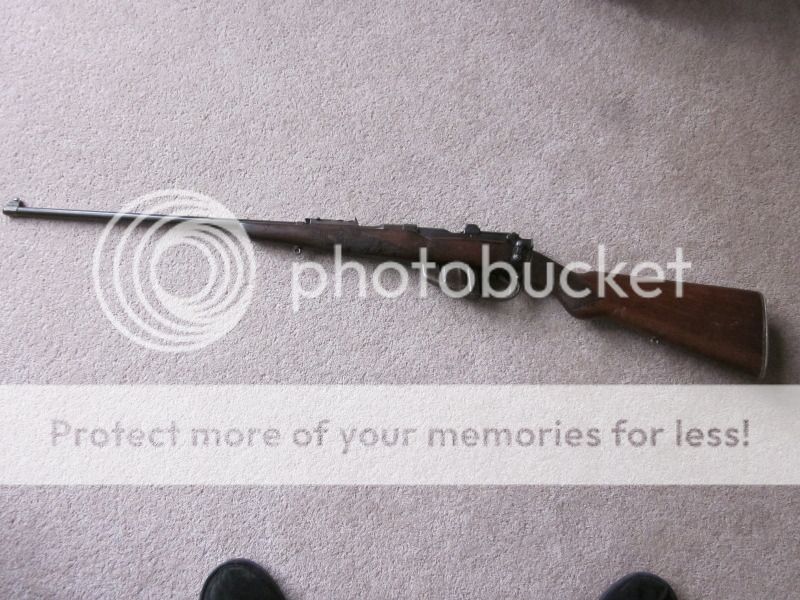
Old Lee or maybe a Lee Speed, please help identify
- Thread starter stang
- Start date
greyman441
CGN Regular
- Location
- Wasaga Beach, ON
Looks like a Lee Speed but im not very familiar with them.

Dark Alley Dan
CGN Ultra frequent flyer
- Location
- Darkest Edmonton
Whatever she is, she's sure pretty. Makes me want to drink G&T's on the veranda of my hill station and talk about the "situation in Injah..."
Last edited:


Have one very similar but perhaps a bit newer.
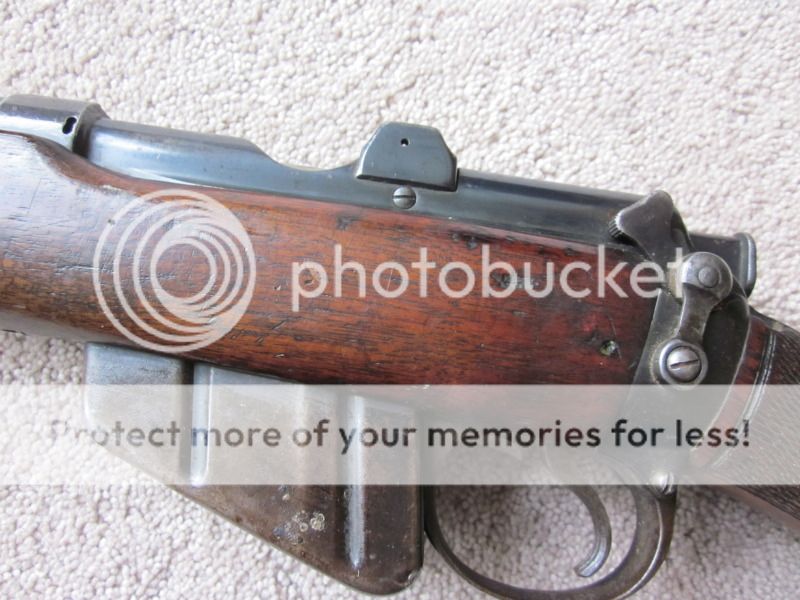
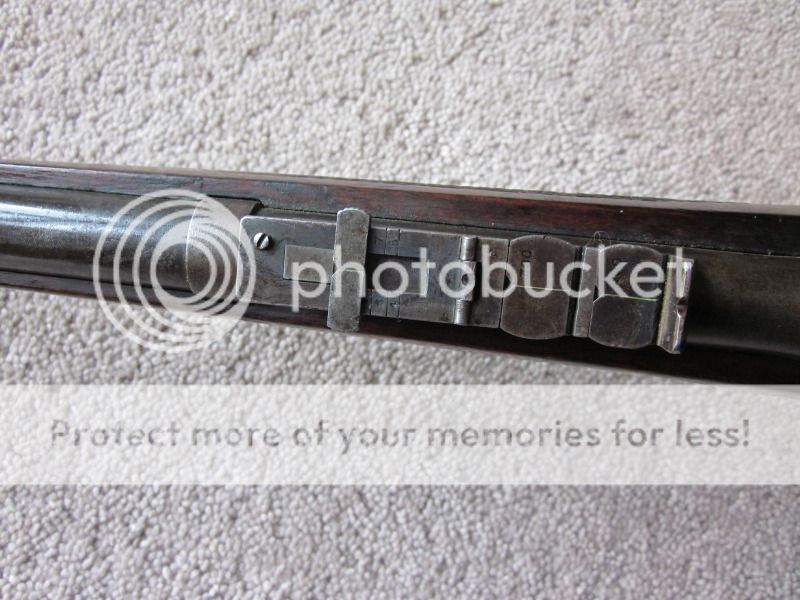
It's a BSA High Velocity Sporting Rifle made in the early 1900's. Has the standard African pattern cape sight, i e , 1 standing 100 yard leaf, folding leaves for 200 and 300 yards & a flip up ladder sight for 400 to 1,000 yards. It was built as a sporter by the British Arms trade between 1898 & 1914.


It's a BSA High Velocity Sporting Rifle made in the early 1900's. Has the standard African pattern cape sight, i e , 1 standing 100 yard leaf, folding leaves for 200 and 300 yards & a flip up ladder sight for 400 to 1,000 yards. It was built as a sporter by the British Arms trade between 1898 & 1914.

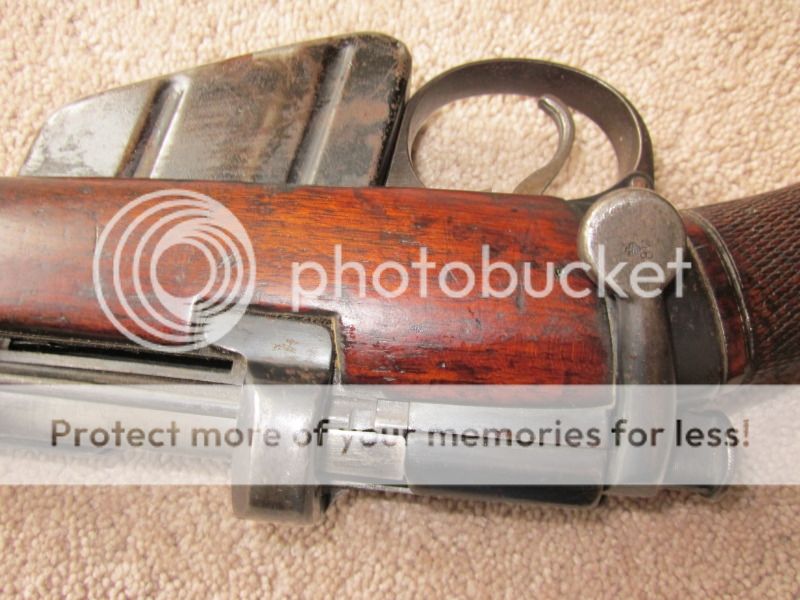
Your rifle is a #4 Pattern High Velocity Sporting Rifle, built & marketed by B.S.A.Co. between 1902 & August 1914.
#1 Pattern Deluxe had a barrel rib, full coverage engraving, horn fore-end & grip cap, engraved steel trap butt-plate complete with brass oil bottle and pull-through & usually 5 round fish-belly magazine;
#1 Pattern had a barrel rib, 3/8th coverage engraving, horn fore-end & grip cap; engraved steel trap butt-plate complete with brass oil bottle and pull-through & usually 5 round fish-belly magazine
#2 Pattern had no barrel rib, partial coverage engraving, horn fore-end & grip cap, engraved steel trap butt-plate complete with brass oil bottle and pull-through & usually 5 round fish-belly magazine;
#3 Pattern had no barrel rib, no engraving, ebonite fore-end & grip cap, un-engraved steel trap butt-plate & usually 5 round fish-belly magazine;
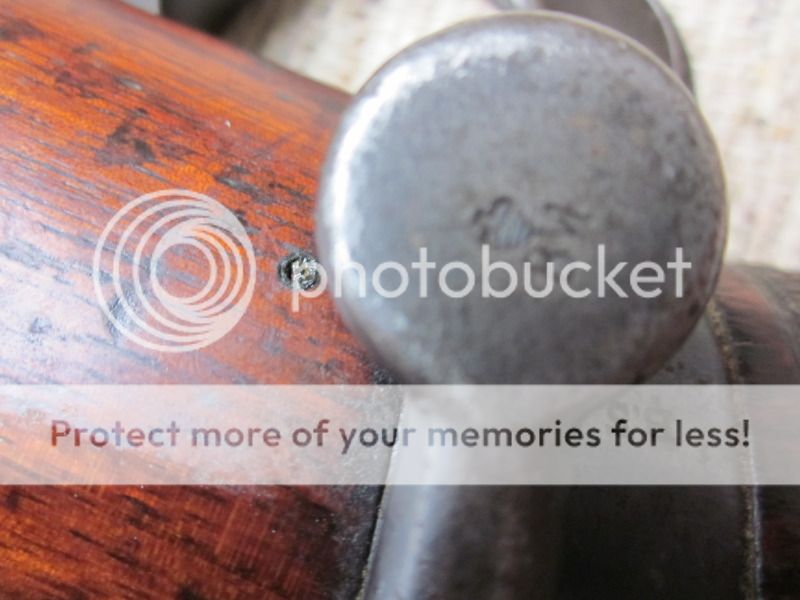
#4 Pattern had no barrel rib, no engraving, no fore-end or grip cap, gutta percha butt-plate embossed with the B.S.A.Co. logo of three stacked rifles & a 10 round standard military pattern magazine.
While virtually all of the British "Gunmakers" retailed these rifles, with their own markings, 95% were in fact made by Birmingham Small Arms Co., while the remaining 5% were made by London Small Arms Co. Ltd., who used the carbine actions exclusively for their sporters. Typically, these latter were supplied to the big London (Holland & Holland, J. Purdey, W.J. Jeffery, J. Rigby, Wm. Evans, J. Wilkes, H. Atkin, S.Grant, Lang) & Scottish (Fraser, MacNaughton & Gibbs) gunmaking firms as well as to Army & Navy Co-operative Society Ltd. (who also had the B.S.A.Co. rifles made for them).
The Lee SPEED PATENT marked ones were so marked until the 14 year British patents expired. Thereafter, they were not required to be marked to acknowledge the patents or to pay royalties for their use.
Prior to B.S.A.Co. building the HVSR's themselves, starting in 1902, a number of makers to the trade used the commercially available B.S.A. & M. Co. or the later B.S.A.Co. Volunteer pattern rifle or carbine actions or barrelled actions to supply James Paris Lee's sporting rifles to the trade, partly because there was a dearth of bolt action sporting rifles extant & partly because of not wanting to pay Rigby's mark-up on the Mauser actions for which he was the exclusive importer at the time. The only other bolt action commonly used was the Steyr Mannlicher Model 1892-95 turnbolts in .256 Mannlicher (aka 6.5x53R) or .303 Flanged.
These rifles are my collecting passsion & I am in the midst of writing a book on them. I am also trying to determine which of mine to take to the Dark Continent on a plains game safari.


#1 Pattern Deluxe had a barrel rib, full coverage engraving, horn fore-end & grip cap, engraved steel trap butt-plate complete with brass oil bottle and pull-through & usually 5 round fish-belly magazine;
#1 Pattern had a barrel rib, 3/8th coverage engraving, horn fore-end & grip cap; engraved steel trap butt-plate complete with brass oil bottle and pull-through & usually 5 round fish-belly magazine
#2 Pattern had no barrel rib, partial coverage engraving, horn fore-end & grip cap, engraved steel trap butt-plate complete with brass oil bottle and pull-through & usually 5 round fish-belly magazine;
#3 Pattern had no barrel rib, no engraving, ebonite fore-end & grip cap, un-engraved steel trap butt-plate & usually 5 round fish-belly magazine;
#4 Pattern had no barrel rib, no engraving, no fore-end or grip cap, gutta percha butt-plate embossed with the B.S.A.Co. logo of three stacked rifles & a 10 round standard military pattern magazine.
While virtually all of the British "Gunmakers" retailed these rifles, with their own markings, 95% were in fact made by Birmingham Small Arms Co., while the remaining 5% were made by London Small Arms Co. Ltd., who used the carbine actions exclusively for their sporters. Typically, these latter were supplied to the big London (Holland & Holland, J. Purdey, W.J. Jeffery, J. Rigby, Wm. Evans, J. Wilkes, H. Atkin, S.Grant, Lang) & Scottish (Fraser, MacNaughton & Gibbs) gunmaking firms as well as to Army & Navy Co-operative Society Ltd. (who also had the B.S.A.Co. rifles made for them).
The Lee SPEED PATENT marked ones were so marked until the 14 year British patents expired. Thereafter, they were not required to be marked to acknowledge the patents or to pay royalties for their use.
Prior to B.S.A.Co. building the HVSR's themselves, starting in 1902, a number of makers to the trade used the commercially available B.S.A. & M. Co. or the later B.S.A.Co. Volunteer pattern rifle or carbine actions or barrelled actions to supply James Paris Lee's sporting rifles to the trade, partly because there was a dearth of bolt action sporting rifles extant & partly because of not wanting to pay Rigby's mark-up on the Mauser actions for which he was the exclusive importer at the time. The only other bolt action commonly used was the Steyr Mannlicher Model 1892-95 turnbolts in .256 Mannlicher (aka 6.5x53R) or .303 Flanged.
These rifles are my collecting passsion & I am in the midst of writing a book on them. I am also trying to determine which of mine to take to the Dark Continent on a plains game safari.
Last edited:


Your rifle is a #4 Pattern High Velocity Sporting Rifle, built & marketed by B.S.A.Co. between 1902 & August 1914.
#1 Pattern Deluxe had a barrel rib, full coverage engraving, horn fore-end & grip cap, engraved steel trap butt-plate complete with brass oil bottle and pull-through & usually 5 round fish-belly magazine;
#1 Pattern had a barrel rib, 3/8th coverage engraving, horn fore-end & grip cap; engraved steel trap butt-plate complete with brass oil bottle and pull-through & usually 5 round fish-belly magazine
#2 Pattern had no barrel rib, partial coverage engraving, horn fore-end & grip cap, engraved steel trap butt-plate complete with brass oil bottle and pull-through & usually 5 round fish-belly magazine;
#3 Pattern had no barrel rib, no engraving, ebonite fore-end & grip cap, un-engraved steel trap butt-plate & usually 5 round fish-belly magazine;
#4 Pattern had no barrel rib, no engraving, no fore-end or grip cap, gutta percha butt-plate emboosed with the B.S.A.Co. logo of three stacked rifles & a 10 round standard military pattern magazine.
While virtually all of the British "Gunmakers" retailed these rifles, with their own markings, 95% were in fact made by Birmingham Small Arms Co., while the remaining 5% were made by London Small Arms Co. Ltd., who used the carbine actions exclusively for their sporters. Typically, these latter were supplied to the big London (Holland & Holland, J. Purdey, W.J. Jeffery, J. Rigby, Wm. Evans, J. Wilkes, H. Atkin, S.Grant, Lang& Scottish (Fraser, MacNaughton & Gibbs) gunmaking firms as well as to Army & Navy Co-operative Society Ltd. (who also had the B.S.A.Co. rifles made for them).
The Lee SPEED PATENT marked ones were so marked until the 14 year British patents expired. Thereafter, they were not required to be marked to acknowledge the patents or to pay royalties for their use.
Prior to B.S.A.Co. building the HVSR's themselves, starting in 1902, a number of makers to the trade used the commercially available B.S.A. & M. Co. or the later B.S.A.Co. Volunteer pattern rifle or carbine actions or barrelled actions to supply James Paris Lee's sporting rifles to the trade, partly because there was a dearth of bolt action sporting rifles extant & partly because of not wanting to pay Rigby's mark-up on the Mauser actions for which he was the exclusive importer at the time. The only other bolt action commonly used was the Steyr Mannlicher Model 1892-95 turnbolts in .256 Mannlicher (aka 6.5x53R) or .303 Flanged.
These rifles are my collecting passsion & I am in the midst of writing a book on them. I am also trying to determine which of mine to take to the Dark Continent on a plains game safari.
Very nice James and waiting for your book.

RoadKing:
Thank you kindly. I'm not really sure when it will publish, as although I already have ~250 pages done, it seems every time I think I have amassed all of the data that remains in living memory (from the old retired British gun trade workers) or on the few published sources (all of B.S.A.Co.'s records were destroyed in the bombings of Birmingham in the Second World War & the L.S.A.Co.Ld. records have not yet surfaced), some new bit of information comes along and I start to second guess myself that there may yet be a bunch more information that needs to be documented.
Of course, I also have to fit in time to load & shoot them as well, in addition to documenting my existing ones with the "Gunmakers" whose records are still intact.
And, to make matters worse, I have recently developed twin Faquharson and Rook Rifle addictions, which further deplete the funds available to purchase more of these old girls.
Oh well, I suppose it could be worse (DO NOT bring up British hammerless double rifles, whatever you do!).
;-)
Thank you kindly. I'm not really sure when it will publish, as although I already have ~250 pages done, it seems every time I think I have amassed all of the data that remains in living memory (from the old retired British gun trade workers) or on the few published sources (all of B.S.A.Co.'s records were destroyed in the bombings of Birmingham in the Second World War & the L.S.A.Co.Ld. records have not yet surfaced), some new bit of information comes along and I start to second guess myself that there may yet be a bunch more information that needs to be documented.
Of course, I also have to fit in time to load & shoot them as well, in addition to documenting my existing ones with the "Gunmakers" whose records are still intact.
And, to make matters worse, I have recently developed twin Faquharson and Rook Rifle addictions, which further deplete the funds available to purchase more of these old girls.
Oh well, I suppose it could be worse (DO NOT bring up British hammerless double rifles, whatever you do!).
;-)

The rifle in the original post is listed in the 1927 BSA catalogue as a "BSA Lee-Enfield Sporting Rifle No4b pattern charger loading" cal.303" or .315" price 12 pounds.
Where it says .315 is that the bore? It's not .311?
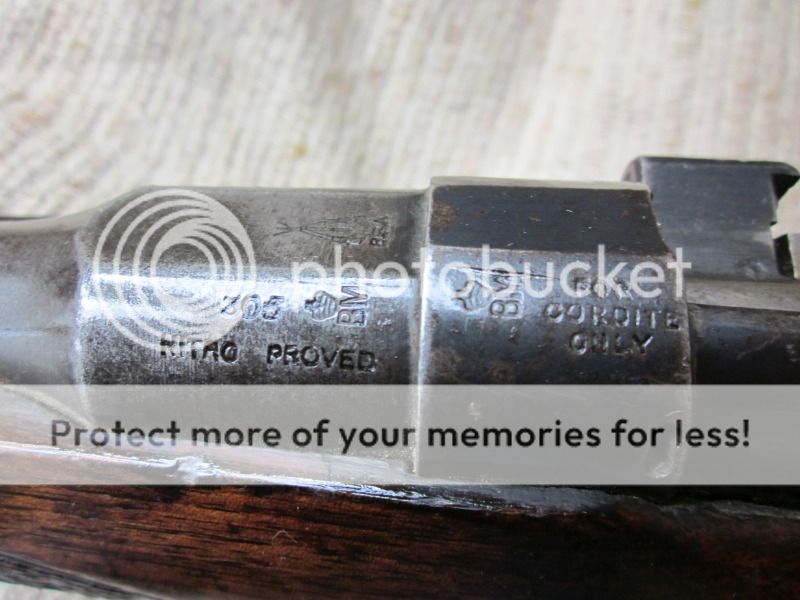
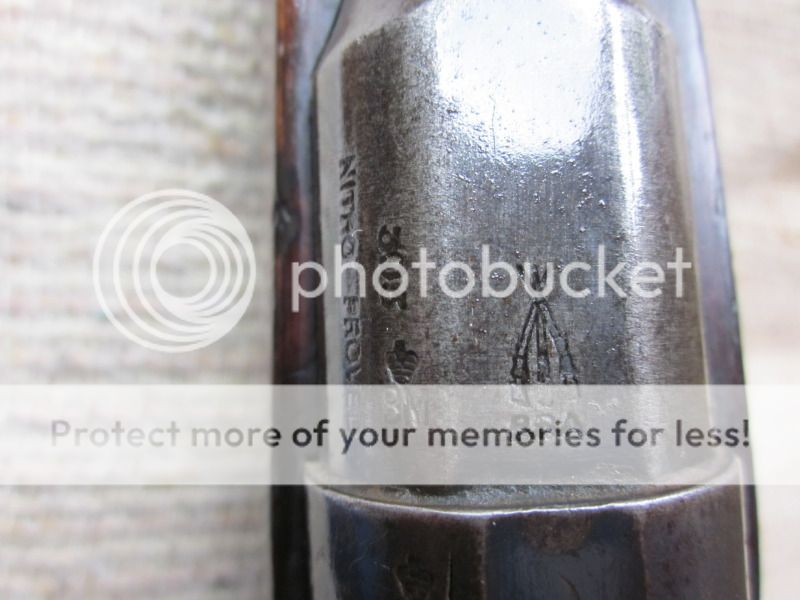
While it is quite true that the 4b rifle was in the 1927 (& 1935 & 1950, for that matter) catalogues, unless the receiver action strap is marked B.S.A.Guns Ld. and not B.S.A.Co., as shown in the OP's photos, the action & perhaps the barrel & whole rifle was manufactured before 1919 when B.S.A.'s legal name & the way they marked their rifles, changed. BTW, if it was marked B.S.A.Guns Ld., it will be the very 1st H.V.S.R. Lee Pattern rifle so marked known to exist!
The #4 Pattern Sporting Carbine with 24 1/2" barrel & a charger bridge is first shown in the 1909 B.S.A.Co. catalogue in the Lee Enfield Magazine Sporting Rifles section, while the 1910 catalogue has it moved to the Lee Enfield Magazine Carbine section and identified as a #4 Sporting Carbine, as it is in the 1912 and 1913 catalogues. Subsequent to the Great War, there is no mention of any but the #4 Pattern (in A, B & C configurations as "subject to limited stock on hand" (p. 11 of 1919 catalogue).
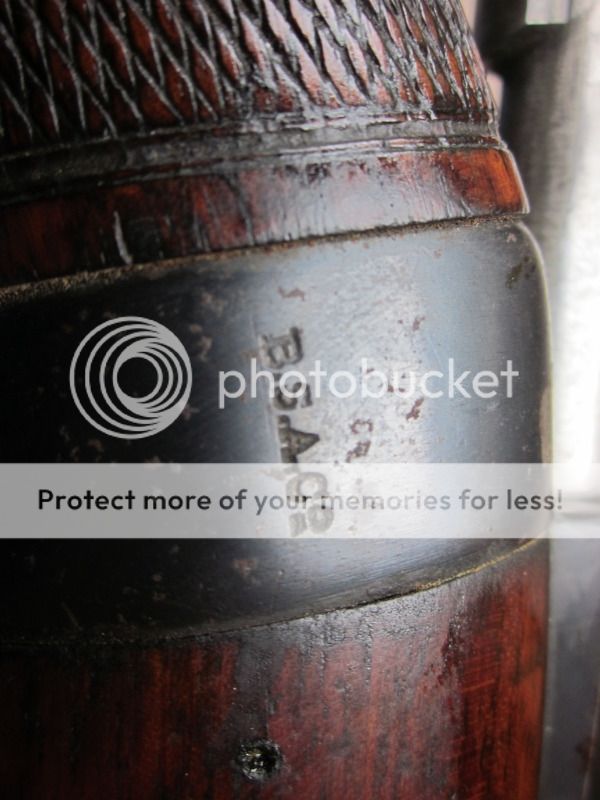
The proof marks, however, indicate it was sent for final proof sometime between 1916 and 1925. Considering that no sporting rifles were made after August 1914 & production at Small Heath did not re-commence until early 1919, it is reasonable to presume the rifle was sent to the Birmingham Proof House for proof somewhere between 1919 and 1925. A number of us who are passionate about these rifles speculate that they did this so that the rifles could be sold as "brand new" (Birmingham Proof house inspection marks under the stock identified the year the rifle was sent to the Proof House for proof before sale and BSA inspection marks identified the year the rifle was barrelled), although they were, in fact, still advertising new ones in their 1950 catalogue & a LE I* pattern (Long Lee with bolt safety) actioned-specimen sold new in Montreal in the 1950's by Fraser had post 1954 proof marks!
We can be sure of a few things, however:
-The sights were completed after the 1910 introduction of the Mark VII cartridge as the barrel is so marked to reflect the sights being regulated for that round;
-the action is of the post 1903 SHT. L.E. MK. III pattern (charger bridge & left action strap safety) type;
-it is a commercial rifle rather than a sporterized military weapon;
-it is chambered for the .303 British cartridge;
-it went through the Birmingham Proof House & passed "with flying colours" somewhere between 1916 and 1925.
Stang:
Re: .311 or .315 bore size.
What that refers to is the cartridge the rifle was chambered for and not a .303 cartridge with a .315" bore size.
The High Velocity Sporting Rifles came in 4 different chamberings: .276 Nitro Express (aka 7x57, aka .275 Rigby), .303 Flanged Nitro Express 2 1/4", 500/320 Flanged Nitro Express (aka 8x50R Austrian Mannlicher) & .375 Flanged Nitro Express 2 1/2". The .32-40 chambered rifles were a single shot rifle known as the B.S.A. Sporting Rifle and were not not built on the HVSR pattern and the .256 Mannlicher (aka 6.5x53R) chambered rifles were built on Trade Pattern actions by the trade.
The 500/320 (ie .315) chambering came about after the 1907 ban, in India and Sudan, of cartridges and components in British military calibers (I guess they didn't care about it being an Austrian military cartridge that Emperor Franz Josep could have supplied to keep the Raj's forces busy!). This included any .577, ,450 & 303 cartridges or components, which was why the British guntrade came up with all of their bigger/smaller calibers, after Rigby's .450 Nitro Express was banned virtually overnight.
In any event, the catalogues were confusing in that the bore size (ie land size) of the .303 is, of course, .303" (groove size ~.311"), while the 500/320 land size is .315" (groove size .323"). They sort of compared apples to oranges, or rather the outside of a navel orange to the inside of the peel of a pommelo.
The #4 Pattern Sporting Carbine with 24 1/2" barrel & a charger bridge is first shown in the 1909 B.S.A.Co. catalogue in the Lee Enfield Magazine Sporting Rifles section, while the 1910 catalogue has it moved to the Lee Enfield Magazine Carbine section and identified as a #4 Sporting Carbine, as it is in the 1912 and 1913 catalogues. Subsequent to the Great War, there is no mention of any but the #4 Pattern (in A, B & C configurations as "subject to limited stock on hand" (p. 11 of 1919 catalogue).
The proof marks, however, indicate it was sent for final proof sometime between 1916 and 1925. Considering that no sporting rifles were made after August 1914 & production at Small Heath did not re-commence until early 1919, it is reasonable to presume the rifle was sent to the Birmingham Proof House for proof somewhere between 1919 and 1925. A number of us who are passionate about these rifles speculate that they did this so that the rifles could be sold as "brand new" (Birmingham Proof house inspection marks under the stock identified the year the rifle was sent to the Proof House for proof before sale and BSA inspection marks identified the year the rifle was barrelled), although they were, in fact, still advertising new ones in their 1950 catalogue & a LE I* pattern (Long Lee with bolt safety) actioned-specimen sold new in Montreal in the 1950's by Fraser had post 1954 proof marks!
We can be sure of a few things, however:
-The sights were completed after the 1910 introduction of the Mark VII cartridge as the barrel is so marked to reflect the sights being regulated for that round;
-the action is of the post 1903 SHT. L.E. MK. III pattern (charger bridge & left action strap safety) type;
-it is a commercial rifle rather than a sporterized military weapon;
-it is chambered for the .303 British cartridge;
-it went through the Birmingham Proof House & passed "with flying colours" somewhere between 1916 and 1925.
Stang:
Re: .311 or .315 bore size.
What that refers to is the cartridge the rifle was chambered for and not a .303 cartridge with a .315" bore size.
The High Velocity Sporting Rifles came in 4 different chamberings: .276 Nitro Express (aka 7x57, aka .275 Rigby), .303 Flanged Nitro Express 2 1/4", 500/320 Flanged Nitro Express (aka 8x50R Austrian Mannlicher) & .375 Flanged Nitro Express 2 1/2". The .32-40 chambered rifles were a single shot rifle known as the B.S.A. Sporting Rifle and were not not built on the HVSR pattern and the .256 Mannlicher (aka 6.5x53R) chambered rifles were built on Trade Pattern actions by the trade.
The 500/320 (ie .315) chambering came about after the 1907 ban, in India and Sudan, of cartridges and components in British military calibers (I guess they didn't care about it being an Austrian military cartridge that Emperor Franz Josep could have supplied to keep the Raj's forces busy!). This included any .577, ,450 & 303 cartridges or components, which was why the British guntrade came up with all of their bigger/smaller calibers, after Rigby's .450 Nitro Express was banned virtually overnight.
In any event, the catalogues were confusing in that the bore size (ie land size) of the .303 is, of course, .303" (groove size ~.311"), while the 500/320 land size is .315" (groove size .323"). They sort of compared apples to oranges, or rather the outside of a navel orange to the inside of the peel of a pommelo.
Thanks for all the info so far guys especially thanks to jamesharrison.
Now if I understand the info provided, my rifle is the same as a Lee Speed but not marked as such, as it was sold after the patent expired?
Is it possible that this rifle is chambered in the 500/320 or is my barrel just badly worn as a cast .312 bullet is easily pushed through with minimal contact with the rifling yet the rifling is quite evident looking down the bore.
Can any one give me a ball park on the value?
Now if I understand the info provided, my rifle is the same as a Lee Speed but not marked as such, as it was sold after the patent expired?
Is it possible that this rifle is chambered in the 500/320 or is my barrel just badly worn as a cast .312 bullet is easily pushed through with minimal contact with the rifling yet the rifling is quite evident looking down the bore.
Can any one give me a ball park on the value?
Last edited:
Re: Thanks for all the info so far guys especially thanks to jamesharrison.
You're welcome.
Re: my rifle is the same as a Lee Speed but not marked as such, as it was sold after the patent expired?
Yes
Re:Is it possible that this rifle is chambered in the 500/320
No, otherwise it would be marked as such. The 8x50R (aka 500/320 Flanged is a completely different cartridge & the barrel would not have been marked as for the Mark VII ammunition.
Re: or is my barrel just badly worn as a cast .312 bullet is easily pushed through with minimal contact with the rifling yet the rifling is quite evident looking down the bore.
Don't forget that the original .303 British barrel specs. reflected 0.303" across the lands & 0.0065" rifling thickness, resulting in 0.316" for a perfect (at least according to North American standards) fit.
Do you mean the whole 0.312" bullet fits down the barrel or just the front part up to the driving bands?
Re: Can any one give me a ball park on the value?
Given the replacement military magazine & beat-up finish, ~$3-400, IF it's NOT drilled & tapped.
If you want to sell it, let me know.
You're welcome.
Re: my rifle is the same as a Lee Speed but not marked as such, as it was sold after the patent expired?
Yes
Re:Is it possible that this rifle is chambered in the 500/320
No, otherwise it would be marked as such. The 8x50R (aka 500/320 Flanged is a completely different cartridge & the barrel would not have been marked as for the Mark VII ammunition.
Re: or is my barrel just badly worn as a cast .312 bullet is easily pushed through with minimal contact with the rifling yet the rifling is quite evident looking down the bore.
Don't forget that the original .303 British barrel specs. reflected 0.303" across the lands & 0.0065" rifling thickness, resulting in 0.316" for a perfect (at least according to North American standards) fit.
Do you mean the whole 0.312" bullet fits down the barrel or just the front part up to the driving bands?
Re: Can any one give me a ball park on the value?
Given the replacement military magazine & beat-up finish, ~$3-400, IF it's NOT drilled & tapped.
If you want to sell it, let me know.
The LEE-SPEED rifle was particularly a commercial Lee-Metford Mark II and sporting rifles derived from it.
It should have a METFORD barrel, which was more than a bit desired at that time.
Your rifle is a commercial sporting LEE-ENFIELD.
It is exactly the same rifle EXCEPT that your barrel will have ENFIELD rifling: 5 lands, 5 grooves, very deep grooves, lands and grooves of EQUAL width, the lands slightly wider at the botom than at the top. This form of rifling was actually designed by Metford but was adopted as the standard by Enfield. I suppose you MIGHT call yours Lee-Speed, but it actually is an improvement. It HAS the SPEED improvements to the bolt-head and it also has the vastly-improved ENFIELD (invented by METFORD) rifling form.
The METFORD rifling form (invented by METFORD, fancy that!) was characterised by SEVEN grooves, shallow and gentle and radiused (Metford called it "segmental": it was actually very like the current K&K rifling, for which the Germans are not paying royalties). The barrels actually looked worn-out when they were brand-new, but it was amazingly accurate with Black Powder cartridges and was very easy to clean. Its downfall came when the Army adopted fast-burning, super-erosive CORDITE MARK I as its propellant. The new CORDITE cartridges washed the shallow Metford rifling out very quickly, hence the change in 1896 to the improved ENFIELD (invented by Metford) rifling form. CORDITE itself was modified greatly and adopted again in 1910 as CORDITE MD-T 5-2 and remained the standard for the remainder of the isue period of the .303" cartridge. It is only 37% nitroglycerine, 58% nitrocellulose and 5% mineral jelly, so it is MODIFIED (MD) and it is extruded into spaghetti-like lengths, so it is also TUBULAR (T), the outside diameter of the lengths is.050" (5/100) and the inside diameter of the tube is .020" (2/100). Now you know how it got its name!
Lovely old rifle!
It should have a METFORD barrel, which was more than a bit desired at that time.
Your rifle is a commercial sporting LEE-ENFIELD.
It is exactly the same rifle EXCEPT that your barrel will have ENFIELD rifling: 5 lands, 5 grooves, very deep grooves, lands and grooves of EQUAL width, the lands slightly wider at the botom than at the top. This form of rifling was actually designed by Metford but was adopted as the standard by Enfield. I suppose you MIGHT call yours Lee-Speed, but it actually is an improvement. It HAS the SPEED improvements to the bolt-head and it also has the vastly-improved ENFIELD (invented by METFORD) rifling form.
The METFORD rifling form (invented by METFORD, fancy that!) was characterised by SEVEN grooves, shallow and gentle and radiused (Metford called it "segmental": it was actually very like the current K&K rifling, for which the Germans are not paying royalties). The barrels actually looked worn-out when they were brand-new, but it was amazingly accurate with Black Powder cartridges and was very easy to clean. Its downfall came when the Army adopted fast-burning, super-erosive CORDITE MARK I as its propellant. The new CORDITE cartridges washed the shallow Metford rifling out very quickly, hence the change in 1896 to the improved ENFIELD (invented by Metford) rifling form. CORDITE itself was modified greatly and adopted again in 1910 as CORDITE MD-T 5-2 and remained the standard for the remainder of the isue period of the .303" cartridge. It is only 37% nitroglycerine, 58% nitrocellulose and 5% mineral jelly, so it is MODIFIED (MD) and it is extruded into spaghetti-like lengths, so it is also TUBULAR (T), the outside diameter of the lengths is.050" (5/100) and the inside diameter of the tube is .020" (2/100). Now you know how it got its name!
Lovely old rifle!






















