Optics for service rifle?

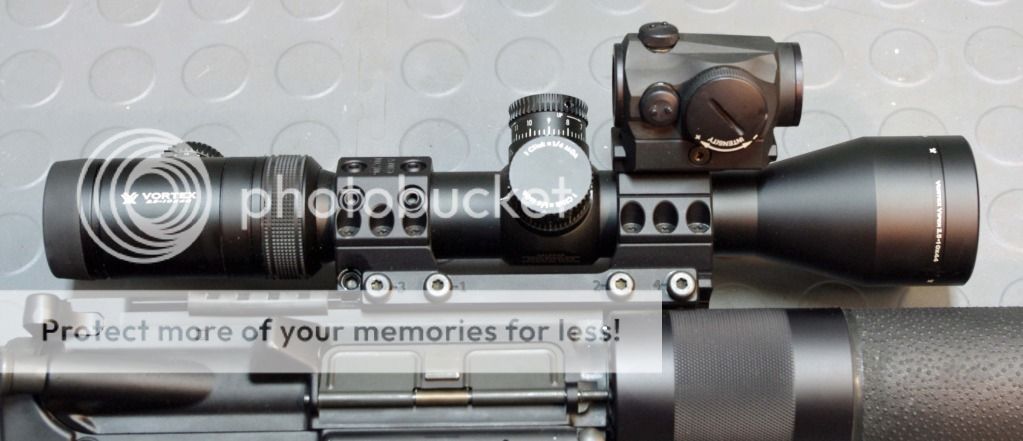
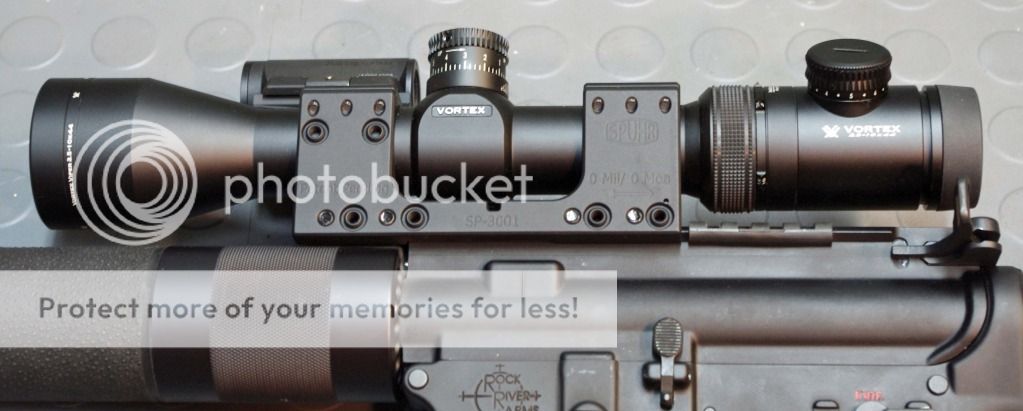
Its a Spuhr mount. Best cantilever mount I've found. Built like a tank! I wouldn't even consider bridging the handguard with any other mount. Unfortunately, they don't make one with 3" offset.

March is a relatively new company that quickly gained a reputation for packaging high quality glass with wide magnification ranges into extremely light and compact tubes. Their big scopes have really taken off with the F-Class shooters.
 
OK.

I am not a variable kind of guy.

Aside from the Burris AR-332, what kind of fixed power scope could I look at. 3x range. Illuminated or not. Can't break the bank either.

At one of the CQB matches a guy was using what I "think" was a smaller fixed scope aand he did very well.

I can't remember his name though.
 
I liked the Burris prism (3 and 5 power) scopes. I just wish they had a better reticle (more like what you see on the CMR 1x4x24 scope)

Does March Scopes have a dealer/distributor in Canada? So far, I have them listed/found in Australia and UK. Where is this company based?
 
Last edited:
Canadian March dealer is Spartan Precision. US distributor is Kelbly's. March is based in Japan.

fyi, March is not a cheap scope. They're top tier, with a price tag to match.
 
Canadian March dealer is Spartan Precision. US distributor is Kelbly's. March is based in Japan.

fyi, March is not a cheap scope. They're top tier, with a price tag to match.

Yes, I saw that:(. Still, it's nice to know these units are out there. It's only a matter of time when their competitors come up with similar units--maybe get a bit more affordable too.
 
Prices are right up there. So is the quality and performance. I examined kombayotch's scope, and it is impressive. No doubt about it.
I have one of the little Burris 3X prism scopes. I wouldn't use it for SR competition.
 
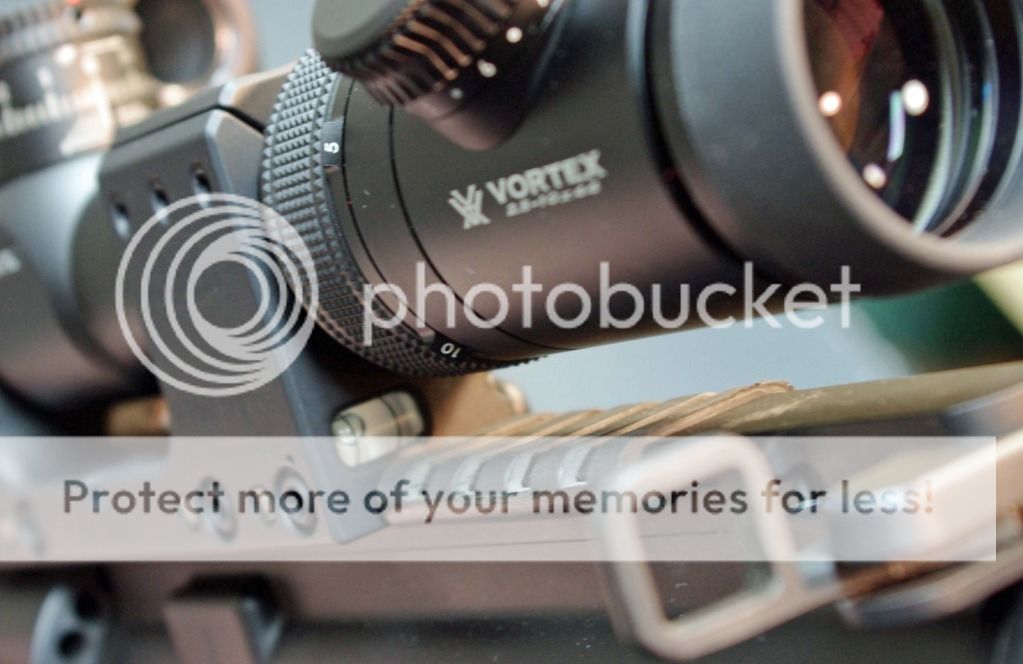
I'm with Kombayotch on the Spuhr. The quality and design features are top shelf. The screw mounts are recessed for repeatability and there is allowance made everywhere for Loctite. The inside of the rings are grooved for bonding if you choose. The interchangeable rails and mounts have lego-like flexibility. The built in level is perfect - doesn't stick out, and I can see it with the disengaged eye. I met Mr. Spuhr in Sweden earlier this year and I am completely sold on them.

The Vortex 2.5 - 10 is great back to 500m - I won the 500 agg at NSCC with it. I love having a variable scope that I can dial down to the sight picture I want, particularly on the run downs.

After 20 years in the army and seeing what Elcan did to the CF and the Dutch, I just can't get behind one voluntarily. The glass is always clear and I like the reticles, but it's guts are on the outside. I have had them fail everywhere including Afghanistan. I tested two newer switch power Elcans and they did not hold zero at all.

I've had a few minor issues with lower end Vortex scopes, but they have top shelf customer service and sorted me out lightning fast. I ended up upgrading from the Viper HS to the PST to get the uncapped turrets. It came illuminated which is a waste in my view, but the turrets are worth the upgrade.

I have the Aimpoint Micro for CQB - I have not used that in competition yet, but I shot a bunch of groups from 50 m to 5m and it is bang on and super fast - and two sights are better than one.

RSSR.jpg


LSSR.jpg


Level.jpg
 
I've been tempted by the PST 2.5-10 a number of times, but, I don't like the weight that a 44mm objective adds (or the implication on the optical quality in that it requires a 44 instead of a 40 or 36), and agree that if it was offered without illumination it would in fact be a better optic, both weight wise, and reliability wise. I've heard of the electronics failing, and, while a warranty is fabulous, it's not a solution.

I think if Vortex could get their act together and offer a true one optic to rule them all in the 4X erector range, we'd all be quite tickled. I swear if my Nikon had a proper reticle, they'd be the winner hands down with their M223 2-8. I love everything about that optic except for the ballistic reticle, which is cluttered and redundant with the exposed turrets. Size, weight, quality and versatility are fantastic though. Zero stops would be nice, I guess, but, they're not a deal breaker for me. SR is shot in a linear fashion, which means you're always returning to zero at the last stage of the match.

Vortex is just so damn close with the 2.5-10, but, they could do it way better with less, and probably increase their margins at the same time, while still offering a competitvely priced optic.

If they did a 2-8, kept the turrets, kept the reticle, and reduced the objective to say 38 or 40, it would be spot on I think. Price it at $600 and I think this discussion would be over, but, alas, they did the Razor II 1-6 with a reticle that is completely useless for SR, for a lot more money than most of us are looking to spend.

 
I'd buy the Vortex PST 2.5-10x in a heartbeat if it was offer in FFP. Crossing my fingers for this years Shot Show.
 
Match 2 is easy once you tear it apart and figure out where the bullets are going, and how to avoid cross fire. If doable with a 3.4 Elcan a 2.5 NF is going to work fine.

Ryan if you don't get a zero stop model you will be sorry.

Match 2 is dumb because it has nothing to deal with "close quarter". It is basically shooting mini bullseyes at 10 to 20yards.

Since there is no speed involved in match 2, I will totally pack a 4x sight to shoot so I can see the bullet holes and the little shapes on the fig 11. That is why the army guys have no issues with the elcan in match 2. They design the Cof so people can "win" with the elcan, instead of providing "real" training for close range shooting.

The key to not cross fire is to raise the wpn to the eyes, instead dipping the head to the wpn and trying to find the right targets again. I will totally pack a min. 4x sight without worrying that match 2.
 
I'd buy the Vortex PST 2.5-10x in a heartbeat if it was offer in FFP. Crossing my fingers for this years Shot Show.

Do you think there is any advantage? I thought about it, and don't see any advantage in fixed sub-tensions. It's all known distance shooting and I know the dimensions of all the targets. If I do need to use the sub tensions, it's a quick flip up to max power.

I think FFP can have a distinct disadvantage at longer ranges in that the reticle gets bigger as magnification gets bigger.

So my requirements were from 1 to between 8 and10 power variable, SFP, MOA adjustable turrets and a simple reticle. The 2.5-10 is nearly perfect for me.

Not that I'm arguing, I suppose that the most important factor is personal preference. There is more than one way to skin a cat in this game.
 
In a competition like NCSS, or anything shot at know distances with know size targets, no I don't think it offers any big advantages. However, if you were to shoot a competition that was all unknown distances, with targets of varying size, under time pressure and things like that, there is a HUGE advantage to being able to use that reticle at any magnification for all of your hold overs, wind hold-off, leads on movers and things like that. Its been shown time and time again in the "practical/tactical" UKD matches have down south. FFP rules the roust.

I've never found it to be a disadvantage at long distance and have never bought into to reticle too thick nonsense. An F'er friend of mine routinely shoots his 1000 yard matches (and wins) at 5x because seeing 2/3 or the wind flags on the range is a bigger advantage than zooming in on the target. It's very easy to center the reticle on a big target/taget board if you're using lower magnification or have thicker cross hairs. But really, the cross hairs aren't that thick. The cross hairs on my March cover 1.8" at 1000 yards, and the ones on my Premier cover less than 1". Can you really hold that shooting off of a mag?

For me, its a training issue; I'm used to FFP. I don't think about how big an MOA/mil is at whatever distance or calculate my corrections anymore, I just measure with the reticle and plug it into the turrets directly. If I have a reticle that isn't always accurate, I WILL eventually do this at the wrong setting, especially under pressure. It's not as much of an issue with a 4x or 5x optic since I can leave it at that for everything but close range CQB stuff. But with a 10x, it would be an issue.
 
Looks like Leupold has a new variant of the Mark 6 coming out that is comparable in size to the March F. Very compact for what it offers.

DAGR4.jpg


149776_10151376731317953_1824273024_n.jpg


First Focal Plane
3-18X magnification range
44mm objective
34mm main tube
0.1mil M5CS locking turrets
Overall length of this scope is 11.9 inches
Weights 23.6 ounces
 
Nice scope! But at almost $3,000 is totally out of my range :( I think the Nightforce 2.5-10 x32 NXS has plenty enough magnification at 1/3 of the price, and it's good glass too.
 
$3000 includes that little red dot scope, which isn't needed. And that price is also MSRP. I'd expect it to be closer to $2k.


 
Looks like Leupold has a new variant of the Mark 6 coming out that is comparable in size to the March F. Very compact for what it offers.

DAGR4.jpg


149776_10151376731317953_1824273024_n.jpg


First Focal Plane
3-18X magnification range
44mm objective
34mm main tube
0.1mil M5CS locking turrets
Overall length of this scope is 11.9 inches
Weights 23.6 ounces

My experience with higher magnification scopes is of the lower to moderate quality items. I've found that anything over about 16 power just picks up weather/barrel mirage more making clarity of the target harder. Is this still a factor with these higher end units? Would one really be using the full 18X to full effect?
 
Mirage is mirage, its not going to change. I seldom use more than 10x with my March. The draw to this scope is the compact size, features like zero stop and having a mil/mil ffp setup similar to what is becoming the norm on tactical precision rigs.
 
Back
Top Bottom