













































Hey guys,
I am not an expert on the Civil War, the Indian Wars, Sharps Rifles/Carbines or black powder by any means, so please take this post with a grain of salt, and absolutely post any corrections or further information. Although I'm not a "new" black powder shooter, I have a lot to learn and value any and all input and suggestions
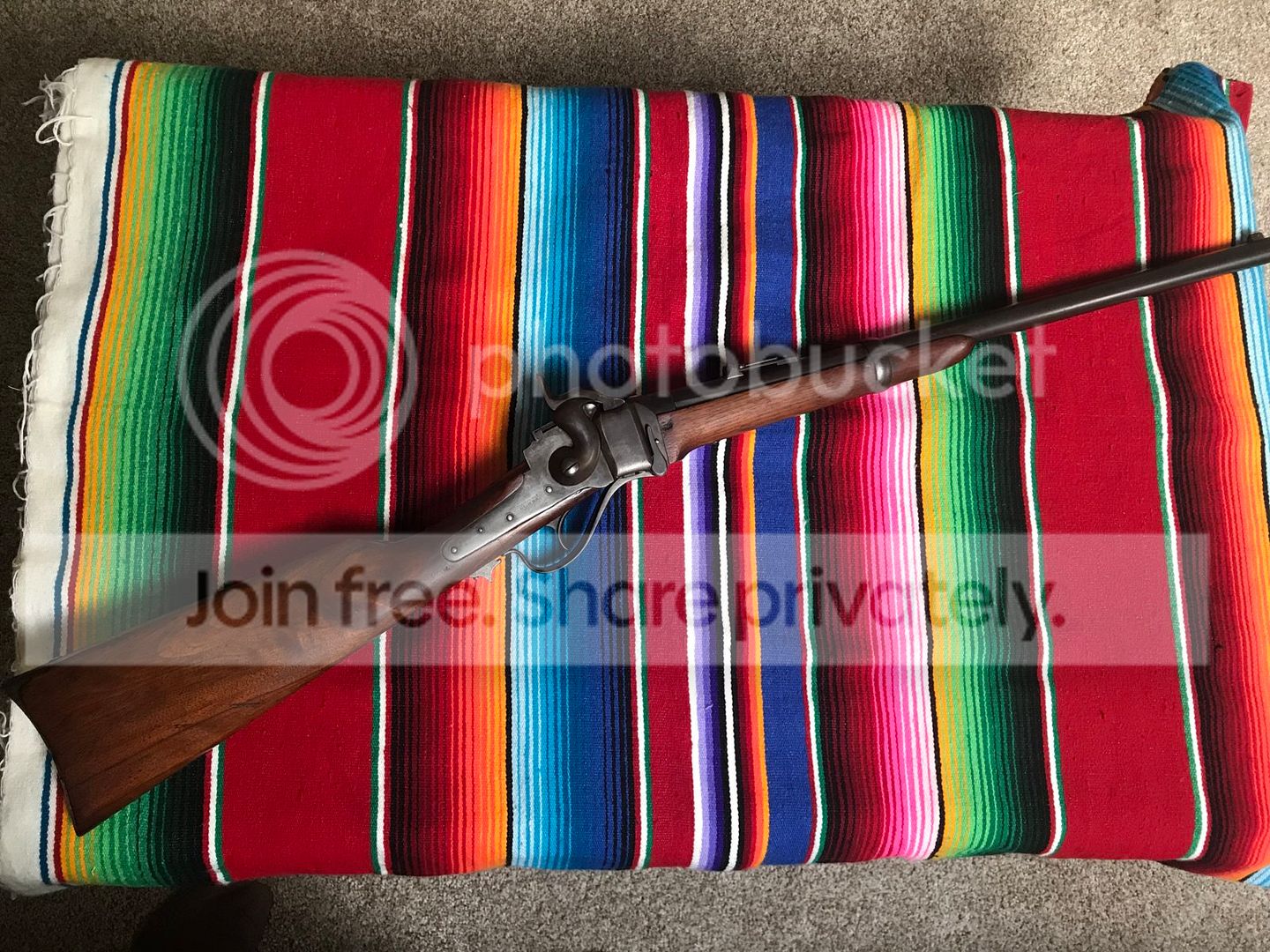
A while back I was fortunate enough to pick up an original 1863 "New Model" Sharps Carbine from a great member here. This particular carbine was produced in early-mid 1864 from my quick research, and started life as a .52 calibre, paper cartridge, breech loading percussion carbine. From my understanding, these carbines saw extensive use during the US Civil War, and this carbine would have likely been issued in some form to a Union Cavalry Trooper.
Following the US Civil War, the US government found themselves with stockpiles of now outdated muzzle loaders and percussion weapons in numerous calibres and configurations, and in an attempt to standardize military armament, began the process of converting both infantry rifles (primarily the 1861/1863 Springfield muzzleloading muskets into 1866 Allin "Trapdoor" breech loading rifles) and cavalry carbines to the newly adopted .50-70 Government metallic cartridge. Early specifications called for a 50 calibre bullet (.515 dia) weighing 450 grains over 70 grains of black powder, often being referred to as the .50-70-450. It is this load that I have attempted to replicate in my reloads for this carbine using starline brass, 2FG powder and "jet bullets" .515 diameter 450gr projectiles. I have also read mixed reports of period "carbine" loads being made and implemented in the US Ordnance system using approximately 45-55gr of black powder, though information seems to be limited.
In 1867, Ordnance Department contracted with the Sharps Rifle Company for conversion of over 31,000 Sharps percussion carbines to the .50-70 breech loading configuration. These carbines were issued to the regular Cavalry regiments on the western frontier and remained in service until they were replaced by the Springfield Model 1873 Carbine (Per RIA). Early conversion pieces reportedly maintained the original 6 groove barrels without a liner and were considered "good enough for government work", though most found today will have a 3 groove liner installed which was intended to tighten up the bore and improve accuracy. This particular rifle had a "new" breech block installed and the barrel was lined with a 3 groove barrel as part of the refurbishment/conversion, which was fairly typical of this process. From my understanding, these early conversion Sharps Carbines saw extensive use on the "frontier" in the "Indian Wars" of the late 1860s and 1870s, and were generally quite well regarded by both the troopers that carried them and any civilians that could get their hands on one, as the .50-70 government made a great buffalo and general hunting cartridge. These carbines were slowly phased out of front line service and saw further "service" on the frontier as hunting and/or self defence carbines and rifles with the adoption and issuing of the "new" .45-70 1873 Trapdoor carbines and rifles.
My carbine
After extensive reading, careful preparation, safety inspections and pre-firing disassembly and maintenance, my dad and I decided to work up a limited amount of ammunition and give the carbine a few shots. I should mention that the gentleman I purchased the carbine from had fired it within the past few years with no issues, so we were quite eager to try it ourselves in a safe, controlled setting using carefully worked up loads. We started with a simple empty casing with a primer and no charge/bullet to ensure functionality, followed by a "blank" round of about 20gr of 2FG powder compressed with a wad and no bullet to a "soft" load of 55gr of 2FG compressed with a wad and loaded with the bullet. After every "round" the carbine and brass was carefully checked for any signs of blowback, fatigue, stress, expansion/bulging etc... We finished with 2x rounds of "full" powder loads using 65gr of 2FG powder, though given that we didn't want to over-stress such a prized piece of history, we decided to switch to the modern Pedersoli and Henry for the rest of our black powder range session.
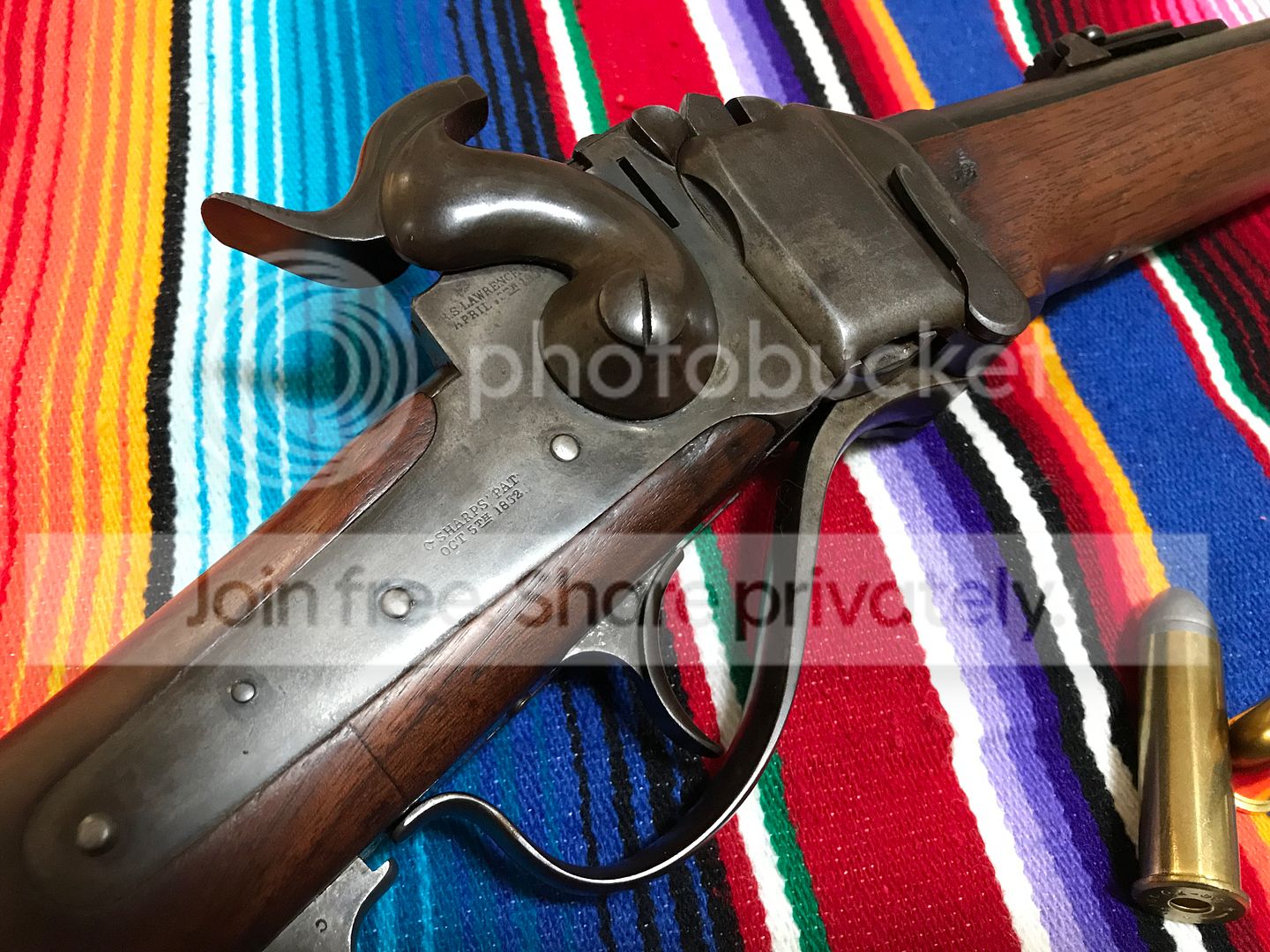
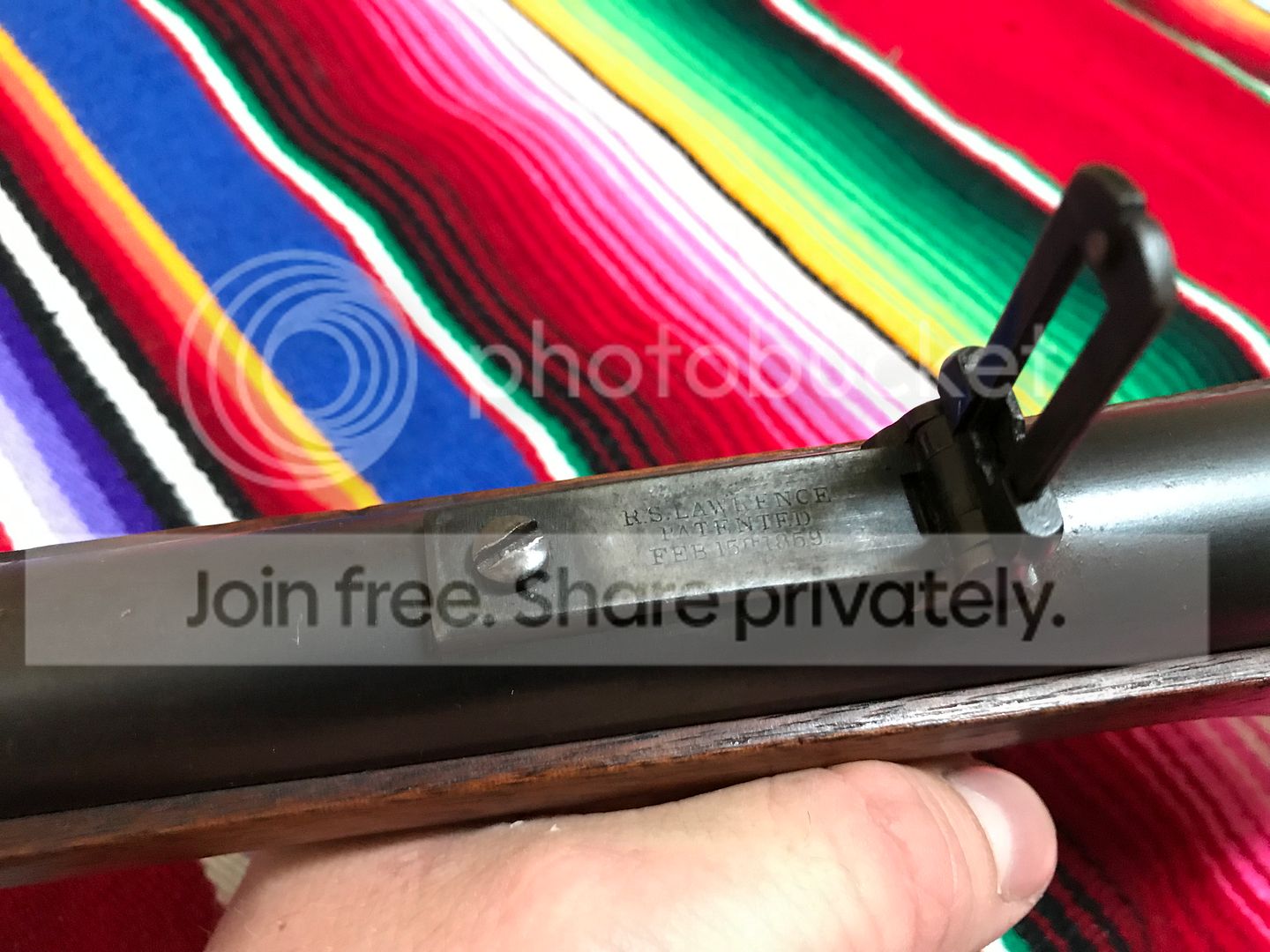
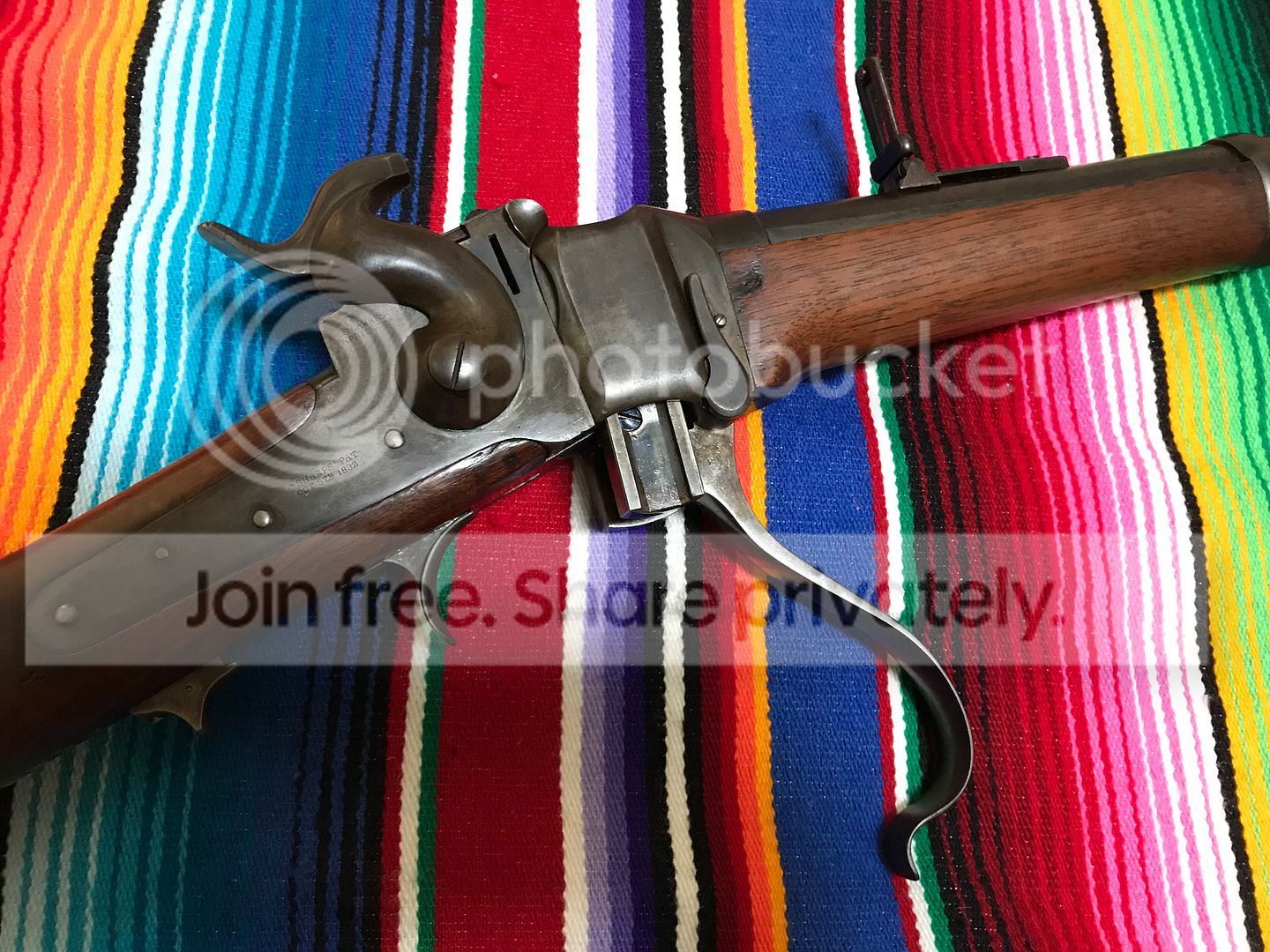
This carbine has a very, very smooth action and exceptionally tight lock up. I would argue that the action is far smoother then our 1874 Pedersoli rifle (an excellent rifle in its own right). The hammer has a very strong, positive half and full #### position, and the hammer drops with an anvil of authority. The sights are very fine and arguably terrible for combat by today standards, though for 1863 they were fairly typical. The trigger is absolutely terrible and is on par with an 1895 Nagant on double action for those of you that are fortunate enough to own one, though for 155 years old, I can live with that . The bore is in VG+ condition with quite a bit of shine and defined, sharp grooves. The chamber has light, consistent pitting but is quite serviceable. The wood is in beautiful shape and the metal is complete and in VG shape, with bluing remaining on parts of the action and barrel, though in natural light the brown patina is quite evident. The stampings are mostly all there, with the left side of the action's patent marks being half-faded. The entire carbine is covered in single letter Ordnance Department proof marks. Once thing that is interesting is the "fire blue" screws in the action, although a little faded, are in nice shape as well. The left side of the barrel has more finish wear then the right, which is interesting in its own right - saddle wear? leaning up against a hunting cabin after a rainy hunt for far too long? I guess we will never know for sure.
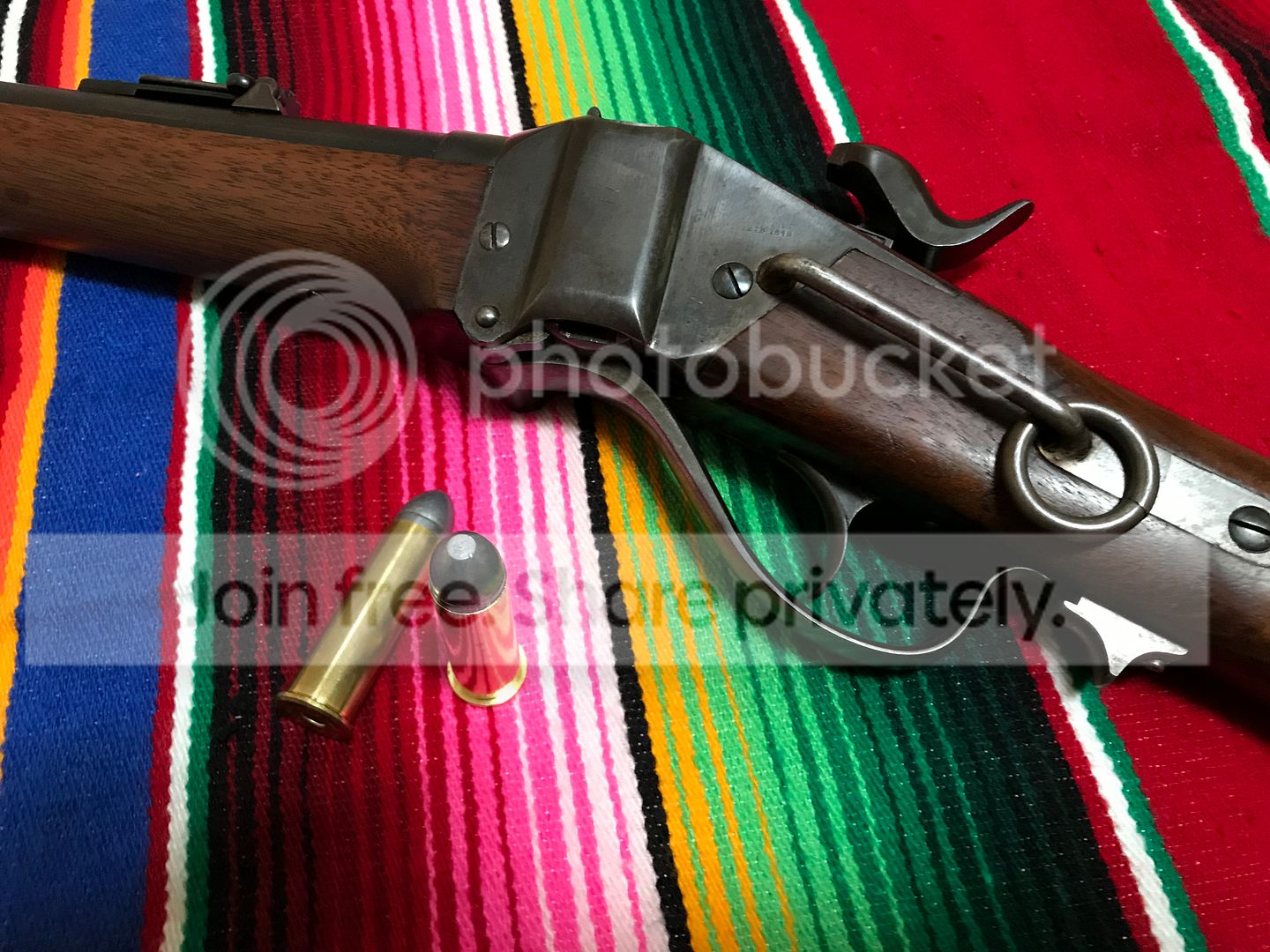
I have read that these carbines tend to shoot high, and since testing was done at 25m only we began by placing a large sheet of paper behind the target stand to "catch" fliers. I am happy to report that the carbine shot quite well considering its age, my first time loading/firing .50-70 and the terrible trigger. I am sure that my first round had a flinch as well...
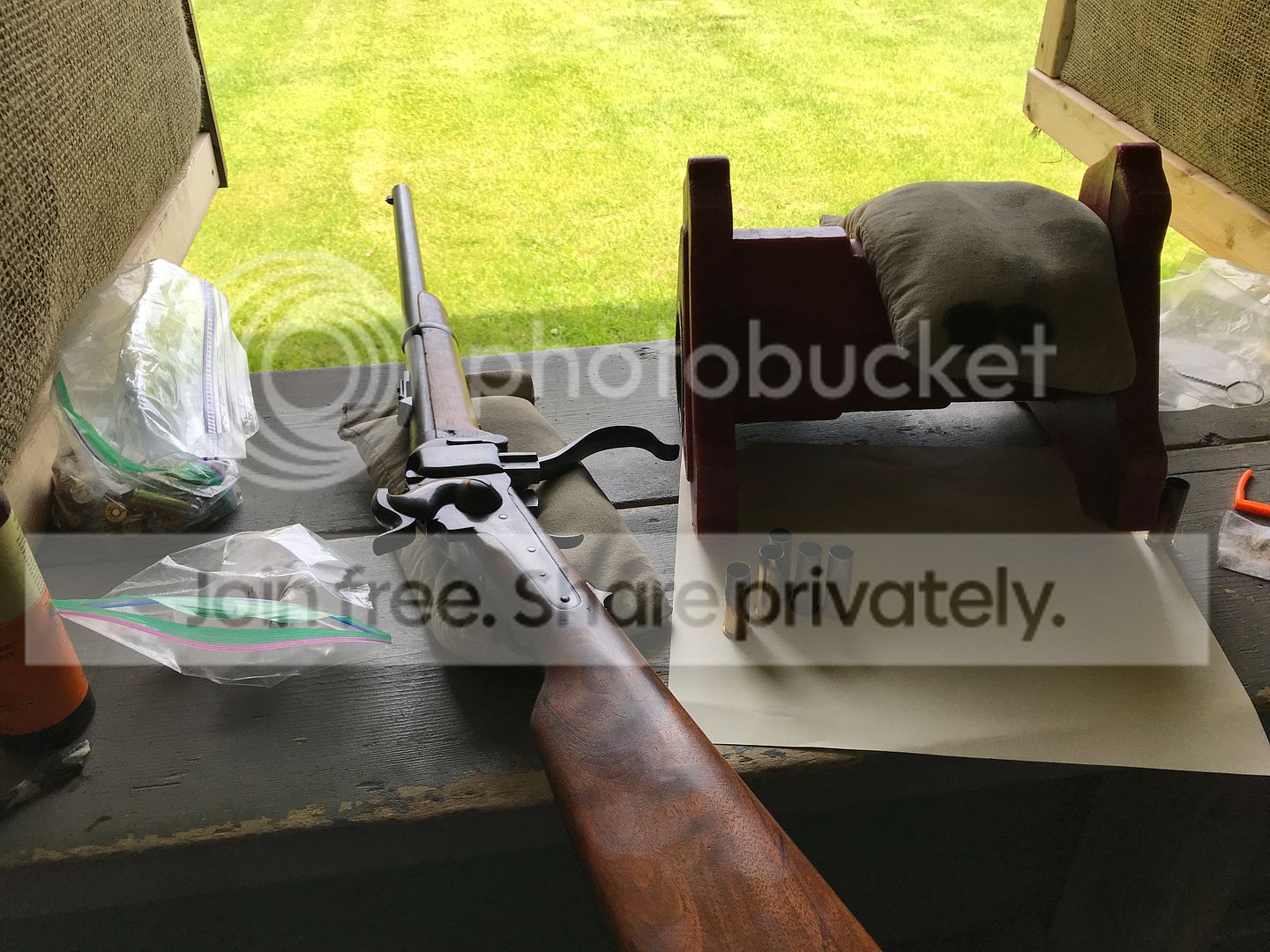
On the bench, ready to go...
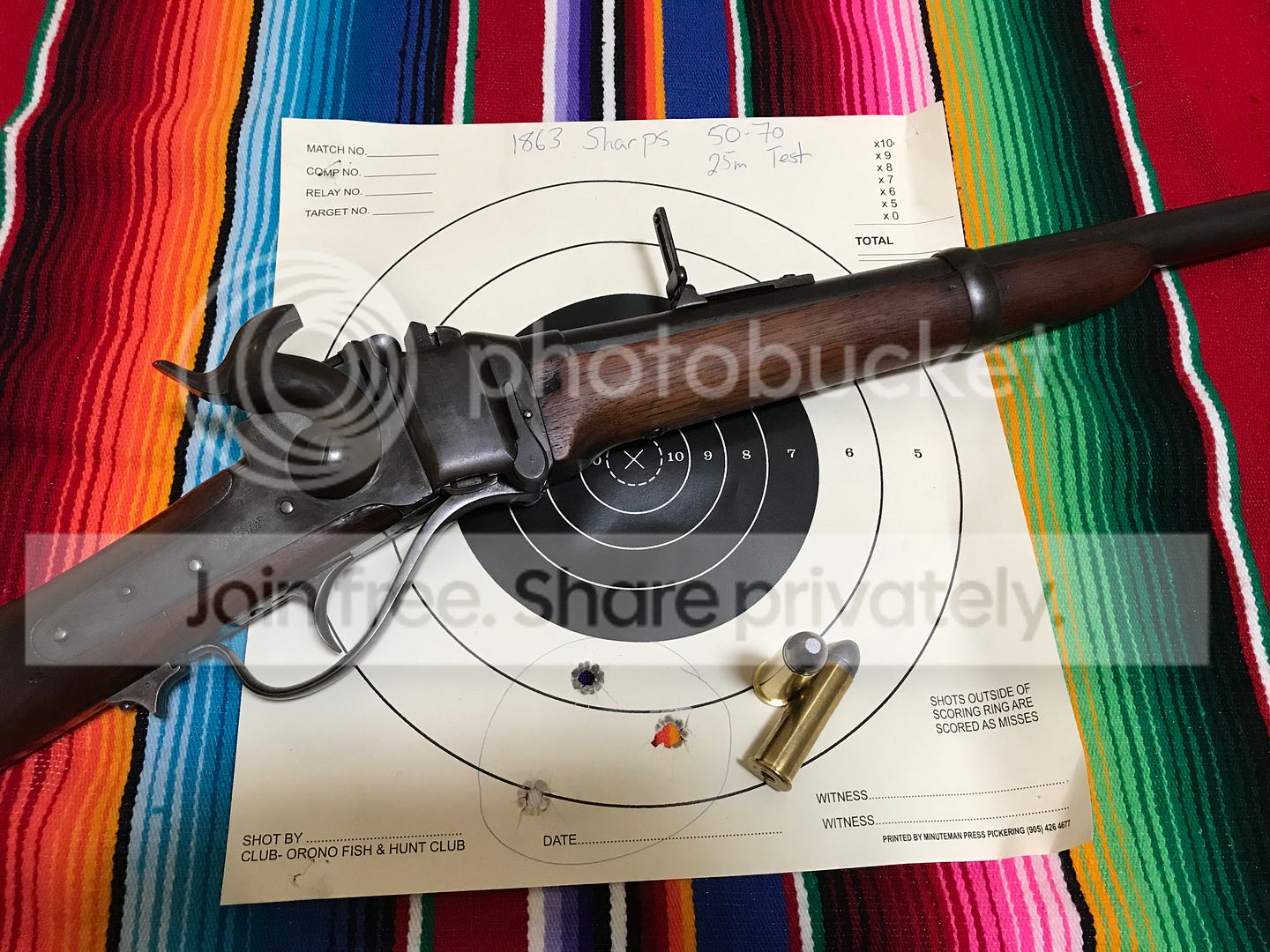
55gr load
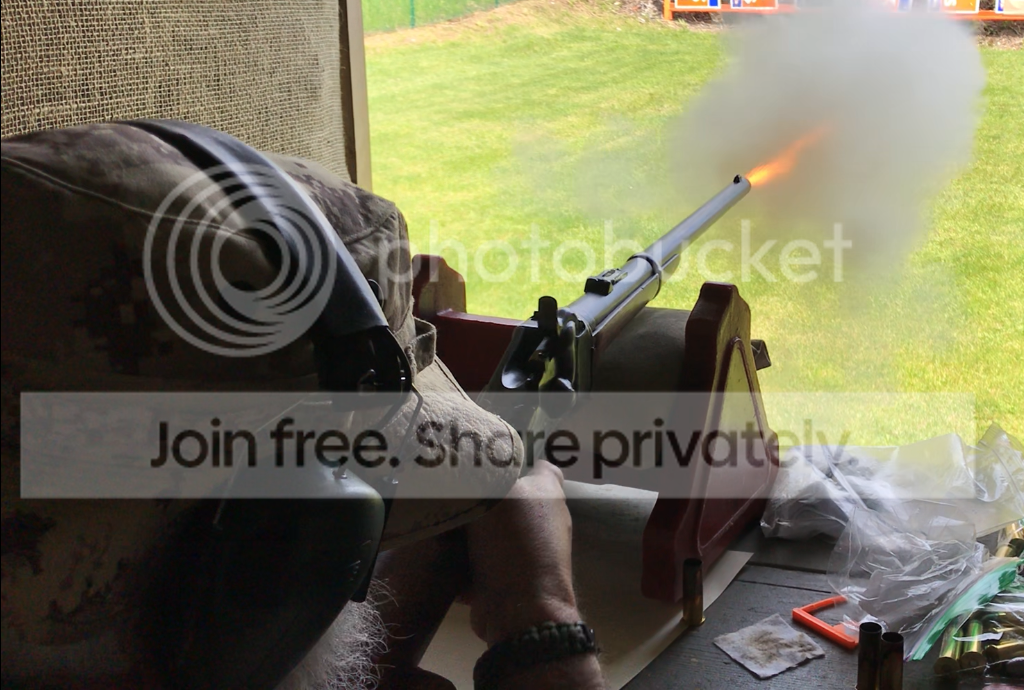
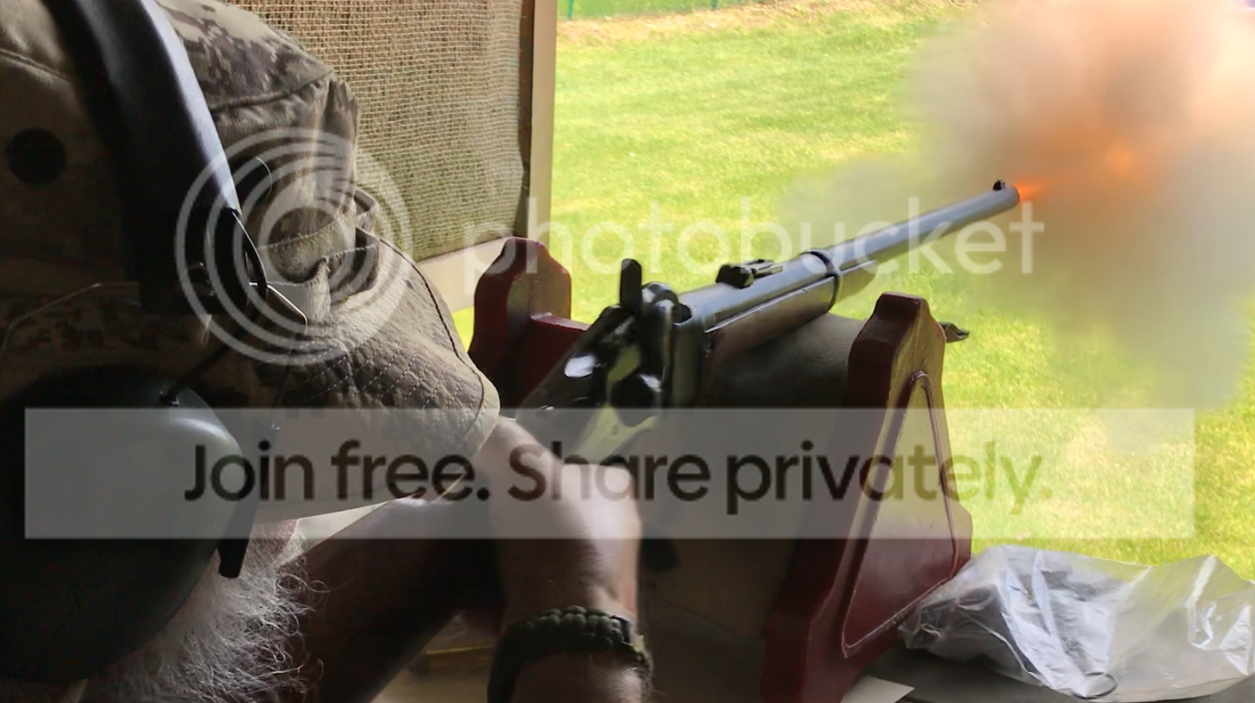
The results with the "light" 55gr load at 25m. I'm quite content with this considering.

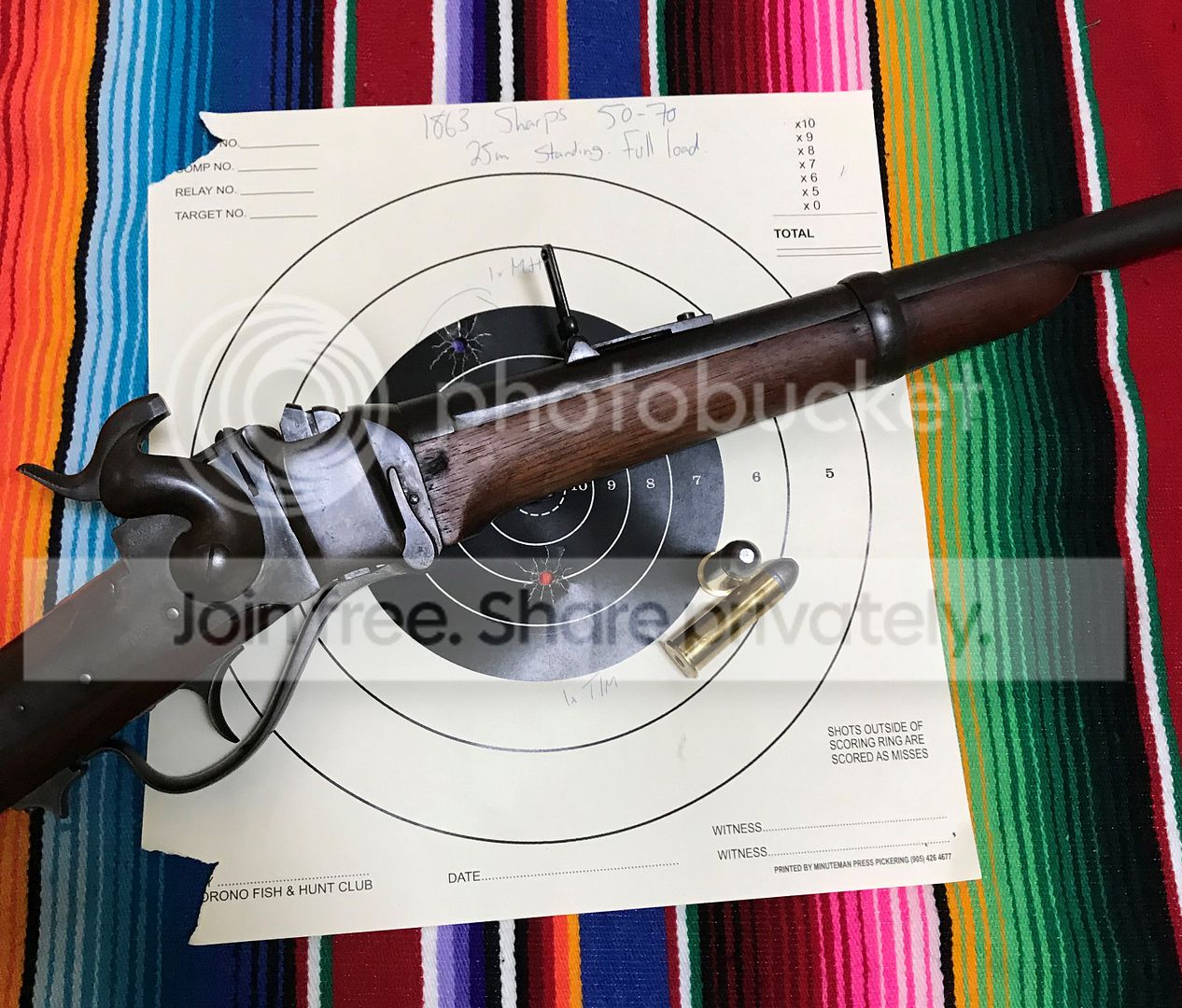
We did notice that the 65gr load shot MUCH closer to the point of aim and gave quite a wallop for such a lightweight gun. That being said, the .50-70 is surprisingly soft on the shoulder, much less punishing then a 12 gauge with slugs for example. I think this loading would be far more accurate then the "light" load, though I guess I can't really back that statement up much.
The results with the "full" 65gr load. The top round is my single, standing shot. The centre/low round is my dad with his standing shot. As much as I wanted to sit and "group" with the full power loads, we felt this old girl deserved a rest. I feel this carbine is more than accurate for a 155 year old piece of living history.
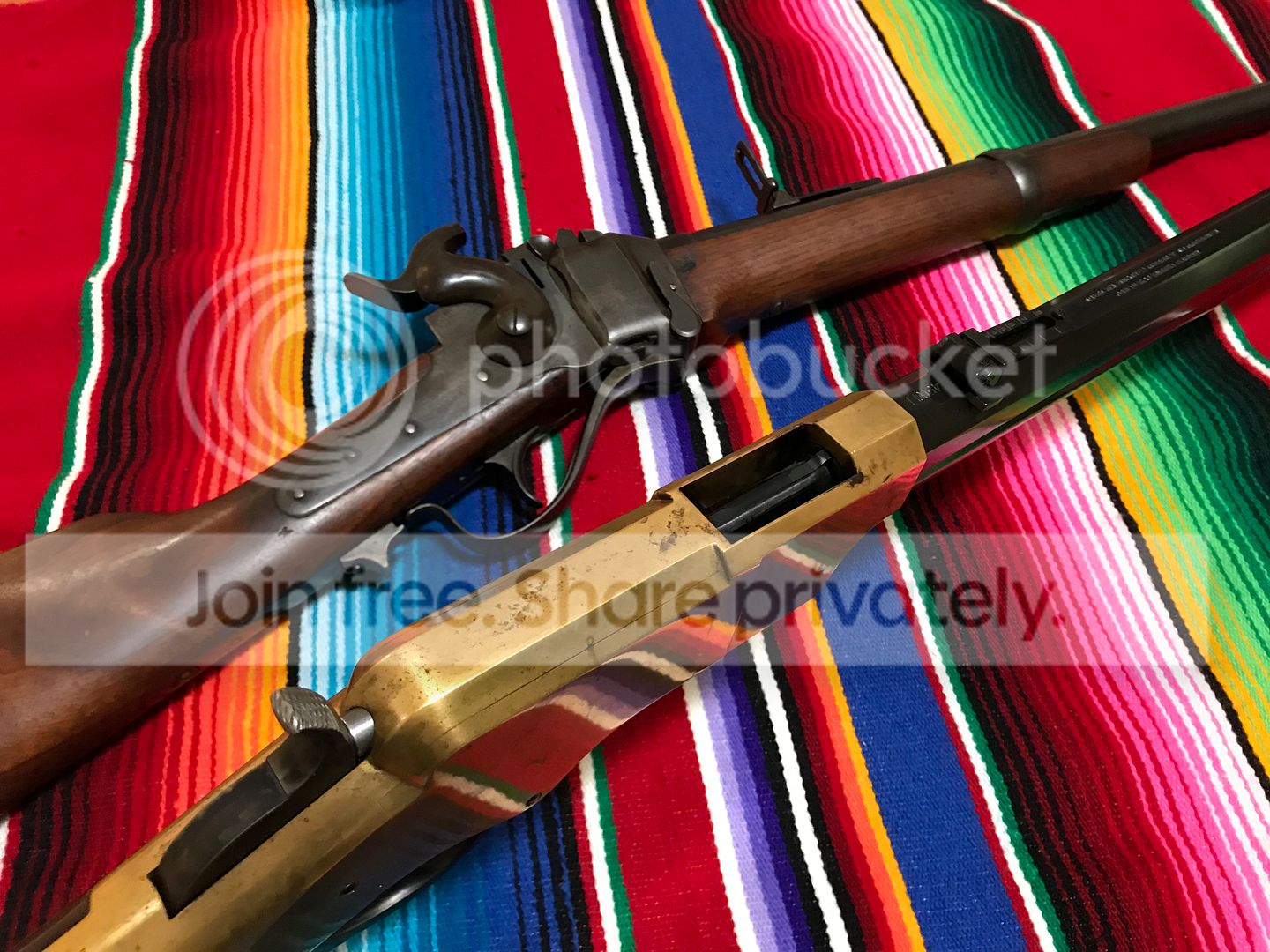
After cleaning with the Uberti 1860 Henry. The black powder loads are slowly turning the shiny Henry into a deep, mustard yellow. Note quite like the originals of course, but I sure like it more then the "fresh out of the box" look.
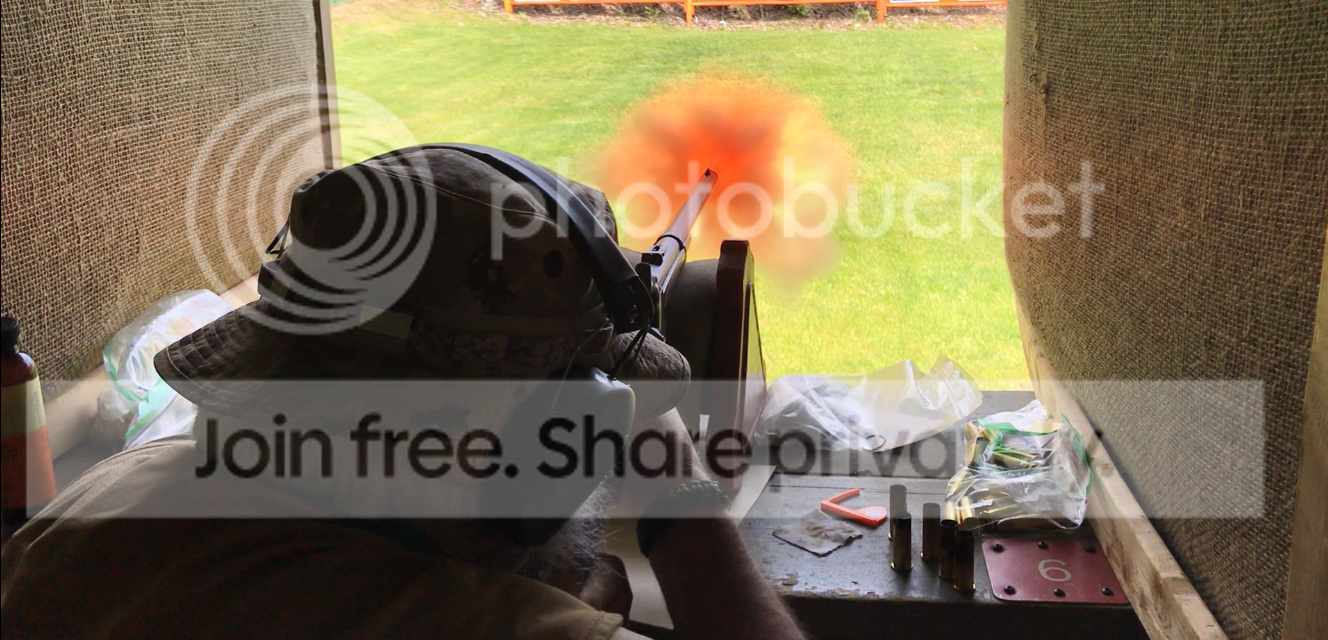
The Uberti 1860 Henry in action with the holy black.

The Pedersoli 1874 Sharps in .45-70. Black Powder of course.
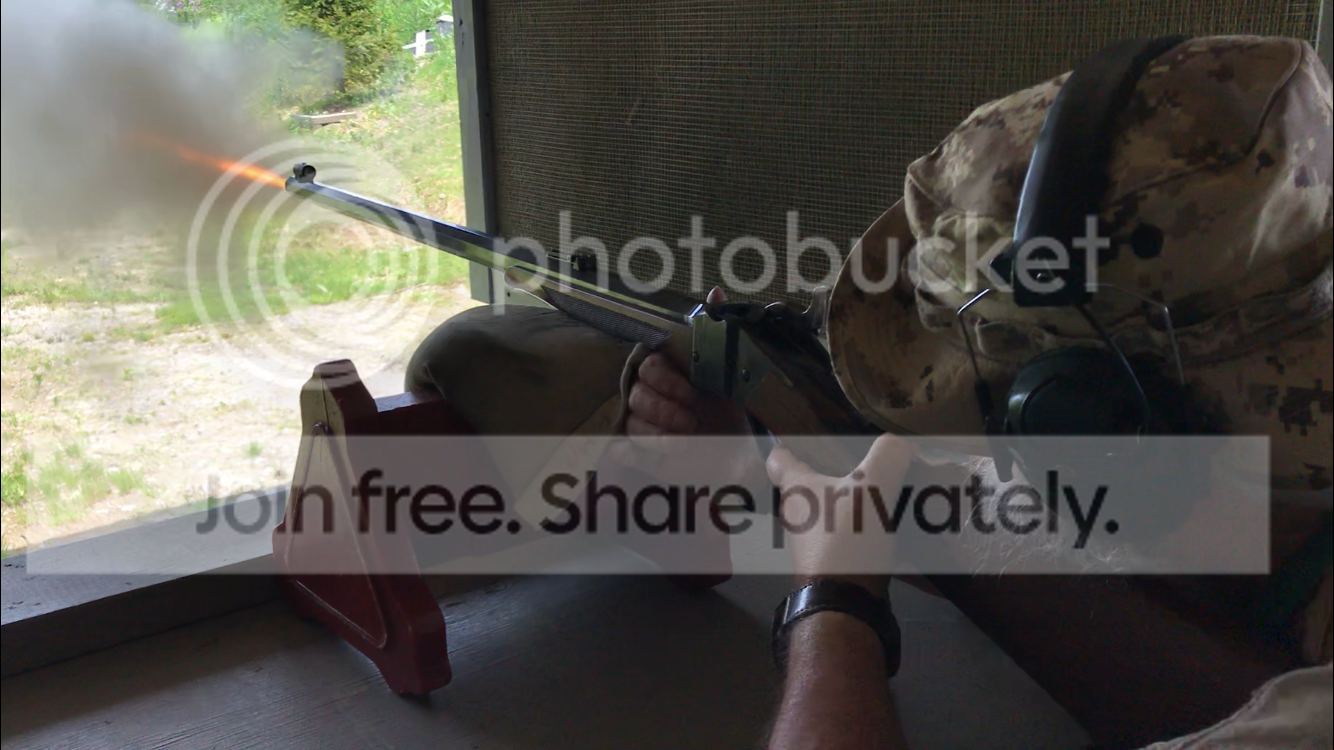
Overall we are very happy to have been able to not only acquire this carbine and appreciate its history, but to be able to safely shoot it and bring history to life. Rest assured that this carbine will NOT see much further "use" from us as we do absolutely appreciate its history and age, and will be sticking to really shooting the Pedersoli for our "Sharps fix". Well, that and the Shiloh in .45-120 that's on its way...
Thanks for reading! Anyone have an Allin conversion rifle in .50-70 for sale?
I am not an expert on the Civil War, the Indian Wars, Sharps Rifles/Carbines or black powder by any means, so please take this post with a grain of salt, and absolutely post any corrections or further information. Although I'm not a "new" black powder shooter, I have a lot to learn and value any and all input and suggestions
A while back I was fortunate enough to pick up an original 1863 "New Model" Sharps Carbine from a great member here. This particular carbine was produced in early-mid 1864 from my quick research, and started life as a .52 calibre, paper cartridge, breech loading percussion carbine. From my understanding, these carbines saw extensive use during the US Civil War, and this carbine would have likely been issued in some form to a Union Cavalry Trooper.
Following the US Civil War, the US government found themselves with stockpiles of now outdated muzzle loaders and percussion weapons in numerous calibres and configurations, and in an attempt to standardize military armament, began the process of converting both infantry rifles (primarily the 1861/1863 Springfield muzzleloading muskets into 1866 Allin "Trapdoor" breech loading rifles) and cavalry carbines to the newly adopted .50-70 Government metallic cartridge. Early specifications called for a 50 calibre bullet (.515 dia) weighing 450 grains over 70 grains of black powder, often being referred to as the .50-70-450. It is this load that I have attempted to replicate in my reloads for this carbine using starline brass, 2FG powder and "jet bullets" .515 diameter 450gr projectiles. I have also read mixed reports of period "carbine" loads being made and implemented in the US Ordnance system using approximately 45-55gr of black powder, though information seems to be limited.
In 1867, Ordnance Department contracted with the Sharps Rifle Company for conversion of over 31,000 Sharps percussion carbines to the .50-70 breech loading configuration. These carbines were issued to the regular Cavalry regiments on the western frontier and remained in service until they were replaced by the Springfield Model 1873 Carbine (Per RIA). Early conversion pieces reportedly maintained the original 6 groove barrels without a liner and were considered "good enough for government work", though most found today will have a 3 groove liner installed which was intended to tighten up the bore and improve accuracy. This particular rifle had a "new" breech block installed and the barrel was lined with a 3 groove barrel as part of the refurbishment/conversion, which was fairly typical of this process. From my understanding, these early conversion Sharps Carbines saw extensive use on the "frontier" in the "Indian Wars" of the late 1860s and 1870s, and were generally quite well regarded by both the troopers that carried them and any civilians that could get their hands on one, as the .50-70 government made a great buffalo and general hunting cartridge. These carbines were slowly phased out of front line service and saw further "service" on the frontier as hunting and/or self defence carbines and rifles with the adoption and issuing of the "new" .45-70 1873 Trapdoor carbines and rifles.
My carbine
After extensive reading, careful preparation, safety inspections and pre-firing disassembly and maintenance, my dad and I decided to work up a limited amount of ammunition and give the carbine a few shots. I should mention that the gentleman I purchased the carbine from had fired it within the past few years with no issues, so we were quite eager to try it ourselves in a safe, controlled setting using carefully worked up loads. We started with a simple empty casing with a primer and no charge/bullet to ensure functionality, followed by a "blank" round of about 20gr of 2FG powder compressed with a wad and no bullet to a "soft" load of 55gr of 2FG compressed with a wad and loaded with the bullet. After every "round" the carbine and brass was carefully checked for any signs of blowback, fatigue, stress, expansion/bulging etc... We finished with 2x rounds of "full" powder loads using 65gr of 2FG powder, though given that we didn't want to over-stress such a prized piece of history, we decided to switch to the modern Pedersoli and Henry for the rest of our black powder range session.
This carbine has a very, very smooth action and exceptionally tight lock up. I would argue that the action is far smoother then our 1874 Pedersoli rifle (an excellent rifle in its own right). The hammer has a very strong, positive half and full #### position, and the hammer drops with an anvil of authority. The sights are very fine and arguably terrible for combat by today standards, though for 1863 they were fairly typical. The trigger is absolutely terrible and is on par with an 1895 Nagant on double action for those of you that are fortunate enough to own one, though for 155 years old, I can live with that
. The bore is in VG+ condition with quite a bit of shine and defined, sharp grooves. The chamber has light, consistent pitting but is quite serviceable. The wood is in beautiful shape and the metal is complete and in VG shape, with bluing remaining on parts of the action and barrel, though in natural light the brown patina is quite evident. The stampings are mostly all there, with the left side of the action's patent marks being half-faded. The entire carbine is covered in single letter Ordnance Department proof marks. Once thing that is interesting is the "fire blue" screws in the action, although a little faded, are in nice shape as well. The left side of the barrel has more finish wear then the right, which is interesting in its own right - saddle wear? leaning up against a hunting cabin after a rainy hunt for far too long? I guess we will never know for sure.
I have read that these carbines tend to shoot high, and since testing was done at 25m only we began by placing a large sheet of paper behind the target stand to "catch" fliers. I am happy to report that the carbine shot quite well considering its age, my first time loading/firing .50-70 and the terrible trigger. I am sure that my first round had a flinch as well...
On the bench, ready to go...
55gr load
The results with the "light" 55gr load at 25m. I'm quite content with this considering.
We did notice that the 65gr load shot MUCH closer to the point of aim and gave quite a wallop for such a lightweight gun. That being said, the .50-70 is surprisingly soft on the shoulder, much less punishing then a 12 gauge with slugs for example. I think this loading would be far more accurate then the "light" load, though I guess I can't really back that statement up much.
The results with the "full" 65gr load. The top round is my single, standing shot. The centre/low round is my dad with his standing shot. As much as I wanted to sit and "group" with the full power loads, we felt this old girl deserved a rest. I feel this carbine is more than accurate for a 155 year old piece of living history.
After cleaning with the Uberti 1860 Henry. The black powder loads are slowly turning the shiny Henry into a deep, mustard yellow. Note quite like the originals of course, but I sure like it more then the "fresh out of the box" look.
The Uberti 1860 Henry in action with the holy black.
The Pedersoli 1874 Sharps in .45-70. Black Powder of course.
Overall we are very happy to have been able to not only acquire this carbine and appreciate its history, but to be able to safely shoot it and bring history to life. Rest assured that this carbine will NOT see much further "use" from us as we do absolutely appreciate its history and age, and will be sticking to really shooting the Pedersoli for our "Sharps fix". Well, that and the Shiloh in .45-120 that's on its way...
Thanks for reading! Anyone have an Allin conversion rifle in .50-70 for sale?
Last edited:
























