I purchased one of these used a couple years ago. I cleaned it up and it has been in the safe since. Finally I have it out and intend to try it. The first thing I notice is the extremely heavy trigger pull. I have looked at the lock and lubricated it but still the trigger pull is gruesome. Is there anyone who can advise a solution or even someone who could lighten it up some. I really do not understand the mechanics fully enough to make any adjustments myself. Thanks, Dave













































You are using an out of date browser. It may not display this or other websites correctly.
You should upgrade or use an alternative browser.
You should upgrade or use an alternative browser.
Parker Hale Musketoon
- Thread starter Dantforth
- Start date
There are several things that determine the weight of pull. Some can be modified and others cannot. The distance between the pivot point on the trigger and the point of contact with the sear has a major effect and cannot reasonably be altered.
The following are also determining factors that can be adjusted:
Does the trigger move smoothly when the lock is removed? If not, find and correct whatever is causing the problem.
The smoothness of the top of the trigger bar and the bottom of the sear bar can have an effect on how smooth the pull is. If the trigger pull feels like dragging two files together (exaggeration here) stoning those areas might improve the situation if they are somewhat rough.
The angles of the sear tip and full #### notch in the tumbler have a major effect on trigger pull - and safety. Too much one way leads to a hard trigger pull and too much the other way leads to safety issues. The mating surfaces need to be smooth and the angles need to be right. This is a job for someone who knows what they are doing.
The depth of the full #### notch in the tumbler has an effect on length of pull and creep, but I doubt it would have a significant effect on weight. The notch needs to be deep enough to fully engage the sear with a reasonable safety factor. How's that for wishy-washy? If the sear sits way down in a deep notch, the trigger needs to drag it up across the notch to release - which is often felt as creep. There are several ways to address an overly deep notch but, again, this is a job for someone who knows what they are doing.
The strength of the sear spring has a major effect on weight of trigger pull and could well be your problem. In my opinion, some locks, and particularly military locks, have overly heavy sear springs. Trigger pull would likely be reduced by installing a lighter sear spring or stoning the one in the lock. Out of an abundance of caution, I don't think I would mess with the sear spring in the Parker Hale lock. I would likely obtain a replacement and work on it - if needed. It is important that the sear spring remain strong enough to reliably hold the sear in the full #### notch.
Just my two cents worth. Hope it helps.
Forgot to mention - The sear could also be binding. Does it move freely with the sear spring removed? If not, find and correct.
Also, make sure the sear is not contacting wood. Put some transfer color on the sear, install the lock, go through cocking and releasing, disassemble and look for transfer color on wood.
The following are also determining factors that can be adjusted:
Does the trigger move smoothly when the lock is removed? If not, find and correct whatever is causing the problem.
The smoothness of the top of the trigger bar and the bottom of the sear bar can have an effect on how smooth the pull is. If the trigger pull feels like dragging two files together (exaggeration here) stoning those areas might improve the situation if they are somewhat rough.
The angles of the sear tip and full #### notch in the tumbler have a major effect on trigger pull - and safety. Too much one way leads to a hard trigger pull and too much the other way leads to safety issues. The mating surfaces need to be smooth and the angles need to be right. This is a job for someone who knows what they are doing.
The depth of the full #### notch in the tumbler has an effect on length of pull and creep, but I doubt it would have a significant effect on weight. The notch needs to be deep enough to fully engage the sear with a reasonable safety factor. How's that for wishy-washy? If the sear sits way down in a deep notch, the trigger needs to drag it up across the notch to release - which is often felt as creep. There are several ways to address an overly deep notch but, again, this is a job for someone who knows what they are doing.
The strength of the sear spring has a major effect on weight of trigger pull and could well be your problem. In my opinion, some locks, and particularly military locks, have overly heavy sear springs. Trigger pull would likely be reduced by installing a lighter sear spring or stoning the one in the lock. Out of an abundance of caution, I don't think I would mess with the sear spring in the Parker Hale lock. I would likely obtain a replacement and work on it - if needed. It is important that the sear spring remain strong enough to reliably hold the sear in the full #### notch.
Just my two cents worth. Hope it helps.
Forgot to mention - The sear could also be binding. Does it move freely with the sear spring removed? If not, find and correct.
Also, make sure the sear is not contacting wood. Put some transfer color on the sear, install the lock, go through cocking and releasing, disassemble and look for transfer color on wood.
Last edited:
Hello Richard. I do not need parts but really need someone who is able to work on the lock without screwing it up. It is manageable to fire but a very heavy trigger pull. I would guess well above ten pounds. This trigger makes me want to close my eyes and jerk it! Really I am not targeting with it nor hunting so it probably does not matter that much. Others are saying to lube it and leave it alone. Dave
Cleaning and polishing would be the starting point.
I mentioned the parts possibility in case you wanted to start altering pieces. Good to have extras, in case something goes wrong. Or alter the replacement part, saving the original.
If a full #### notch is made shallower - which will lighten the pull, there is a risk of the sear catching the half #### notch.
You might try this - clean the tumbler really well, and epoxy a shim to the tumbler to reduce the depth of the full #### notch. This might make quite a difference. Just make sure the hammer is held positively at full ####, won't slip.
I mentioned the parts possibility in case you wanted to start altering pieces. Good to have extras, in case something goes wrong. Or alter the replacement part, saving the original.
If a full #### notch is made shallower - which will lighten the pull, there is a risk of the sear catching the half #### notch.
You might try this - clean the tumbler really well, and epoxy a shim to the tumbler to reduce the depth of the full #### notch. This might make quite a difference. Just make sure the hammer is held positively at full ####, won't slip.
####, I am not good at this type of thing. Also, we are just leaving on the 29th for two months in California. When we are back I will contact you again to see if I sent it to you if you might try it? Thanks for the advise.


Remember that this is NOT a target rifle - a trigger of 8 - 10# is not unusual.
I have one of the reproduction PHs .58 Musketoons and don't find the trigger much different than my Mil-Surp rifles.
I like a stiff trigger, especially hunting in the winter and wearing gloves

I ve got one the early manufactured PH musketoons complete with the sergeants tool in unfired condition.I bought a Pritchett bullet mold for it last year but do to other demands haven t had time to play with it.I also lucked out and found a complete spare lock that was never used at a gun show a few years back.Hopefully one of these days I ll get sometime to play with it.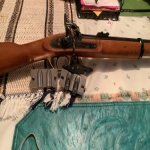
Attachments

I ve got one the early manufactured PH musketoons complete with the sergeants tool in unfired condition.I bought a Pritchett bullet mold for it last year but do to other demands haven t had time to play with it.I also lucked out and found a complete spare lock that was never used at a gun show a few years back.Hopefully one of these days I ll get sometime to play with it.View attachment 642340
That's a beauty!






















