Partition Protected Point OAL

Ubermeier

CGN Regular
Rating - 100%
17   0   0
Location
Yukon Territory
Those of you who use 180 gr Nosler Partition Protected Points in .300 Win Mag, what is your OAL?

My magazine only allows for 3.340”, and I have noticed deformed tips under recoil on rounds I have loaded to that length. This is where the Protected Point Partitions come into play, and also my query on OAL.

Nosler load data lists their OAL as tested for the 180 gr PPT to be 3.210”.

I noticed if I left my die as set for 180 gr BTSP at 3.340”, the 180 gr Partition PPTs would seat to near 3.210” OAL. This seems like a lot of jump for the bullet to engage the rifling. I tested these and they shot alright, but not the accuracy I have with the BTSPs at 3.340” (when chambered one at a time to avoid deformed tips).

I loaded up some PPTs at 3.330”. I will test these tomorrow, but wanted to hear what those who have loaded the PPTs in .300 Win Mag have found worked best for OAL. Thanks.
 
Last edited:
Measuring the overall length of cartridge, from cartridge base to bullet tip, tells you nothing about "bullet jump". The bullet engages the rifling much closer to the bullet's "ogive", not at the tip, and that is the measurement to use when trying to compare one bullet to another. Many reloading manuals show how to verify when your bullet is touching the lands - then you back off your desired amount from there.
 
Stumblejumper: Yes, I realize all rifles are different. Yes, they chamber in my rifle and feed from the magazine.

Potashminer: My magazine limits me to 3.340” I have yet to reach the lands with a bullet that fits in the magazine. Don’t have a comparator yet, so ogive measuring isn’t an option, though I wish it was.

I am looking for information on what others have found using the Nosler Partition Protected Point, not a broad overview of the do’s and don’ts of reloading. Thanks.
 
Last edited:

Partitions work well in my 30-06 and 270s set 80 thou from the lands. You can find where the ogive meets the lands with out a comparator. Do a search on this site.
 
Stumblejumper: Yes, I realize all rifles are different. Yes, they chamber in my rifle and feed from the magazine.

Potashminer: My magazine limits me to 3.340” I have yet to reach the lands with a bullet that fits in the magazine. Don’t have a comparator yet, so ogive measuring isn’t an option, though I wish it was.

I am looking for information on what others have found using the Nosler Partition Protected Point, not a broad overview of the do’s and don’ts of reloading. Thanks.

You don't need a comparator to measure how far off of the lands you are seating bullets. There are methods that don't require special tooling, other than a caliper.
 
Toddbartell: Yes. Groups loaded from the magazine were grouping 1 1/2”. Chambered individually 3/4” groups. The tips don’t just flatten, the top round in the magazine hits the top edge of the mag, peeling a flap of lead to one side.

Stubblejumper: You have made me come to the answer to my question in a roundabout way, I will find the lands with a BTSP then find the distance to the lands I have with the 3.340” BTSP load. Find the lands with a PPT, then start with the same distance back from the lands as with the BTSP load for a starting point at least. A comperator would have been handy to find this easily.

I realize it all comes down to testing, guess I was tired last night, and figured I’d see what works for others.
 
Last edited:

What works for others is determined by the depth of the throat in their chamber. Each rifle maker has its own dimensions. Then the throat moves forward with erosion, so what others use is of no use to you.

If a round at mag length does not touch the rifling, that is generally the length I would use.

Sounds to me like you need to do some magazine lip tweaking so the round chambers without getting mashed.
 
Ganderite: Thanks, that is what I have done so far with this rifle.

It isn’t the cycling of the round that damages, the rounds I noticed the deformation in I dropped the mag and noticed it after recoil, not cycling it through.
 
Ganderite: Thanks, that is what I have done so far with this rifle.

It isn’t the cycling of the round that damages, the rounds I noticed the deformation in I dropped the mag and noticed it after recoil, not cycling it through.

I thought the plastic tip bullets were supposed to solve that problem......

I had this problem one with lead tip bullets. I clipped off the lead tip with side cutters, and then used a file to trim the lead back to the jacket. This gave the bullet a small flat point that was immune to deformation.

It would also allow the bullet to be seated deeper into the rifling, if desired.
 
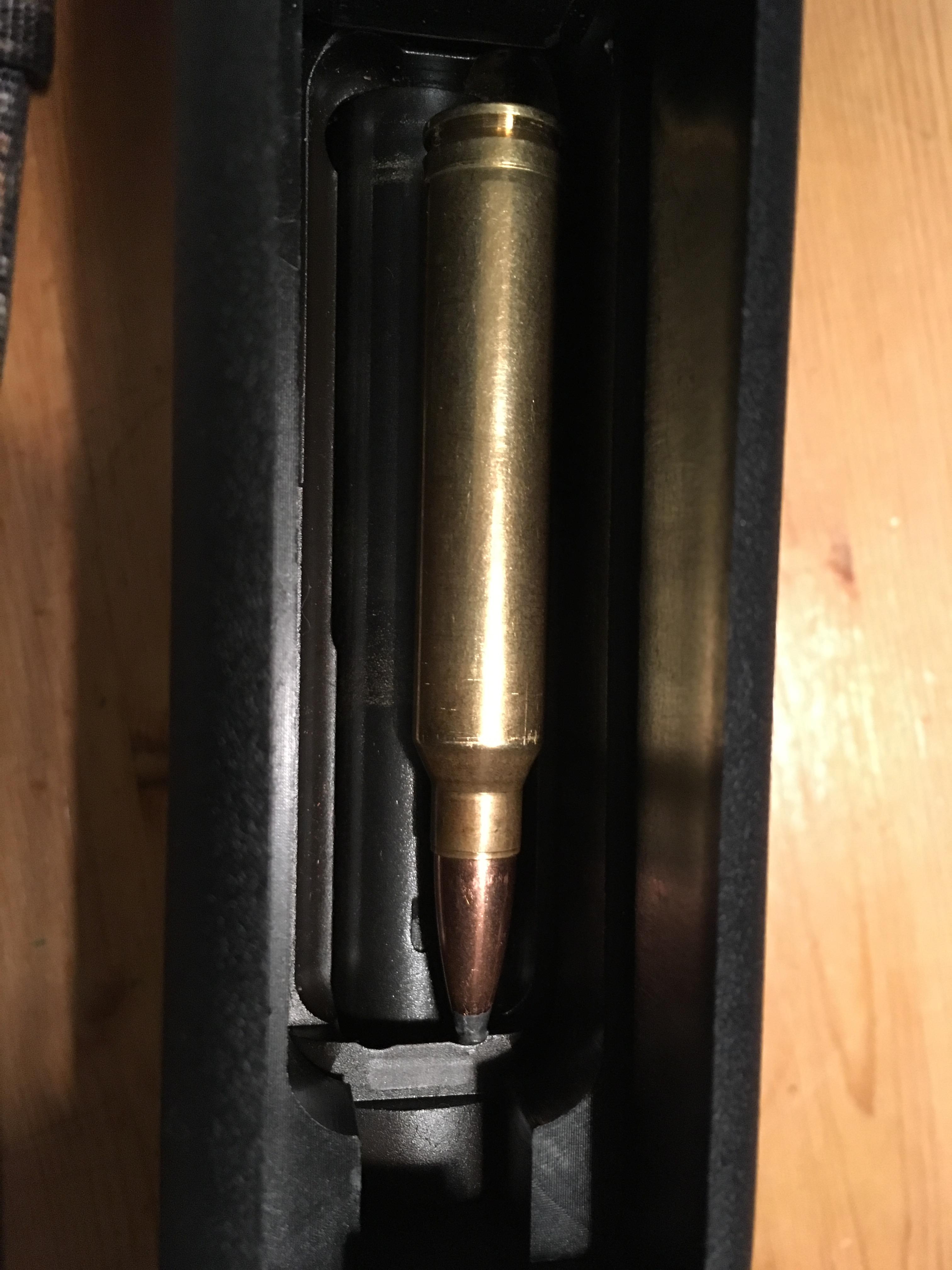
On further inspection it seems the top round in the magazine hits the bottom of the feed ramp under recoil.

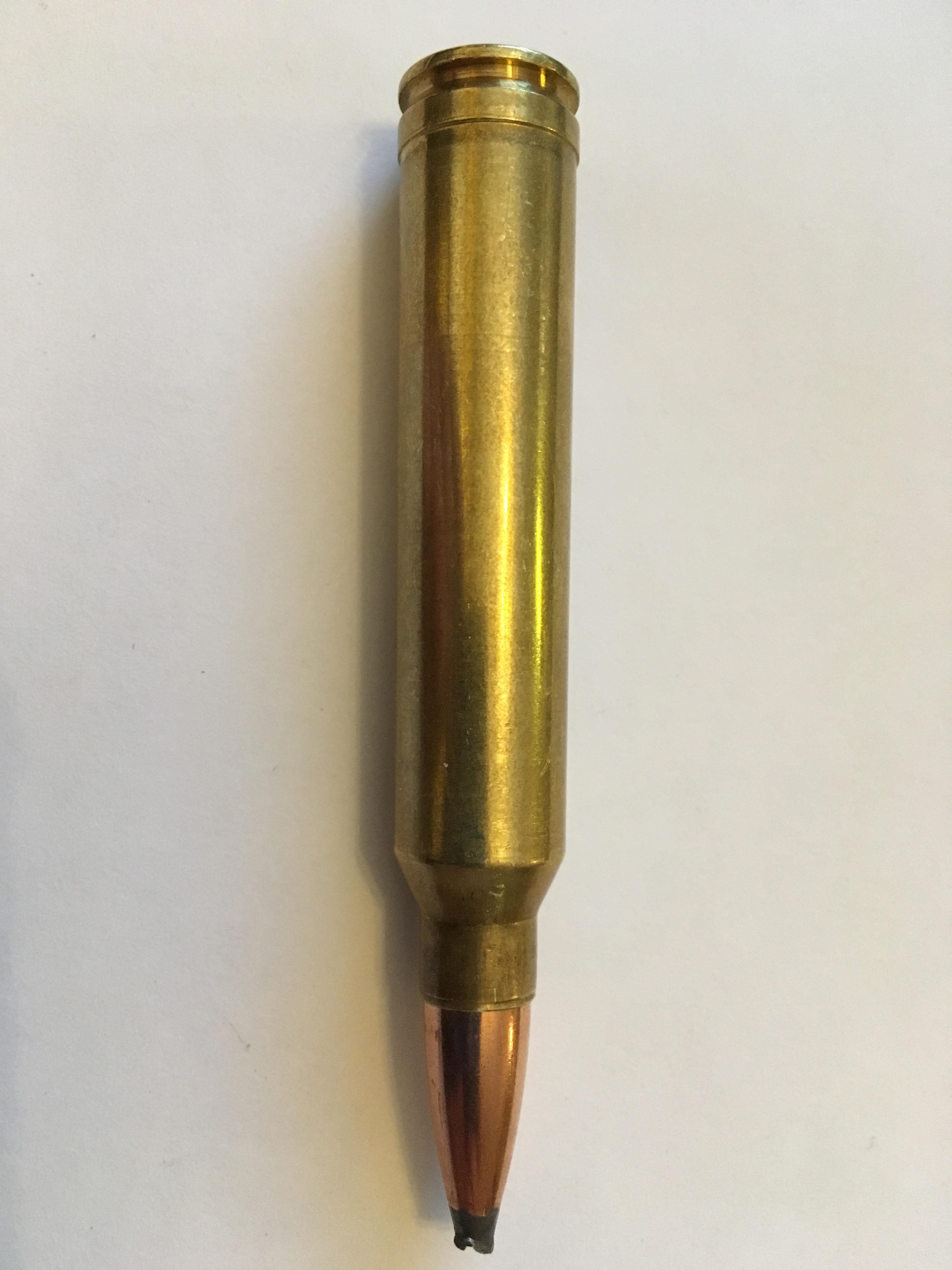
Tip damage:
zJU5LlV.jpg


Contact under recoil:
Un3wqRH.jpg


The Protected Point Partitions may not solve this after all. Enough speculation, I’m going to do some testing while I have shooting light.
 
Just saw your post about plastic tips, haven’t tried them yet, may check out accubonds.

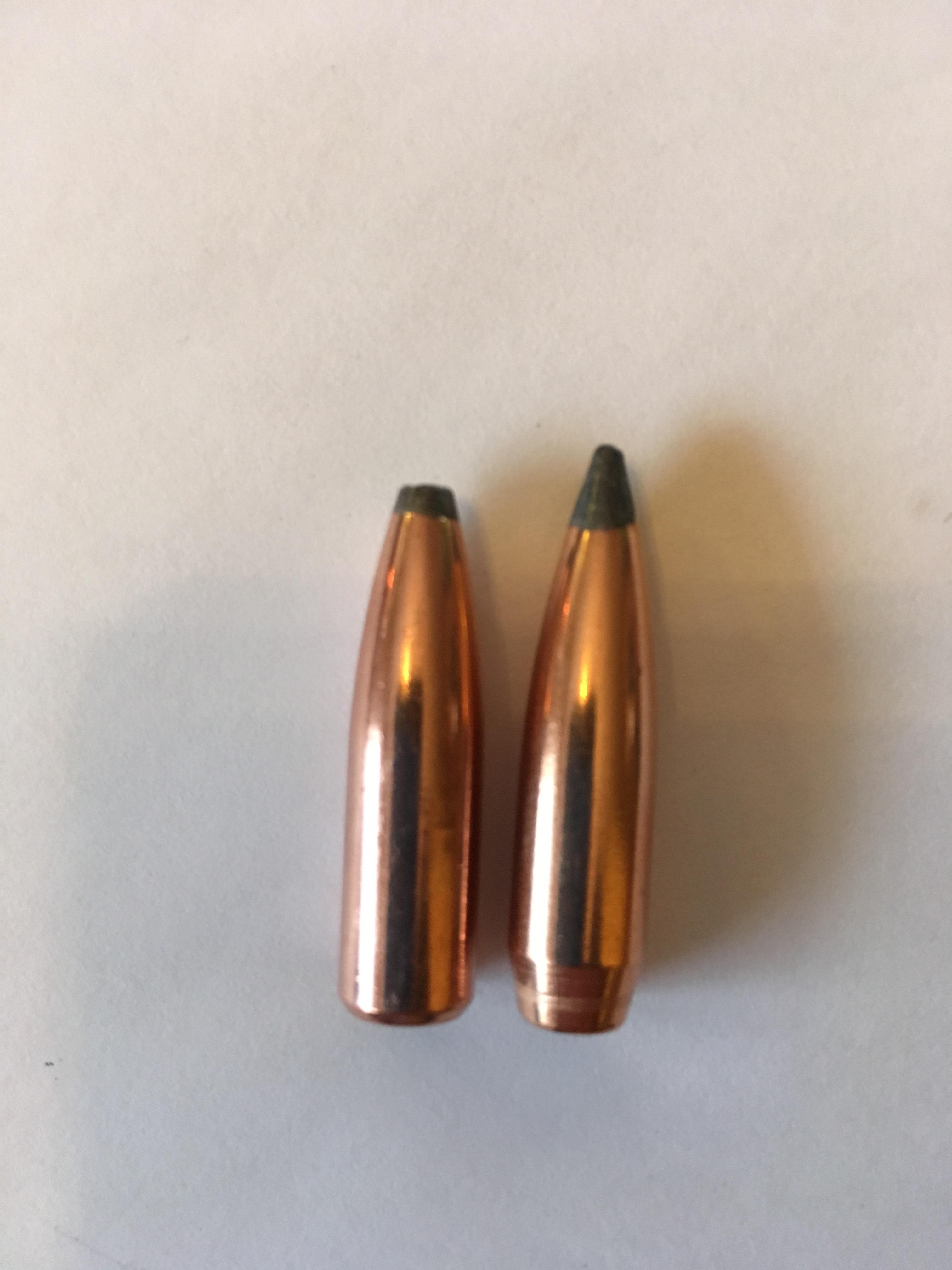
For clarity, here are the two I have, the right is a 180 gr Speer BTSP that has been deforming at 3.340” or max length I can fit in my magazine, but shoots excellent chambered individually. On the left, the 180 gr Nosler Partition Protected Point, which I am in the process of developing as a hunting round.
C8LBHJ4.jpg


The Partition PPT was designed for the .300 win mag to resist tip deformation under recoil. It seems similar to your DIY method of blunting the tip.

My concern is is I push it out to mag length will it deform as well? Are they meant to be set farther back to allow room for them to move in the mag without hitting the forward side under recoil? As I mentioned above Nosler’s load data had the OAL at 3.210” maybe this is the reason.

So I figured I’d ask all you fine gents on CGN and get your opinions. Thanks everyone for contributing so far. I will report back after my range trip.
 
Last edited:

The deformed tips are indeed in part due to the feed ramp design of the rifle. It is a Rem 783. Before anyone else pipes up and tells me that is my problem, I don’t need to hear it, thanks.

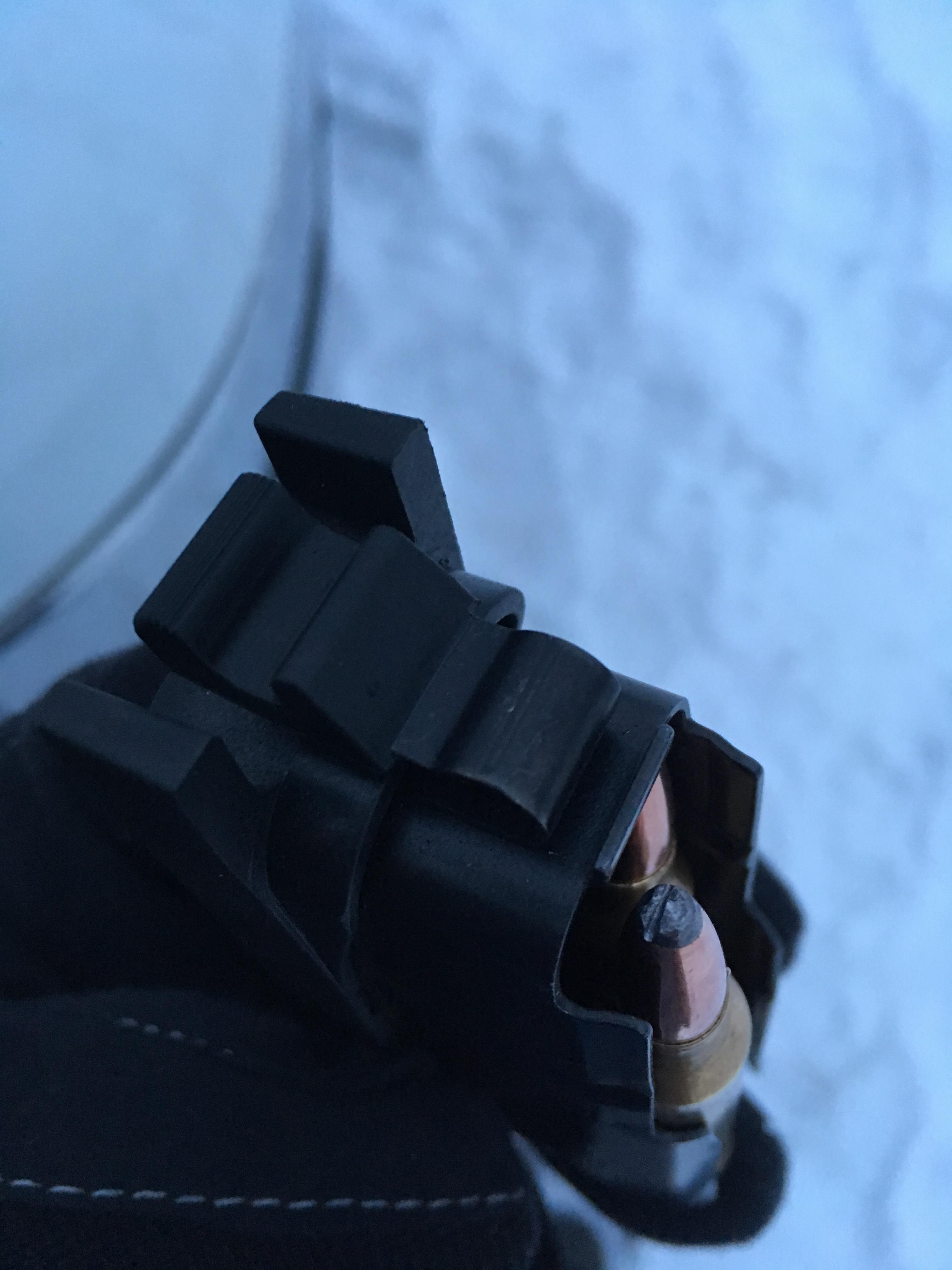
Back to the original question I asked. I found the 180 gr Nosler Partition Protected Point is in contact with the lands in my rifle at 3.445” giving the 3.330” test rounds .115” to the riffling, and the 3.210” (Nosler’s OAL) test rounds .235”. The rounds loaded at 3.330” were a decent group 1.345”, the ones with more jump grouped slightly over 2”. Both groups were fed from the mag. I stopped and noted the tips of the bullets after firing as the barrel cooled. Both lengths looked similar, still taking a beating:
tqFnD76.jpg

If seems running them longer is the way to go in my rifle. More work to be done here, but a good place to start. The better group:
PsaVL7v.jpg


The beauty sunset I was shooting under at 3:30 this afternoon:
gKXRooR.jpg
 
Last edited:

The deformed tips are indeed in part due to the feed ramp design of the rifle..

Any bullet you use in that rifle will probably look just as beat up. A Protected Point Partition will jamb up just as bad as that soft point in your pictures. I would send those pictures to Remington and see what they have to say.
 
Any bullet you use in that rifle will probably look just as beat up. A Protected Point Partition will jamb up just as bad as that soft point in your pictures. I would send those pictures to Remington and see what they have to say.

Testing shows the same result with the PPTs, see the post above yours. So it is likely to happen with any lead tip as you say.

I doubt Remington will do anything about it. I suspect this only becomes an issue with these rifles in the .300 win mag chambering due to the heavier recoil. I wonder how many guys with this rifle in .300WM care about accuracy enough to check tips after recoil? Lol
 
Back
Top Bottom