Peabody from the 1870's - being shot by descendants of the same family

tacfoley

CGN Ultra frequent flyer
Rating - 100%
1   0   0
Enjoy watching this unusual occasion with me -

From Mars_attacks over on sigforum.com, with thanks....he writes -

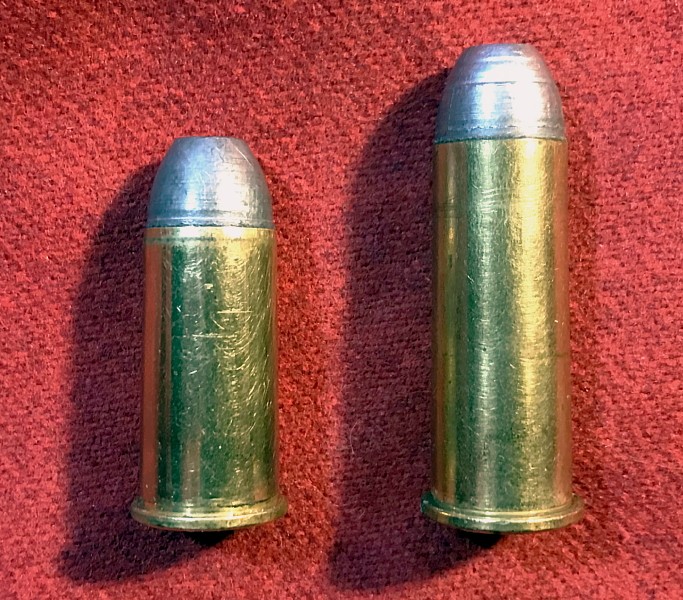
This one is chambered in .43 Spanish, the brass and casting mold had to come from Belgium, so 100 cases was $500.

It's been in my family forever and has always just hung up in the attic until our older brother retired, got bored and set out to see if he could make it shoot again.

This old rifle hasn't been shot in over 100 years since the Franco-Prussian war.

He is going to take it to Oklahoma and kill an Elk with it now.

https://www.youtube.com/watch?v=LiXMBi23lLM&feature=emb_title

And another from yet another friend off sigforum, Screaming_Cockatoo...

https://www.youtube.com/watch?reload=9&v=B5T-trfm6x0&feature=emb_title
 
Last edited:
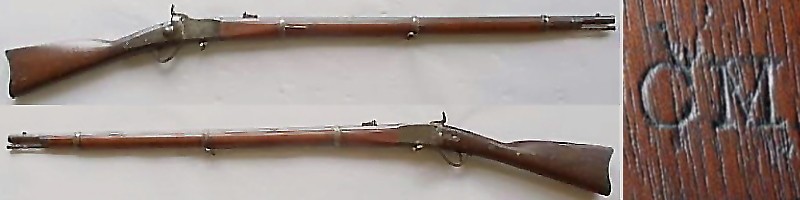
FWIW, I have one of the Canadian-contract Peabody rifles (1866/67) chambered in .50-60 Peabody rimfire ... with the "Canada Militia" property mark stamped on the butt -

qHfKM3.jpg


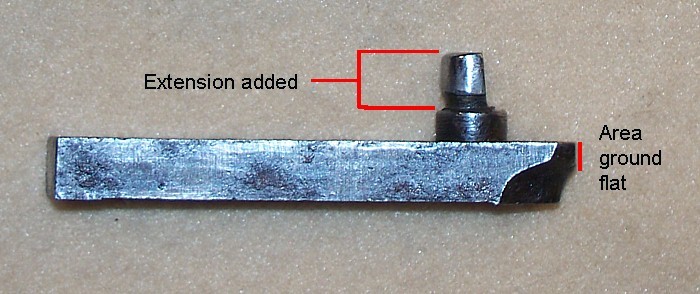
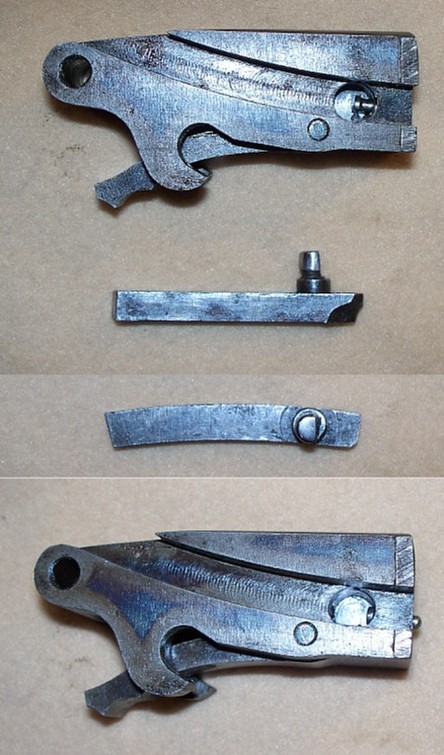
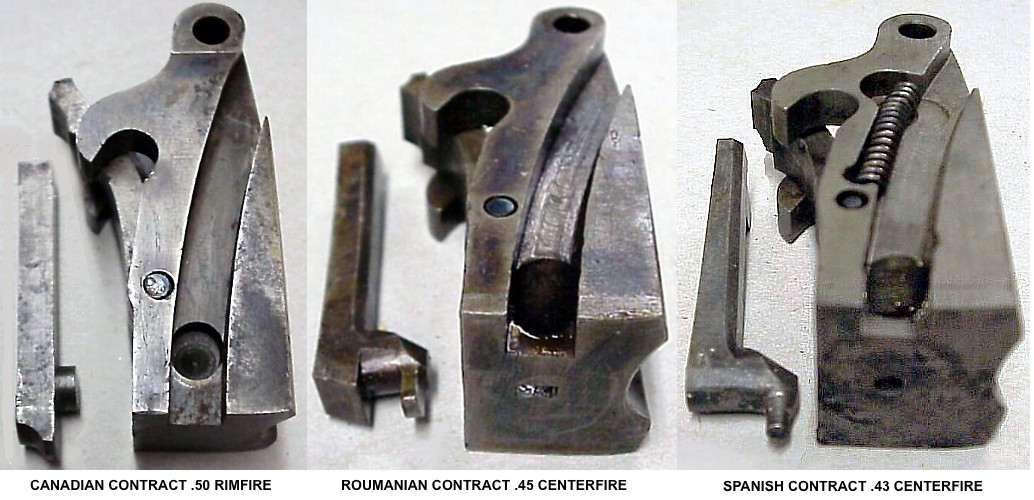
After I got the rifle I was lucky enough to acquire one of the "new, old stock" Peabody breechblocks, with some strikers, when Dixie Gun Works in Tennessee still had them, and a gunsmith friend converted it to a centerfire block for me.

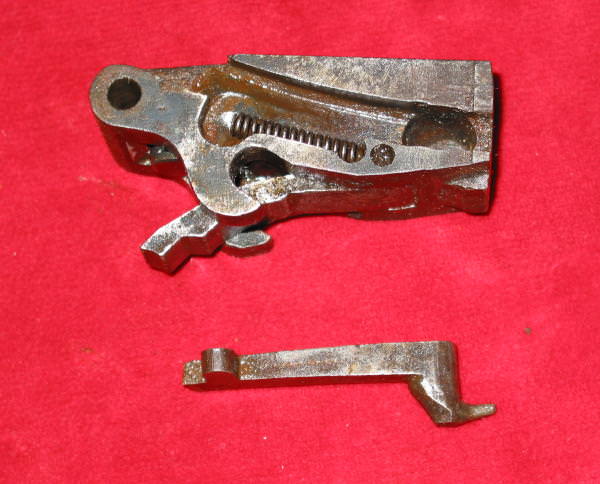
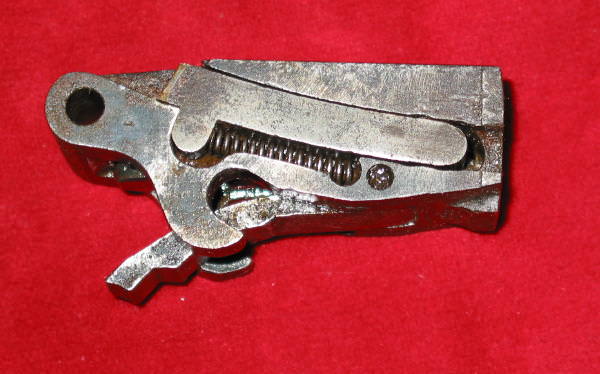
The lug on the inside flat of the striker (which limits the forward and back movement of the striker in its channel on the side of the breechblock, confined as it is within the recess machined in the side of the breechblock) is altered with an extension which reaches into the centre of the breechblock, as well as having the tip which would impact the rim of a cartridge ground off -

s57cHZ.jpg


The block is altered by deepening and enlarging the recess on the side of the block to make a chamber in which the extended lug can move back and forth, and a firing pin hole is drilled in the centre of the block face, occupied by a simple floating firing pin. Some conversions like this that I have seen used a coil spring on the shaft of the firing pin to make it retract, but mine simply floats and its rounded end insures that it safely rides back out of the way as the block is raised after a round is chambered.

ecbrOs.jpg


This conversion seems to perform flawlessly.

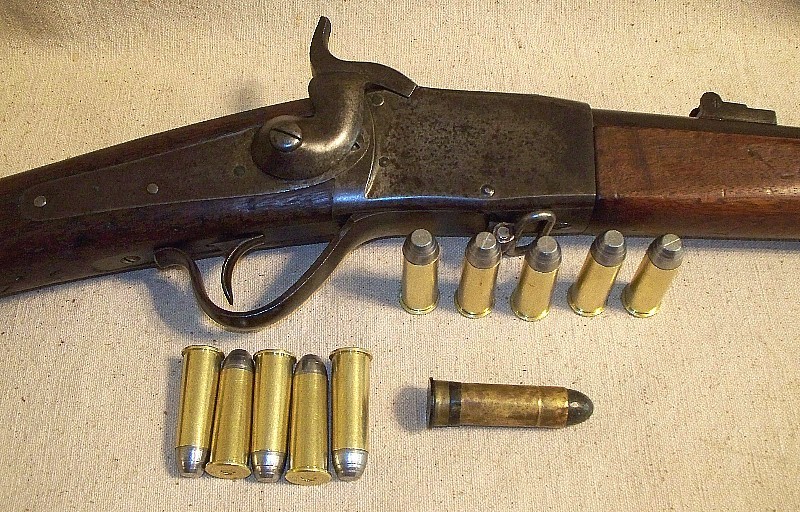
My "centerfire" .50-60 Peabody cartridge cases are shortened .50-70 brass ... here are some of them with the rifle, and a single original .577 Snider Boxer cartridge for comparison -

ZEMGP6.jpg


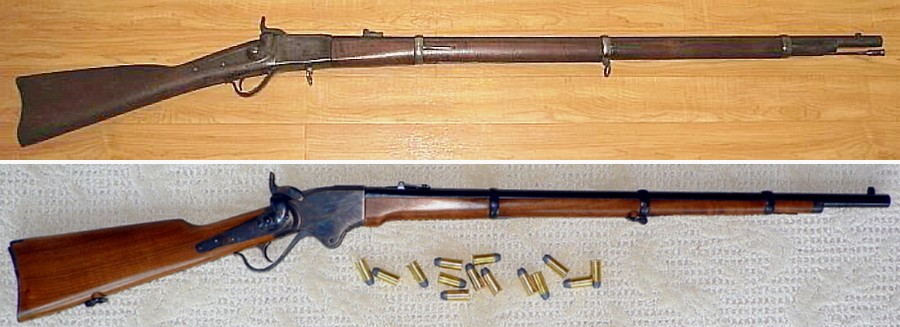
As you may know, in the emergency presented by the Fenian Raids, the United Province of Upper & Lower Canada got quite a few .56-.50 Spencer rifles and carbines, in addition to the 3,000 Peabody rifles. The shorter Spencer cartridge would chamber and fire in the Peabody rifles, but a Peabody cartridge would neither chamber in a Spencer nor even feed through the action. So, in an unusual display of common sense, the Militia Deparment purchased only .56-.50 Spencer cartridges for use in either type of arm, to avoid the significant logistical confusion which might otherwise have ensued! I also have a .56-50 Spencer rifle (reproduction, centerfire), but have never gotten around to seeing how the shorter Spencer rounds would actually perform in the Peabody ... must do that one of these days ...

KWMiUy.jpg


zwDAGJ.jpg
 
If the Covid "The Sky is Falling" Situation is not sufficiently resolved by June to permit me to attend the Grand Army of the Frontier Muster in Nebraska this year, then I will undoubtedly be shooting with Rob again on the last weekend in June at the Alberta British Militaria Forum Shoot, as I did last year when I couldn't get across the border. So maybe we could do something then ...

As a matter of fact, however, there is some footage of me shooting and talking about this Spencer rifle (... which is merely a modern reproduction, unfortunately ...) and also Rob shooting it at the 2020 Alberta Shoot - from about 11:15 through to about 15:25 of this video:

 
My compliments to the videographer and shoot participants, very well done !!

I was thinking through the Canadian section that it would be nice to have the odd cannon involvement throughout the day and there it was in the US portion...that Cohorn filled the bill.
 
I recommend that everybody with an interest in Victorian military firearms, no matter in which direction they were aimed*, watch this wonderfully evocative fun shoot.

*The Boer rifle may have aimed at Canadians, Australians or British. My own carbine is just three digits different from the example displayed by Ian McCollum in his 'Forgotten Weapons' series - 'Mausers of the Veldt'. It was was captured after the skirmish at Korannafontein Farm, where the Australians found out the hard way that 'those scruffy-looking guys over there' were no push-over.
 
the photos below are from a Peabody that appears to have been made centerfire at the factory. As found the gun was in 450-577 possibly as a sporting rifle for a British officer. The counter to that is that the sporterized fore stock appears to have originally been a full length military style.

cheers mooncoon

0KyxUHG.jpg


QhXzFFj.jpg
 
Providence Tool did indeed make centerfire Peabody rifles ... in fact, a lot more of their military contract rifles were centerfire than rimfire. Only about 5,000 of the Canadian model were made (of which Cnada accepted only 3,000) and about 15,000 Swiss rifles in .41 rimfire. Compare that with 25,000 Roumanian contract rifles (.45 Roumanain centerfire) and about 50,000 Spanish/Mexican/French contract rifles (.43 Spanish centerfire).

ojsTOw.jpg


Smaller contracts included 2,000 rifles for the Connecticut Militia (.45-70 centerfire) and not quite 3,000 for the Massachusetts Militia (.43 Spanich centerfire, later converted/rebarreled to .45-70, if I recall correctly.)
 
Back
Top Bottom