












































You are using an out of date browser. It may not display this or other websites correctly.
You should upgrade or use an alternative browser.
You should upgrade or use an alternative browser.
Picked up a Project at a recent Auction...
- Thread starter Meroh
- Start date

If the bore is not heavily pitted, badly dented or bent, it should be repairable. Everything else is repairable and the bore can be honed. Have brought a few fowlers back to shooting condition over the last couple of years. Fun and rewarding projects. English. Liege, Maker's name?
I agree, I have a lock, butt plate, trigger, Ramrod... I also have a plain chunk of black walnut plank. If I can save the barrel, great, if not, the condition of the other parts will help me determine wall hanger vs, rebuild with a new barrel and stock.If the bore is not heavily pitted, badly dented or bent, it should be repairable. Everything else is repairable and the bore can be honed. Have brought a few fowlers back to shooting condition over the last couple of years. Fun and rewarding projects. English. Liege, Maker's name?
Regarding make, it was sold as "unknown". Here are some more pictures from the auction listing; I don't know much about Fouling Pieces; maybe the photos might shed a bit of light:




Pretty sure it is British. Once the barrel is out, there should be proof marks.
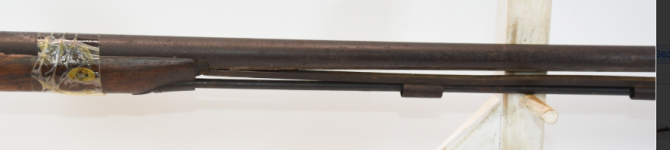
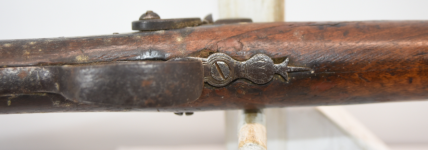
Looks as if the rib is too short - broken in addition to being detached. Restore it to full length before reattaching it to the barrel. Instead of soldering it, I'd be inclined to clean the contact surfaces and use Loctite Black Max or similar modern adhesive. Going to need a forend cap too.
The tape suggests that there is a problem with the underlug and cross bolt.
Looks as if it was rode hard and put away wet, but also looks as if it was a decent quality working gun when made. If the bore cleans up OK, it might be a shooter.
Looks as if the rib is too short - broken in addition to being detached. Restore it to full length before reattaching it to the barrel. Instead of soldering it, I'd be inclined to clean the contact surfaces and use Loctite Black Max or similar modern adhesive. Going to need a forend cap too.
The tape suggests that there is a problem with the underlug and cross bolt.
Looks as if it was rode hard and put away wet, but also looks as if it was a decent quality working gun when made. If the bore cleans up OK, it might be a shooter.
I agree, likely British and probably late 19th century. The rib appears to be bent and running off to the left side of the stock, so possibly not too short. Proof marks should reveal origin. Any name or location on lock face or top of barrel?
tiriaq,
Do you have hands on experience with ribs reattached using modern adhesives such as high quality epoxy? Interested in how they stood up to use. My experience was not positive and have returned to resoldering. NOT a job I enjoy
tiriaq,
Do you have hands on experience with ribs reattached using modern adhesives such as high quality epoxy? Interested in how they stood up to use. My experience was not positive and have returned to resoldering. NOT a job I enjoy
Pretty sure it is British. Once the barrel is out, there should be proof marks.
Looks as if the rib is too short - broken in addition to being detached. Restore it to full length before reattaching it to the barrel. Instead of soldering it, I'd be inclined to clean the contact surfaces and use Loctite Black Max or similar modern adhesive. Going to need a forend cap too.
The tape suggests that there is a problem with the underlug and cross bolt.
Looks as if it was rode hard and put away wet, but also looks as if it was a decent quality working gun when made. If the bore cleans up OK, it might be a shooter.
I agree, likely British and probably late 19th century. The rib appears to be bent and running off to the left side of the stock, so possibly not too short. Proof marks should reveal origin. Any name or location on lock face or top of barrel?
tiriaq,
Do you have hands on experience with ribs reattached using modern adhesives such as high quality epoxy? Interested in how they stood up to use. My experience was not positive and have returned to resoldering. NOT a job I enjoy
Thanks guys; I think the tape might be to prevent the key from falling out. It does appear to be there. I was actually contemplating adhesive bonding. I have a lot of experience with bonding (particularly automotive glass encapsulation.) I have access to various bonding agents, masking tapes and release agents. A rib extension should not be too difficult. I will post some more info as it comes available.Oldest one is a rifle with a bonded rib (flat to flat) that I installed over 40 years ago. No sign of separation. Vented ribs, even barrels into monoblocs are now assembled with bonding agents.
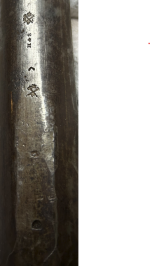
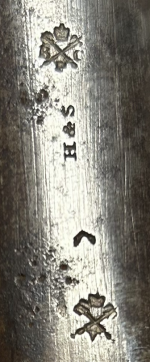
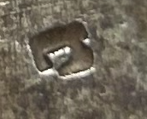

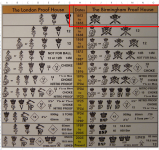
Thanks, that is more than I was able to find! Based on the proof marks, it looks like Birmingham Proof House, 1830-1855. She's an old one.I believe H&S is for Hollis & Sheath.
https://collectionswa.net.au/items/f091ae5f-ed99-4f6e-b66a-e7aa89793a94
This one looks very similar, but in a larger gauge. They date it at 1850-1860, which seems to jive with the proof marks. Seems H & S could also be "Hollis and Sons"; same company but I think single barrels seem to be "and Sons" while doubles seem to be "and Sheath".
Despite the pitting on the exterior of the barrel, the inside is quite smooth, and there seems to be lots of material, even at the muzzle end. It may well shoot again.Thanks, that is more than I was able to find! Based on the proof marks, it looks like Birmingham Proof House, 1830-1855. She's an old one.
View attachment 1065169
https://collectionswa.net.au/items/f091ae5f-ed99-4f6e-b66a-e7aa89793a94
This one looks very similar, but in a larger gauge. They date it at 1850-1860, which seems to jive with the proof marks. Seems H & S could also be "Hollis and Sons"; same company but I think single barrels seem to be "and Sons" while doubles seem to be "and Sheath".
Apologies for the brevity earlier. Here's a bit more about Hollis and Sheath.
It began with the Hollis Brothers, who were first recorded trading from 11 Weaman Row, Birmingham, in 1840 but appear to have started trading a little earlier. The firm later became Isaac Hollis & Sons and claimed establishment from 1814. The brothers were Isaac Hollis (b.1815) and Frederick Hollis (birth date unknown), but Frederick died 20 December 1839. Isaac was recorded in the 1841 census living in Weaman Row. He was a 25-year-old gun and pistol maker, married to Emma (b.1821). After Frederick died, Isaac carried on trading under the name Hollis Brothers until 1845, when he renamed the business Hollis Brothers & Co, which traded until 1848. In 1844, Isaac entered into a short-term partnership with William Tranter at 10 & 11 Weaman Row, presumably to complete a particular contract or supply certain parts. This partnership lasted until 1849. In 1848, Isaac took in Isaac Brentnall Sheath as a partner, and the firm of Hollis & Sheath was established, expanding into 10 Weaman Row. In 1851 Hollis & Sheath moved their principal offices to 49 Whittall Street, but in 1853 these moved back to Weaman Row where the addition of the premises at 5-9 Weaman Row gave them the address of 5-11 Weaman Row. The firm either had an unrecorded office in London or they had an unknown agent. A great many barrels can be found with the H&S mark.
Hollis & Sheath were licenced makers of percussion breech loading guns under Frederick Prince's patents 386 of 1855, and 3036 of 1856. Isaac Sheath himself held patent No. 996 of 26 April 1853 for a revolver part. The licence to make Frederick Prince's patent probably passed to the London Armoury Company Ltd in 1861 when the firm changed its name to Isaac Hollis & Sons on the departure of Isaac Brentnall Sheath.
It began with the Hollis Brothers, who were first recorded trading from 11 Weaman Row, Birmingham, in 1840 but appear to have started trading a little earlier. The firm later became Isaac Hollis & Sons and claimed establishment from 1814. The brothers were Isaac Hollis (b.1815) and Frederick Hollis (birth date unknown), but Frederick died 20 December 1839. Isaac was recorded in the 1841 census living in Weaman Row. He was a 25-year-old gun and pistol maker, married to Emma (b.1821). After Frederick died, Isaac carried on trading under the name Hollis Brothers until 1845, when he renamed the business Hollis Brothers & Co, which traded until 1848. In 1844, Isaac entered into a short-term partnership with William Tranter at 10 & 11 Weaman Row, presumably to complete a particular contract or supply certain parts. This partnership lasted until 1849. In 1848, Isaac took in Isaac Brentnall Sheath as a partner, and the firm of Hollis & Sheath was established, expanding into 10 Weaman Row. In 1851 Hollis & Sheath moved their principal offices to 49 Whittall Street, but in 1853 these moved back to Weaman Row where the addition of the premises at 5-9 Weaman Row gave them the address of 5-11 Weaman Row. The firm either had an unrecorded office in London or they had an unknown agent. A great many barrels can be found with the H&S mark.
Hollis & Sheath were licenced makers of percussion breech loading guns under Frederick Prince's patents 386 of 1855, and 3036 of 1856. Isaac Sheath himself held patent No. 996 of 26 April 1853 for a revolver part. The licence to make Frederick Prince's patent probably passed to the London Armoury Company Ltd in 1861 when the firm changed its name to Isaac Hollis & Sons on the departure of Isaac Brentnall Sheath.
Thanks!! Would you agree with my dating based on the two Birmingham Proof marks?Apologies for the brevity earlier. Here's a bit more about Hollis and Sheath.
It began with the Hollis Brothers, who were first recorded trading from 11 Weaman Row, Birmingham, in 1840 but appear to have started trading a little earlier. The firm later became Isaac Hollis & Sons and claimed establishment from 1814. The brothers were Isaac Hollis (b.1815) and Frederick Hollis (birth date unknown), but Frederick died 20 December 1839. Isaac was recorded in the 1841 census living in Weaman Row. He was a 25-year-old gun and pistol maker, married to Emma (b.1821). After Frederick died, Isaac carried on trading under the name Hollis Brothers until 1845, when he renamed the business Hollis Brothers & Co, which traded until 1848. In 1844, Isaac entered into a short-term partnership with William Tranter at 10 & 11 Weaman Row, presumably to complete a particular contract or supply certain parts. This partnership lasted until 1849. In 1848, Isaac took in Isaac Brentnall Sheath as a partner, and the firm of Hollis & Sheath was established, expanding into 10 Weaman Row. In 1851 Hollis & Sheath moved their principal offices to 49 Whittall Street, but in 1853 these moved back to Weaman Row where the addition of the premises at 5-9 Weaman Row gave them the address of 5-11 Weaman Row. The firm either had an unrecorded office in London or they had an unknown agent. A great many barrels can be found with the H&S mark.
Hollis & Sheath were licenced makers of percussion breech loading guns under Frederick Prince's patents 386 of 1855, and 3036 of 1856. Isaac Sheath himself held patent No. 996 of 26 April 1853 for a revolver part. The licence to make Frederick Prince's patent probably passed to the London Armoury Company Ltd in 1861 when the firm changed its name to Isaac Hollis & Sons on the departure of Isaac Brentnall Sheath.
Yes, that would appear to be correct. This gives you a range between 1848 and 1855, more or less.Thanks!! Would you agree with my dating based on the two Birmingham Proof marks?
Interesting...Hollis also made Trade Guns for the HBC. Percussion guns with Enfield pattern locks.
Thanks, like a preliminary review once I knew what to look for.V = "View".
This is from a time when gun barrels were examined by the Proof House (View mark), given a provisional proof test (Provisional mark), and finally the definitive proof test (Definitive mark). The first two could be obtained while the barrel was unfinished, while the definitive proof was done when the barrel was in its complete, final form.






















