Plains of Abraham

Can Civ Museum...not a bad place!!

One of my favorite corner at the Civ museum is the Canada Hall on the 3rd floor...a walk through a timeline of our country; from Basque whale fisheman to western expansion...my favorite spot is the ''Officer's Throphy Room''...it is basically a live size setting of Krieghoff's painting (1846) of the same name...You can appreciate a multitude of items that British officers on duty in the colony would collect and live behind as they would rotate to other colonies...indian craft, bear skin, name it, it's there... (a reenactor's delight)the painting is quite cluttered and so is the live rendering the Civ museun did....see pic:
http://i157.photobucket.com/albums/t76/jacques1952/PICT00051.jpg
What does Krieghoff has to do with the Plains of Abraham? well, he lived on Grande Allée for many years...so we both had the P of A as our backyard! You can see his house (near intersection with Cartier St), there is a plaque telling more about that great painter...he used to hang with M Livernois who later became famous for his photographies (advance technology then) of the old city...each used their own way to leave us something to look at and better figure out how it was then!...
Cheers
 
Last edited:
Artillery was the question...

To get back to the above question regarding artillery on the battle of the P of A...I checked back in my books and it appears that not much was used in this short engagement...Wolfe had managed to bring only 2 brass 6 pounder pieces (one was damaged in the transport). He had these 2 light pieces positionned in the middle of his thin red line formation...he even placed the broken one in battery to at least impress/deceive the French. As for Montcalm...not much...I read he had called for many field cannons as he dashed through the town but only a very few were brought out of the wall...

An interesting point with the artillery (or lack of) is that although in very small number it played on the final result...When Montcalm saw the two british pieces, he was affraid that if given more time the Brit would bring many more artillery pieces, therefore Montcalm felt compelled to rush into action...the rest is history!!

Jacques...
 
8ball said:
On the pics I was looking at the soldiers of the Compagnie Franche de la Marine mustach's. Mustachs were permitted only in the Canonniers Bombardiers de Québec elite troops. One more requirement than to be an excellent soldier to be a Canonnier Bombardier is to be 6 feet+ tall.

Considering that in the 1700's, 6ft tall would be like being 7ft tall today (nutrition wasn't very good in those days), they probably had difficulty filling ranks.
 
I do recall that Death of Wolfe was removed and placed into storage a few years back. I recall at the time (I lived in NB back then) alot of ppl I knew were VERY upset saying that the (probably) Francophone person in charge of the exhibit had hidden it out of resentment. Somebody in Ottawa intervened b/c of public complaints and it was rehung at the gallery. I think it's a permanent exhibit now?
 
Last edited:

Hmm... I just spoke to a friend and he told me the painting has now been moved from the National Gallery to a permanent exhibit at the Canadian War Museum. If true, I have mixed feelings about that. While it's equally at home in both settings, more ppl would see it at the gallery IMHO - and it's one of those things ALL Canadians should see.
 
Every height had their place...

Claven2 said:
Considering that in the 1700's, 6ft tall would be like being 7ft tall today (nutrition wasn't very good in those days), they probably had difficulty filling ranks.


The shorty had their place in the canoe!... to be paddler in the big canoe you had to be under 5'something. Too tall guy were deem to take too much room in the canoe that carried cargo...so then, there was a job for every height!...I am researching that height requirement and the moustache thing...more to follow.
cheers
 
Claven2 said:
Hmm... I just spoke to a friend and he told me the painting has now been moved from the National Gallery to a permanent exhibit at the Canadian War Museum. If true, I have mixed feelings about that. While it's equally at home in both settings, more ppl would see it at the gallery IMHO - and it's one of those things ALL Canadians should see.

I agree with you there, that was probably the most important battle for western civilization. It should be at the Gallery.
 
Height requirements...and more

Claven2 said:
Considering that in the 1700's, 6ft tall would be like being 7ft tall today (nutrition wasn't very good in those days), they probably had difficulty filling ranks.

Checking on the subject of enlistment requirements with a well documented friend...here are some of the bits of info I got...
to be a soldier in the French army...in 1700s, you had to be min. age 16
and have at least 4 teeth...you were not expected to suck on the paper cartridge but to bite the end off...!!
As for the height requirements, my friend indicates, that for the common soldier, it was 5'1'' (pieds du Roy) or 1.65M (post revolution measurement) or English 5'4''...just getting the unit of measure conversion right seems to be an area for confusion.
The Cannonier Bombardier were considered Grenadiers and therefore they were allowed the moustache and they carried sabre.
My friend also indicated the Engineers were part of the Artillery...their uniform was completely red (with blue facing in Canada)...we tend to think of Fr Blue and Eng Red...not so simple it appears!!! I guess being color blind then could have been a serious handicap...

Interesting topic...
 
Here is an other one every one should see...

fester said:
I agree with you there, that was probably the most important battle for western civilization. It should be at the Gallery.


http://i157.photobucket.com/albums/t76/jacques1952/wolfe.jpg

The death of General James Wolfe, as pointed by Edward Penny.
This 1763 painting depicts the death of General James Wolfe. This work by Edward Penney is probably much closer to the truth of how Wolfe died than Benjamin West’s more famous painting. Of all the accounts of the general’s last moments, Captain John Knox’s version is generally accepted as the most credible. Knox stated that ‘various accounts have been circulated of General Wolfe’s manner of dying, his last words, and the officers into whose hands he fell; and many, from a vanity of talking, claimed the honour of being his supporters after he was wounded; but […] Lieutenant Brown, of the grenadiers of Louisbourg and the twenty-second regiment […] with Mr. Henderson, a volunteer in the same company, and a private man, were the three persons who carried his excellency to the rear; which an artillery officer seeing, immediately flew to his assistance; and these were all that attended him in his dying moments.

Not to denigrate West painting but this is what is said about his method...

The death of General James Wolfe, as painted by Benjamin West.
This 1769 work by Benjamin West is the best-known image of British General James Wolfe’s death at Quebec in 1759. Seen from left to right are: Colonel William Howe wearing a cap and a green coat, Simon Fraser of the 78th (Highland) Regiment of Foot just above, Captain Debbieg, an Indian, Brigadier Robert Monckton, Colonel Napier, Captain Hervey Smith ADC, Colonel Isaac Barré, Colonel Williamson of the Royal Regiment of Artillery and Lieutenant Henry Browne of the 22nd Regiment of Foot above, Wolfe, Surgeon Robert Adair in a blue civilian coat, Wolfe’s servant and a grenadier of the 35th Foot. West’s painting is an artistic masterpiece but it is far from accurate. The artist put in anyone who could prove they were at Quebec and who would pay him. Thus, officers who were in various other places are all grouped around Wolfe. One who did not pay (Henry Browne, who helped carry Wolfe from the field) is shown obscured. Adair did not attend Wolfe. Napier’s identity is in doubt. (National Gallery of Canada)

I also read that there were no native on the British side on that engagement...so who is that imposter...
 
Battlefield markers...

y2k said:
Do they know the exact spot where the battle took place? is there a park or marker there now?:)

I do not recall such definite system to identify exactly where the battle realy took place...although main features remains for example the main location where Wolfe troop climbed the cliff is still there...now there is a road access to the plains, so steep that it is close in the winter (Côte Gilmour). The Wolfe monument is about where he is known to have died (Entrance of the Plains near Museum)...the ''Butte à neveu'' is also a feature referred to in the account of the battle...that knoll is basically where Montcalm's monument is...the Lowes Concord Hotel is on that high ground...about 600M from St Louis Gate...the ground did not change much...there is enough open space that you could locate where some of the action took place...Wolfe thin red line extended for a mile or so...therefore on ground that is presently built on but his right flank (where he got hit remains part of the National Battlefield Park). Worth a visit, and a good read!
Cheers
 
Pictures of sites related to Wolfe Siege of QcCity...

Here are a few pictures of actual sites relating to Wolfe...
First the majestic Montmorency Fall...Wolfe had his HQ on top (East side/right of picture)
http://i157.photobucket.com/albums/t76/jacques1952/PICT3880.jpg
He fortified his side with redoudts, earth works still visible see picture:
http://i157.photobucket.com/albums/t76/jacques1952/PICT3889.jpg
Note in background (left) the rooftop of an old house said to have been his HQ(Maison Vézina). From that vantage point he could see Québec city at the horizon, the ile d'Orléan on the left (his).
http://i157.photobucket.com/albums/t76/jacques1952/PICT3907.jpg
On the right on the foreground you can appreciate the place where he launched an unsucceful assault against the Fr on the west side of the Fall (31Jul)...heavy loss, note the road along the river...then, the river came closer to the foot of the cliff at high tide. The french were entrenched at bottom and top of cliff...
Next is Wolfe monument on the Plains of Abraham:
http://i157.photobucket.com/albums/t76/jacques1952/PICT3985.jpg
It is located where the General is believe to have died...note in background the Plain's Museum (old Jail). Then the well near the monument:
http://i157.photobucket.com/albums/t76/jacques1952/PICT3986.jpg
And the plaque on the well...
http://i157.photobucket.com/albums/t76/jacques1952/PICT3988.jpg

Enjoy!!!
 
Last edited:

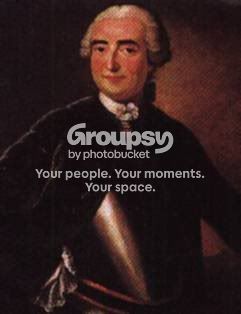
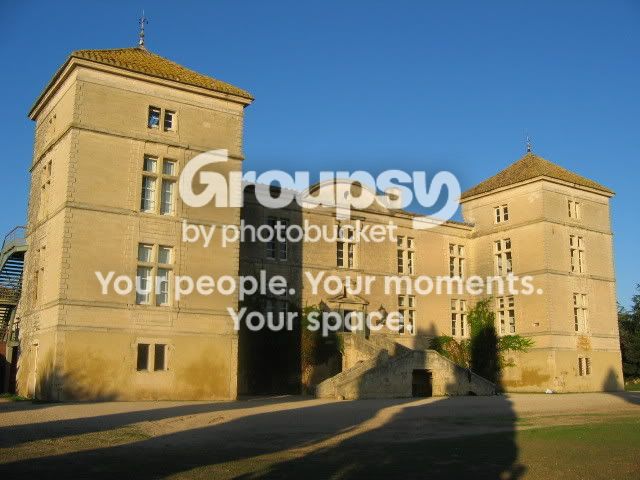
My buddy is a huge fan of the battle, mostly Montcalm and he is currently writing a book about Montcalms life. We were just joking saying how everybody is drawn to the winner. Being Wolfe. Its awesome how much information you guys have. Thanks. He has some Montcalm photos he will email me too post.
Keep up the info.
 
montcalm.jpg

chateau_candiac.jpg

armoiries_2.jpg


Here are a few Montcalm photos.
The one is a photo of Montcalms place in Vestric et Candiac.
One is a portrait of him, one is his family crest. Which translates too. Dragon Slayer and My Innoncence is My Fortress.
 
and Montcalm...

Fester, you are hangning with an interesting fellow maybe he can answer my question at the bottom of this info nugget...cheers

Montcalm died of his battle wound (said to be grape shot to the stomach) 24 hrs after the first English troop landed at the bottom of the cliff...he was burried in the old town, in the Urseline nuns chapel in a bomb crater...Would you believe the following: extracted from this link: http://xenophongroup.com/mcjoynt/quebec01.htm
......................
IN 2001!
A funeral convoy with Montcalm's coffin and music departed the Ursulines' chapel and the procession walked (with military music band) through the old city in direction of the cemetery...(in 2001!!)
Montcalm's remains were transfered into a sarcophagus inside a specially build mausoleum. Montcalm's Mausoleum is inside the cemetery which still belongs to the Augustine nuns, and the general is now reunited with his soldiers, 242 years later.
........................
A reenactor friend of mine was closely involved with this ceremony ...innauguration of a Seven year War Cemetary in Québec city, with the remains of one of the General!! i am sort of surprise the French or family did not claim the remain of the General shortly after the battle...??
 
He says that at the time France was in so much disarray politically, economically and socially at the time that it was not one of there concerns.
It is true that his remains were moved in 2001 and his descendents were present and supported the move. They brought a box of soil from Candiac his birthplace and laid it with his body.
He was moved to be with his soldiers.
 
France was near bankrupcy but...

Although nearly ruined, the French convened a large tribunal with some 27 Judges to trial about 24 administrators of New France..trial lasted 15 month...the former Intendant Bigot was expelled from France for life and he had to liquidate his asset to pay the fine of 1.5 million livres, he died alone in Switzeland in 1778...
A great book on the two generals is 'Wolfe & Montcalm, their lives, their times, and the fate of a continent' by JOY CARROLL (firefly pub)...it's last chapter go on tellng what happenned of the principal characters...sort of like in the movies when they show at the end how the main characters went on with their lives...

enjoy
 
Too bad you missed the program on TV last night. It covered part of the seige, the battle (that reportedly lasted only ten minutes) and the paintings coving the death of both men.
 
Back
Top Bottom