












































Plant’s Mfg. Co.- Front Loading .42 cal Army Revolvers 1st & 3rd Models.
In the mid 1860s the patent for bored through cylinders was held by Smith & Wesson.
Merwin & Bray were the financiers and agents for the guns turned out by Plant’s Mfg Co.. The revolver was designed to load (and unload) through the front of the cylinder chamber, with the hole in the rear of the cylinder (where the hammer struck the cartridge) smaller than the hole in the front. This technically skirted the fact that Rollin White of Smith & Wesson had patented the bored through cylinder design. The cartridges were loaded from the front and the frame mounted ejector rod pushed them right back out the way they had entered. Another unique portion of the design is that most the revolvers were originally sold with both the cup-fire cylinder and a percussion cylinder as well. This allowed the owner to continue to use the gun, even if his supply of self-contained cartridges were to be exhausted. The secondary percussion cylinders are very rarely encountered today.

1st model and 3rd model together.

The 1st model showing the ejector. (Serial number 171)

The cartridge in the cylinder.

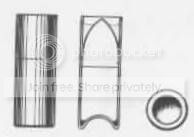
Cup-primed cartridges.
A .28 cal.- three thirty cal. and a .42 cal. cartridge.
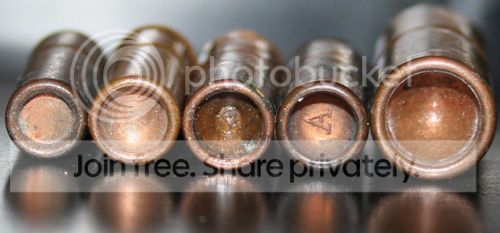
They made the cup-fire revolver and cartridges in three different sizes; .28, .30, and .42. Many people who know about cup-fire cartridges do not know that these sizes are actually based on the base diameter and not the actual bullet caliber. The bullet caliber is actually .26, .28 and .39 respectively.
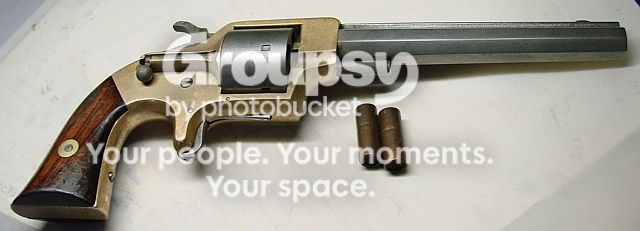
The 3rd model with two cup-primed cartridges. (Serial number 2811)
In the mid 1860s the patent for bored through cylinders was held by Smith & Wesson.
Merwin & Bray were the financiers and agents for the guns turned out by Plant’s Mfg Co.. The revolver was designed to load (and unload) through the front of the cylinder chamber, with the hole in the rear of the cylinder (where the hammer struck the cartridge) smaller than the hole in the front. This technically skirted the fact that Rollin White of Smith & Wesson had patented the bored through cylinder design. The cartridges were loaded from the front and the frame mounted ejector rod pushed them right back out the way they had entered. Another unique portion of the design is that most the revolvers were originally sold with both the cup-fire cylinder and a percussion cylinder as well. This allowed the owner to continue to use the gun, even if his supply of self-contained cartridges were to be exhausted. The secondary percussion cylinders are very rarely encountered today.

1st model and 3rd model together.

The 1st model showing the ejector. (Serial number 171)

The cartridge in the cylinder.

Cup-primed cartridges.
A .28 cal.- three thirty cal. and a .42 cal. cartridge.

They made the cup-fire revolver and cartridges in three different sizes; .28, .30, and .42. Many people who know about cup-fire cartridges do not know that these sizes are actually based on the base diameter and not the actual bullet caliber. The bullet caliber is actually .26, .28 and .39 respectively.

The 3rd model with two cup-primed cartridges. (Serial number 2811)

Last edited:
























