please remove

Status
Not open for further replies.
First of all, thank you all for your replies.
I guess I failed to draw down the parameter of my question. I use 270WIN for big animals, I hand load my own rounds, and I practice throughout the year. I don't shoot any big animal if I am not confident. I understand many hunters only practice 1-2 times before season, therefore, it is best to shoot deer in the biggest vital area. For people like me, who can shoot a bottle cap between 40-150 yards on any calm day, head shot is more humane than double lungs. sorry for the rant, but too many people are forcing their 'superior' moral standard on head & neck shots. For the CGNer who shotted the deer in the jaw at 30m, you have to know in short range, your bullet's point of impact is 1.5-3 inches lower than 100m zero. I once shot a squirrel at 3-5m, aimed at it's head, and blew it's guts out.

I hunt in Ontario, where I hunt the brush is extremely thick if I shot a deer in the heart at the edge of the field, and the deer dives 100m into the thick brushwood, it is nearly impossible to recover the deer under low light condition. Even I recover the deer next day, coyotes and black bears would had a feast, and the meat might only be good for dog food. (which my dog would be happy to eat.) One deer I shot, was missing top part of it's heart and maybe one lung, it sprinted almost 100m into the field. The deer I shot this year, also has top part of it's heart missing, with both lungs. If my bullet didn't blow through one of the shoulder blade, it would definitely sprint a good distance. This is why I asked if a high shoulder shot would anchor a deer.
 
For people like me, who can shoot a bottle cap between 40-150 yards on any calm day, head shot is more humane than double lungs. sorry for the rant, but too many people are forcing their 'superior' moral standard on head & neck shots.

Oooooo - people like you impress me.

No one is forcing anything. Experienced people are trying to tell you that you will have fewer problems if you always take the first shot at the biggest lethal target. If you can't trail a deer that has been double lunged with a .270, you need to do some study. There is no way that I would ever say I could hit a bottle cap under hunting conditions every time at 150 yards - maybe I'm a bad shot - maybe I just don't B.S.

The high shoulder shot will anchor most deer most of the time (there is no such thing as "always"). It also tends to ruin some good meat. Just a little off, and it can ruin quite a bit. My advice (not my moral command) is to always take the first shot at the biggest lethal target on a game animal. If you hunt a long time, you will find it produces the fewest problems, will cause the least suffering, and will provide the best meat. That's my advice.

You can, of course, do whatever you want, and rationalize your choice any way you want, but a humane meat hunter should think about my advice carefully before discarding it. Insisting on trying head shots will eventually give you an experience that will convince you it can be a bad idea, and it can become bad because of factors you can't control (like target movement). Eliminate the factors you can't control as much as you can before you release a bullet. It's the smart thing to do.
 
I hunt in Ontario, where I hunt the brush is extremely thick if I shot a deer in the heart at the edge of the field, and the deer dives 100m into the thick brushwood, it is nearly impossible to recover the deer under low light condition. Even I recover the deer next day, coyotes and black bears would had a feast, and the meat might only be good for dog food. (which my dog would be happy to eat.) One deer I shot, was missing top part of it's heart and maybe one lung, it sprinted almost 100m into the field. The deer I shot this year, also has top part of it's heart missing, with both lungs. If my bullet didn't blow through one of the shoulder blade, it would definitely sprint a good distance. This is why I asked if a high shoulder shot would anchor a deer.

Part of being a good hunter is to know when to shoot, and when not to, and to deal with the consequences of the shot. If you're not prepared to drag it through the thickets, don't shoot one in the thickets.
 
I hunt and practice in prone position with stable shooting platform, and 90% sure where the deer is going to come out. So yes it is pretty much the same as target shooting. I never stated I'm shooting off hand at 200m target.
 
I hunt and practice in prone position with stable shooting platform, and 90% sure where the deer is going to come out. So yes it is pretty much the same as target shooting. I never stated I'm shooting off hand at 200m target.

Remember that your "target" when hunting can and frequently will move when you least expect it to. If your aiming spot is very small it doesn't take much movement of the deer to mess up the shot and this is magnified with increased distance of the animal.
 
I never advocated for either, just stating people still miss the biggest targets.

The argument every time head shots come up is the old jaw shot off. I have hunted for decades, seen all kinds of things, but never a animal running around without a jaw like everyone else seems to have that posts.....

People who are regularly shooting 6" plus groups at the 100yard range under perfect rest and weather conditions have no business shooting at a live animal. This would eliminate a lot of wounding shots, many more than those advocating for double lung only

I've seen one and damn near added one. Went for a behind the ear shot at a Mulie Doe around 50 yards. She turned her head towards me as I was squeezing off the shot. Hit her in the top jaw between the right eye and nose with a 150r .308 softpoint. She dropped but was back up quickly. Fortunately I had already chambered another round. Next shot took her behind the shoulder as she tried to take off.

Never tried a head shot again. Little extra meat isn't worth a fatally wounded cripple.
 
The objective is not to see the animal bugger off into the thickets when shot so I always endeavor to hit the shoulder joint. 1 shot DRT kill every time.

The little bit of bone and ligament damage that results is unavoidable of course. ;)

36963635912_a436c7d1a4.jpg
36886588373_5fa5b7968f.jpg

The one on the bottom is showing a double lung. They usually give a short sprint from those not "DRT" as you always say. Or am I missing something?
 
only way you are shooting off a jaw without killing the deer with the point of aim at the base of the skull where the neck meets is missing by more than 6"

Trouble is, as others have mentioned, the head and neck tend to move quite a bit more which makes missing by 6” a lot more likely.

The argument every time head shots come up is the old jaw shot off. I have hunted for decades, seen all kinds of things, but never a animal running around without a jaw like everyone else seems to have that posts.....

Never eh? And yet you’ve been stopped by COs multiple times and had them check the capacity of your Beowulf mags!!!! Your stories are fantasytic!
 
Last edited:
Here is an example of critters can and do move in the time it takes to squeeze a trigger. Doe 150 yds broadside, head down feeding, Encore muzzleloader with sabots, rest against a tree and the shot is what I thought in the boiler room. Deer drops instantly and see hooves flipping above a slight rise, no issue must have pulled high and spined it. Once the drive was done I walk out in the field and look at my deer and look to see the hit as it was the first deer I had shot with the Encore.

To my surprise I had hit the doe exactly between the eyes, front on, shooting at a perfect broadside deer. Only thing I can think of is the deer must have looked towards me at the shot and directly into the bullet path. That is why I don't like head shots as they very rarely stay still for long.

I agree a lesson in meat handling would do vastly improve the end result as you are doing just about everything wrongOP
 
Never eh? And yet you’ve been stopped by COs multiple times and had them check the capacity of your Beowulf mags!!!! Your stories are fantasytic!

No, never seen a jawless animal walking around like everyone else seems to have seen posts about. Maybe it is a regional problem?
 
First of all, thank you all for your replies.
I guess I failed to draw down the parameter of my question. I use 270WIN for big animals, I hand load my own rounds, and I practice throughout the year. I don't shoot any big animal if I am not confident. I understand many hunters only practice 1-2 times before season, therefore, it is best to shoot deer in the biggest vital area. For people like me, who can shoot a bottle cap between 40-150 yards on any calm day, head shot is more humane than double lungs. sorry for the rant, but too many people are forcing their 'superior' moral standard on head & neck shots. For the CGNer who shotted the deer in the jaw at 30m, you have to know in short range, your bullet's point of impact is 1.5-3 inches lower than 100m zero. I once shot a squirrel at 3-5m, aimed at it's head, and blew it's guts out.

I hunt in Ontario, where I hunt the brush is extremely thick if I shot a deer in the heart at the edge of the field, and the deer dives 100m into the thick brushwood, it is nearly impossible to recover the deer under low light condition. Even I recover the deer next day, coyotes and black bears would had a feast, and the meat might only be good for dog food. (which my dog would be happy to eat.) One deer I shot, was missing top part of it's heart and maybe one lung, it sprinted almost 100m into the field. The deer I shot this year, also has top part of it's heart missing, with both lungs. If my bullet didn't blow through one of the shoulder blade, it would definitely sprint a good distance. This is why I asked if a high shoulder shot would anchor a deer.

You asked for advices and you got them. Most of us have decades in the field and/or killed several dozens big game animals, not our fault if you don't like the answers we are giving you, which are almost all the same btw.

You can shoot bottle caps all day, good for you, I won't argue with you when it comes to the time you spend on the range. I also spend loads of time on the range myself and have instructed hundreds of soldiers over my career in the CAF, even good shooters take bad shots in optimal conditions from time to time and I myself im one of them. I've also filled my freezer with hundreds of lbs of game meat and the animals on my wall also speak to my hunting abilities. What I have learnt on the range and in the military helps me when I'm out hunting but it doesn't dictate how I hunt. Years of experience in the field and taking advice from other hunters got me where I am today and have made me a better hunter.

Take what you want but your other thread on meat care and your statements above show that you have A LOT to learn about huniting... Don't argue with guys who know more than you on a subject you clearly know little about, it makes you look foolish.
 
This thread is about how to kill & immobilize a whitetail deer, not asking any of you if head & neck shot is ethical. For those who judge other with 'superior' moral standard, please leave us alone, and use your liberal way of convincing/forcing people at other places.
 
This thread is about how to kill & immobilize a whitetail deer, not asking any of you if head & neck shot is ethical. For those who judge other with 'superior' moral standard, please leave us alone, and use your liberal way of convincing/forcing people at other places.

Hunting two years and you are OK with a head shot under "150 YARDS"... I'm judging... but the judgement is based on four decades of experience in the field with far more seasoned hunters. Do the deer a favour and stick to the boiler room.
 
Besides hunting and shooting a lot of critters over a bunch of years I have studied veterinary anatomy as part of my professional training and also come from several generations of butchers. Here's my opinion.

The anatomy diagram posted previously is a pretty good one. If you look at a deer from broadside, about 2/3 of the area of the head is not a vital area. Yet newbies and some experienced hunters continue to use the term "head" shot like shooting the head is some kind of a goal. If you insist in shooting a deer in the head, make sure you are aiming at the BRAIN. The brain is about 3" in diameter, is behind the eyes, and barely extends rearward from the base of the ears. A brain shot is always instantly fatal. Agreed.

However, a shot placed lower than halfway up will result in a broken jaw, ( yes I have seen that) or a punctured esophagus, or trachea. ( have seen that too) A shot forward of the eyes will result in blown out nasal sinuses. ( have seen that too) The animal WILL run off to die a slow horrible death from starvation or possibly slow blood loss. Such a wound may nock them down, but if they don't fall down, or if they get up and run, it will not slow down the deer in the least. You'd better be able to hit a wounded deer on the run. From a good rest and within 100 yards or so I can hit the brain of a stationary deer every time. Except when they move their heads, which they do pretty much constantly or at odd moments. So I don't take brain shots except in unusual circumstances. The last one I took was at a fox, a couple years ago. It was only 50 M away. I was in a tree stand in Germany and the hunt master cautioned us not to waste fur if we shot a fox with our deer/boar rifles. So I aimed for the eye. Fox moved its head. Clean miss from a steady rest. If that was a deer it would have had its jaw shot off.

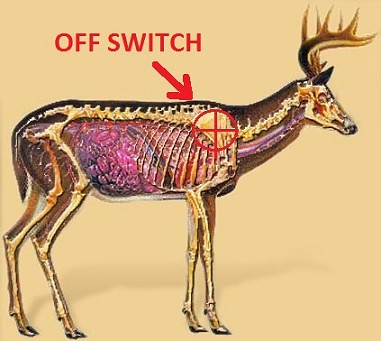
The anatomy diagram posted previously in this thread does show an instantly fatal aiming point above the shoulder joint, through the scapula and spine. My main reason for not advocating it is wasted meat. I have taken that shot fairly often, but still prefer double lung shot from that angle. The main downside is that shots too high miss entirely or shots too far forward + low will wound.

The earlier picture of the deer with a circle drawn on it has the circle placed too far back for the angle presented. Move it forward by one half its diameter and it would be about right.
 
Last edited:
No, never seen a jawless animal walking around like everyone else seems to have seen posts about. Maybe it is a regional problem?

Jawless animals can't feed, they starve. That might explain why you haven't seen too many. I haven't seen any live ones either, but I've seen a few dead ones after the second shot was where the first should've been.
 
Status
Not open for further replies.
Back
Top Bottom