Going to canoe the Hayes River in northern Manitoba. Need to protect against bears around camp and also looking to get into duck hunting in the fall. This will be my first gun and I am leaning toward the 870 express super mag. I am concerned about the quality and weight of the 870. Keep in mind I probably won't put a whole lot of rounds through it but will be lugging it through the bush on a consistent basis. Looking for suggestions and advise. Thanks!














































You are using an out of date browser. It may not display this or other websites correctly.
You should upgrade or use an alternative browser.
You should upgrade or use an alternative browser.
Polar Bears & Ducks
- Thread starter LETSDANCE
- Start date
If it's the 870 you like, then get it in a combo package and use the short barrel for your trip. This fall put the long barrel on for ducks. You won't need the 3 1/2" chamber, just 3" occasionally for geese. Also make sure you leave the gun shop with a good sling and the parts to attach the sling to the gun of course...you need your hands free when walking through the bush. Just my bit of experience... good luck.
Alternatively a mossberg 500 combination package(multi-barrel) would be a good choice as they have an aluminum receiver which helps out with weight. Another good bear deterrent is an electric fence around your camp at night. I've seen some light weight packages marketed specifically for things like canoing.
Alternatively a mossberg 500 combination package(multi-barrel) would be a good choice as they have an aluminum receiver which helps out with weight. Another good bear deterrent is an electric fence around your camp at night. I've seen some light weight packages marketed specifically for things like canoing.
will you bet your bear protection on an electric fence?
a shotgun with different barrel that can be a good idea but im pretty it will always at the wrong moment you ll need the right barrel.
back to the OP are the ducks already open while your canoe trip will occurs.
just my two cents.

What ever you end up buying, PRACTISE with it!!! Run the ammo you will have with you on your trip! Guns can be finicky, best to work out the ammo issue BEFORE you ever need it to protect your or others lives from a bear!
Cheers
Jay
Cheers
Jay

I've seen bears walk right over a electric fence.
Pumps are great. Reliable n cheap but for someone new maybe a sxs coach gun is best for your needs. Yes u only get 2 shots but chances are you won't fire more then 2 with a pump if a bear does charge in. A sxs is light and easily pointed. It is easy to take down as well. When moving thru bush and water it is easy to check the bores for mud and debris. It's 2 guns in one. Easy to load and unload. Just a thought
Pumps are great. Reliable n cheap but for someone new maybe a sxs coach gun is best for your needs. Yes u only get 2 shots but chances are you won't fire more then 2 with a pump if a bear does charge in. A sxs is light and easily pointed. It is easy to take down as well. When moving thru bush and water it is easy to check the bores for mud and debris. It's 2 guns in one. Easy to load and unload. Just a thought


BigUglyMan
CGN Ultra frequent flyer
- Location
- New Scotland
The 870 express is a very unreliable firearm. I wouldn't use it for bird hunting let alone bear defense. The problems are well documented on this site.
Quoi? Did I miss a meeting?
I would (or should I say, I did) go with an 870 with 28" and 12.5" barrels. Buy one and shoot it lots. Shoot clays either formally or informally and you'll smooth out the action nicely. Take off the 28 incher, pull the plug, tighten on the 12.5" and you're off to the canoe races. I took my 870 for a nice 7.5km walk the other day when my atv took a dump out of town in grizzly country. The 12.5" barrel is a dream to carry out there.

- Location
- Somewhere on the Hudson Bay Coast
Ducks and polar bears are two different problems, requiring two different guns. Your bear gun should have rifle sights rather than a bead. IMHO, a ghost ring and rectangular post trumps all other types. If you intend to do any exploring on foot while on your adventure, a sling and swivels will be helpful. A side saddle is a good option should your intend to use cracker shells and rubber slugs in addition to lethal ammo. The best way is to have the magazine full of slugs, then single load the less lethal rounds as required. That way if the situation deteriorates, you have instant access to a slug with no fumbling.
If traveling with a companion, one could have a scare gun and the other the kill gun, don't mix em up! Cracker shells are corrosive, so be sure to clean the bore with hot soapy water as soon as possible after shooting them. Another option is to carry a scare pistol which illuminates the need for mixing ammo in your shotgun.
The brass on shotgun shells corrodes quickly when exposed to the elements, and for that reason I would choose a gun with a tube magazine that has a spring and follower that is easily removable for maintenance. A steel follower that rusts fast to the inside of the magazine tube will spoil your day. The gun is going to get wet, and if its going to function when you need it to, you'll have to look after it. Too many people purchase the cheapest guns they can find, and then treat them like clubs. Shotguns are far less robust than their rifle counterparts. Barrels and magazines dent easily due to their thin wall construction, and a dented magazine tube reduces your repeater to a single shot.
As for the make of gun you should choose, my first choice is a Mossberg 590 (which is what I carry when I choose a shotgun rather than a rifle) and my second is an 870 Marine Magnum (which is what the DNR guys carry as do Parks Canada's people, Churchill Northern Study Center's staff and some of the buggy operators). The parkerized finish on my 590 offers good protection from the elements (a 590 with a marine finish is available) but without attention, the 870 Marine Magnum will stand up to the use of corrosive ammo longer than a parkerized 590.

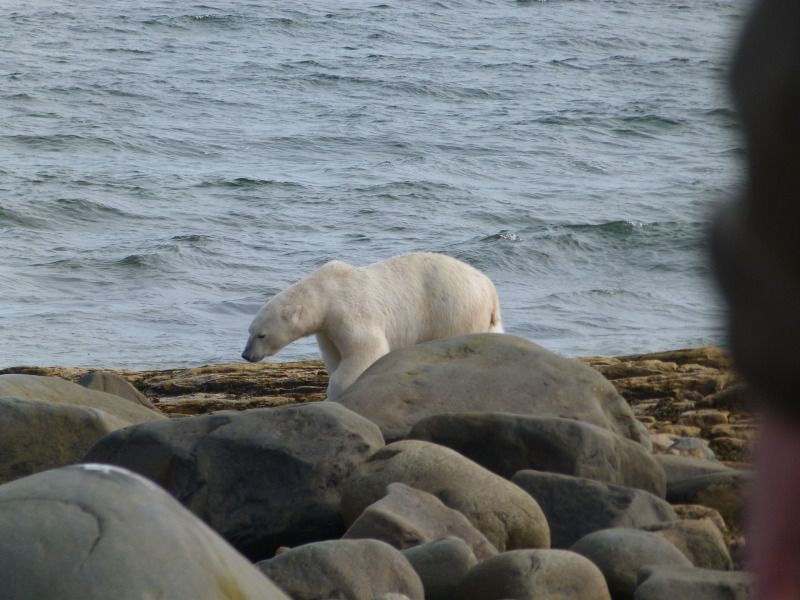
After your trip, buy a nice 20 ga for ducks.
With respect to less lethal ammo in general, and cracker shells in particular, practice with them before you need them. If you drop a cracker shell on the far side of the bear, you've just arranged for a train wreck. Should you have to use lethal ammo, to save yourself or a companion, don't shoot for the chest. The point of shooting is to stop the bear and a chest shot won't do it quickly enough. A brain shot works, but is difficult because the bear's head is very wide, and unless the bear is focused on you, its in constant motion. Additionally, the brain is only the width of the snout, and the bear's forehead is low. A spine shot might be a better choice. If the bear is after your companion, attempt to break a large supporting bone like the hip which should be the farthest viable target away from your companion, to stop his forward progression. You then have time to reposition to make a kill shot.
If this is your first gun, I then assume, rightly or wrongly, that you have little shooting experience. On the job training is a difficult way to go when it comes to personal defense, and I would like to see you put 500 rounds down range before you needed that gun to save you. Concentrate on shooting at close range, a bear that can't touch you can't hurt you, so by definition defensive shooting is a close range gig. Practice snap shooting 10 yards and in, practice loading and unloading, practice shell select, whereby you load a type of ammo other than a slug, fire that round, then repeat without getting a slug from the magazine in the chamber. And get used to stripping that gun and putting it back together until you are comfortable with the process.
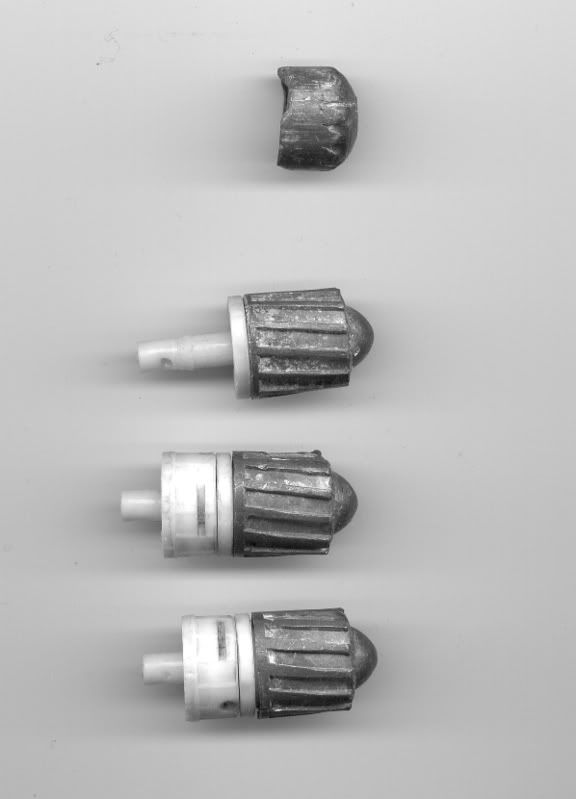
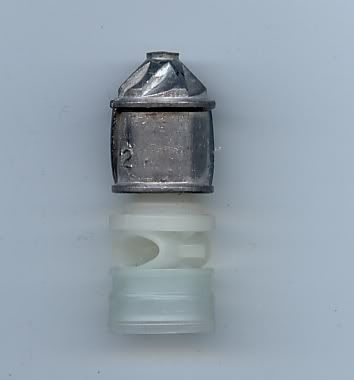
A word about slugs. Get Brennekes. If you can't find Brennekes, get Challengers. Use foster slugs only as a last resort, they're too softy, expand too quickly, and lack penetration.
Recovered slugs, Brennekes compared to a Foster slug
A Challenger Slug
Aside from the gun question, be sure to print off and laminate a Tide Chart for the Nelson/Hayes River part of the Hudson Bay coast. You could be in salt water 10 miles before you get to the coast, depending on the height of the tide when you get there. The tidal flats on that part of the coast extend for miles into the Bay, so don't get caught out there when the tide changes.
http://www.waterlevels.gc.ca/eng/data/table/2013/wlev_sec/4980
If traveling with a companion, one could have a scare gun and the other the kill gun, don't mix em up! Cracker shells are corrosive, so be sure to clean the bore with hot soapy water as soon as possible after shooting them. Another option is to carry a scare pistol which illuminates the need for mixing ammo in your shotgun.
The brass on shotgun shells corrodes quickly when exposed to the elements, and for that reason I would choose a gun with a tube magazine that has a spring and follower that is easily removable for maintenance. A steel follower that rusts fast to the inside of the magazine tube will spoil your day. The gun is going to get wet, and if its going to function when you need it to, you'll have to look after it. Too many people purchase the cheapest guns they can find, and then treat them like clubs. Shotguns are far less robust than their rifle counterparts. Barrels and magazines dent easily due to their thin wall construction, and a dented magazine tube reduces your repeater to a single shot.
As for the make of gun you should choose, my first choice is a Mossberg 590 (which is what I carry when I choose a shotgun rather than a rifle) and my second is an 870 Marine Magnum (which is what the DNR guys carry as do Parks Canada's people, Churchill Northern Study Center's staff and some of the buggy operators). The parkerized finish on my 590 offers good protection from the elements (a 590 with a marine finish is available) but without attention, the 870 Marine Magnum will stand up to the use of corrosive ammo longer than a parkerized 590.


After your trip, buy a nice 20 ga for ducks.
With respect to less lethal ammo in general, and cracker shells in particular, practice with them before you need them. If you drop a cracker shell on the far side of the bear, you've just arranged for a train wreck. Should you have to use lethal ammo, to save yourself or a companion, don't shoot for the chest. The point of shooting is to stop the bear and a chest shot won't do it quickly enough. A brain shot works, but is difficult because the bear's head is very wide, and unless the bear is focused on you, its in constant motion. Additionally, the brain is only the width of the snout, and the bear's forehead is low. A spine shot might be a better choice. If the bear is after your companion, attempt to break a large supporting bone like the hip which should be the farthest viable target away from your companion, to stop his forward progression. You then have time to reposition to make a kill shot.
If this is your first gun, I then assume, rightly or wrongly, that you have little shooting experience. On the job training is a difficult way to go when it comes to personal defense, and I would like to see you put 500 rounds down range before you needed that gun to save you. Concentrate on shooting at close range, a bear that can't touch you can't hurt you, so by definition defensive shooting is a close range gig. Practice snap shooting 10 yards and in, practice loading and unloading, practice shell select, whereby you load a type of ammo other than a slug, fire that round, then repeat without getting a slug from the magazine in the chamber. And get used to stripping that gun and putting it back together until you are comfortable with the process.
A word about slugs. Get Brennekes. If you can't find Brennekes, get Challengers. Use foster slugs only as a last resort, they're too softy, expand too quickly, and lack penetration.
Recovered slugs, Brennekes compared to a Foster slug

A Challenger Slug

Aside from the gun question, be sure to print off and laminate a Tide Chart for the Nelson/Hayes River part of the Hudson Bay coast. You could be in salt water 10 miles before you get to the coast, depending on the height of the tide when you get there. The tidal flats on that part of the coast extend for miles into the Bay, so don't get caught out there when the tide changes.
http://www.waterlevels.gc.ca/eng/data/table/2013/wlev_sec/4980
Last edited:
antiqueguy
CGN Ultra frequent flyer
- Location
- windsor ontario
The 870 express is a very unreliable firearm. I wouldn't use it for bird hunting let alone bear defense. The problems are well documented on this site.
????? never had a problem with my 870 ive ran everything from cheap Winchester target loads to heavy buckshot and slugs
antiqueguy
CGN Ultra frequent flyer
- Location
- windsor ontario
I've seen bears walk right over a electric fence.
Pumps are great. Reliable n cheap but for someone new maybe a sxs coach gun is best for your needs. Yes u only get 2 shots but chances are you won't fire more then 2 with a pump if a bear does charge in. A sxs is light and easily pointed. It is easy to take down as well. When moving thru bush and water it is easy to check the bores for mud and debris. It's 2 guns in one. Easy to load and unload. Just a thought
a lot of doubles cant handle steel he is looking for one gun two do two things hunt ducks and bear protection a pump will do nicely

- Location
- Ft. Mac. Alberta
The 870 express is a very unreliable firearm. I wouldn't use it for bird hunting let alone bear defense. The problems are well documented on this site.
And most of the issues are very easily fixed.
I buy and sell them all the time, never had one that couldn't be tuned in a few minutes.
Cat

I am leaning more towards the Mossbergs lately, they just seems lighter and smoother than a Remington. I say get the Mossberg combo, (it's a better value than the Remington), and put the extra coin towards learning and proving your gun is up to the task of defending your life.
Mossberg has that open style of shell lifter so do a little research on it before you spend your money on a defense gun. I hear if you use shorter shells in the longer Mossberg action they can catch on the elevator.
Mossberg has that open style of shell lifter so do a little research on it before you spend your money on a defense gun. I hear if you use shorter shells in the longer Mossberg action they can catch on the elevator.
antiqueguy
CGN Ultra frequent flyer
- Location
- windsor ontario
Ducks and polar bears are two different problems, requiring two different guns. Your bear gun should have rifle sights rather than a bead. IMHO, a ghost ring and rectangular post trumps all other types. If you intend to do any exploring on foot while on your adventure, a sling and swivels will be helpful. A side saddle is a good option should your intend to use cracker shells and rubber slugs in addition to lethal ammo. The best way is to have the magazine full of slugs, then single load the less lethal rounds as required. That way if the situation deteriorates, you have instant access to a slug with no fumbling.
If traveling with a companion, one could have a scare gun and the other the kill gun, don't mix em up! Cracker shells are corrosive, so be sure to clean the bore with hot soapy water as soon as possible after shooting them. Another option is to carry a scare pistol which illuminates the need for mixing ammo in your shotgun.
The brass on shotgun shells corrodes quickly when exposed to the elements, and for that reason I would choose a gun with a tube magazine that has a spring and follower that is easily removable for maintenance. A steel follower that rusts fast to the inside of the magazine tube will spoil your day. The gun is going to get wet, and if its going to function when you need it to, you'll have to look after it. Too many people purchase the cheapest guns they can find, and then treat them like clubs. Shotguns are far less robust than their rifle counterparts. Barrels and magazines dent easily due to their thin wall construction, and a dented magazine tube reduces your repeater to a single shot.
As for the make of gun you should choose, my first choice is a Mossberg 590 (which is what I carry when I choose a shotgun rather than a rifle) and my second is an 870 Marine Magnum (which is what the DNR guys carry as do Parks Canada's people, Churchill Northern Study Center's staff and some of the buggy operators). The parkerized finish on my 590 offers good protection from the elements (a 590 with a marine finish is available) but without attention, the 870 Marine Magnum will stand up to the use of corrosive ammo longer than a parkerized 590.
After your trip, buy a nice 20 ga for ducks.
With respect to less lethal ammo in general, and cracker shells in particular, practice with them before you need them. If you drop a cracker shell on the far side of the bear, you've just arranged for a train wreck. Should you have to use lethal ammo, to save yourself or a companion, don't shoot for the chest. The point of shooting is to stop the bear and a chest shot won't do it quickly enough. A brain shot works, but is difficult because the bear's head is very wide, and unless the bear is focused on you, its in constant motion. Additionally, the brain is only the width of the snout, and the bear's forehead is low. A spine shot might be a better choice. If the bear is after your companion, attempt to break a large supporting bone like the hip which should be the farthest viable target away from your companion, to stop his forward progression. You then have time to reposition to make a kill shot.
If this is your first gun, I then assume, rightly or wrongly, that you have little shooting experience. On the job training is a difficult way to go when it comes to personal defense, and I would like to see you put 500 rounds down range before you needed that gun to save you. Concentrate on shooting at close range, a bear that can't touch you can't hurt you, so by definition defensive shooting is a close range gig. Practice snap shooting 10 yards and in, practice loading and unloading, practice shell select, whereby you load a type of ammo other than a slug, fire that round, then repeat without getting a slug from the magazine in the chamber. And get used to stripping that gun and putting it back together until you are comfortable with the process.
A word about slugs. Get Brennekes. If you can't find Brennekes, get Challengers. Use foster slugs only as a last resort, they're too softy, expand too quickly, and lack penetration.
Recovered slugs, Brennekes compared to a Foster slug
A Challenger Slug
Aside from the gun question, be sure to print off and laminate a Tide Chart for the Nelson/Hayes River part of the Hudson Bay coast. You could be in salt water 10 miles before you get to the coast, depending on the height of the tide when you get there. The tidal flats on that part of the coast extend for miles into the Bay, so don't get caught out there when the tide changes.
http://www.waterlevels.gc.ca/eng/data/table/2013/wlev_sec/4980
those challenger slugs look like the ones you can get as a reloading component from ballistic products