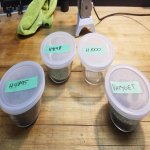
Powder Lot Woes

RangerPark

CGN frequent flyer
Rating - 100%
160   0   0
I know to expect a slight variation in powders from lot to lot. I've had to tweak loads when changing lots, usually a max of .5 grains either way.

I spent all summer going through 8 lbs of H4895 developing OBT loads for .223 and .308. I went a little nuts developing approximately 35 loads using 5 rifles, 20+ different bullets and multiple combinations of cases and primers. All loads were developed over a chronograph and in short, OBT absolutely works. This will be a write up for another day...

I'm now using a 10 lbs lot of H4895 (10 x 1 lb containers) all from the same lot. I ran a test from a previously developed load using 10 rounds of the old lot and 10 rounds of the new lot. All other loading parameters were exactly the same. In the same .308 rifle, with the new powder lot, I saw a drop of 100 fps. Speeds went from 2639 to 2533. Sierra 155 gr Palma, Lake City cases, CCI400 primers. The shots were fired under the same conditions, on the same day, from the same rifle. I have already developed 35 or so loads, what's another 35 more right?!

What's everyone's experience with variations from powder lots? 100 fps drop from lot to lot seems excessive to me. As another example, during the summer I switched lots on H4198 powder in .223 and saw exactly ZERO difference on the chronograph between lots. I have also seen very minimal difference between previous lots of Varget, CFE223, H1000, H4350 and IMR 4064.
 
I typically purchase enough of 1 lot of powder for the life of the barrel I am using it in. Several rifles use the same powder so I dedicate a lot per rifle and do not use that lot for a different rifle.
When I can't get enough of the same lot I mix the cans together to make it 1 lot. Needless to say all the same powder not mixed brands or designations.
A brand new clean 5 gallon paint can works very well for this by the way.
 
Since you know the average velocity of each load, I would increase the various loads to the same velocity with the new powder lot. Usually that gives you the same accuracy, all other things considered (shooting conditions, reload components, etc.).
 
I've experienced this issue before as well. Mine was with Varget.
It's easy to theorize that you just add more powder until you get to your previous loads speed, but when your loading 223/308's you often have little to no extra room in the cases without excessive compression. Especially when trying to gain another 100 fps.
It's a bummer alright.
 
I know to expect a slight variation in powders from lot to lot. I've had to tweak loads when changing lots, usually a max of .5 grains either way.

I spent all summer going through 8 lbs of H4895 developing OBT loads for .223 and .308. I went a little nuts developing approximately 35 loads using 5 rifles, 20+ different bullets and multiple combinations of cases and primers. All loads were developed over a chronograph and in short, OBT absolutely works. This will be a write up for another day...

I'm now using a 10 lbs lot of H4895 (10 x 1 lb containers) all from the same lot. I ran a test from a previously developed load using 10 rounds of the old lot and 10 rounds of the new lot. All other loading parameters were exactly the same. In the same .308 rifle, with the new powder lot, I saw a drop of 100 fps. Speeds went from 2639 to 2533. Sierra 155 gr Palma, Lake City cases, CCI400 primers. The shots were fired under the same conditions, on the same day, from the same rifle. I have already developed 35 or so loads, what's another 35 more right?!

What's everyone's experience with variations from powder lots? 100 fps drop from lot to lot seems excessive to me. As another example, during the summer I switched lots on H4198 powder in .223 and saw exactly ZERO difference on the chronograph between lots. I have also seen very minimal difference between previous lots of Varget, CFE223, H1000, H4350 and IMR 4064.

Water moisture is part of the content of powder. If you use an 8 pounder and pour powder back and forth from time to time (jug to thrower and then back again) the power dries out and gets faster.

When you buy a new jug, with the proper water content, it is slower. The solution is to decant the 8 pounder into smaller containers, so that 7 of them remain sealed and don't lose moisture. And another reason why you should not leave powder in the thrower from one session to the next.
 
Water moisture is part of the content of powder. If you use an 8 pounder and pour powder back and forth from time to time (jug to thrower and then back again) the power dries out and gets faster.

When you buy a new jug, with the proper water content, it is slower. The solution is to decant the 8 pounder into smaller containers, so that 7 of them remain sealed and don't lose moisture. And another reason why you should not leave powder in the thrower from one session to the next.

Thank you so much Ganderite, this is exactly the kind of information I was looking for! I also believe I have discovered a fatal flaw in my reloading practices that could account for random variations in velocity I had so far been unable to explain.

For the past 3+ years now, I have had the habit of using glass bowls a intermediate storage for the powders I currently use. My thinking was that I would pour from the canisters into the bowls but NEVER the other way around. I started doing this when a powder mishap yielded a pound of an unintentional Varget / IMR 4064 hybrid combo. I used the mixture for plinking rounds and it was fine, but obviously I wanted to avoid repeating the mistake.

So I came up with my little glass bowl system. I realize now the glass bowls aren't airtight. I would pour from the canister into the bowl and the powder would sometimes stay there for a couple of weeks before I loaded in into rounds. The powder in the canisters would maintain it's moisture content and the one in the bowl would lose moisture, resulting in velocity variations.

In the case of my H4895 woes, I also took 6 lbs of the same lot and poured them into an 8 lb jug, compounding the problem. The last time I had seen a measurable variance was from an 8 pounder of Varget to the next. I was pouring straight from the 8 pound jug in the glass bowls. I can now see my mistake clear as day.

More questions:
- Is there a limit to how much moisture a powder will lose?
- Is losing moisture detrimental to accuracy beyond the change in velocity?
- Will a factory "moist" powder yield better ES/SD numbers than a dried out one?
- Should I pour my 10x 1 lb containers in an 8 lb jug and let it evaporate to match my previous results? I'm thinking no.
- Or should I endeavour to keep all my powders in their canisters and ensure they're all airtight to prevent moisture loss? I'm thinking yes.

Thanks to everyone else who also contributed so far BTW, but Ganderite nailed it I think

20200202_140033.jpg
 

Attachments

  • 20200202_140033.jpg
    20200202_140033.jpg
    61.4 KB · Views: 608
Interesting. I've had a 60-70 fps increase in a 6.5 CM load using H4350 from one lot to another. I backed off the powder charge .5 gr to get back to the previous velocity.
 
Thank you so much Ganderite, this is exactly the kind of information I was looking for! I also believe I have discovered a fatal flaw in my reloading practices that could account for random variations in velocity I had so far been unable to explain.

For the past 3+ years now, I have had the habit of using glass bowls a intermediate storage for the powders I currently use. My thinking was that I would pour from the canisters into the bowls but NEVER the other way around. I started doing this when a powder mishap yielded a pound of an unintentional Varget / IMR 4064 hybrid combo. I used the mixture for plinking rounds and it was fine, but obviously I wanted to avoid repeating the mistake.

So I came up with my little glass bowl system. I realize now the glass bowls aren't airtight. I would pour from the canister into the bowl and the powder would sometimes stay there for a couple of weeks before I loaded in into rounds. The powder in the canisters would maintain it's moisture content and the one in the bowl would lose moisture, resulting in velocity variations.

In the case of my H4895 woes, I also took 6 lbs of the same lot and poured them into an 8 lb jug, compounding the problem. The last time I had seen a measurable variance was from an 8 pounder of Varget to the next. I was pouring straight from the 8 pound jug in the glass bowls. I can now see my mistake clear as day.

More questions:
- Is there a limit to how much moisture a powder will lose?
- Is losing moisture detrimental to accuracy beyond the change in velocity?
- Will a factory "moist" powder yield better ES/SD numbers than a dried out one?
- Should I pour my 10x 1 lb containers in an 8 lb jug and let it evaporate to match my previous results? I'm thinking no.
- Or should I endeavour to keep all my powders in their canisters and ensure they're all airtight to prevent moisture loss? I'm thinking yes.

Thanks to everyone else who also contributed so far BTW, but Ganderite nailed it I think

View attachment 346840

Powders are made in lots of 1000 pounds and up. You might be surprised at how much variation there is from lot to lot. For a manufacturer, this does not matter. They just load enough powder to get the velocity they are looking for. Each lot of powder comes with a spec sheet that discloses how fast or slow it is. Looking at the spec sheet, you might think of a given powder as "Slow 4350" or "Fast 4832". If an ammo maker is loading 180 gr in 3006 and buy a couple tons of 4895, it does not matter if the lot is fast or slow. It is still a suitable powder and it will generate the velocity they want.

There is one recipe they use to make powder for the US Army ammo. If it turns out fast, it is given one name and used for 5.56. If it is slow, it gets another name, and is used for 7.62.

Some canister powders seem to be very consistent, lot to lot. Others tend to have a lot of variation. Personally, I buy in a large quantity, and decant it into 8 pound jugs. One jug gets packaged into 1 pounders. I use powder fast enough that the 1 pounder does not get a chance to dry out.

I do not know if a fresh or a dry powder gets the better ES-SD.

If a powder lot happens to be the same speed as the canister grade powder, it is put aside for retail sales.

Those bowls have a large surface area for the powder. I can see it drying out.
 
Wow, this has been extremely informative. Thank you RangerPark for asking and to Ganderite for the exceptional knowledge.

But.....but....but. Does this mean the dried out powder will be better in a short barrel. Will it have a big fireball, and where does it say this on the internet and quick load.

Wheres that dancing bananas juice box thingy.
 
When you're using a powder thrower or an automated dispenser, make sure the lid is on the hopper. Same goes for the can/tub the powder came from. It does help with slowing down the evaporation.

Just for full disclosure. I haven't worried about different lot numbers for a long time. I blend all lots of the same powder together into one lot.

When my blended lot gets down to around half, I get the same quantity and without even bothering to look at lot numbers, just blend it all together into one large, useful lot again. I haven't had to change a load, other than because of a change of brass for a long time. Brass lots can also have very noticeable effects on performance, especially if you're repurposing surplus cases, which can have significant weight variations, that directly effect capacity.

I also checked the difference between powder that had been frozen in its original, unopened container, against an unopened container from the same lot, that had been stored on a shelf in a temp controlled room.

I had actually forgotten about the powders, until I grabbed the test lot can from the shelf. It was marked on the label for the test, along with the date they were stored. It as close to 18 months.

I had read that freezing powder would help it to keep stable. The people at Hogdon were skeptical. They stored their lots of surplus military powders in huge sheds, without sides and only roofs to keep things dry.

The powder that was frozen was definitely a bit faster than the powder stored on the gun room shelf. Not a lot though. The same load averaged slightly over 60 fps faster with the frozen powder.

I was surprised. I didn't expect to see any difference at all.

It was when Ganderite mentioned they had a very accurate lot of surplus ammo at his club, that they stored in a shed over the winter and it was no longer accurate when they went to use it in the spring, that brought my experiment back from the recesses o my memory. My test was close to 30 years ago.

The freezing changed something. Maybe it forced the water in the kernels to the outside of the kernel? That would make a difference or maybe it made the kernels porous??

The frozen water molecules would expand then shrink down again when thawed. Whether this would be enough to make a difference???
 
It is common knowledge that different lots of powder can give varying velocity or performance. Varget for instance is one of the main offenders. I usually just reload a couple rounds starting at my last accuracy node and .3gr increments above or below until I find that node again. It's a quick process. Then I just adjust my velocity in my ballistics app and carry on.
I had 3x 1lb cans of imr4064 once that smelled like tiger balm and were about 1 1/2 times the length of normal 4064 sticks. I called the factory and it turned out they had to use more graphite in this lot to get the desired burn rate. That stuff went in the AR10 for spray and pray.
 
Water moisture is part of the content of powder. If you use an 8 pounder and pour powder back and forth from time to time (jug to thrower and then back again) the power dries out and gets faster.

When you buy a new jug, with the proper water content, it is slower. The solution is to decant the 8 pounder into smaller containers, so that 7 of them remain sealed and don't lose moisture. And another reason why you should not leave powder in the thrower from one session to the next.

Does this mean in humid summer's, powders get slower?
 
When you're using a powder thrower or an automated dispenser, make sure the lid is on the hopper. Same goes for the can/tub the powder came from. It does help with slowing down the evaporation.

Just for full disclosure. I haven't worried about different lot numbers for a long time. I blend all lots of the same powder together into one lot.

When my blended lot gets down to around half, I get the same quantity and without even bothering to look at lot numbers, just blend it all together into one large, useful lot again. I haven't had to change a load, other than because of a change of brass for a long time. Brass lots can also have very noticeable effects on performance, especially if you're repurposing surplus cases, which can have significant weight variations, that directly effect capacity.

I also checked the difference between powder that had been frozen in its original, unopened container, against an unopened container from the same lot, that had been stored on a shelf in a temp controlled room.

I had actually forgotten about the powders, until I grabbed the test lot can from the shelf. It was marked on the label for the test, along with the date they were stored. It as close to 18 months.

I had read that freezing powder would help it to keep stable. The people at Hogdon were skeptical. They stored their lots of surplus military powders in huge sheds, without sides and only roofs to keep things dry.

The powder that was frozen was definitely a bit faster than the powder stored on the gun room shelf. Not a lot though. The same load averaged slightly over 60 fps faster with the frozen powder.

I was surprised. I didn't expect to see any difference at all.

It was when Ganderite mentioned they had a very accurate lot of surplus ammo at his club, that they stored in a shed over the winter and it was no longer accurate when they went to use it in the spring, that brought my experiment back from the recesses o my memory. My test was close to 30 years ago.

The freezing changed something. Maybe it forced the water in the kernels to the outside of the kernel? That would make a difference or maybe it made the kernels porous??


The frozen water molecules would expand then shrink down again when thawed. Whether this would be enough to make a difference???


Something changed in that ammo. Accuracy was gone.

I doubt it had anything to do with water content. The powder was sealed in each case.

My guess would be the neck sealant breaking down and giving erratic neck tension.
 
How would you explain the difference in velocities between the frozen powder and that stored at room temperature???

I tried to come up with something at the time but couldn't find anything, other than conjecture.

I'm working on my last container of surplus 4831, which I purchased close to 50 years ago and it's still just as consistent now as it ever was. It was taken out of its original packaging, wood box, tar paper lined, filled with 50 pound pressed paper containers with a white wrapper and a large 4831 on the side. Good powder. Likely won't have to purchase any more of that type, considering what's left and that I don't use it nearly as much as I used to. Now, it resides in amber, glass, one gallon jugs and has done ever since the original container was opened. Didn't know anything about the powder being exposed to air being detrimental at the time, just got the jugs from where I worked and they were much easier to store and handle. Got lucky on that one.
 
Back
Top Bottom