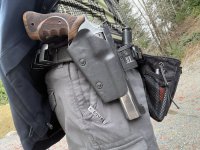
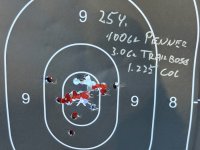
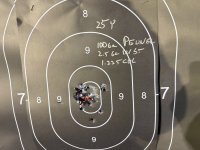
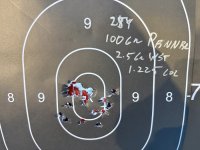
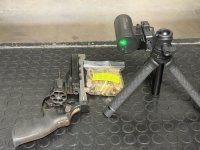
I do a lot of load development for revolvers, and noticed there was a pattern that the 1st shot was lower than the subsequent shots. I started with a CED M2 chrono about 10 years ago, moved up the a LabRadar, and now use a BulletSeeker Mach 4.
So a while back I decided to do some tests with Bullseye, WST, and Titegroup in my 38sp target loads.
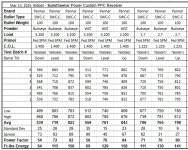
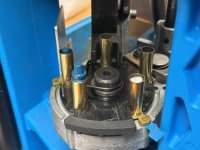
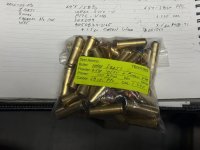
A suggestion was made by another CGN'er that a filler may help with powder position sensitivity. So I made up a batch of practice ammo as I normally do, and added 1.5gr of cotton ball filler for the last 50 rounds so I could run a parallel test.
I was concerned about any affect on accuracy of the load, so I did the following testing:
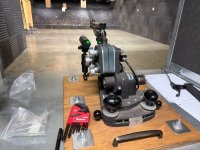
The ransom rest testing
Testing freehand
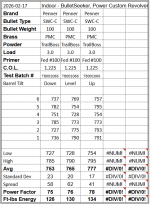
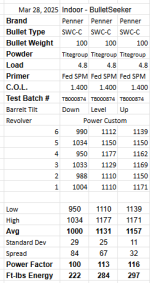
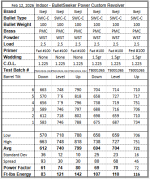
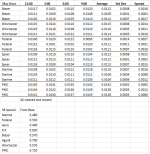
The results of freehand testing. Interesting results, the wadding did indeed reduce the variance due to powder position, but the level and barrel tilt up results were slower with the cotton wad filler. I'm wondering if compressing and expelling the filler consumes some of the energy from the powder charge?
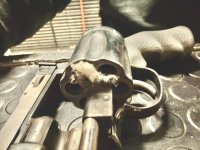
There was a lot of cotton fluff expelled. I noticed one wad of fluff stuck between the cylinder and forcing cone. Not liking that at all, so I kept an eye out for that between each shot.
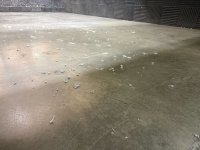
Fluff all over the floor
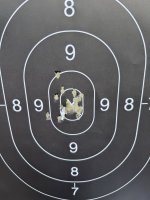
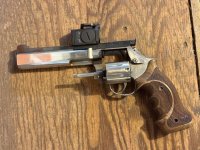
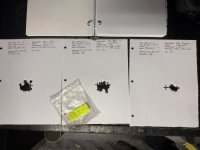
Surprisingly not a significant difference in group size. I knew although this PPC revolver had seen a lot of rounds, that it could do better, so I ran another test of match ammo through (target on the right).
Here's a video snippet showing all the cotton fluff blown out each shot
So a while back I decided to do some tests with Bullseye, WST, and Titegroup in my 38sp target loads.
- string, prior to each shot, I would tilt the barrel down and then chrono that shot.
- string I would level the revolver and give it a shake, then chrono that shot.
- string I would tilt the barrel straight up, then chrono that shot.
A suggestion was made by another CGN'er that a filler may help with powder position sensitivity. So I made up a batch of practice ammo as I normally do, and added 1.5gr of cotton ball filler for the last 50 rounds so I could run a parallel test.
I was concerned about any affect on accuracy of the load, so I did the following testing:
- test 24 rounds normal practice ammo - ransom rest @ 17y
- test 6 rounds freehand barrel tilted down, leveled, and tilted up prior to each shot using standard practice ammo
- test 6 rounds freehand barrel tilted down, leveled, and tilted up prior to each shot using practice ammo made with cotton wad added
- test 24 rounds practice ammo with cotton wad added - ransom rest @ 17y
- test 24 rounds match ammo - ransom rest @ 17y.
The ransom rest testing
Testing freehand
The results of freehand testing. Interesting results, the wadding did indeed reduce the variance due to powder position, but the level and barrel tilt up results were slower with the cotton wad filler. I'm wondering if compressing and expelling the filler consumes some of the energy from the powder charge?
There was a lot of cotton fluff expelled. I noticed one wad of fluff stuck between the cylinder and forcing cone. Not liking that at all, so I kept an eye out for that between each shot.
Fluff all over the floor
Surprisingly not a significant difference in group size. I knew although this PPC revolver had seen a lot of rounds, that it could do better, so I ran another test of match ammo through (target on the right).
Here's a video snippet showing all the cotton fluff blown out each shot


 !
!