Pressure sign help

I'm not sure if that's a compliment or an insult. Well done. :)

It was a compliment to your very wise posting, it looks like some of the posters here need to have a case head separation to know what they look like.:stirthepot2:

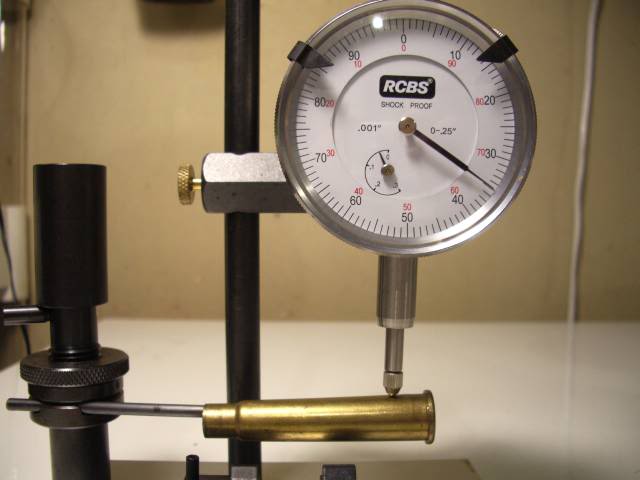
Below is my $100.00 bent paper substitute for measuring case stretch and thinning.

CCntXIg.jpg


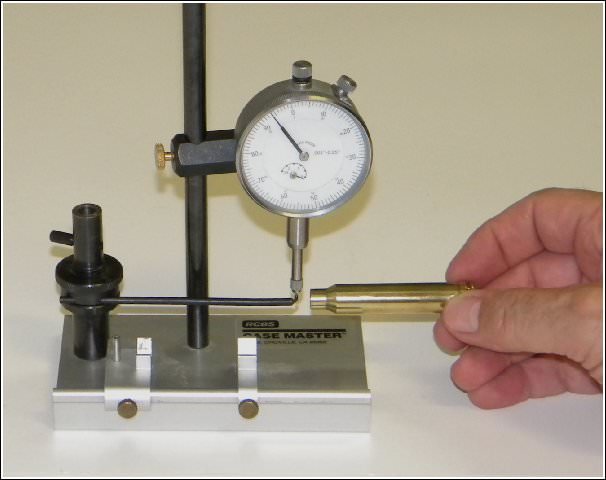
The RCBS case mastering gauge can be setup to measure to .001 of an inch in case wall thickness and any thinning.

SrysELY.jpg


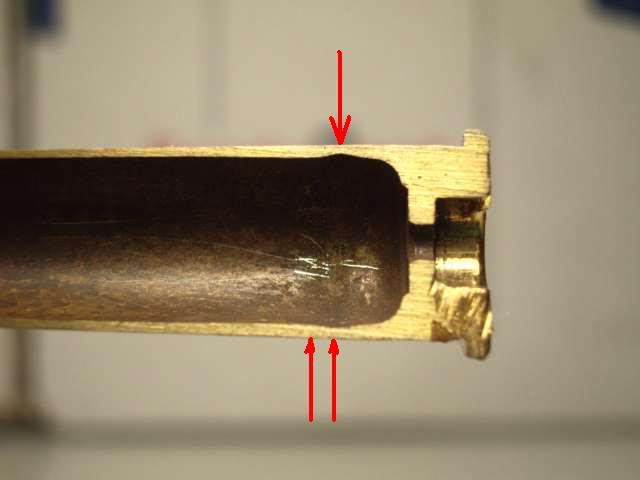
Below is a factory loaded .303 British Winchester case that stretched and thinned .009 on its first firing in my 1943 No.4 Enfield rifle. The bolt will not close on a SAAMI .067 NO-GO gauge but the Winchester brass is thinner than any other brand of .303 British case I have. And a Prvi Partizan .303 British case is .010 "thicker"at the same point and no stretching happened on the first firing. (Built Ford Truck Tough) :d

B1hY7TM.jpg
 
That's where reading reloading manuals comes into play as well. Not all of them mention or show the paperclip trick, each manual has something a bit different about checking cases, that's where it pays to acquire them. Not sure I've seen it shown on any reloading vids on YT, then again, I don't watch a lot of those types of vids.
 
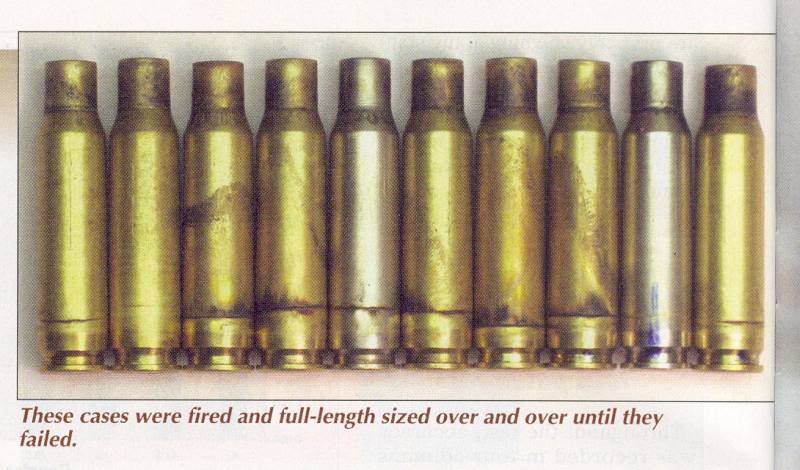
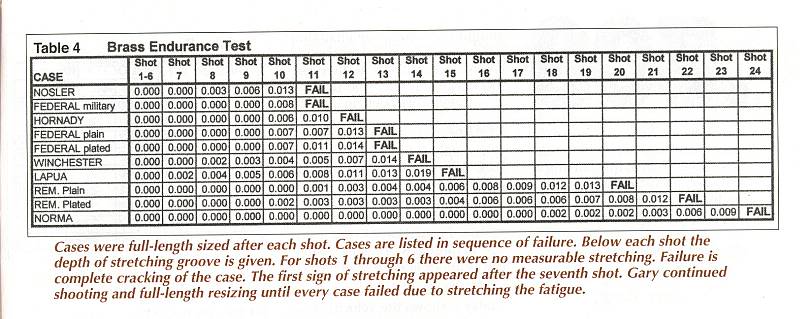
The .308 Winchester cases below were fired in a brand new Savage bolt action. Please note the bottom chart and when the cases started to stretch and the number of times they were fired before the case failed.

TDwPD1Q.jpg


XEuny9C.jpg
 
You only know "for sure" about the one you cut in half.

Actually the RCBS gauge I have measures the stretching and thinning in thousandths of an inch. Meaning I do not need to cut the case in half to know what is happening inside the case.

In the photo I posted of the sectioned case it stretched and thinned .009 and this was hard to feel with a bent paper clip.
 
Actually the RCBS gauge I have measures the stretching and thinning in thousandths of an inch. Meaning I do not need to cut the case in half to know what is happening inside the case.

Yeah, I know that. My post was referring to sectioning / halving a case to prove "for sure" the condition of an entire batch. Halving one case may tell us something but it is not "for sure". Using a gauge like yours is as close to "for sure" as most of us can get.
 
Back
Top Bottom