Primer Energy Approximation Chart

BlackSheepBrass

Regular
Rating - 100%
120   0   0
Location
Cobourg, Ontario
Hello everyone,

I am working on a machine. I can't really talk about it too much until the patent paperwork gets approved unfortunately

I am trying to find tabular data with the energy of various primers. I need to go from small pistol on the low end all the way up to 50 BMG Primers. As I need a min / max amount of energy that is being introduced into an assembly.

I do not need to see photos of the primers igniting, I am actually looking for engineering data for in either Calories, Joules, or Watts. My google-fu is failing me

The only thing I have been able to come up with so far is this photo, and I need a bit bigger cross section of data. I have sent emails out to the OEM manufactures and am waiting to hear responses.
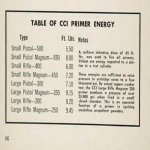
30513219gm.jpg

Thanks

Brian - Black Sheep Brass

 

Attachments

  • 30513219gm.jpg
    30513219gm.jpg
    49.3 KB · Views: 340
Strange that the small pistol magnum has more energy than a small rifle.

Never seen that information before. Thank you.

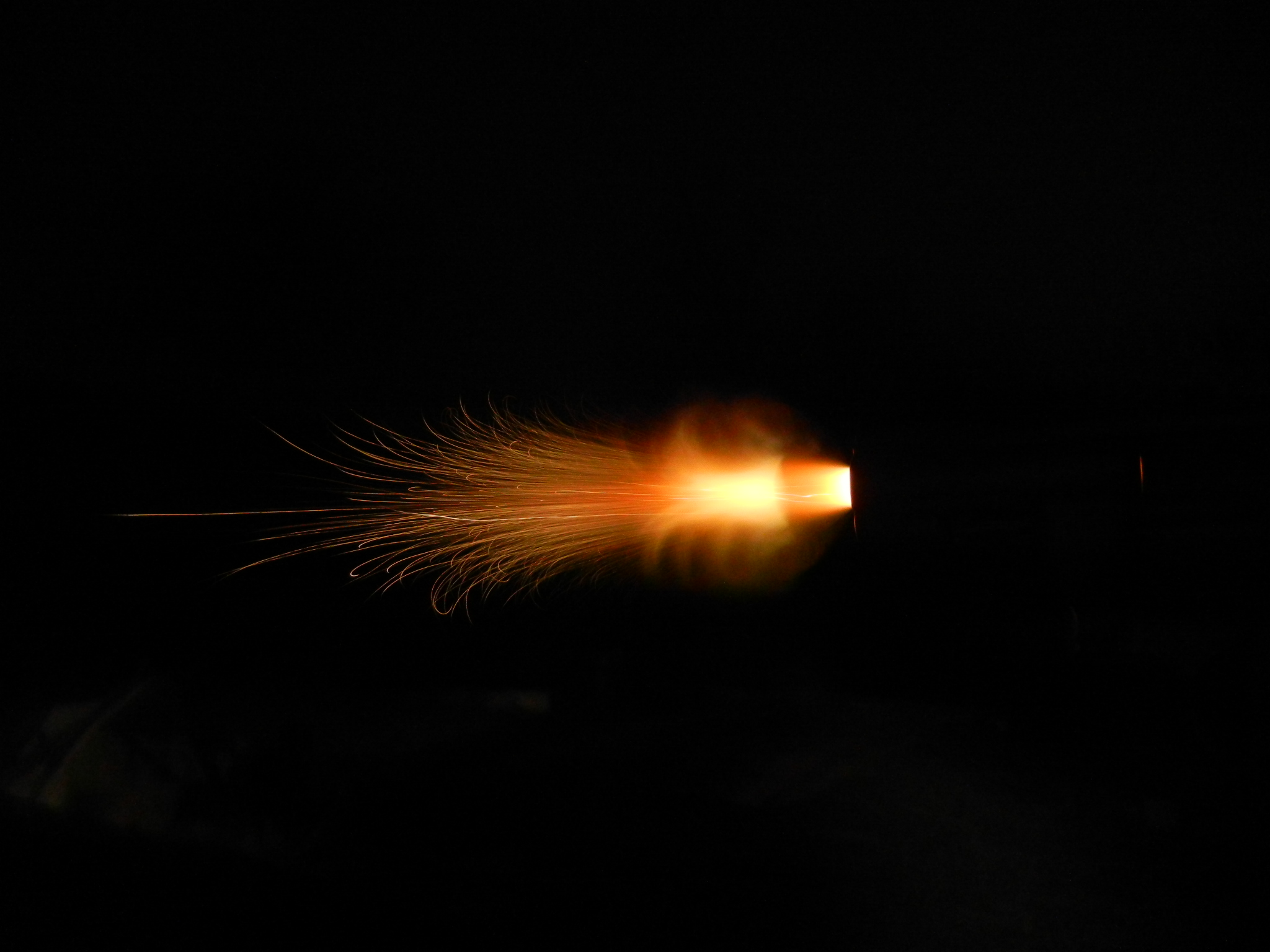
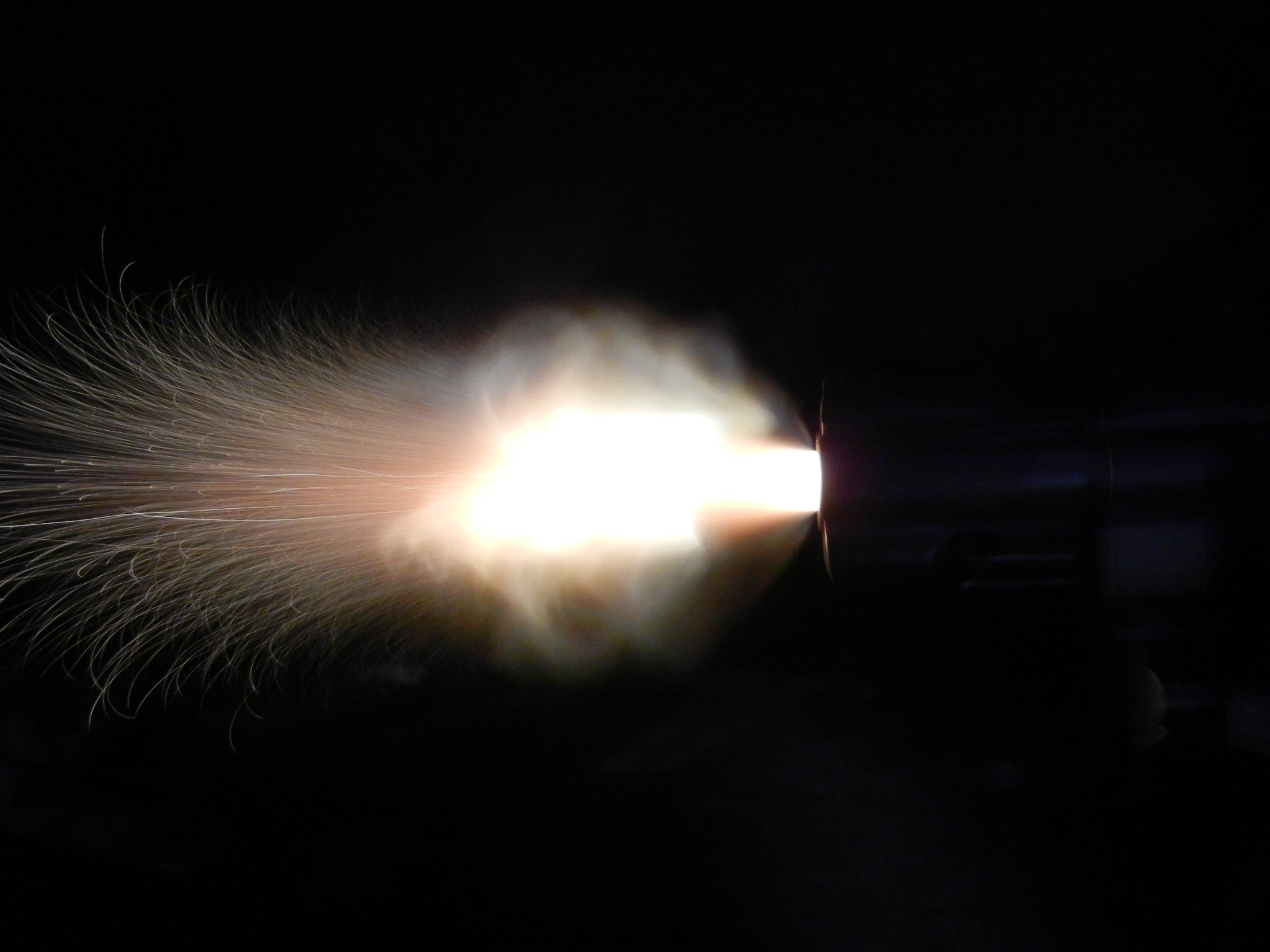
But there is no doubt that there are power differences between brands and power difference between primer sizes.

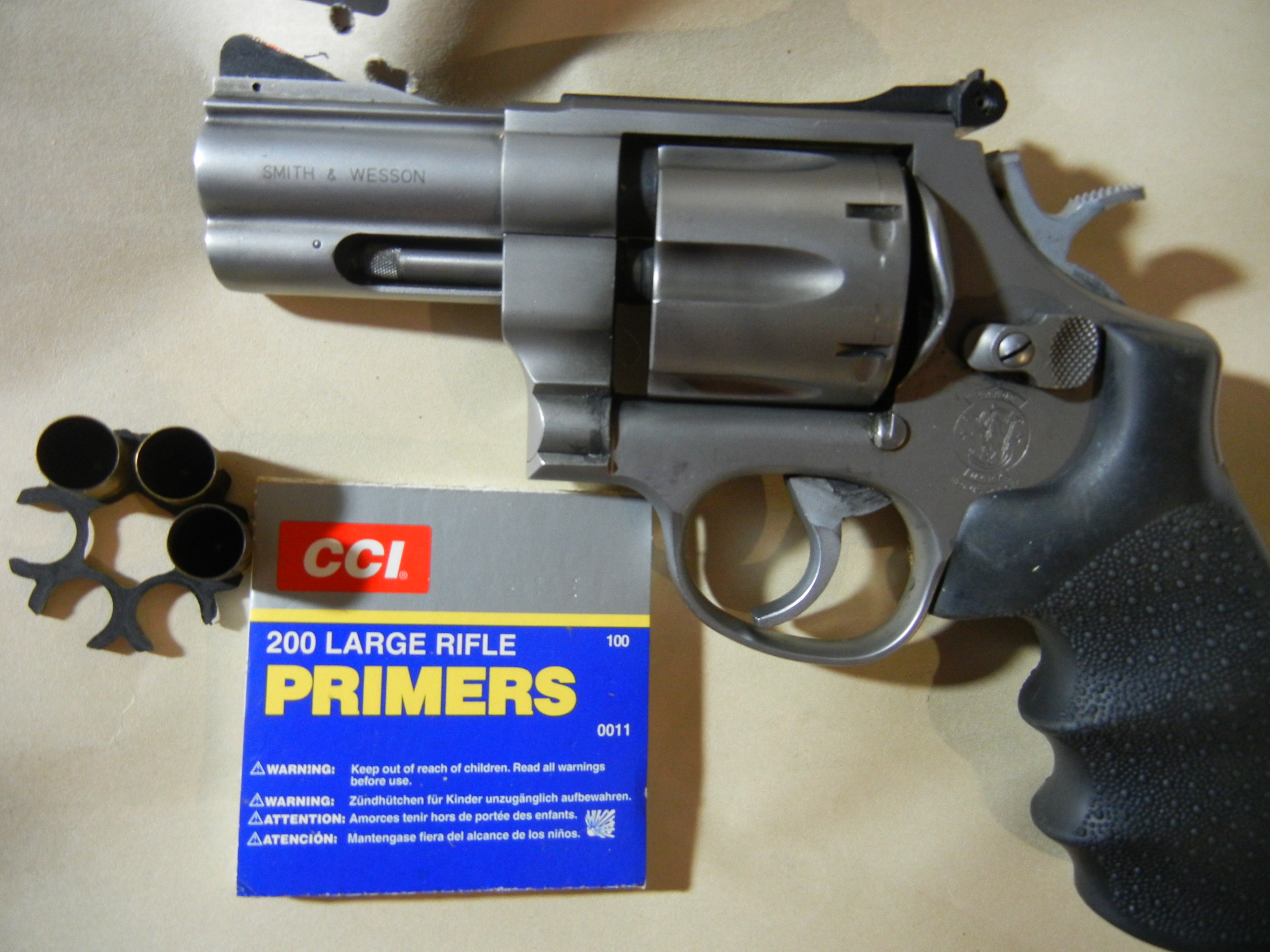
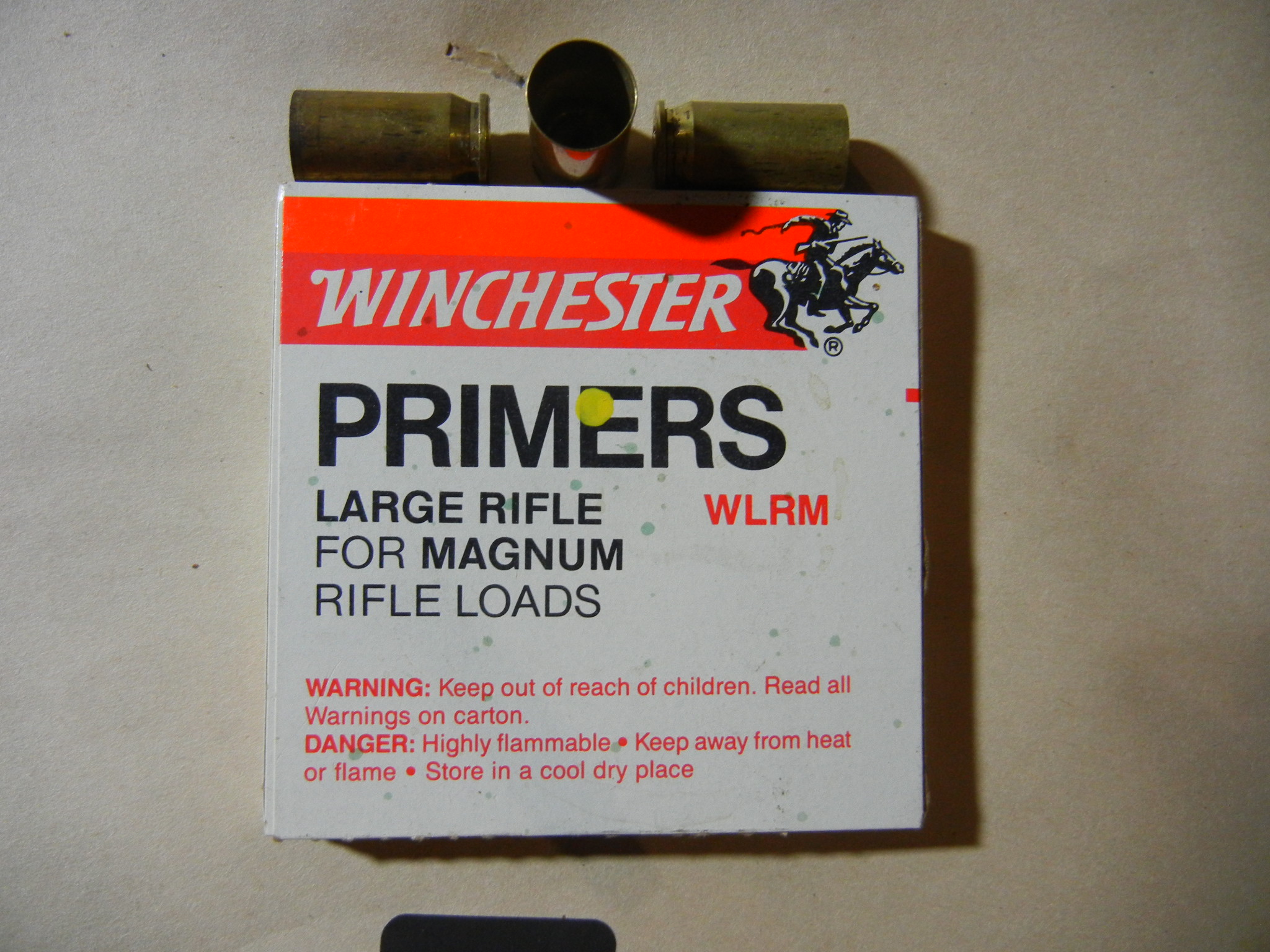
Shooting primers out of a revolver, at night, and photographing the muzzle is an easy way to see the differences.

NviAJdh.jpg

E99FcEb.jpg


wVrlHbF.jpg

TxkeVjK.jpg
 
Is your invention similar to this, for checking quality of primers?

hqdefault.jpg

jalhpaabg.jpg
 

Attachments

  • hqdefault.jpg
    hqdefault.jpg
    13.6 KB · Views: 329
  • jalhpaabg.jpg
    jalhpaabg.jpg
    71.3 KB · Views: 331
Ganderite,

I was surprised by that also. I am trying to determine minimum and maximum values of energy delivered into an assembly if all of the energy of a certain amount ammunition expended all forms of energy and converted it into heat. I need to control the heat flow.

This machine is a military application, so I can't really get into too much details. Once the patent paperwork is completed and I get a NSN assigned to it I can talk about it a bit more. Lots of interesting things going on here and I am pretty excited about it.
 
I have worked in an ammunition plant (CIL - Brownsburg) and have seen testing of machinery to see how fires, etc. are handled.

I recall a test of a new powder hopper for a shotgun loading machine. The hopper held about 25 pounds of powder. In the test the powder detonated instead of burning. We found pieces of quarter inch steel plate a quarter mile away.

The problem is either shrapnel, if the rig detonates, or heat, if there is burning. If powder catches fire you have a couple seconds to get out of the way.

My son had a Jerry can of water in the loading room. The lid was unscrewed, just sitting loosely on top to reduce evaporation. The fire plan was to knock over the can on the way out of the room. The spreading water would kill the fire in the powder on the floor.
 
bigedp51,

Thanks for the information, however not what I am looking for. I am trying to determine an relatively accurate account of the amount of energy in a given primer. The measurement must isolate the primer specifically into an energy measurement. I am conducting engineering calculations of heat flow. Hence when dealing with hundreds of pounds of ammunition, a few calories of energy per piece does equate to a fairly big change potentially.
 
A joule is the amount of energy it takes to heat 1 cubic CM 1degree Celsius. If you could devise a way to measure how hot 1 cc of water gets after igniting a bunch of different primers you could make your own chart
 
Try contacting the primer manufacturers, they should know the energy potential for the compounds used. For example, TNT is 2.72 Ă— 10^6 J/kg.
 
Surely it is simply a function of the heating value, and the quantity, of the priming compound.... For example, google "heat of decomposition of potassium perchlorate"
 
Last edited:
I've been looking for that same info for a few years now, with no luck. Accurate Shooter linked some articles related to primers on their website and the best bit of info I got out of it was "As for the "which is hotter/colder" discussion, a similar conundrum exists: primer specification change." Primer pellet composition seems to have too many variables that the manufactures are constantly dealing with, that makes publishing information unsafe.

https://www.shootingtimes.com/editorial/ammunition_st_mamotaip_200909/100079

Overall, the best technical description on primers I've come across is the two chapters on primers contained in Metallic Cartridge Reloading - Pursuit of the Perfect Cartridge by Mic McPherson, published in 2013.

bigedp51,

Thanks for the information, however not what I am looking for. I am trying to determine an relatively accurate account of the amount of energy in a given primer. The measurement must isolate the primer specifically into an energy measurement. I am conducting engineering calculations of heat flow. Hence when dealing with hundreds of pounds of ammunition, a few calories of energy per piece does equate to a fairly big change potentially.
 
Have you looked at US military primer tests? there are some out on the net, as they were testing "green" primers in the last few yrs and they may have some comparison info contained there. Try this search, maybe it will give you an idea or point you in the direction you need to go? Quite a number of results;
US military small arms primer technology tests
 
bigedp51,

Thanks for the information, however not what I am looking for. I am trying to determine an relatively accurate account of the amount of energy in a given primer. The measurement must isolate the primer specifically into an energy measurement. I am conducting engineering calculations of heat flow. Hence when dealing with hundreds of pounds of ammunition, a few calories of energy per piece does equate to a fairly big change potentially.

You won't get those numers. The manufacturers probably won't release any kind of result to you. You'll need to get a calorimeter and setup your own test.
 
Back
Top Bottom