












































Putting British forestock on Australian action lee enfield?

Emshey

CGN Regular
Rating - 100%
51   0   0
Location
Calgary Alberta
Yet another question I tried researching but find way too many conflicting answers, I have a 1917 Lithgow no1 mk3 that potentially needs a new forestock, the current one has the brass recoil plates and the cylinder bushing for the king screw.

I have found a British walnut stock I can buy now my question is can I drop the forestock into my action and put the bushing in for the key screw from my old one? And I was told the British ones do not use the recoil plates because it is walnut a harder wood so could I get away with not putting them in? And if so would any wood have to be removed or added just to drop it in if I didn't use the plates? As that small space would have to be counted for.

Thanks!!
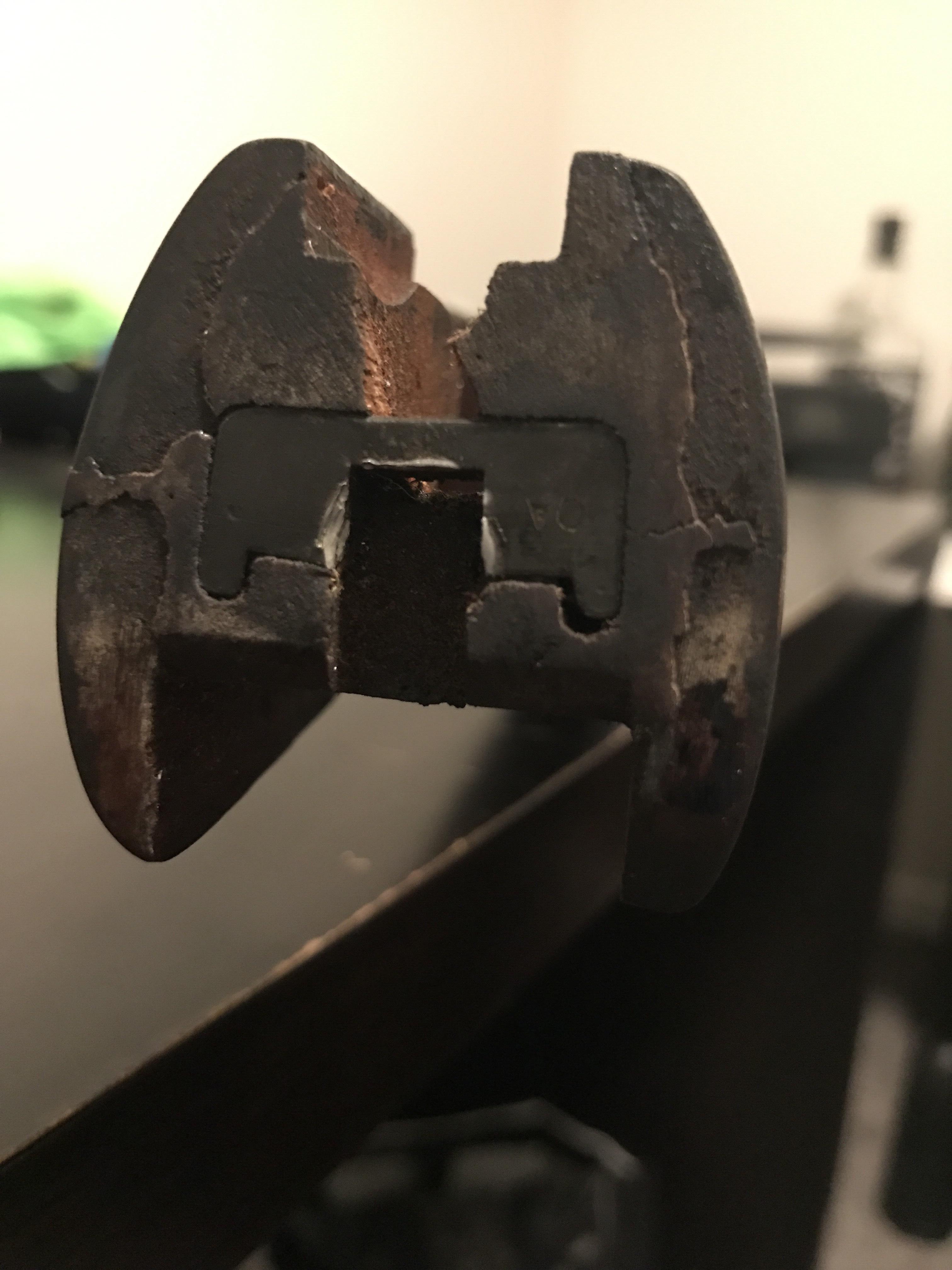
 
It has some cracks in the back where the bolt plate is and around the recoil bridge it is currently with a gunsmith he should let me know if a bit if it can be saved with some creative glueing. If not I have found a British walnut for sale
 
lc4EFUB.jpg
 
Emshey: If you're looking at a new, unused replacement you will likely have to shave down the draws to allow your barreled action to "drop in". It's a finicky process if you've never done it before and easy enough to screw up. If you take this route study up real good using all the material you can find on a forum like Milsurps. As far as your old one goes, it does look pretty bad. I've saved a couple in similar state by chiseling out the entire draws area, front to back, and gluing/ dowelling in a replacement. I don't know how well it would hold together simply gluing all the pieces back in place. You'd certainly have to make an effort to clean all the oil out of the cracks first. Good luck with it.

milsurpo
 
THe draws on your old rifle look to have been taking a hammering. It has been in a loose condition and shot for some time.

It can be repaired (anything can be repaired with enough time and effort), but would need somebody with advanced skills to fix this one.

I think that you are wise replacing it, especially if it will be your regular shooter.

The Sht.LE needs sharp tools and skills to bed it properly. The info is on the net. Problem being, it can take several times repairing these rifles before you will gain the experience to do it properly. If not done right, accuracy will suffer and something will crack and split under recoil.

Best to let somebody who knows these rifle to set it up for you. It is an art which apprentices took years to learn.
Unlike some modern rifles, it is not simply a case of assembling with new parts.

However, I give you every encouragement to try fixing the old stock, and if it doesn't work out, you can always replace it.
 
Have you posted this rifle elsewhere recently? It looks familiar.

Back to your original post re recoil plates. British and Australian receivers are made to the same dimensions, therefore stocks are made same. Australian stocks had wood removed to fit the copper inserts, not the other way around.......there was no adjustments made to the action.
 
Clearly someone un-screwed the buttstock bolt without first taking off the forestock. This splits the stock every time, and from there the draws take a hammering and you see the end result above.

I've seen FAR too many Enfields that look like this, to the point I don't buy SMLE's on the secondary market unless I can inspect in person.
 
Clearly someone un-screwed the buttstock bolt without first taking off the forestock. This splits the stock every time, and from there the draws take a hammering and you see the end result above.

I've seen FAR too many Enfields that look like this, to the point I don't buy SMLE's on the secondary market unless I can inspect in person.

Yes it's way too common isn't it. So common it would have turned plenty away from SMLE's I'm sure. I don't think the butt stock bolt is responsible for busted draws every time, but it's certainly a large contributor.
 
Thanks all! I currently have the old stock at a gunsmith waiting for him to call me back to see what he thinks he can do to maybe save it.

I bought an SMLE on the forum a few years ago. I even asked the seller if the forend had any cracks at the rear and he said no.

When I got it...holy crack! It was full of them.

The seller took responsibility for it, no problem. He was good.

Took it to my gunsmith and he said no problemo....he boiled the area in water to remove any and all oil, several times as I recall. Then he filled the whole complex up with glue and got it in and throughout everywhere. Then it was clamped.

Net result- excellent.

Now, that forend as many others have said is not good...if you have another good one then that might be worthwhile.

Problem is of course it'll be a different wood and manufacturer and yes, not so easy to fit.

Finding an original Aussie coachwood forend is near to impossible, even if you have deep pockets.

Yes, curse that stupid square tip on the stock bolts! It's fine as long as you know about it...but not everyone does.
 
Last edited:
If you're a serious Lee Enfield collector you owe it to yourself to attempt a draws repair! The ratio of damaged to good forends seems to be so high that it's very handy skill. The worst I've seen was a (desporterized) No. 4 that I bought online. Forend was on super tight but the draws area of the forend wasn't actually in contact with the sear lugs! I was unable to reassemble it and concluded the "craftsman" that "restored" it must have put the metal and wood together with a vice. Had to return it disassembled. Scary thing was it actually looked fine externally.

milsurpo
 
I'd wager that not many people have the skills, time and gumption to repair draws properly. (Although I'm sure that there are those who can, even on this thread)

Even fitting a new forend with every dimension oversize...is a daunting prospect.

Even back in the day, when you had trained REME guys servicing the rifles, a forend like that would have likely gone into the scrap or woodstove would it not?

They had new replacement forends ready to install.
 
Last edited:
Back
Top Bottom






















