So, I decided that it is time to get some honest reviews on some products that people are interested in buying. For much of my life, I have been purchasing gun magazines that have been reviewing many of the guns that I liked. As I got older, I noticed that the magazines never reviewed any bad guns, and they all shot under 1 MOA for a bolt action, and 2 MOA for any kind of "assault" rifle. Adding to my skepticism is the fact that all the guns provided come directly from the manufactured for these reviews. My inner conspiracy theorist started wondering:
THE RIFLE
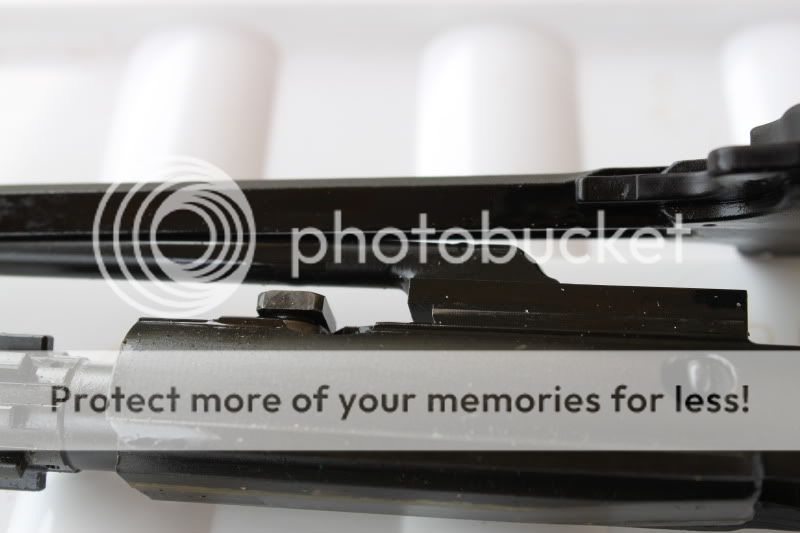
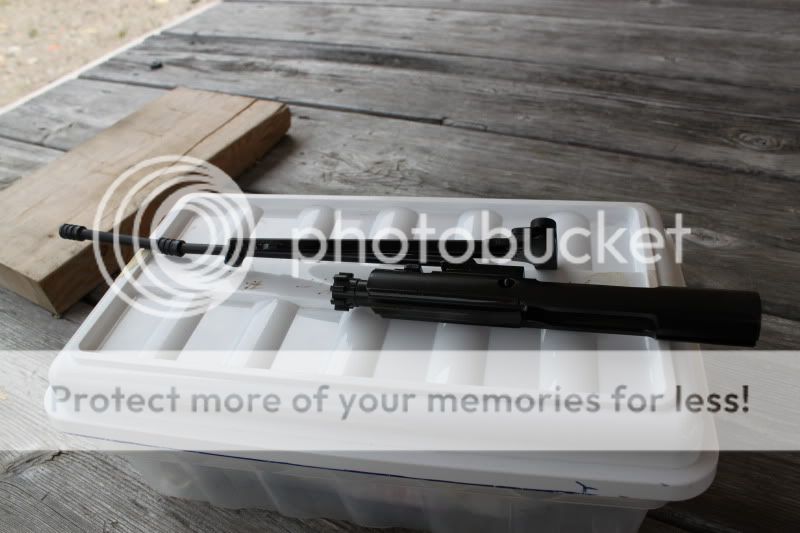
First some background on what we are looking at. The PWS MK110 is a piston operated rifle chambered in 5.56 NATO. Manufacturers have been jumping on the piston bandwagon with the hopes of eliminating one of the main criticisms of ARs: carbon fouling being directed into the receiver. The problem with most piston designs is carrier tilt (feel free to Google this) which reduces the life of the system. PWS has decided to go with a long stroke piston, as opposed to the regular short stroke piston used by most AR piston guns. This is supposed to prevent carrier tilt.
Note the one piece design. Time will tell how clever the design is
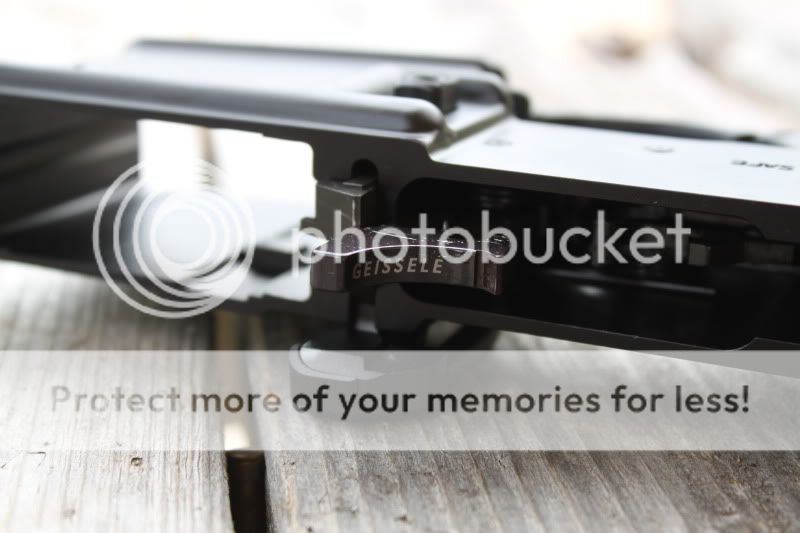
The barrel on the rifle is a stainless steel 10.5", button rifles with a twist of 1:8. It is NOT free floated in the quad rail. The internals are cerakoted micro slick. One thing I will note at this moment is that the stock trigger is utter crap. Most stock triggers are, and I think this one is comparable to the stock trigger on Norinco ARs. I immediately replaced the trigger with the fine Geissele Super Semi-Automatic trigger. The trigger is a very well made two stage trigger that has a 2.5 lb first stage, and a 2 lb second stage (manufacturers claim). Any testing would be tainted by the trigger that came with the rifle. Rifle weight is 6.5 lbs (manufacturers claim). I consider this a nice weight for a rifle of this type. As a reference, this feels much lighter and better balanced than the Swiss Arms CQB.
Geissele SSA trigger installed by the author
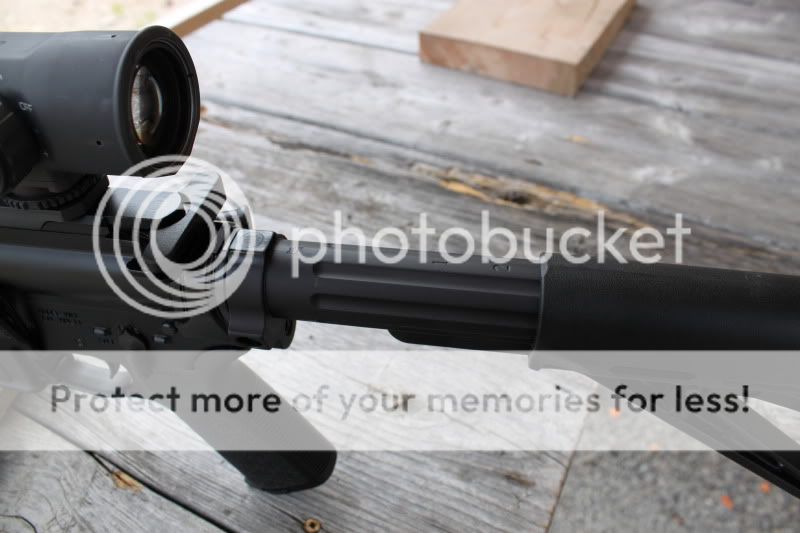
The buffer tube is proprietary but Milspec and came with the Magpul MOE stock and grip. There is a very minor bit of wiggle in the butt stock, which could have been corrected with a CTR, but at some point cost becomes an issue.
PWS buffer and MOE stock
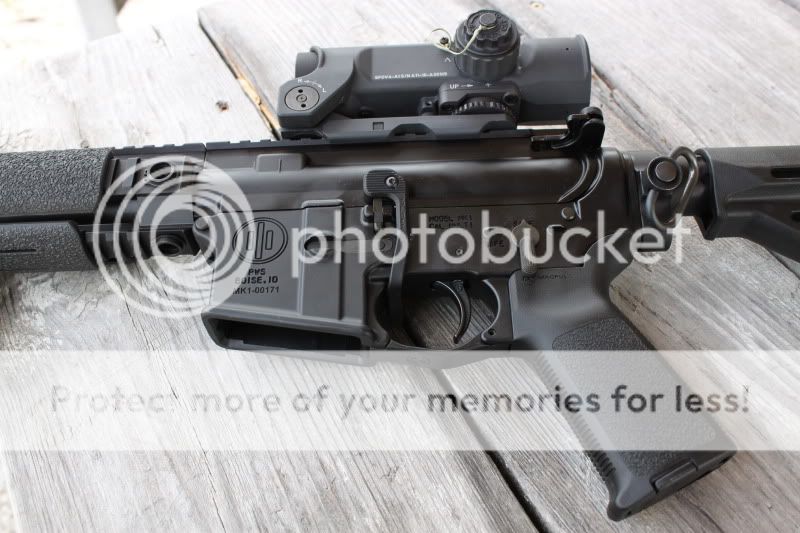
Also a nice feature is the Magpul curved trigger guard which would come in handy should gloves be worn.
Note the curved trigger guard and MOE grip, both courtesy of Magpul
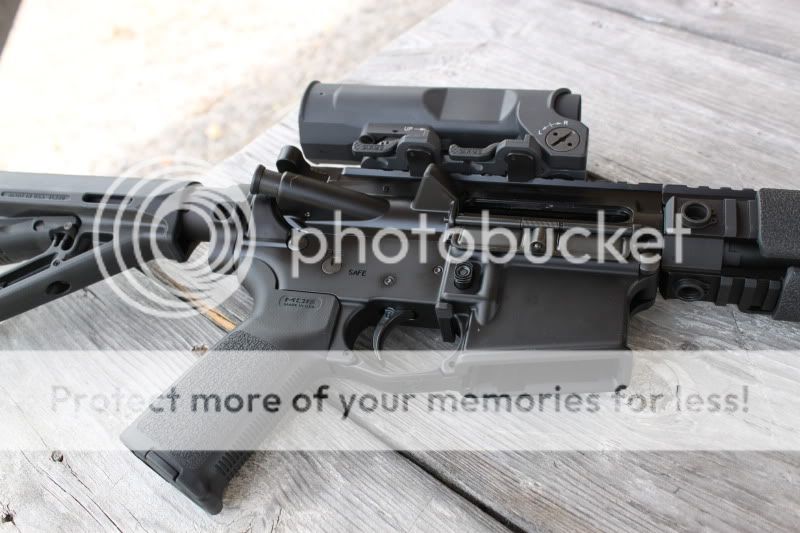
The controls of this AR are standard fare. They are NOT ambidextrous. I have never been a fan of the charging handle / bolt release / bolt hold open system of the AR, so I added the Magpul BAD lever. This is a great solution to the problem, and allows the user to manipulate the rifle with one hand.
The safety selector is very crisp and locks into place with authority. Also included standard is a sling attachment at the buffer tube - receiver junction. Its a nice thing to have and lends itself nicely to a single point sling.
Magpul's BAD lever and the standard fare, non-ambidextrous controls
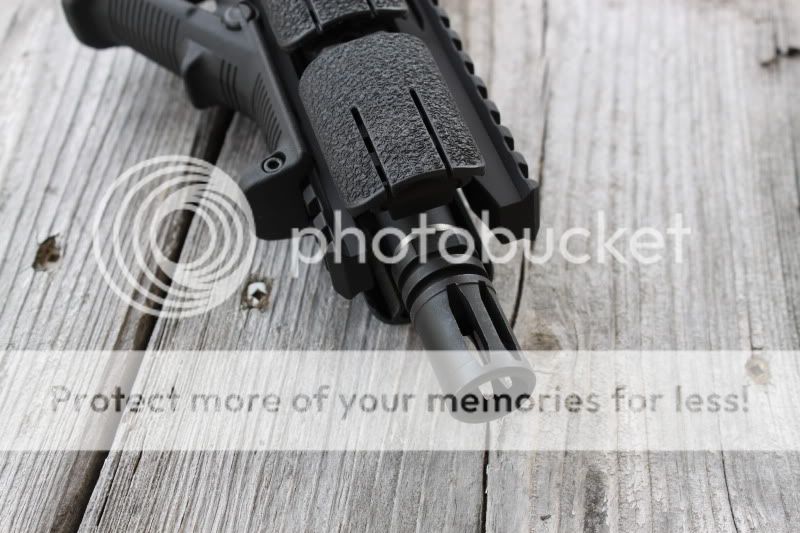
The flash hider included with the rifle is standard A2 birdcage design. I did find it odd that PWS wouldn't include their own muzzle brake, but again, this could have been a cost saving measure.
A2 Flash Hider
No back up iron sights were included with the rifle. Magpul rail covers were included to save my fragile hands from the rails, and I added a Magpul Angled Fore Grip. This helps in providing a natural pointing grip on the rifle.
Magpul rail covers and AFG
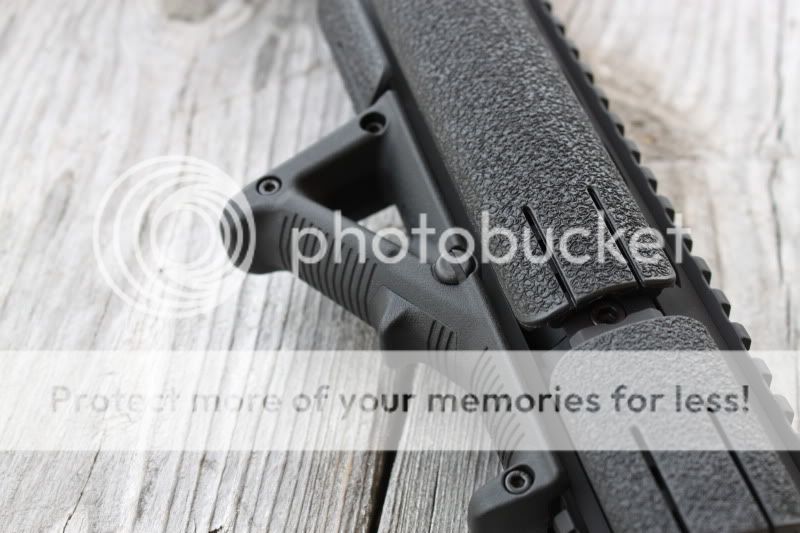
One thing that I was extremely impressed with was the fit and finish of both the upper and the lower. There was no wiggle between the upper and lower, and the machining on the parts were much better than I would have expected on a $2000 rifle.
THE SCOPE
Normally a rifle with such a short barrel is ideally fitted with a red dot sight, but I decided to add a magnified optic to get a better idea of what the rifle can do. I had seen reviews claiming MOA with the 7.5" barrel, so I thought it would only be fair to see my target with a little more clarity. In a moment of patriotism, I decided to give the nod to the Elcan OS4x.
The scope comes equipped to mount to a standard picatinny rail via quick release arms mounts. This made mounting quick, easy and allowed for a secure solution.
Arms Quick Release Mounting
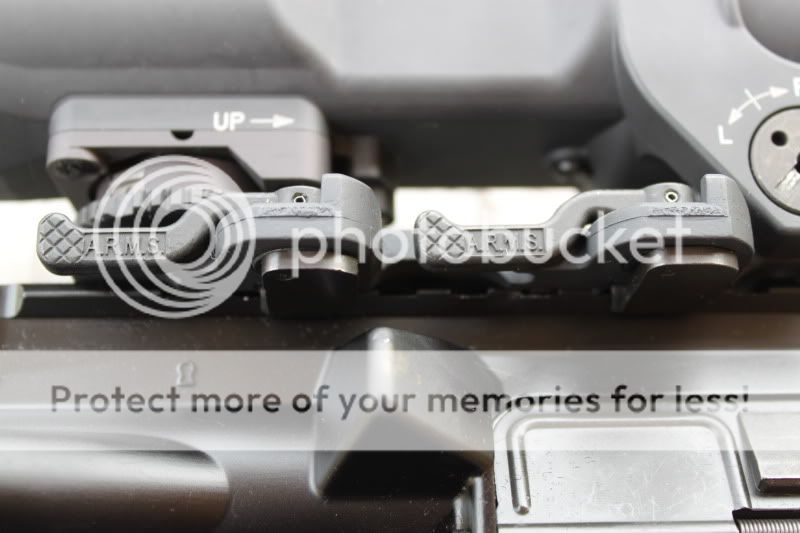
The scope is fixed at a magnification of 4x and is illuminated via 3v battery and is Night Vision compatible. It is attached by a little string, which to me seemed a little cheap. Turning the dial counter clockwise illuminates in the normal fashion, clockwise for Night Vision settings.
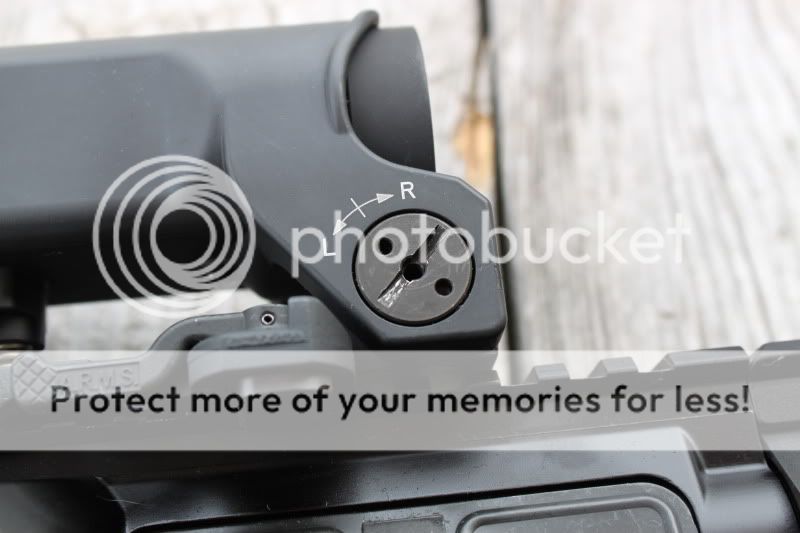
Windage can be adjusted on either the right or the left side. It should be noted that the right side will allow for adjustments with a flat head screwdriver (or coin or key), whereas the left side is only adjustable with a special tool.
Left side of the Elcan OS4x - Illuminated dial and UN-user friendly windage adjustment
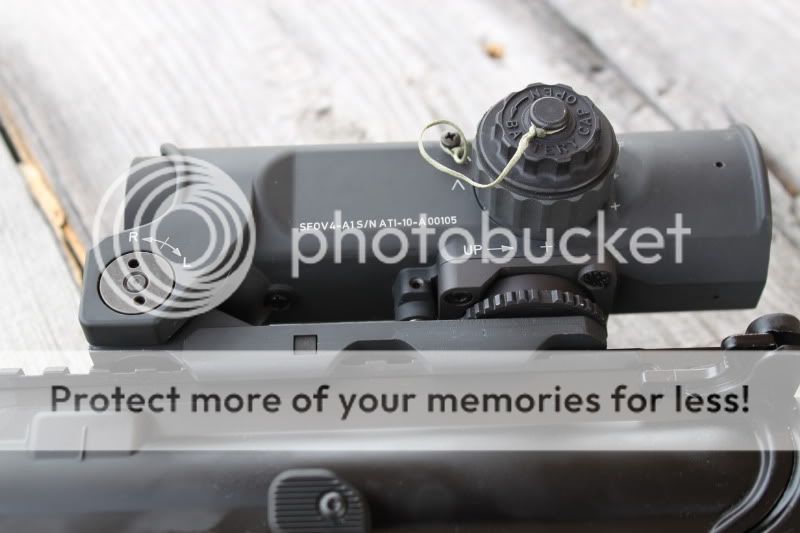
User friendly windage adjustments via the right side
Elevation is handle quite differently with a horizontal dial between the ARMS mounting and the scope. The dial is has a little notch the locks and unlocks the dial to prevent any unintentional changes due to abuse and recoil. Unlocking the dial is not difficult and can be done with a key, but not too easy as to allow for it be accidentally be unlocked.
Elevation Dial with notch clearly visible.
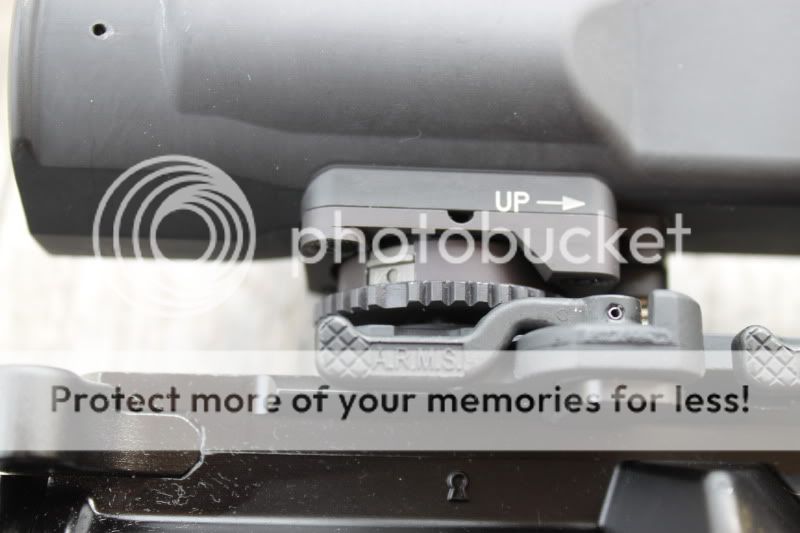
I should note that both the elevation and windage adjustments were precise, but not as crisp as I would have liked. Better than the ACOGs though. Also, the weight of the scope is 18 oz, which is quite a bit heavier than the ACOG.
The glass on the OS4x is in a word... Superb. The accompanying pictures (available upon request) were taken to display the reticle, and don't do justice to what the eye sees. I would say that they were better than the excellent ACOG glass. As for the reticle, it comes in two styles, and the model I tested came with a chevron and bullet drop compensator that was calibrated for the M855 round out to 800 meters.
This scope was made to compete with the likes of the ACOG TA31 series, and I think it does a great job. It is cheaper, brighter and Canadian, but is also heavier and unproven in harsh environments (the Elcan C79s have had a reputation for not holding zeros due to the external adjustments) and relies on batteries (which always die when you least expect it). On a mobile rifle (14" barrel or less), I would pick the ACOG solely based on weight, but I believe that overall, the Elcan is a better optic. The future will tell us if Elcan has defeated the "zero" demons of the past. Shed a few ounces and it would be perfect.
TESTING
First, right off the bat, let me state that I have owned this rifle for about 500 rounds prior to this testing. During this time, I have yet to experience a single malfunction and it has accepted all ammo and mags (Aluminum Mags, Steel Mags, PMAGS, EMAGS), all without any cleaning whatsoever. During shooting at CQB distances, the rifle was a natural pointer and well balanced. This is to be expected by it's light weight and short barrel.
This testing was to test the accuracy of the rifle in slow, deliberate shots and faster combat type shooting. All groups were fired from a bench using a front sandbag.
Also, since the shooter is the biggest influence in accuracy and precision, I must validate my skills in general, and during testing. Generally, I am a .5 MOA shooter on a good day with a capable gun and scope on a good day. On a bad day, I am a 2MOA shooter, with an average day being able to keep it under 1 MOA. On the day of testing, I was having an average day, and can attribute that to the damn tasty McDonalds large triple triple.
The conditions for the testing were ideal. Wind was calm, temperature was 20 degrees celcius, visibility was excellent, and mirage was not an issue.
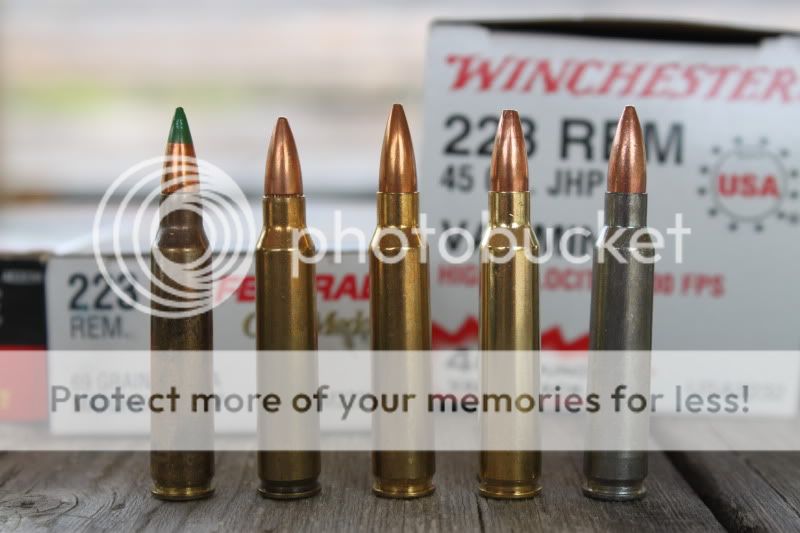
Five different brands of ammunition was used. No reloads were used.
M855 62g, American Eagle 55g, Federal Gold Medal 69g, Winchester JHP 45g and MFS FMJ 55g
The lineup.
In the first phase of testing, I tested the rifle at 50 meters.
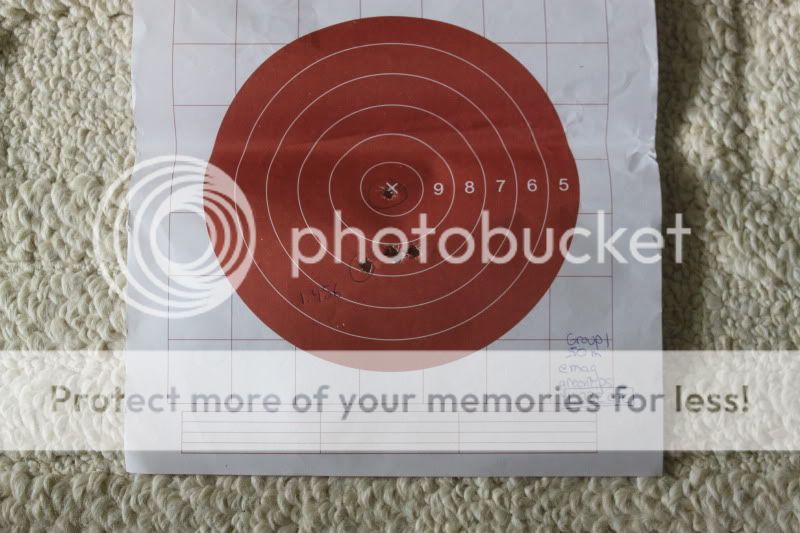
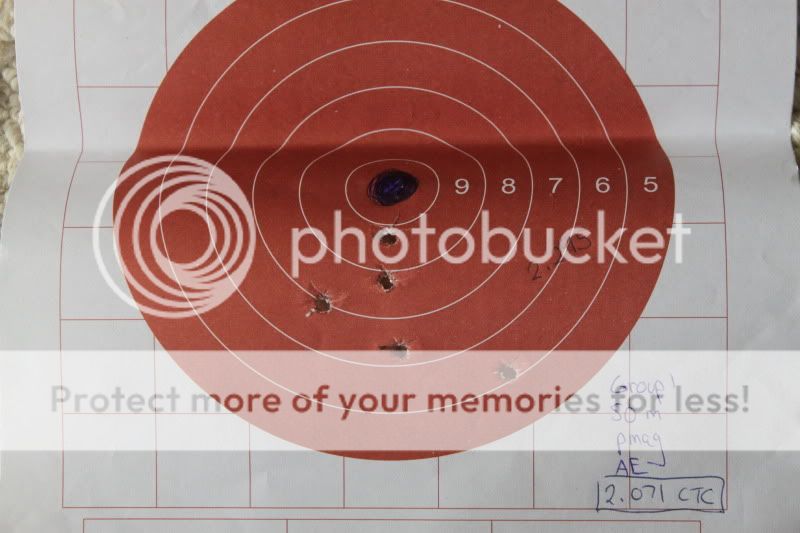
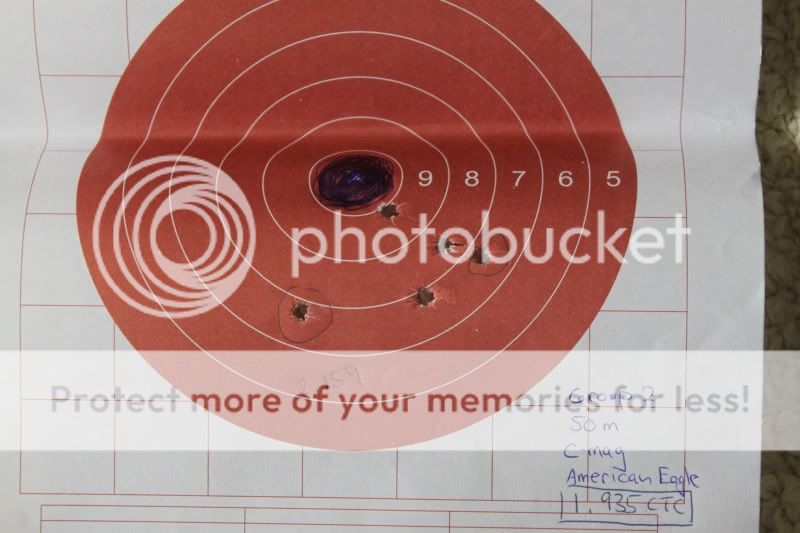
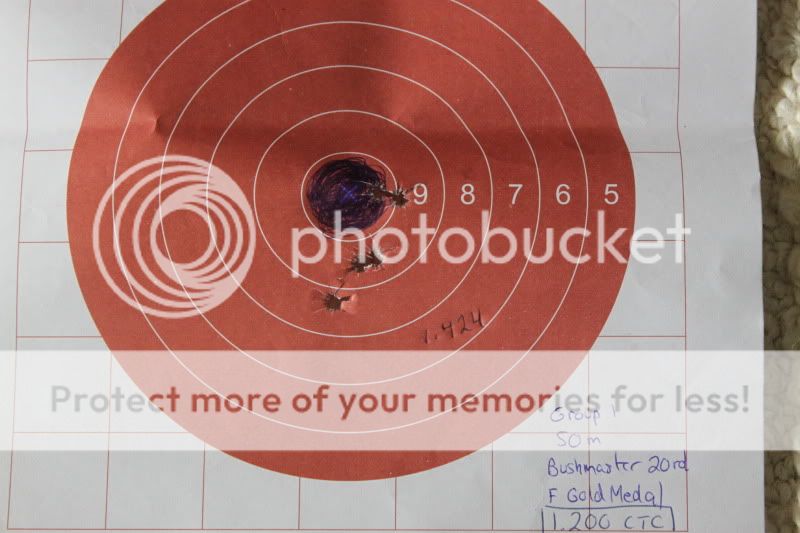
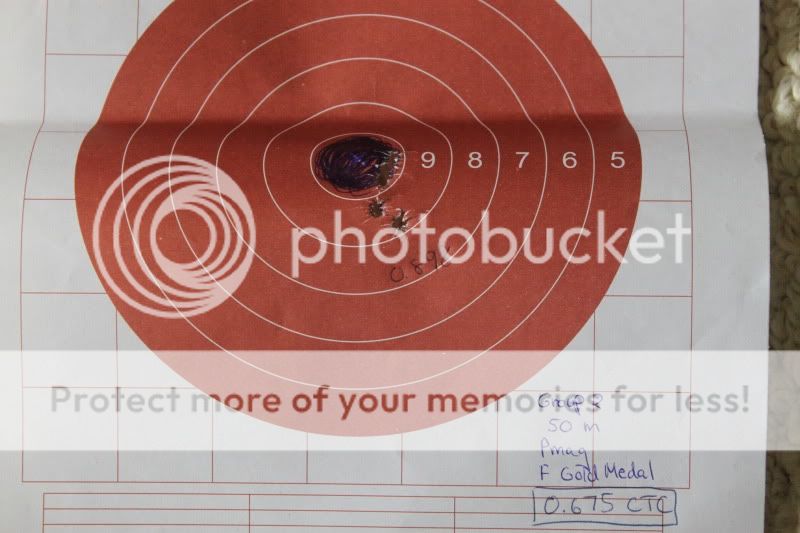
After the scope was zeroed, two five shot groups were shot with each brand. Here are the results.
M855
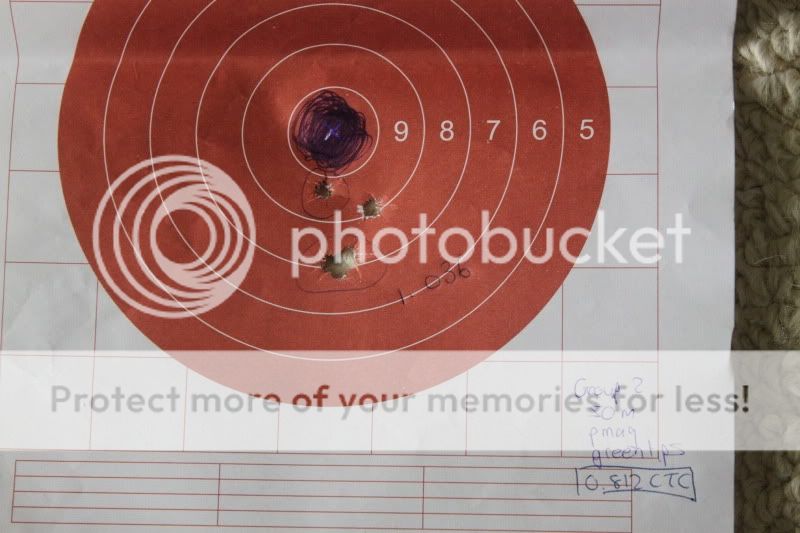
American Eagle 55g
Federal Gold Medal 69g
Winchester JHP 45g
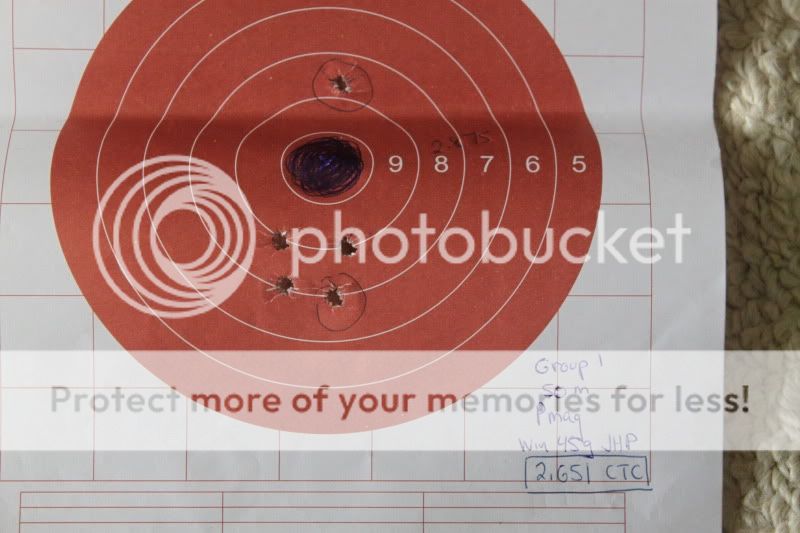
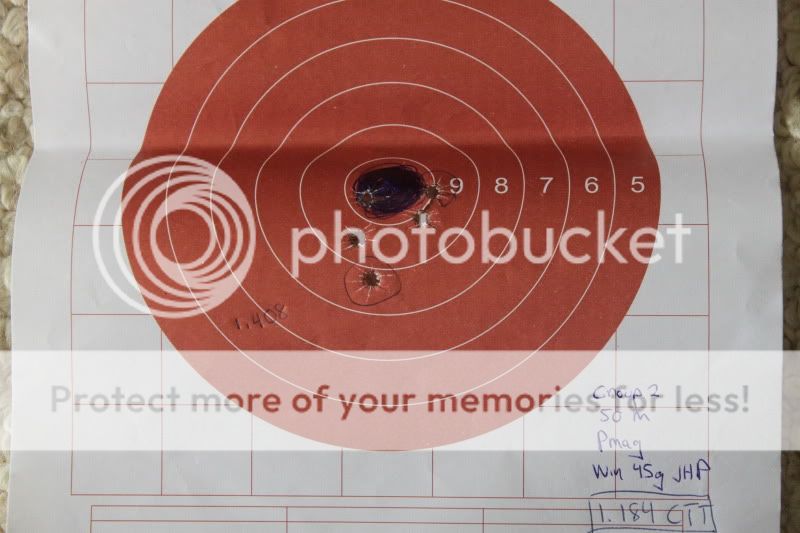
MFS FMJ 55g
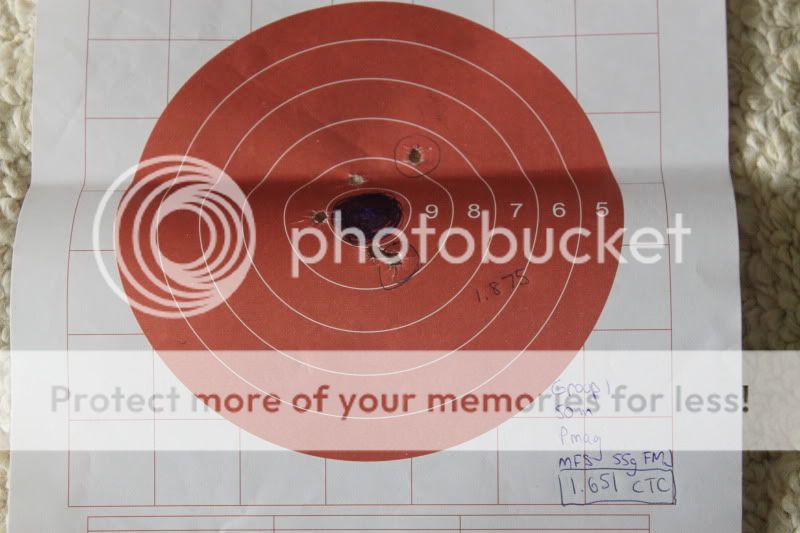
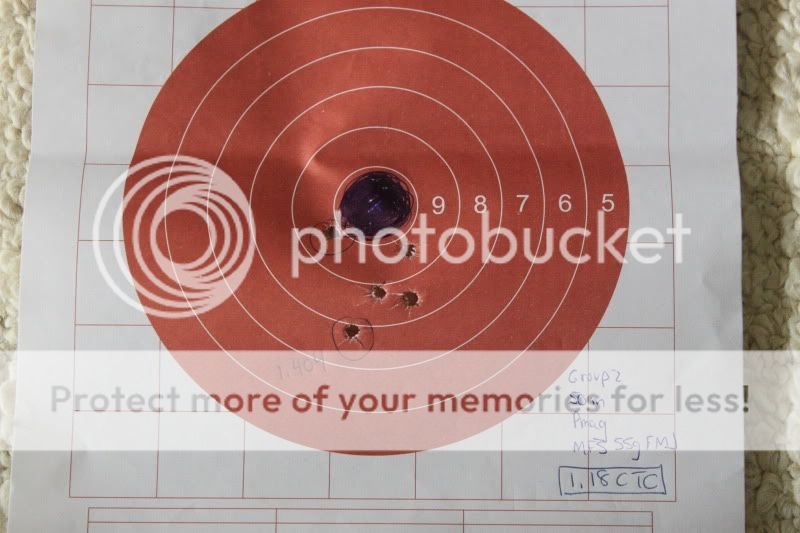
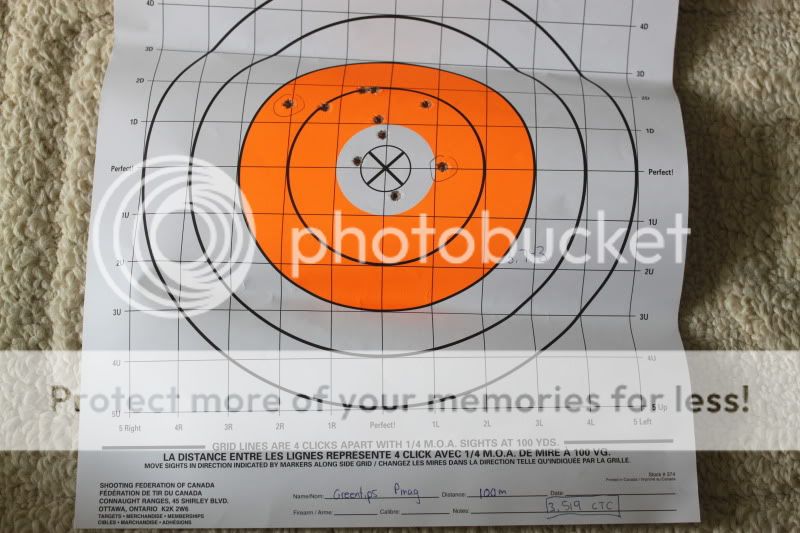
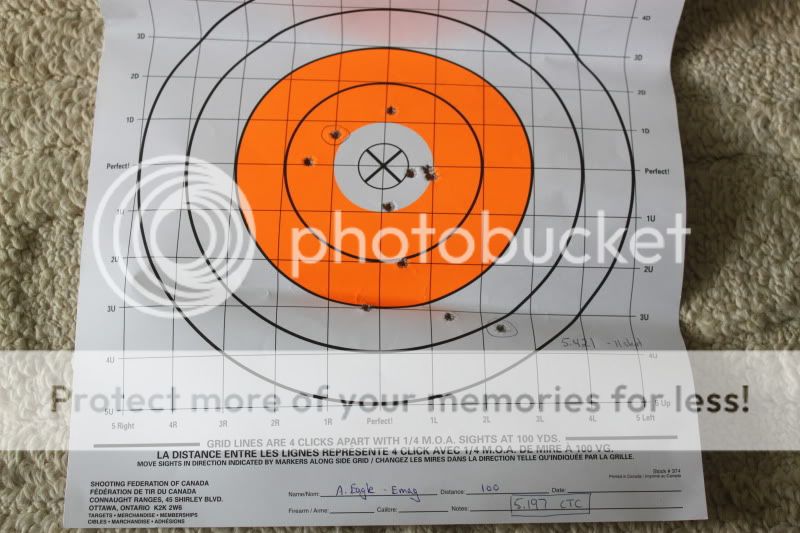
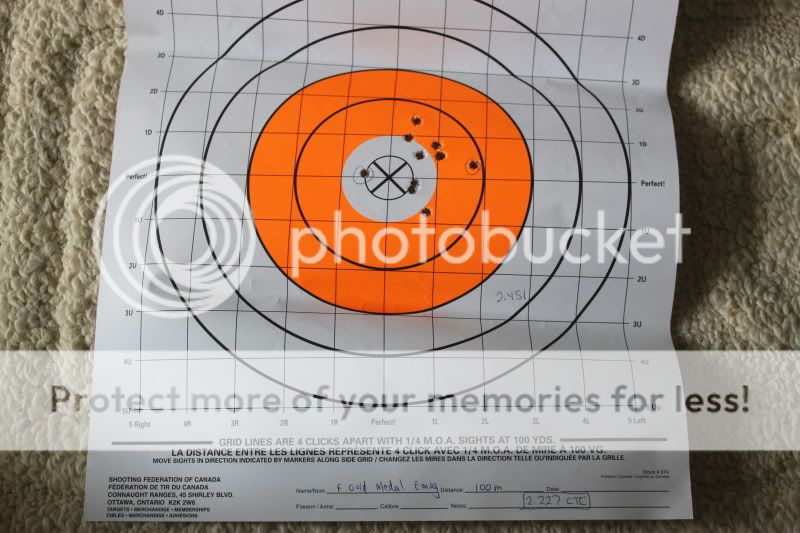
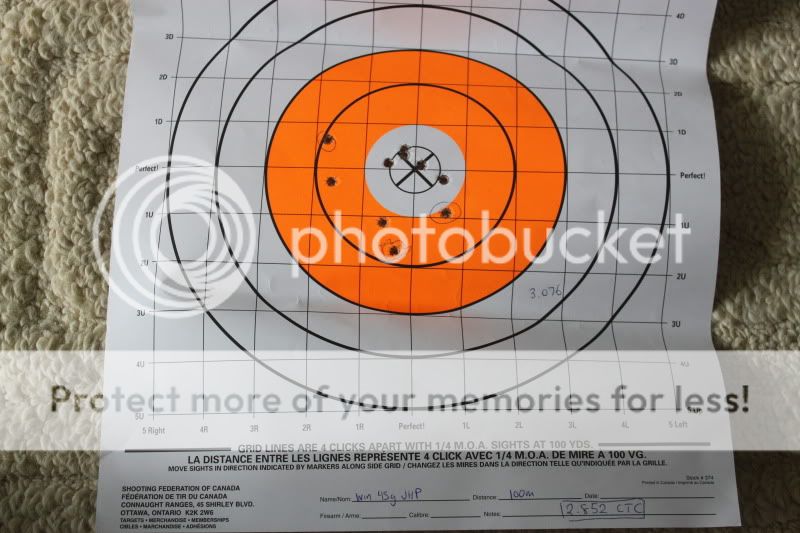
Phase 2 of the testing was conducted at 100 meters. Ten shots were fired at the target as fast as I could reliably get the tip of the chevron back on target. This was about 1 shot every 3 seconds with a mag change being the only pause during the group. Tests were spaced out 5 minutes apart.
M855
American Eagle 55g FMJ (11 shot group)
Federal Gold Medal 69g
Winchester JHP 45g
MFS FMJ 55g
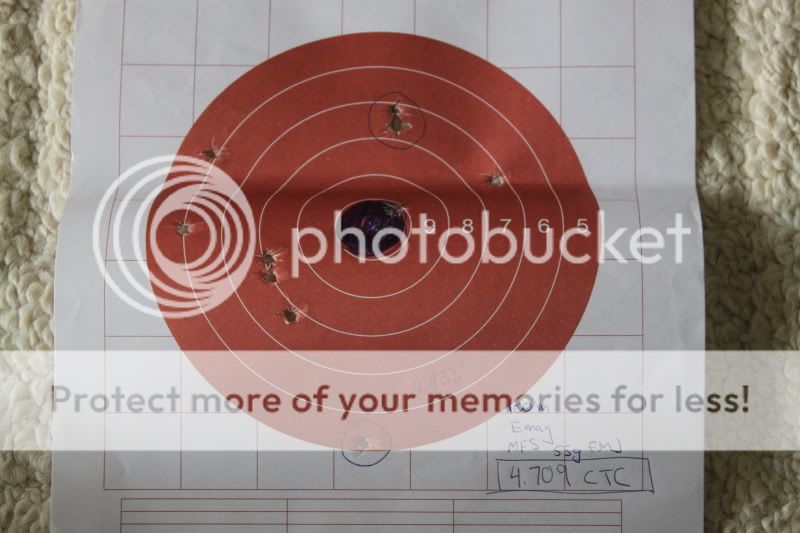
So how does one determine the precision of the rifle with the above groups. Groups were as small as 1.3MOA at 50 meters and 2.2MOA at 100 meters with 10 shot groups at a fast pace. I would deem that acceptable for a 10" combat rifle.
However, groups were as big as 5.3 MOA at 50 meters and 5.3 MOA at 100 meters. I wouldn't consider that acceptable and based on that, rather use a Ruger Mini-14.
I would therefore consider this a capable battle rifle at CQB ranges ONLY if proper ammunition is used. If you are looking for a tack driver, this is not your gun.
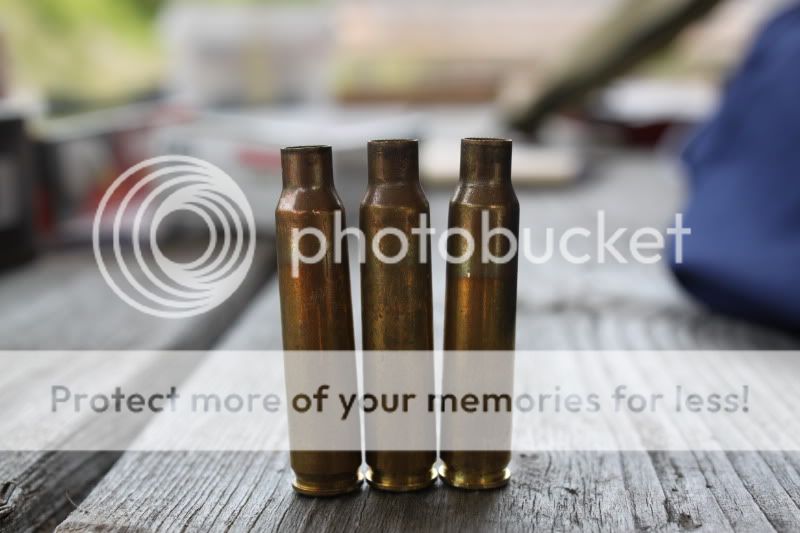
All brass was ejected consistently at the 4 o'clock position, about 2 meters away. The brass was not damaged and would be reloadable.
Ejected Brass - No dents

THE VERDICT
Pro's
Cons
I welcome any constructive criticism as I would like to implement it in my future reviews:
Tavor with 14.5" and 18.5" barrels
PS90 with 10" barrel
LMT 308MWS
Stay tuned.
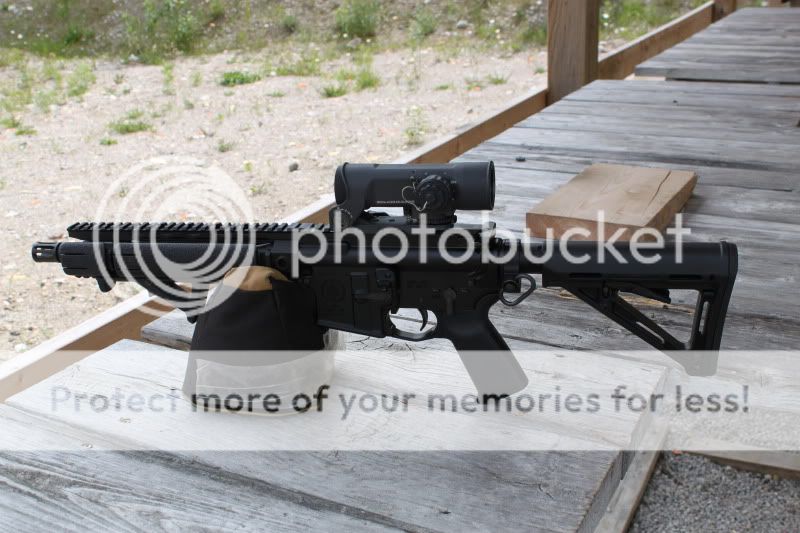
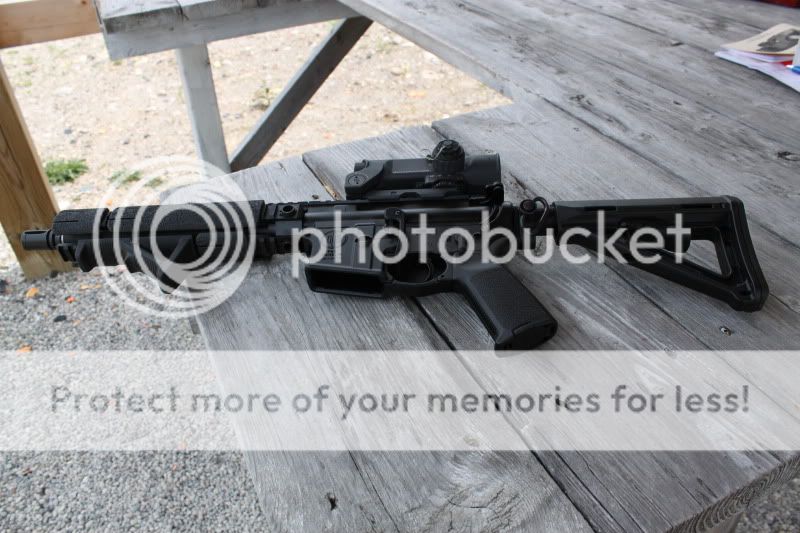
Gratuitous Rifle Shots
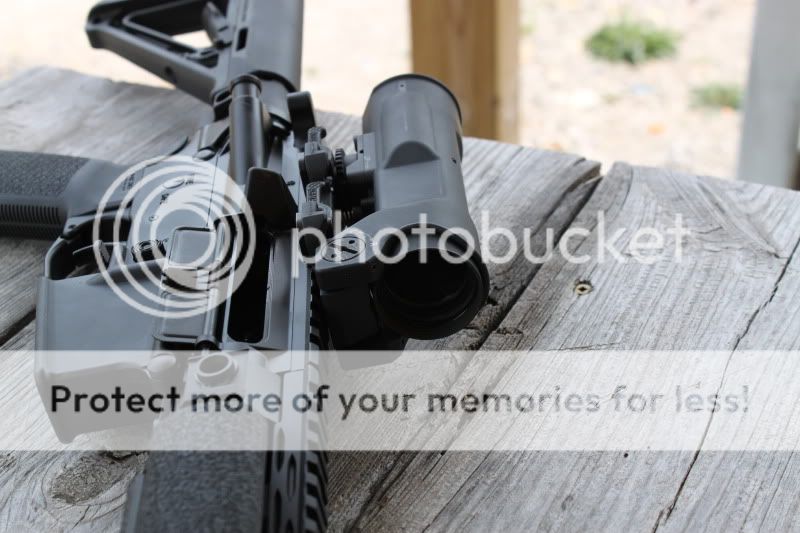
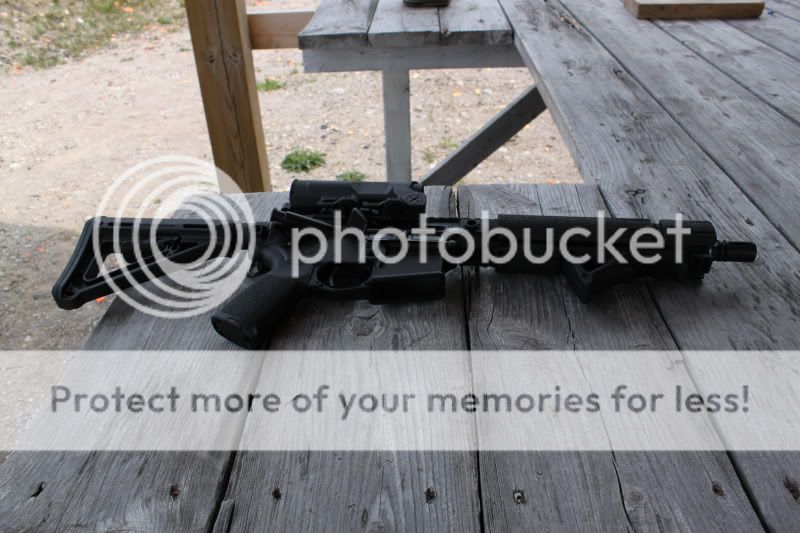
- are the manufacturers "cherry picking" guns that may not be representative of what ships to regular buyers?
- are magazine editors fabricating results to appease the manufacturers who buy advertising space in the magazines?
THE RIFLE
First some background on what we are looking at. The PWS MK110 is a piston operated rifle chambered in 5.56 NATO. Manufacturers have been jumping on the piston bandwagon with the hopes of eliminating one of the main criticisms of ARs: carbon fouling being directed into the receiver. The problem with most piston designs is carrier tilt (feel free to Google this) which reduces the life of the system. PWS has decided to go with a long stroke piston, as opposed to the regular short stroke piston used by most AR piston guns. This is supposed to prevent carrier tilt.
Note the one piece design. Time will tell how clever the design is
The barrel on the rifle is a stainless steel 10.5", button rifles with a twist of 1:8. It is NOT free floated in the quad rail. The internals are cerakoted micro slick. One thing I will note at this moment is that the stock trigger is utter crap. Most stock triggers are, and I think this one is comparable to the stock trigger on Norinco ARs. I immediately replaced the trigger with the fine Geissele Super Semi-Automatic trigger. The trigger is a very well made two stage trigger that has a 2.5 lb first stage, and a 2 lb second stage (manufacturers claim). Any testing would be tainted by the trigger that came with the rifle. Rifle weight is 6.5 lbs (manufacturers claim). I consider this a nice weight for a rifle of this type. As a reference, this feels much lighter and better balanced than the Swiss Arms CQB.
Geissele SSA trigger installed by the author
The buffer tube is proprietary but Milspec and came with the Magpul MOE stock and grip. There is a very minor bit of wiggle in the butt stock, which could have been corrected with a CTR, but at some point cost becomes an issue.
PWS buffer and MOE stock
Also a nice feature is the Magpul curved trigger guard which would come in handy should gloves be worn.
Note the curved trigger guard and MOE grip, both courtesy of Magpul
The controls of this AR are standard fare. They are NOT ambidextrous. I have never been a fan of the charging handle / bolt release / bolt hold open system of the AR, so I added the Magpul BAD lever. This is a great solution to the problem, and allows the user to manipulate the rifle with one hand.
The safety selector is very crisp and locks into place with authority. Also included standard is a sling attachment at the buffer tube - receiver junction. Its a nice thing to have and lends itself nicely to a single point sling.
Magpul's BAD lever and the standard fare, non-ambidextrous controls
The flash hider included with the rifle is standard A2 birdcage design. I did find it odd that PWS wouldn't include their own muzzle brake, but again, this could have been a cost saving measure.
A2 Flash Hider
No back up iron sights were included with the rifle. Magpul rail covers were included to save my fragile hands from the rails, and I added a Magpul Angled Fore Grip. This helps in providing a natural pointing grip on the rifle.
Magpul rail covers and AFG
One thing that I was extremely impressed with was the fit and finish of both the upper and the lower. There was no wiggle between the upper and lower, and the machining on the parts were much better than I would have expected on a $2000 rifle.
THE SCOPE
Normally a rifle with such a short barrel is ideally fitted with a red dot sight, but I decided to add a magnified optic to get a better idea of what the rifle can do. I had seen reviews claiming MOA with the 7.5" barrel, so I thought it would only be fair to see my target with a little more clarity. In a moment of patriotism, I decided to give the nod to the Elcan OS4x.
The scope comes equipped to mount to a standard picatinny rail via quick release arms mounts. This made mounting quick, easy and allowed for a secure solution.
Arms Quick Release Mounting
The scope is fixed at a magnification of 4x and is illuminated via 3v battery and is Night Vision compatible. It is attached by a little string, which to me seemed a little cheap. Turning the dial counter clockwise illuminates in the normal fashion, clockwise for Night Vision settings.
Windage can be adjusted on either the right or the left side. It should be noted that the right side will allow for adjustments with a flat head screwdriver (or coin or key), whereas the left side is only adjustable with a special tool.
Left side of the Elcan OS4x - Illuminated dial and UN-user friendly windage adjustment
User friendly windage adjustments via the right side
Elevation is handle quite differently with a horizontal dial between the ARMS mounting and the scope. The dial is has a little notch the locks and unlocks the dial to prevent any unintentional changes due to abuse and recoil. Unlocking the dial is not difficult and can be done with a key, but not too easy as to allow for it be accidentally be unlocked.
Elevation Dial with notch clearly visible.
I should note that both the elevation and windage adjustments were precise, but not as crisp as I would have liked. Better than the ACOGs though. Also, the weight of the scope is 18 oz, which is quite a bit heavier than the ACOG.
The glass on the OS4x is in a word... Superb. The accompanying pictures (available upon request) were taken to display the reticle, and don't do justice to what the eye sees. I would say that they were better than the excellent ACOG glass. As for the reticle, it comes in two styles, and the model I tested came with a chevron and bullet drop compensator that was calibrated for the M855 round out to 800 meters.
This scope was made to compete with the likes of the ACOG TA31 series, and I think it does a great job. It is cheaper, brighter and Canadian, but is also heavier and unproven in harsh environments (the Elcan C79s have had a reputation for not holding zeros due to the external adjustments) and relies on batteries (which always die when you least expect it). On a mobile rifle (14" barrel or less), I would pick the ACOG solely based on weight, but I believe that overall, the Elcan is a better optic. The future will tell us if Elcan has defeated the "zero" demons of the past. Shed a few ounces and it would be perfect.
TESTING
First, right off the bat, let me state that I have owned this rifle for about 500 rounds prior to this testing. During this time, I have yet to experience a single malfunction and it has accepted all ammo and mags (Aluminum Mags, Steel Mags, PMAGS, EMAGS), all without any cleaning whatsoever. During shooting at CQB distances, the rifle was a natural pointer and well balanced. This is to be expected by it's light weight and short barrel.
This testing was to test the accuracy of the rifle in slow, deliberate shots and faster combat type shooting. All groups were fired from a bench using a front sandbag.
Also, since the shooter is the biggest influence in accuracy and precision, I must validate my skills in general, and during testing. Generally, I am a .5 MOA shooter on a good day with a capable gun and scope on a good day. On a bad day, I am a 2MOA shooter, with an average day being able to keep it under 1 MOA. On the day of testing, I was having an average day, and can attribute that to the damn tasty McDonalds large triple triple.
The conditions for the testing were ideal. Wind was calm, temperature was 20 degrees celcius, visibility was excellent, and mirage was not an issue.
Five different brands of ammunition was used. No reloads were used.
M855 62g, American Eagle 55g, Federal Gold Medal 69g, Winchester JHP 45g and MFS FMJ 55g
The lineup.
In the first phase of testing, I tested the rifle at 50 meters.
After the scope was zeroed, two five shot groups were shot with each brand. Here are the results.
M855
American Eagle 55g
Federal Gold Medal 69g
Winchester JHP 45g
MFS FMJ 55g
Phase 2 of the testing was conducted at 100 meters. Ten shots were fired at the target as fast as I could reliably get the tip of the chevron back on target. This was about 1 shot every 3 seconds with a mag change being the only pause during the group. Tests were spaced out 5 minutes apart.
M855
American Eagle 55g FMJ (11 shot group)
Federal Gold Medal 69g
Winchester JHP 45g
MFS FMJ 55g
So how does one determine the precision of the rifle with the above groups. Groups were as small as 1.3MOA at 50 meters and 2.2MOA at 100 meters with 10 shot groups at a fast pace. I would deem that acceptable for a 10" combat rifle.
However, groups were as big as 5.3 MOA at 50 meters and 5.3 MOA at 100 meters. I wouldn't consider that acceptable and based on that, rather use a Ruger Mini-14.
I would therefore consider this a capable battle rifle at CQB ranges ONLY if proper ammunition is used. If you are looking for a tack driver, this is not your gun.
All brass was ejected consistently at the 4 o'clock position, about 2 meters away. The brass was not damaged and would be reloadable.
Ejected Brass - No dents
THE VERDICT
Pro's
- Light weight
- Excellent Fit and Finish
- Perfect reliability
- CQB rifle accuracy
Cons
- Stock Trigger
- Not Southpaw Friendly
- Barrel NOT Free Floated
- CQB rifle accuracy does not represent what other tests from magazines have produced.
I welcome any constructive criticism as I would like to implement it in my future reviews:
Tavor with 14.5" and 18.5" barrels
PS90 with 10" barrel
LMT 308MWS
Stay tuned.
Gratuitous Rifle Shots
Last edited: