Question about my Enfield 1917 SMLE III*--PICTURES ADDED

Alfonso

CGN Regular
Rating - 100%
53   0   0
Location
Okanagan
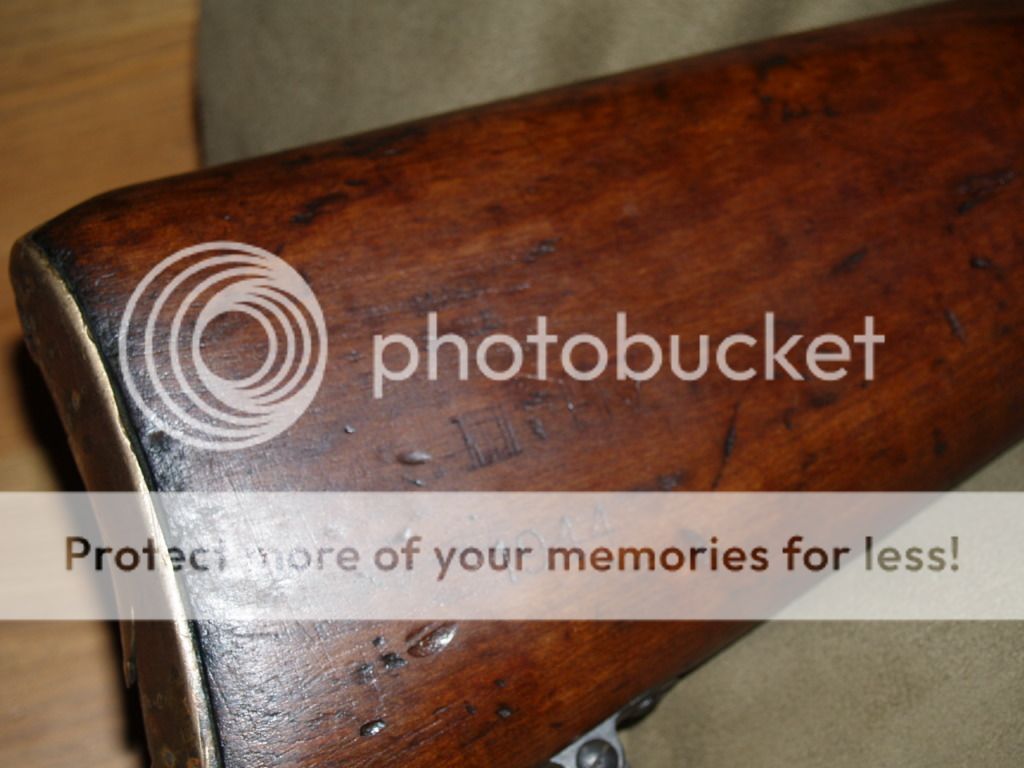
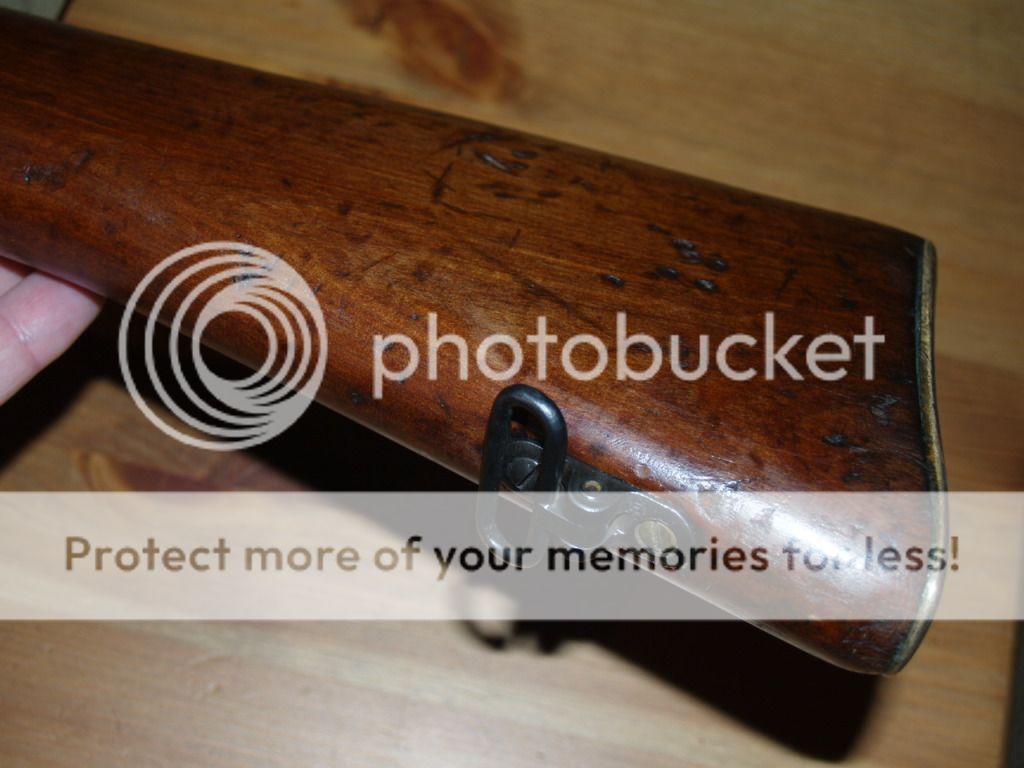
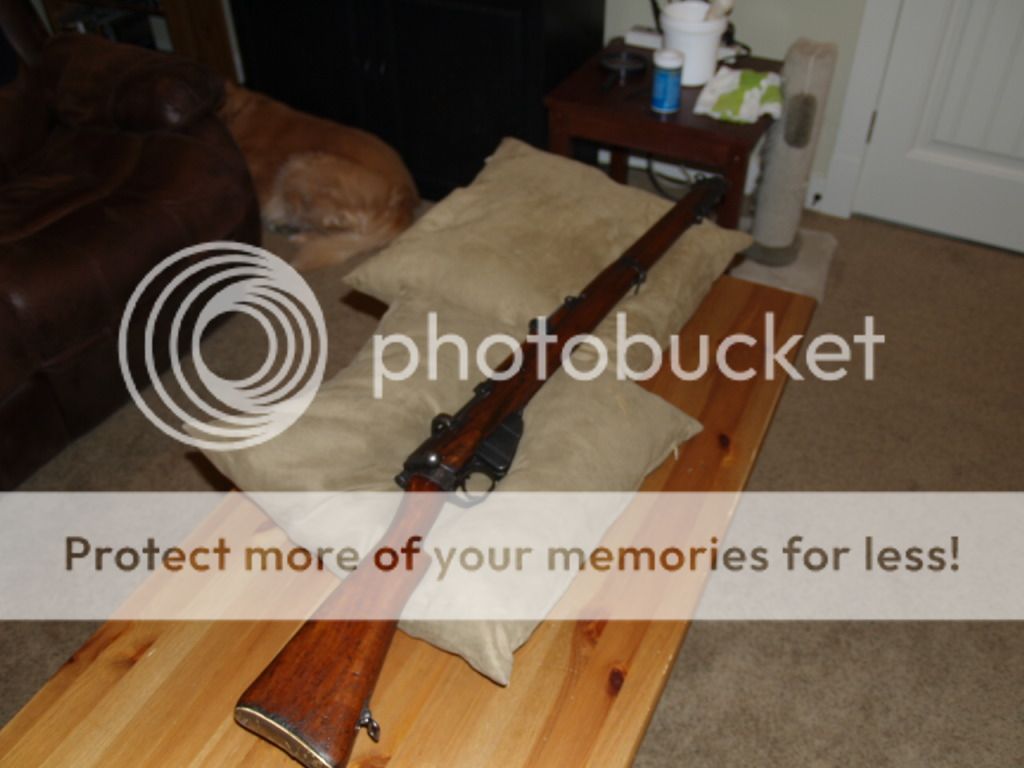
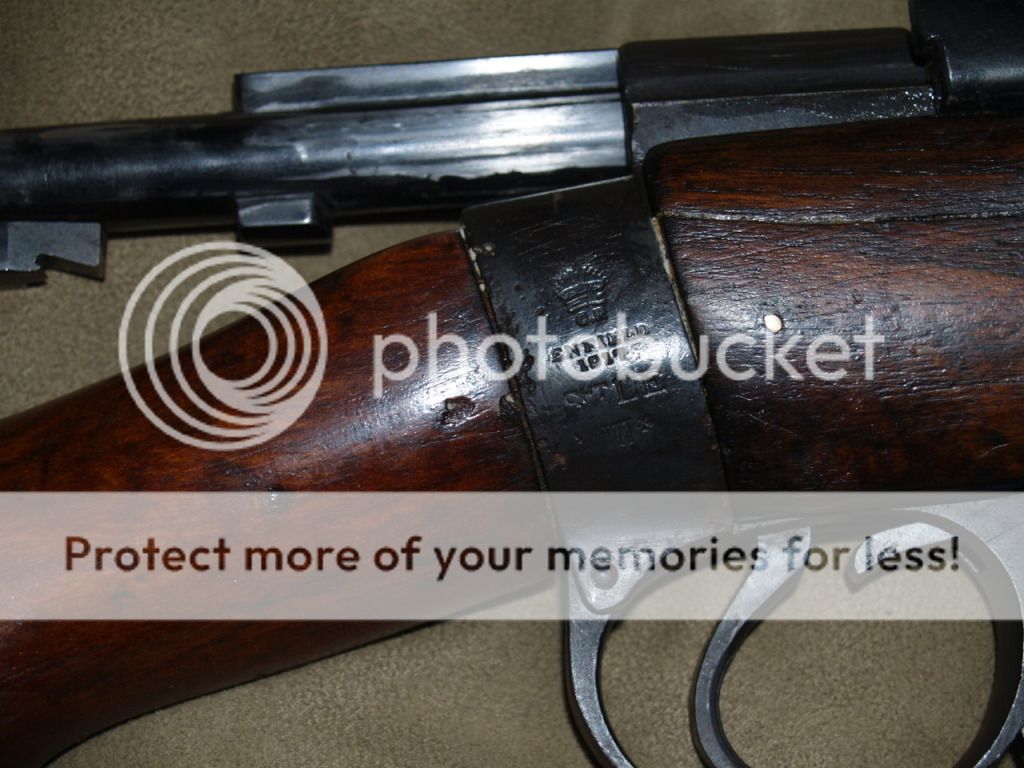
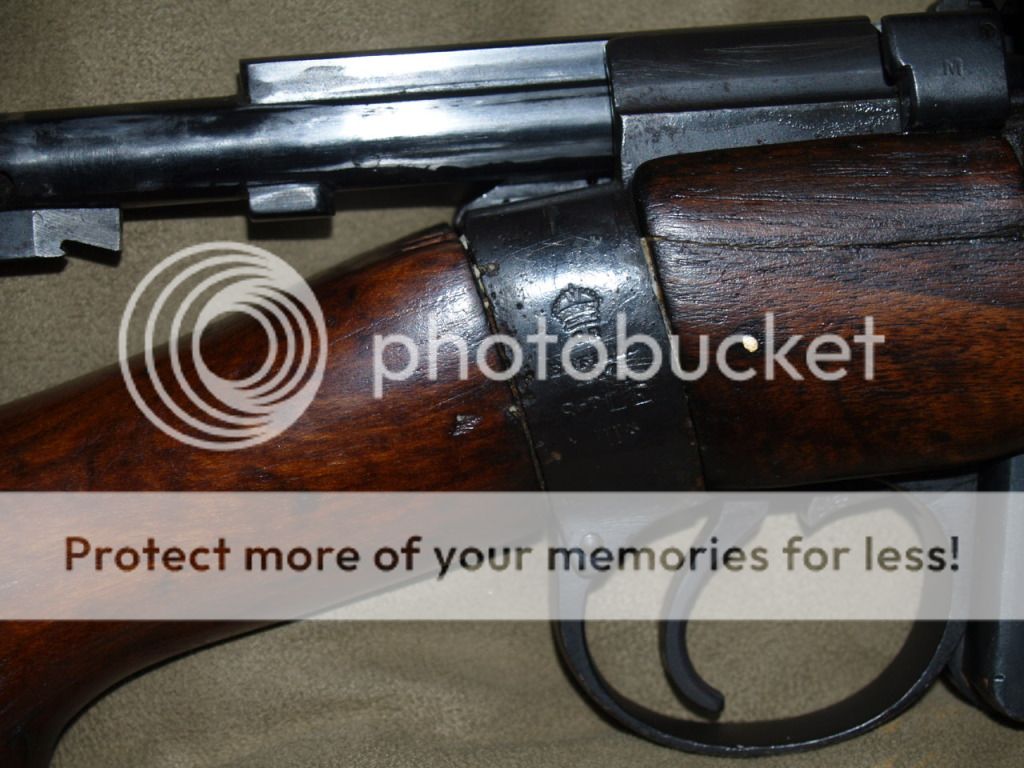
I just acquired an Enfield 1917 SMLE III*. I had expected that this rifle was issued and used in late WWI. Is this the case or were these rifles stock piled and never used in WWI but rather brought out of moth balls for WWII? This would really bum me out as I wanted a shootable SMLE used in The Great War. In any case the rifle is in great condition and looks great but if someone can enlighten me on the history of these rifles. It's my first WWI (I hope so) rifle. On the right side of the butt stock it is clearly stamped 1944 above that a III and what seems to resemble an HV I believe or it could be a IV. Thanks

H:S:
 
Last edited:
Good chance she was used in WW1 as the British (or any nation involved in the war at that time) would not let a perfectly good firearm go to waste.

Sounds like she has been to Australia in the post war and perhaps WW2 years as the marking on the right side of the butt stock is usually their trade mark. The date of 1944 means the wood stock (or the butt stock atleast) was made in that year and probably indicates that the rifle was refurbished at the same time.

The "HV" stands for 'High Velocity' and relates to the British Mk VII ammo.

Used in WW1 to shoot at Germans and used potentially in WW2 to shoot at the Japs, now thats nice history in a rifle :).

One thing you need to do is post some pictures for us to drool over :D.
 
Believe me, friend, in the Great War the British were so short of rifles they actually bought more than 150,000 Japanese Arisakas, not to mention just about anything that could shoot: Winchesters and so forth. The Canadian Rosses were grabbed eagerly by the Navy and the Royal Marines made use of them until well into 1919, then put them into storage and used them again in the Second War.

Any brand-new Lee-Enfield rifle made was destined for a short trip to the Front in order to make up for some of the horrific wasteage there.

Many of these rifles were rebuilt before or during the Second War, a large percentage having new barrels installed. By popping up and off the rear handguard (the little short one..... very carefuly) you can check the left side of the chamber for a double-digit date, as "'17". This is the year that that particular barrel was installed on that rifle. I have an 1894 rifle here which was rebuilt in 1908 with a new barrel and had another new barrel installed in 1941. They were short of rifles in both wars.

They used them all.

Sounds like a Fine Toy.

Just for interest, check the left side of the butt socket, at the bottom, for a 1/4" capital letter "N". This indicates Navy use.

Welcome to the club!
.
 
On the right side of the butt stock it is clearly stamped 1944 above that a III and what seems to resemble an HV I believe or it could be a IV. Thanks

H:S:

Sounds like a Lithgow (Australia)- mine has that stamp, but 1942. Many were refurbished for WW2, but it likely saw service in WW1.

edit- I see Nabs beat me to it!
 
Well,

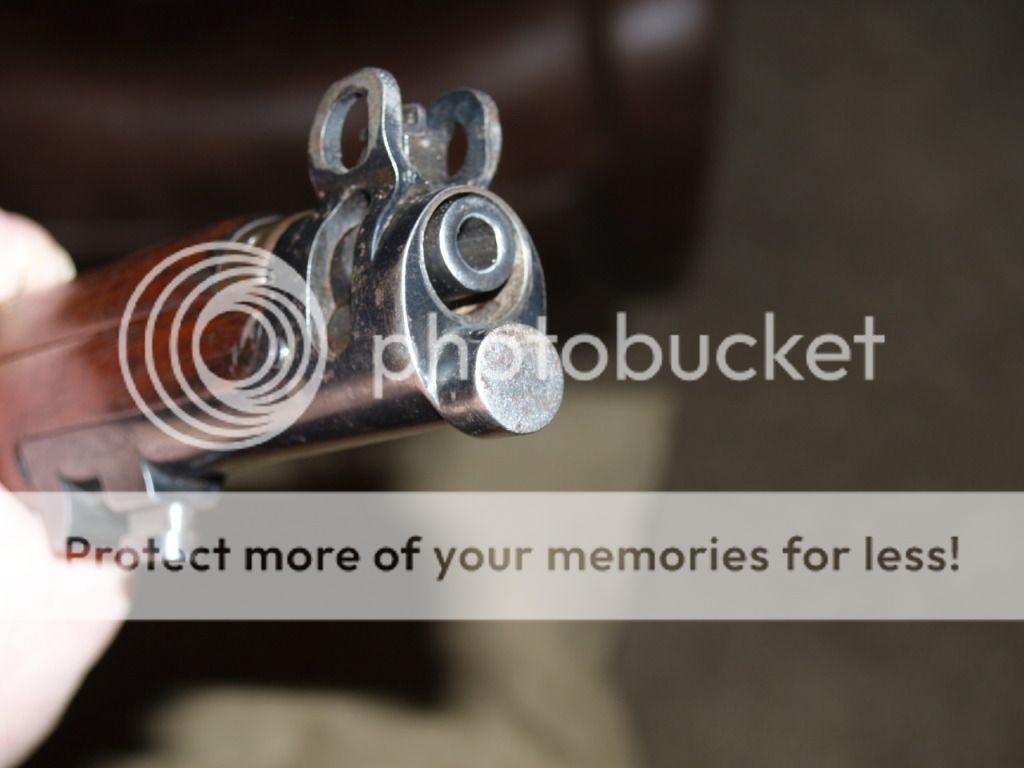
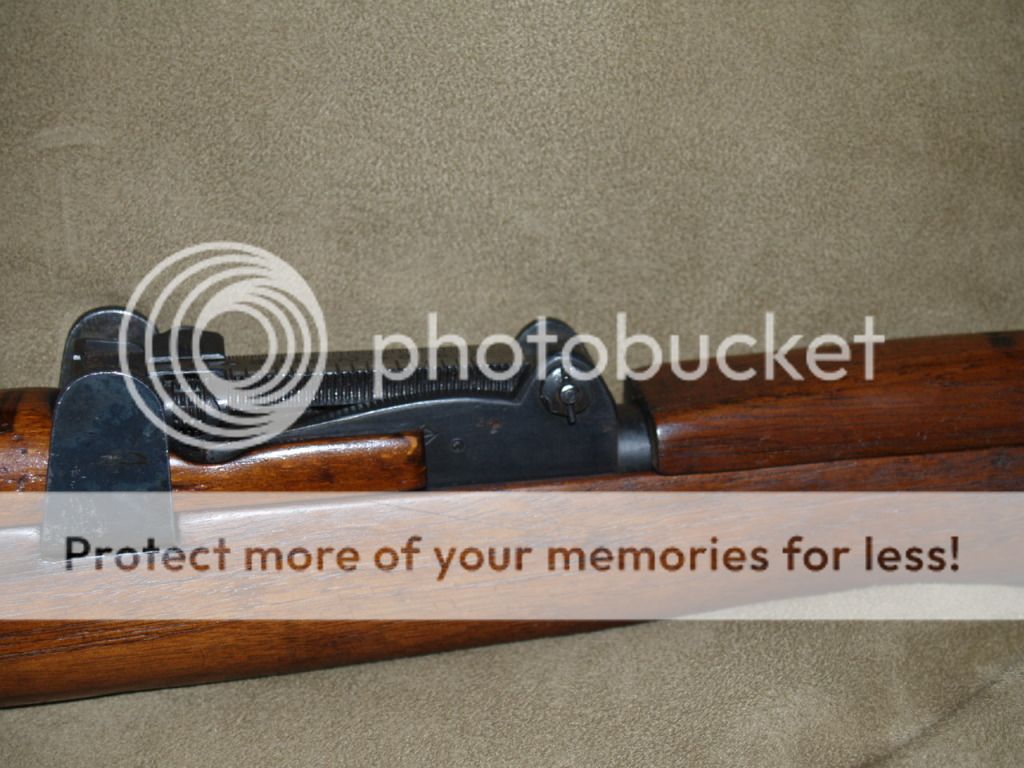
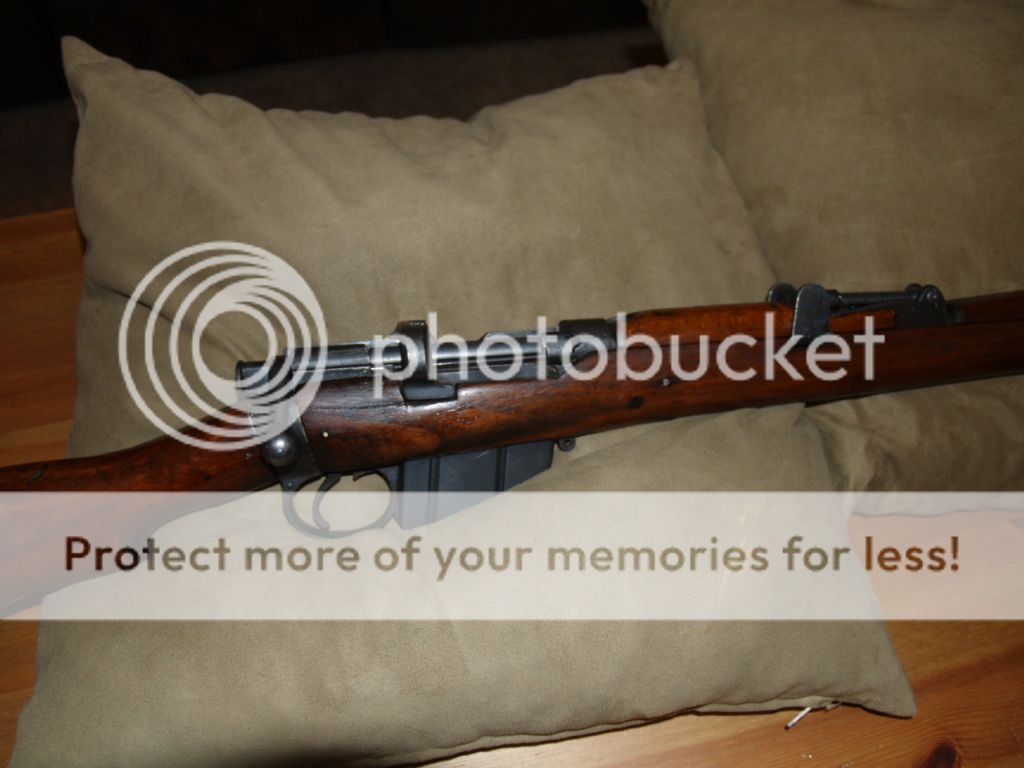
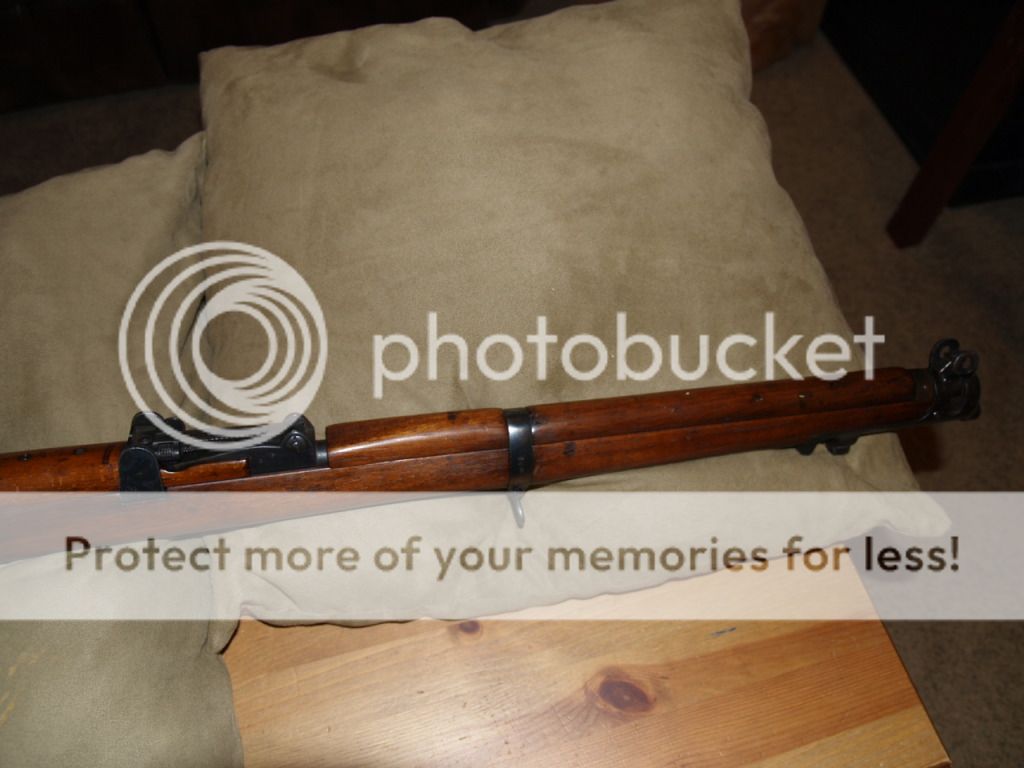
I've had more time to scrutinize the rifle and took it to my Gun Smith. The end cap has been drilled so the bbl end is actually not sitting flush snug against the end cap hole. The front hand guard is missing the 2 fingers that touch the rear hand guard. The butt plate looks like its been used as a hammer, and the swivels and screws are all incorrect, and last but not least it has the Ishapur screw! All of these things I did not properly see in the pictures because I was not an expert on the SMLE. I relied too heavily on the seller and did not get what I had bargained for. What should I do. I have seen on ebay that the end cap is easily replaceable and the stock etc are also. The bbl, bolt, front sit and receiver all match. Is that worth adding some new furniture on and keeping the rifle as a "momento" of WWI and the SMLE, learning from my mistake and just shooting her alot!
 
Photos

021.jpg


019.jpg


017-1.jpg
 
More pictures

027.jpg


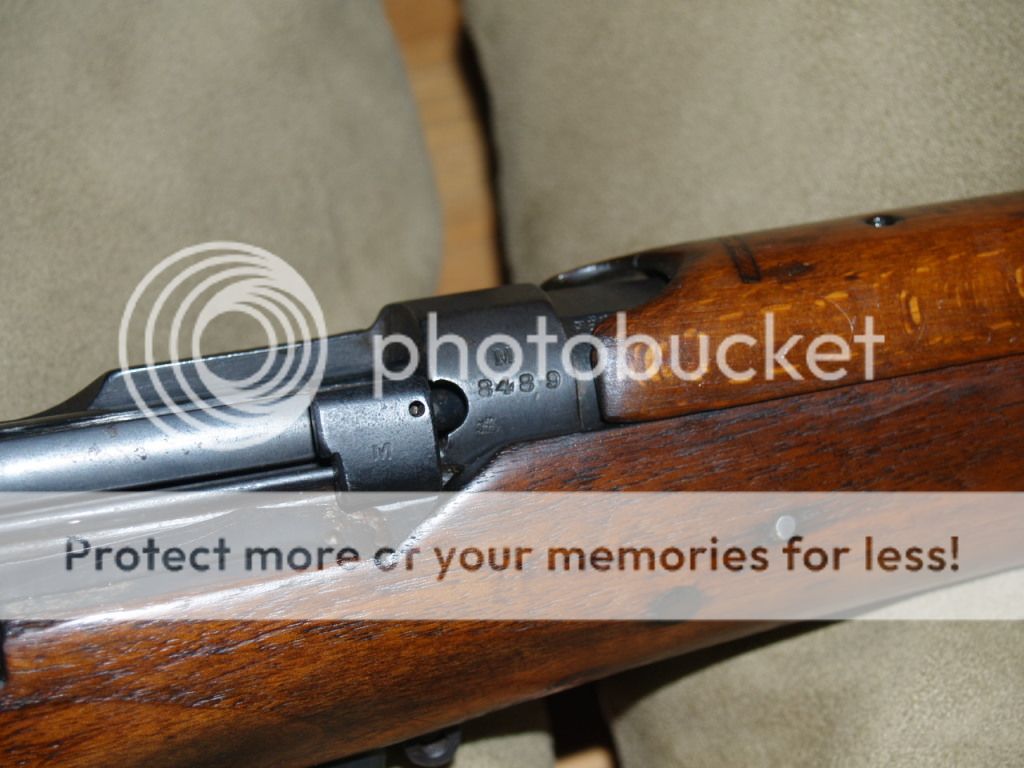
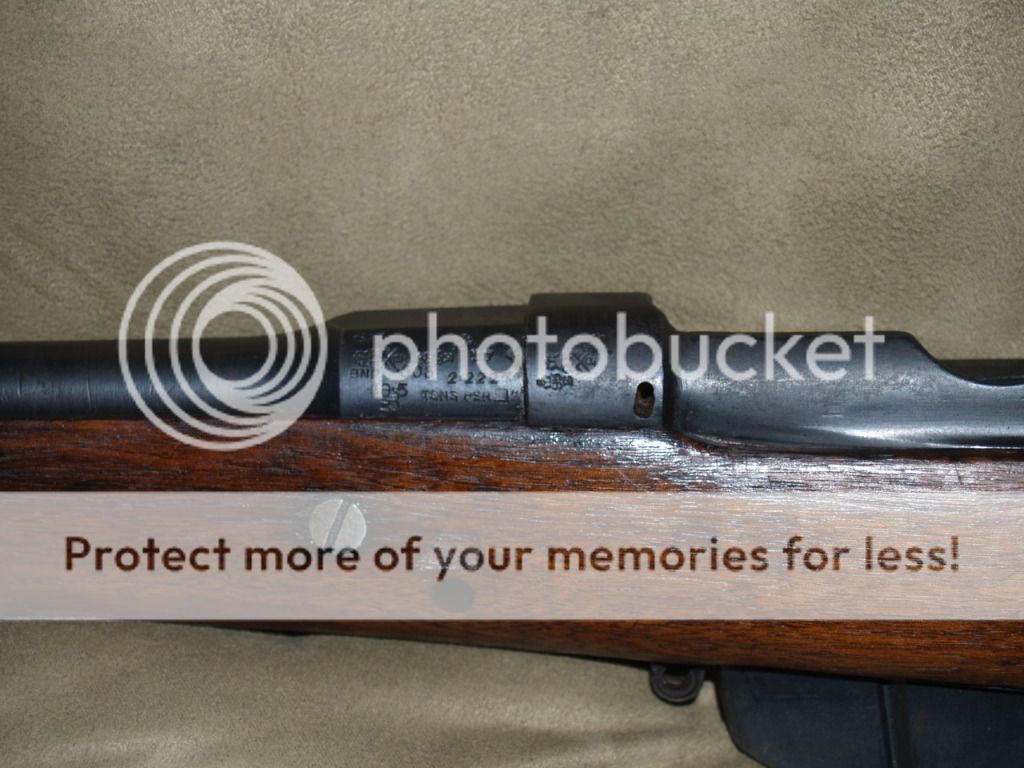
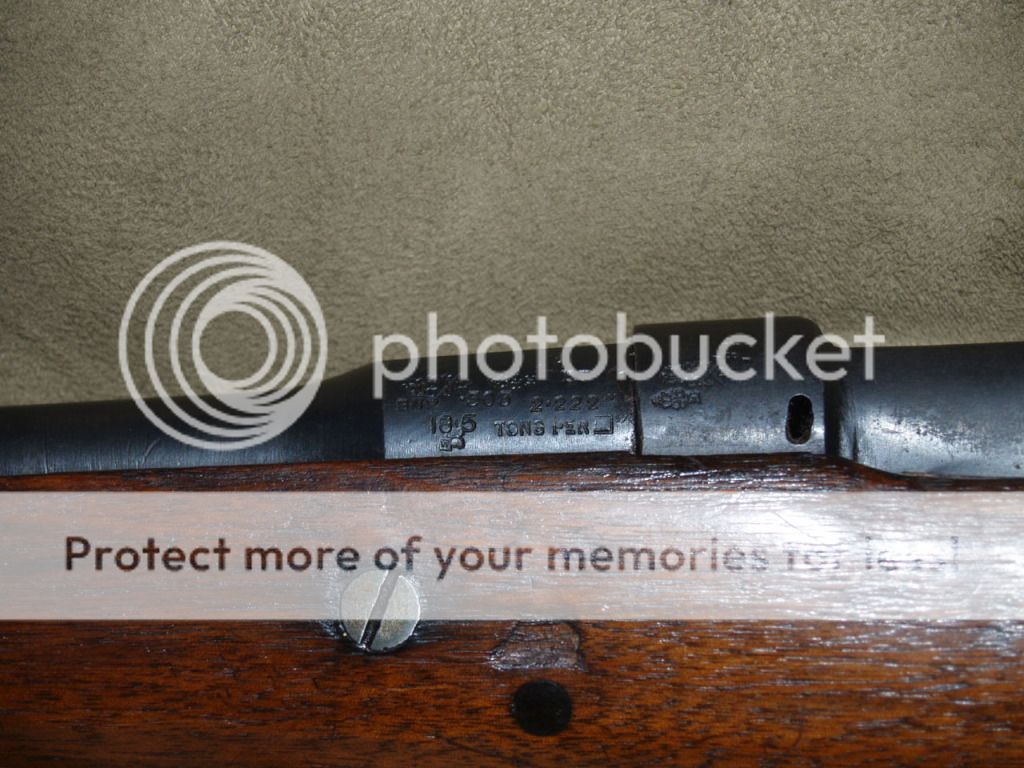
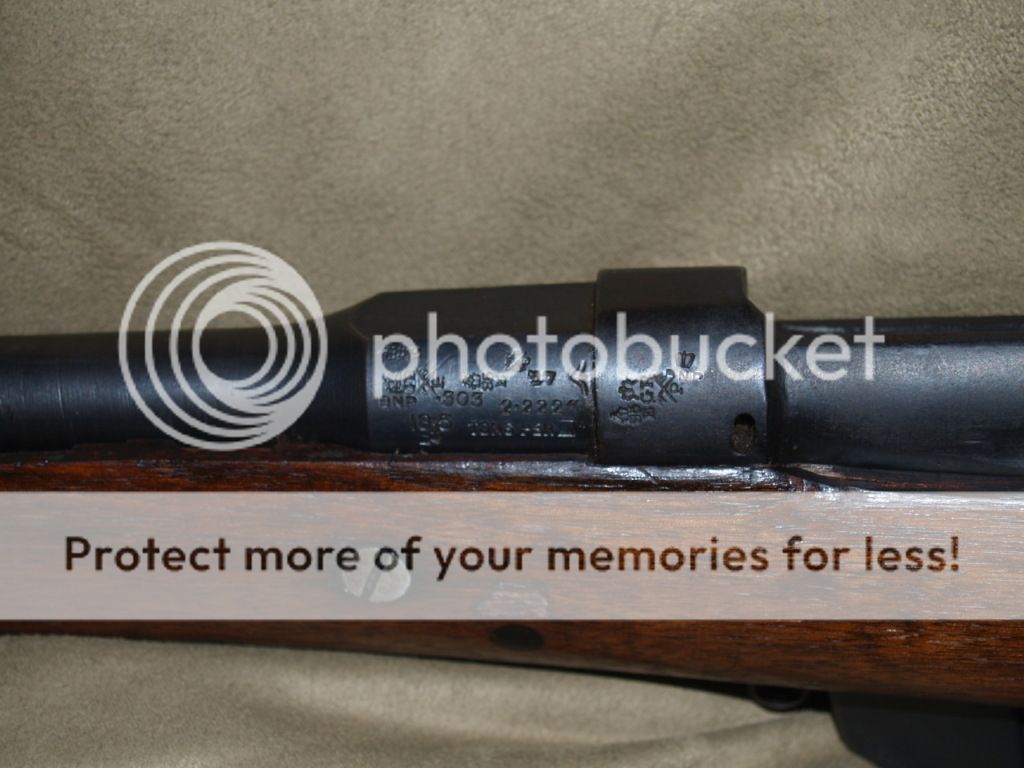
On the left side of the receiver under the front handguard it is stamped:

BNP .303 2.222" 18.5 TONS PER ]"

On the other side the bbl number 8489 does match the receiver.

026.jpg


025.jpg


023.jpg


022.jpg
 
Interesting SMLE from the pictures.

The action was made by RSAF Enfield in 1917 and is a SMLE Mark III * model. Your barrel is 1917 dated as well.

Something is definitely wrong with that nose cap as the port for the barrel to sit in is much too big. It should be "hugging" the barrel when it is in position.

The butt stock has Australian markings and is dated 1944 as previously noted.

The fore stock has the cross screw repair (typical of Indian refurbs) but I heard that the British also used this method as well. It's purpose was to prevent stock splitting. There also appears to be a wood knot just below and to the right of the cross screw on the left side. The right side of the fore stock near the action looks to have been repaired, my SMLE has a repair job in the same area.

The foward hand guard is missing the two wood lips that sit around the base of the rear sight. I wouldn't worry as a number of SMLEs have these pieces missing as the wood is relatively thin in this area and prone to breaking.

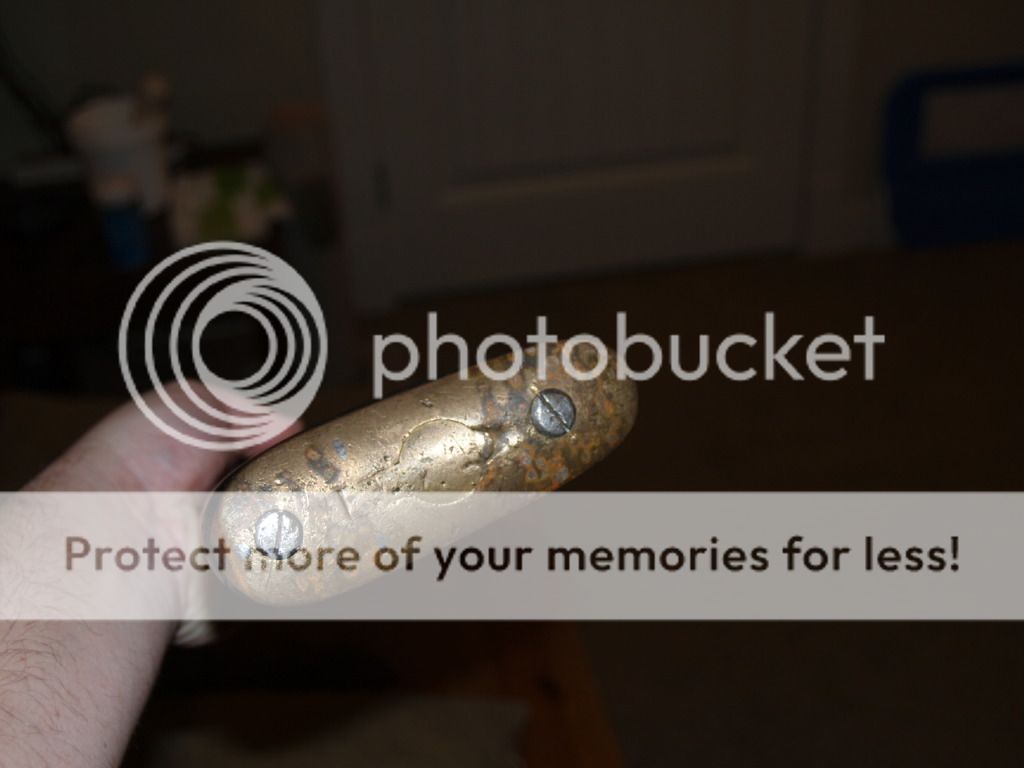
The butt plate has some dings and dents on it as well as some rusting by the looks of it. Some steel wool should remove most of this without much issue.

Now the real trick is figuring her story out. She was made and proofed for British military service in 1917, went possibly to Australia and served there during WW2 and ended up back in England where during the 1960s, she was sold out of service and marked with the BNP marking.

It is also possible that the Australian butt stock was swapped and placed on the rifle during a rebuild while in British post WW1 service. Without a clear Australian property mark (I think it was a D with a broad arrow), we can't be certain.

Are there any markings on the left side of the butt socket ? The Indians usually marked rifles in this spot.

Overall, a nice SMLE. Replace that nose cap with a proper fitting one and you will be good to go for the range.
 
Thanks so much nabs. I was quite upset and I didn't feel that I receievd what I was asking for but again I'm not an expert on the SMLE. No, there are no markings on the left side of butt stock. Would you bother changing out the butt plate then or just clean off as you say? Keeping it close to original as possible? I can pick up a front forend for close to nothing and might do that down the road. As for the nose cap, I have purchased an 1918 Enfield one for $10 on ebay that looks pefect.

Thanks again, you have given me hope! lol

:dancingbanana:
 
I would clean up the butt plate a bit but not to the point of re-finishing. I would also leave the forward hand guard as is, the missing tabs give it character.

The only part I would swap out is the nose cap.

Let us know how she works out :).
 
NABS has this old girl pretty well pegged, I would think.

Without doubt, she saw service in both World Wars, and possibly on three or more continents before being "retired"..... and shipped off to the Colonies (us) on a fourth continent.

That nose cap is interesting in that it is cleaned out that far and also has no serial number. I`m wondering if it has a letter "H" stamped on it, in which case it might be a souvenir of Australia as they did make a Heavy Barrel at one time and this might have come from a Heavy Barreled rifle. If it is marked thus, doubtless somebody will buy the nosecap for enough $$ to buy you a couple withOUT the "H".

But Nabs is quite right: mostly cosmetic work required. Bit of DRY fine-grade steelwool for the rusted bits, followed by a dab of oil. New nose cap. Perhaps repair that forward handguard some time; it doesn`t touch the barrel during firing, so it makes no real difference to how she shoots. Make sure all the parts are there and done up RIGHT, which does not necessarily mean TIGHT (Magpie Screw is a case in point: you can actually use it for fine adjustment of your vertical zero). Give her a good bath and some TLC: your girl IS 95 years old and she has earned a bit of respect. Then you take her to dinner.

My twin to yours has stated a definite preference insofar as dining is concerned. She likes Defence Industries brass (made in Canada from 1941 through 1945 only, headstamp "DI Z date") with standard Large Rifle primers and 37 grains of 4895 powder. The Sierra Pro-Hunter 180 flatbase bullet is seated to the OAL of a standard Mark VII Ball round, which pushes the bullet forward toward the leade just a bit. This load gives you about 2250 feet per second in an SMLE, which is right where the factory determined that the best accuracy could be obtained. Don`t waste your money on bat-tailed bullets: the SMLE almost always shoots its best with a flatbase.

Pop on over to milsurps dot com and download a couple of (free) books:
SHOOT TO LIVE (Canadian WW2 rifle marksmanship course based on the Number 4 but SMLE owners also can benefit from it, and.....

a Manual for your rifle. There were several versions of this but I am thinking that the easiest might be the one from 1942. It is called (most imaginatively) "RIFLE - 1942" and has between its covers complete instructions regarding how to get the most fun out of your SMLE.

Nice thing about the SMLE: there are more and more commemorative-type matches all the time. I expect that this will be an upward trend over the next two to seven years. For matches such as these, the SMLE s the Perfect Rile.

Hope this helps.
.

 
I didn't know that about Aussie nose caps and the heavy barrels. When did they install these barrels on their rifles ? Why did they install them ?

Alfonso, is your nose cap marked as Smellie suggested ?
 
Back
Top Bottom