












































You are using an out of date browser. It may not display this or other websites correctly.
You should upgrade or use an alternative browser.
You should upgrade or use an alternative browser.
question of reloading 308 win with varget
- Thread starter meterus
- Start date

45 gr with Norma brass & 175 SMK proved too hot in my Savage fcp-k, so I settled on 43 gr. for 2700 fps. The Hodgon data was too hot, the Sierra data was closer. There was 3.2 grains difference in their max loads for the 175 SMK

In every bolt action rifle chambered in 308 that I've owned (several Mausers and two Savages), I've used a full case of Varget with every bullet weight up to and including the Hornady 208. Same thing with IMR4064.
These same full loads have been the most accurate.
These same full loads have been the most accurate.
Last edited:

Hi,
I am reloading 308 win with hornady 150 gr sp bullets and varget powder. On the hornady reloading book, the max. load is 44.9 gr, but the data given by hodgdon is 42.3~46.5 gr. It's a big difference. I currently load 44.5 gr, with my 20" barrel rem700, the velocity seems low, just a bit above 2600. Is it safe to try a higher load? For example, 46gr? Over the max. of the Hornady book, but lower than the hodgdon's max. Thanks.
All loading data is ball park because each firearm and the components used vary. On top of this if a specific firearm is listed for the testing a strain gauge was glued to the barrel and ammunition of a known chamber pressure is used to calibrate the stain gauge equipment. In the Lyman manual you will also see that a universal receiver and pressure test barrel may have been used. And the test barrel uses minimum SAAMI chamber and bore dimensions to generate the highest chamber pressures.
Bottom line, average several sources of load data and make a workup load starting low and working up. You will learn more about "your" firearm and the reloading components used. As a example with a workup load at the lower loads the primer will protrude from the rear of the case. This means the chamber pressure was not great enough to push the rear of the case against the bolt face when fired. My 30-30 loads with Remington brass at the max load at 38,000 cup or 42,000 psi always has the primers protruding. So learn to read your brass after firing each case for signs of normal and excessive pressure.
Below is a photo from the Accurate Shooter reloading forum posted by a long range competitive shooter. This person increased his load until he got brass flow into the ejector then backed off 1 or 2 grains of powder. This told him the elastic limits of the case meaning its strength, and this can vary by brand of brass.
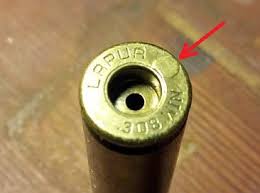
Another method is to measure base expansion just above the extractor groove, this again is not a pressure measurement but tells you how much pressure the case can safely withstand.
Simple Trick for Monitoring Pressure of Your Rifle Reloads
http://www.hodgdonreloading.com/reloading-education/tips-and-tricks/simple-trick-monitoring-pressure-your-rifle-reloads
Last edited:

I have used SAAMI test barrels in pressure guns and have also tested in commercial rifles with strain gauges.
Pressure signs usually show up at around 75,000 psi, and the signs might be quite subtle.
Backing off 2 full grains would be prudent.
Pressure signs usually show up at around 75,000 psi, and the signs might be quite subtle.
Backing off 2 full grains would be prudent.
The books always leave a safety margin and are best used as a ballpark to get started.
Every barrel is different so start in the middle of your book values and as others have said keep working up slowly till you see any sign of pressure then back off at least a full grain but two grains leaves a better safety margin for ambient temp changes. Once you know how high you can go if you've been paying attention to the targets you've probably also noticed where your upper accuracy node is.
That's where I start loading again doing 5 rounds at 0.1 grain difference above and below that charge. Once you find the most accurate powder charge you can start playing with seating depth to see if any more accuracy can be squeezed out of it.
If 45gr was the most accurate while working up I would make five of each at 44.8, 44.9, 45, 45.1, 45.2 and pick the most consistent of those both on paper and if available over a chronograph.
Just be careful you don't get caught up chasing too much. Depending on the quality of your barrel there is only so much accuracy you'll be able to get from it. There are also way too many projectiles and powders to try so you really could end up chasing it forever.
Shoot slowly so your barrel temp doesn't change much, factory barrels are not typically well stress relieved and will start stringing shots as they warm up.
Then you also need to note cold bore first shot of the day point of impact each outing as it may be different than the rest of your shots that day. This is important when hunting since your most important shot will be your cold bore shot.
Accuracy should be your first priority. A flatter trajectory at long range means nothing if you're not consistent and I'd rather dial up a couple extra clicks shooting 1/2 moa than have less correction but only be shooting 1 moa.
Good luck and be safe.
Every barrel is different so start in the middle of your book values and as others have said keep working up slowly till you see any sign of pressure then back off at least a full grain but two grains leaves a better safety margin for ambient temp changes. Once you know how high you can go if you've been paying attention to the targets you've probably also noticed where your upper accuracy node is.
That's where I start loading again doing 5 rounds at 0.1 grain difference above and below that charge. Once you find the most accurate powder charge you can start playing with seating depth to see if any more accuracy can be squeezed out of it.
If 45gr was the most accurate while working up I would make five of each at 44.8, 44.9, 45, 45.1, 45.2 and pick the most consistent of those both on paper and if available over a chronograph.
Just be careful you don't get caught up chasing too much. Depending on the quality of your barrel there is only so much accuracy you'll be able to get from it. There are also way too many projectiles and powders to try so you really could end up chasing it forever.
Shoot slowly so your barrel temp doesn't change much, factory barrels are not typically well stress relieved and will start stringing shots as they warm up.
Then you also need to note cold bore first shot of the day point of impact each outing as it may be different than the rest of your shots that day. This is important when hunting since your most important shot will be your cold bore shot.
Accuracy should be your first priority. A flatter trajectory at long range means nothing if you're not consistent and I'd rather dial up a couple extra clicks shooting 1/2 moa than have less correction but only be shooting 1 moa.
Good luck and be safe.
Last edited:

really? in a 308 case 2 grains is close to the starting load with varget.
your "advice" is crap
The advice is more general reloading advice. Varget and a 150gr projectile runs compressed loads as max charges so seeing pressure signs is unlikely but there are many other powders out there that you will see pressure signs long before you fill the case which the advice is much more relevant to. Two full grains may not be needed in a 308 case but the point is that you need to not just back down till you don't see pressure signs but you need to drop it enough that if you shoot on a hot day or let a round sit in a hot chamber for a couple minutes you don't end up back in a dangerous situation.
There are many people on this site who buy a rifle like a 338 lapua and then realize they can't afford to shoot it so start reloading on a case like that where you can easily run into trouble long before the case is full depending on the powder chosen.
Again, it's the general theory not written in stone numbers to follow.
If you're an experienced loader and have all the answers then do whatever you want and maybe share some knowledge with the new guys but sitting quietly waiting for your chance to sh!t on other peoples advice without offering anything of value helps no one. Ganderite is one of the most experienced reloaders on this site and you'd be wise to listen instead of trying to find fault with everything.
really? in a 308 case 2 grains is close to the starting load with varget.
your "advice" is crap
How can 2 gr less than the load that makes 75,000 psi be a START load? It is a realistic MAX load for that rifle.
If you see a mistake in my posting, please help us all by pointing it out and explaining what you are using to support your opinion.
As the technical director of an ammunition company, I got to order many tests for the ballistic lab and also spent a lot of time in their myself, checking things out.
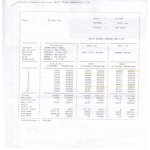
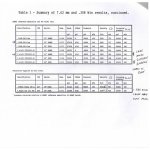
One of the things I researched was how much pressure varied from rifle to rifle. In the second test result below, you can see the same ammo tested in two different barrels. One is to SAAMI specs, and the other would be considered a match grade, tight barrel. And your barrel might be in the other direction, with a worn bore and longer throat. Three very different sets of results - which is why I always say to start with the START load and work up.
The first page is a typical report. We fire 20 rounds of each ammo sample. We record pressure and velocity for each round (and also photograph the pressure curve for the record of each shot).
BTW, there is a theory floating around that NATO 7.62 is milder than commercial 308. Not so. The limits are about the same, although most commercial makers try to avoid loading near max pressure. You can see in this test that the IVI 7.62 was running 62,000 psi. I ordered this test because some target shooters were having problems with this hot ammo in their tight barrels.
Attachments


How can 2 gr less than the load that makes 75,000 psi be a START load? It is a realistic MAX load for that rifle.
working up slowly till you see any sign of pressure then back off at least a full grain but two grains leaves a better safety margin
"Any sign of pressure" while working up does not mean ejector hole mark on the case head.
That would be an "extreme sign of pressure" in my mind.
As such, 2 grains off from the "any sign of pressure" is very low.
I said what I meant.
Last edited:

If you're an experienced loader and have all the answers then do whatever you want and maybe share some knowledge with the new guys but sitting quietly waiting for your chance to sh!t on other peoples advice without offering anything of value helps no one. Ganderite is one of the most experienced reloaders on this site and you'd be wise to listen instead of trying to find fault with everything.
Yup, I'll definitely second that!
ok let's dissect this with the fine blade
why in the middle? the lower limit is the starting load
"Slowly" is confusing for inexperienced reloaders. I'm sure you meant "in small increments". But you said slowly.
"till you see any sign of pressure" is also confusing. You certainly meant "you see signs of over-pressure". Which is utterly vague. After all we do want pressure. Lots of it. But your wording...
A grain or two? Really? The whole book range for Varget is 3 grains (155gr bullet). Moreso, Varget is an extreme powder which means little temperature sensitivity. But you advised "back off one grain or two".
what's that supposed to mean for a new reloader?
still think your advice is good?
ps: Ganderite touched on a different issue to which your advice may not apply at all.
The books always leave a safety margin and are best used as a ballpark to get started.
Every barrel is different so start in the middle of your book values ...
why in the middle? the lower limit is the starting load
...and as others have said keep working up slowly till you see any sign of pressure...
"Slowly" is confusing for inexperienced reloaders. I'm sure you meant "in small increments". But you said slowly.
"till you see any sign of pressure" is also confusing. You certainly meant "you see signs of over-pressure". Which is utterly vague. After all we do want pressure. Lots of it. But your wording...
... then back off at least a full grain but two grains leaves a better safety margin for ambient temp changes...
A grain or two? Really? The whole book range for Varget is 3 grains (155gr bullet). Moreso, Varget is an extreme powder which means little temperature sensitivity. But you advised "back off one grain or two".
...Once you know how high you can go if you've been paying attention to the targets you've probably also noticed where your upper accuracy node is.
what's that supposed to mean for a new reloader?
still think your advice is good?
ps: Ganderite touched on a different issue to which your advice may not apply at all.
Last edited:
Confucius says "A fool's gun is soon parted."
I also disagree with your "Pressure signs usually show up at around 75,000 psi, and the signs might be quite subtle."
I also disagree with your "Pressure signs usually show up at around 75,000 psi, and the signs might be quite subtle."
I have fired several hundred thousand rounds through pressure guns of one type or another. These guns were well made to SAAMI minimum dimensions with lapped locking lugs. They did not show any sign of pressure until hitting proof round range. And the signs were so subtle the average shooter might very well ignore them.
You have different experience and different opinions.





















