
JDForBrkFst
CGN frequent flyer
- Location
- Roughly North Central AB
Wow, that is bad RJ. Either you have a bad machine, or I have a particularly good one.















































If you want perfect throws every time, it won't happen on these dispensers, no matter the brand. They are a cheap unit, and like all cheaper mas produced units, they vary, sometimes you will get a bad one, most times a decent one, sometimes a good one. Sometimes the issue is the environment, sometimes it isn't. If you buy one to speed things up, you won't be happy with them. I have a good one, but, it is .1 difference from my beam scale, however it is consistent, drift occurs, but, not often enough to bug me, I had an electronic scale for 20 yrs before I bought a dispenser, didn't use it for powder, but, understood the issues with them before buying a dispenser. I still use the Lee spoons and beam scale, for some powders, still takes about the same time frame either way. If I can, I use a Redding thrower for some powders, way faster.
Nothing is perfect. I have a V4 coming, see how it works out, I like the A&D scale, no beefs with it yet. Maybe I won't like it, maybe I will.
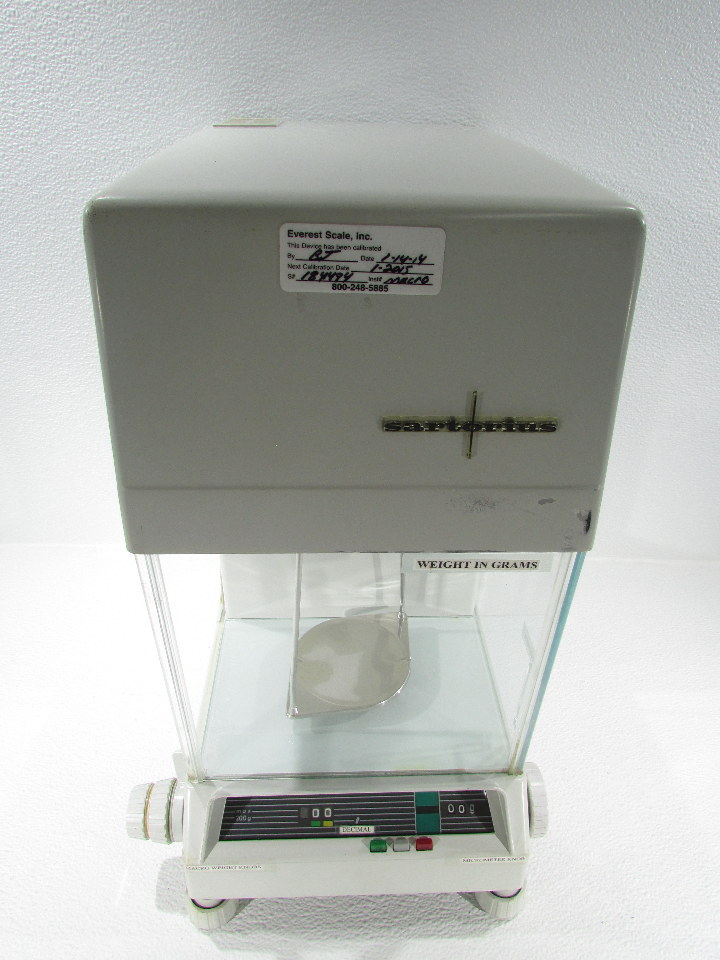
All scales have their strengths and weaknesses that the consumer should understand.
First is the myth that beam scales are more accurate than digital scales... People often claim that beam scales do not drift or are not affected by atmospheric pressure changes and that is just not true... If your beam scale is not affected by pressure changes it is because it does not have the sensitivity to be affected... This is very much like a 1 decimal place digital scale... They are just not sensitive enough to detect the wind coming from your hand movement. There are balance beam scales out there that are affected by air pressure changes if you google the vintage Sartorius beams scales from before the digital revolution. These were made in Germany and were quite complicated by design.
This is a beam scale and it is sensitive enough to be affected by air flow.
Next is the load sensing technology being used... Most common in less expensive scales is the load cell. A load cell has a limited life expectancy and performance will gradually decay over time. Furthermore, they are susceptible to permanent damage when over loaded. If you are using a load cell scale, it will likely be most accurate when new but over time, the accuracy will gradually fade. The real challenge for you is in detecting when that occurs. Unless you have a better scale, you will not have the ability to detect the inaccuracy of the system. You will be chasing ghosts during load development because you will never really have consistency. Load cell scales are budget scales and you get budget performance.
A better load sensing system is called magnetic force reconstruction... Scales of this type run from mid range to high end. These scales are notorious for sensitivity to voltage fluctuations, warm up period and susceptibility to frequency interference from fluorescent lights, cordless phones and cell phones. Such scales are best used when connected to some sort of voltage stabilization system like a battery back up for a computer.
The best and most fault tolerant weighing system is the tuning fork system used by Vibra balances. These do not require warm up and are not affected by frequency interference.
As far as accuracy goes... a typical reloaders beam scale is only accurate to no better than about 0.4 grains. A 1 decimal place digital scale is about the same 0.4 grains accuracy. A decent 2 decimal place scale is accurate to no better than about 0.08 grains. If you get a good 3 decimal place scale in grains, you will then be able to produce loads to within 0.008 grains +-0.004 or within less than half a kernel of Varget. Guys often think they are more accurate than this, but that's because they don't have a $2,300 scale to test their loads against. I do and have done the testing.
Depending on how far you shoot and what your accuracy expectations are, you can decide what you really need.
If you have one of the low end scales and feel you are getting better velocity spreads than the load variance I described above, it is because you are not testing over a large enough sample size to find the flyers, or you are simply ignoring the shots that don't fit into your expectations.
If you are a long range shooter, you will be better off spending the cost of an automated scale on a more accurate digital scale and a set of Lee powder scoops or a mechanical thrower.
If most of your shooting is inside 300 yards, you might just as well get an RCBS powder thrower as the variance will be hard to detect on target if you don't have a match winning rifle.
If you are a serious long range precision shooter then this is the scale you want: https://www.scalesgalore.com/product/ViBRA-HT224R-2HT4S220122-Analytical-Laboratory-Prime-Balance-WITH-Internal-Calibration-220-g-x-01-mg-px49231.cfm?new_page=0
This is a link to the Canadian importer: https://vibracanada.com/laboratory.html
Prices in Canada: https://vibracanada.com/products.html
I have the same scale (as well as two friends in the area) but since we've had them for several years the model number has changed from HT220 to HT224. You will appreciate the internal calibration and the added cost is negligible. You'll likely cringe by the $2,300 price tag but its the last word in scale accuracy and scale error is effectively off the table.

I’m not an Fclass or LR bench guy, but chargemasters are more than adequate for PRS. Not saying I wouldn’t love a V4 or high end scale, but it’s not required. Find a decent accuracy node and your minor powder charge variance won’t matter.
A bit of tuning with a straw and follow the normal guide lines for use of an electric scale (like avoiding static and electronics) and you you will be golden.
A $2300 balance won’t make you a better shooter.
Many records were set and still stand today with power dropped from a volumetric dropper.
I am a long range shooter. I’m not sure what part was obvious, other than being obviously wrong.
My load is sub .2 moa. Routinely shoots in the .1s, and has a couple of zeros to its credit. I think my Chargemaster is doing just fine. I’ll spend $2300 on continuing to learn the art of long range shooting, knowing that it isn’t my scale, but rather, it’s me.
The load may very well have, but I doubt I would, which is why I’ll keep the loading equipment as is, and spend the money on learning to shoot it.You would have won the Sporter Rifle Grand Aggregate at the 2021 National Benchrest Shooters Association (NBRSA) Nationals. Beating the winning aggregate of .2174” with that load!
Pretty impressive stuff!
I use a $2300 scale to call BS on the bogus accuracy claims of crappy scales so frequently posted on the internet. The BSers don't seem to like that. The bigger the BSer the more aggressive they attack because truth pops their fantasy bubble.

























