RCBS Chargemaster

What do you consider “bogus accuracy claims” with loads loaded with Charge Masters?

Scales we might use for reloading come in three basic categories.... Precision balances, Milligram balances and Analytical balances.

People out of ignorance, often make absurd accuracy claims about the first two. The third rarely come cheap and tend to be pretty good.

Scales are usually based on the metric system and the metric value is converted to and rounded grains.

Precision balances are typically no better than 5 milligram scales. Meaning they display values to 5 milligrams. Milligram balances as the name would suggest display values to the milligram. Analytical balances display values to 0.1 milligrams.

Take note that I'm talking about the displayed value, which does not directly correlate to the actual weight....

Precision balances are the ones that display to 0.1 grains... they are usually only accurate to about 0.4 grains... if you have a good one. RCBS is not a good one, its about average for a cheap load cell scale.

Milligram balances are the ones that display to 0.2 grains, these are actually accurate to about 0.8 grains, if you have a good one. There are a lot of imposters in the milligram scale category and load cell models are the posers... a decent milligram scale will use magnetic force reconstruction to determine weight.

Analytical balances are the ones that display to 0.002 grains, these are actually accurate to about 0.008 grains. Since this class of scale is among the very best, you can find models that are more accurate depending upon how much you are willing to spend.

Then there's the beam scale fan... These guys are completely out to lunch. They make claims that beam scales are accurate to the kernel and does not drift... LOL. The typical beam scale used for reloading is only about as accurate as a 1 decimal place digital scale. 0.4 grains.

A charge master is an automated system that uses the lowest grade scale and at a cost that is equal to a decent milligram balance. So you are paying enough to get milligram balance accuracy but getting precision balance accuracy from a relatively cheap load cell precision balance. The actual accuracy of a charge master is about the same as you will get from an RCBS powder thrower.

Guys often challenge that but never by anyone who actually owns a scale that is capable of validating the statistical facts.

Again, I am not saying you "need" an analytical balance, that is up to you to decide. As I've said over and over, you can simply get a better scale for the cost of the automated system.

For the cost of a chargemaster you can get a milligram balance.

For the cost of a matchmaster you can get an analytical balance.

If you are serious about long range accuracy it is obviously advantageous to measure your charge weights as accurately as possible. If you don't shoot past 300 yards, it does not much matter what scale you buy, so long as you are willing to disregard the barrel harmonic POI shift that will result from your wide velocity spreads.

As for velocity nodes... they indicate that something is not performing correctly. These are fleeting anomalies within the load development process that cannot be repeated under abstract conditions and over a significant number of rounds. A good load is one that incrementally changes speed in lock step with changes in powder charge. If that is not happening, there is something weak in your reloading process.
 
Last edited:
Not velocity nodes, poi nodes.
List the better milligram scale please since we are comparing against the Chargemaster.

Beam scale. Tell me how, they can produce poi nodes that are quite decent. ( not F class loads, but in the 1/2 moa territory )
My beam scale will register a kernel of weight, is it correct? Probably not like a high end scale, but drop one H4350 and away it moves. I can count the kernel differences between 41.1 and 41.2 as measured on the scale.
What is the FX120i scale?
 
People out of ignorance, often make absurd accuracy claims

You didn’t answer the question you quoted, so let us know what is a bogus long range accuracy claim?

I run dual charge master lites with great precision and loading speed. It may not be F class/bench winning, but to say you can’t use them for long range is misleading.

To say a charge master is as accurate as a powder thrower is just silly.

My current 6BR PRS loads thrown on my two charge master lites have an ES of <20 and an SD of 6, more than adequate for many long range disciplines. All my 6.5 creed barrels/loads have also had similar velocity spreads, (all over 10 rounds) thrown on chargemasters or a cheap RCBS scale. So no POI shift as you suggest

I don’t care what you use to load with, the better the scale the better your precision, but your misleading people. You don’t need anything more than a Charge master to shoot precisely for majority of LR. (Yes, over 300 yards)
 
Peculiar lot ain't we---- we can debate and pontificate over the difference between 1/7000th of a pound, or 1 gr, 1/70,000th or .1gr and 1/700,000th at .01gr, or 5fps which is say 1/600th of 3000fps or .001667% of 3000fps.
 
Not velocity nodes, poi nodes.
List the better milligram scale please since we are comparing against the Chargemaster.

Beam scale. Tell me how, they can produce poi nodes that are quite decent. ( not F class loads, but in the 1/2 moa territory )
My beam scale will register a kernel of weight, is it correct? Probably not like a high end scale, but drop one H4350 and away it moves. I can count the kernel differences between 41.1 and 41.2 as measured on the scale.
What is the FX120i scale?

A ChargeMaster is NOT a milligram scale. It uses a cheap 5 mg 1 decimal place (grains) scale. A milligram scale will display 2 decimal places. RCBS does have a MatchMaster which I believe uses a 2 decimal place (grains) milligram scale. A MatchMaster costs about $1100 USD and for that cost you have quite a few choices among 0.1 MG balances.
 
Last edited:
I bought mine about 10 years ago, have loaded thousands of rounds with it without any issues. It's consistently 1/10th of a grain under when I check with the 5-0-5 scale, I'd buy another one if it ever dies.

I bought one quite a while back myself, then I bought a Sartorious milligram scale and used that to measure the weight from the ChargeMaster. Then I quickly sold the ChargeMaster.

The ChargeMaster is absolutely NOT accurate to 1/10th of a grain... That's the readability... not the actual weight. Be careful not to confuse one with the other. This is exactly where the misconception lies. If you had a better scale to test the actual weight you would know that.

But if you are ok with the results, don't change a thing.
 
Last edited:
A ChargeMaster is NOT a milligram scale. It uses a cheap 1 decimal place scale. A milligram scale will display 2 decimal places. RCBS does have a MatchMaster which I believe uses a 2 decimal place scale.

Right I understood that, you mentioned a milligram scale for similar cash as the lesser Chargemaster?
 
Not velocity nodes, poi nodes.
List the better milligram scale please since we are comparing against the Chargemaster.

Beam scale. Tell me how, they can produce poi nodes that are quite decent. ( not F class loads, but in the 1/2 moa territory )
My beam scale will register a kernel of weight, is it correct? Probably not like a high end scale, but drop one H4350 and away it moves. I can count the kernel differences between 41.1 and 41.2 as measured on the scale.
What is the FX120i scale?

Lead Hammer... I tested a 505 beam scale against my 0.1 mg balance and in only 3 charges I found a variance of 0.4 grains. Yes the beam scale moves with a single kernel but its just too crude of a system to reliably produce loads that are more accurate than 0.4 grains.

It's important for readers to appreciate that good scales can cost several thousand dollars for a reason. If the 505 was actually as accurate as so many people believe, it would be crazy to manufacture anything else.

If you are getting groups in 1/2 MOA territory, at lets say 100 yards, your velocity spread will cause that group to extend vertically as the changes to flight time play out at longer ranges. If you are an F Class shooter this will cost you the match. If you are more of a casual shooter, this might be perfectly acceptable to you, and that's ok.

The FX120 is a milligram scale that will read to 0.02 grains or about the weight of a kernel of Varget. It's a good scale for the money, certainly a significant performance step up from a ChargeMaster in terms of weight accuracy.

If you watch the FX120 review on Ultimate Reloader, there were times where he would add 3 kernels to detect a weight change of 0.02 grains. Three kernels is closer to 0.06 grains. That's a perfect example of where the readout is not reflective of the actual weight.

If you are not a F Class or long range bench rest shooter, the FX120 is probably a real good scale for the cost as long as you don't plan to automate it. If you do plan to automate, and you are a competition shooter, then its better to look at analytical 0.1 mg scales for the same cost.

As reloaders, we all want the best accuracy we can get within our personal budgets. This thread has become a comparison between poor accuracy + convenience or real accuracy... however we each define that.

Here's a link where you can browse models by weighing accuracy.
If you are interested in any particular balance, make sure it can measure in grains. Not every model does.

Also any of the models that use a strain gage are the least reliable, but also the most affordable.

https://scaleman.com/balances/milligram-balances.html
 
Last edited:
I doubt many can shoot the difference.
I have a 5 shot group shot at Milcun at 500m (547yard), off a bipod and Gamechanger rear bag, thrown on my Chargemaster, with a vertical spread of .59” or .103MOA. Horizontal was 2.89”, and I wasn’t playing the wind game. I held centre for every shot. The entire group measures .51MOA. Hardly record setting, but the it’s the vertical that tells the story, since it’s directly related to velocity spread. This same load delivered an ES of 27 over 60 shots last week in sub zero temps, and a combined SD of 6.4.
 
Nobody can out shoot their weakest link and all variables add up. If you are a regular competitor its not what you did that haunts you, its what you did not do. The worst feeling is a second place finish when some little thing would have made the difference.

Here's a quote from this dealer web site.

https://scaleman.com/weighing-scales-fx120i-reloading-balance.html

FX120i from AND Weighing offers 122g with one milligram readability.

The FX-120i is not Legal for Trade and if you are a cannabis or marijuana dispensary you need to buy the AND FX120iN. If you are confused watch our youtube video below - "FX-i NTEP vs Non NTEP Difference Explained".

Gun and ammo re-loaders dream scale is here. You get 1882 grains and the balance increments in 0.02 grain intervals. Unlike those low cost strain gauge scales (Ohaus SPX123, Acculab VIC123, Sartorius AY123, A&D EJ123 or Denver MXX123) the FX120i has a Super Hybrid Sensor weigh cell - almost like magnetic force restoration, so your reading won't creep and drift all over the place (see video). The FX120i from AND Weighing offers 122g with one milligram readability.

If you are a ammo reloader for competition benchrest shooting and want every round loaded to the kernel the A&D FX120i will NOT work and you'll need to spend a more money for the Sartorius Entris64-1S. See our video below were we demonstrate with a Entris323-1S milligram balance that all you can expect is ± 2 kernels with a milligram scale. People reloading pistol and air rifles and shooting less than 300 yards typically buy a milligram force restoration balance like the FX-120i or Sartorius Entris323-1s, but if you are shooting over 300 yards save your money and buy the Sartorius Entris64-1S.

If most of the long range national champions like the US F-Class Open Rifle Team are using the Sartorius Entris64-1S how can you expect you have a chance winning using the A&D FX-120i which is ten times less accurate than the Sartorius Entris64-1S?

A&D has build an amazing low cost magnetic force restoration balance that performs lightening fast using their Super Hybrid Sensor technology. This patented weigh cell provides quick stabilization speed with accurate weighing result in 1 second resulting in better productivity. The compact size and small footprint is something no other competitor brand can offer.

The vacuum fluorescent display enables easy-to-read weighing results even in poor lighting conditions.

The FXi Series comes standard with RS-232C interface for bi-directional communication with a PC, printer or other peripheral devices. When purchased with the optional AD-8127 printer you'll be GLP/GMP/GCP/ISO Compliant. In accordance with GLP and LIMS regulations, the balance ID number and calibration data can be printed out using A&D AD-8121B or a PC.

FX-i meets EMC regulations and is immune to the effects of electromagnetic fields of up to 10V/m

All FX-i balances are backed with a 5 years manufacturer warranty making it the longest manufacturer warranty in the industry for a high quality lab balance.

Note - Only one of FXi-02 USB Interface, FXi-08 Ethernet interface or FXi-09 Built-in Rechargeable Battery can be installed. These optional accessories are factory installed and must be ordered when placing the order. Again you can only select one.

Many people haven't heard of A&D Weighing but they are the third largest manufacturer of laboratory balances and scales in the world. Corporate headquarters are based in Japan but US offices in California and Georgia.
 
For the level of accuracy, repeatability, and precision my load offers me from my Chargemaster, I maintain that my $2300 is better vested in learning to shoot. I am the weakest link.
Edit. I now see that you have simply fallen victim to the marketing campaign. Congrats.
 
Last edited:
I am the weakest link.
Edit. I now see that you have simply fallen victim to the marketing campaign. Congrats.

Really??? Even the dealer is admitting that FX120 balance isn't suitable for certain types of precision shooting and it's 5 times more accurate than a ChargeMaster! If anyone is going to brag it up the dealer will.

BTW, I have had my Vibra analytical balance since long before I ever heard of scaleman.com. I'm not saying you need a Vibra but its an absolutely incredible piece of kit that will be the last thing I sell when I get too old for reloading. If you ever have a chance to use a really great analytical balance, you will wish you had one.
 
Last edited:
Maple,
For my needs the FX120i would be great.
With my 5-0-5 or 5-10, I have a powder node. I am ####ty at reading wind at 500+ yards as I have only shot probably 100 rounds out there. My rifle will shoot 1/2 moa out to 500 without much trouble. 5 shot groups. I have hits at 1039 yards. I steel is an 18.5” square plate. I have also mustered two, 3 consecutive round groups that I was thrilled with, then lost some off the plate to one side due to wind shifting on me. I have made up my own flags now to help me learn the wind. The two 1039 yard groups were just under 1/2 moa. One was 4 3/4”, the other was 3 7/8”. I do not have the rifle for achieving that tight of groups over many rounds, ( or my skill level) but my misses were beside each other to the left in the dirt. So no really random misses around the plate. I am learning.

If my load is happy at 41.1-4.3 grains according to my scale, my node is actually much much wider than I think it is. If I weighed on an FX120i.

I am not having trouble believing FX or Sat is leaps and bounds better than a beam, but I am having trouble understanding how accurate a weight is really required to stay in a node.

You must remember that top F class shooters will have the latest and greatest equipment, it does not matter if it’s actually required. Up to a point, yes it is. V 3 and 4’s are a huge reason for them to get a super duper scale. Much faster as well.

I liked the video of Cortina shooting that tiny 1000 yard group, then looks at his ES expecting super low, but it was like 20, so he changed topic.
 
Maple,
For my needs the FX120i would be great.
With my 5-0-5 or 5-10, I have a powder node. I am ####ty at reading wind at 500+ yards as I have only shot probably 100 rounds out there. My rifle will shoot 1/2 moa out to 500 without much trouble. 5 shot groups. I have hits at 1039 yards. I steel is an 18.5” square plate. I have also mustered two, 3 consecutive round groups that I was thrilled with, then lost some off the plate to one side due to wind shifting on me. I have made up my own flags now to help me learn the wind. The two 1039 yard groups were just under 1/2 moa. One was 4 3/4”, the other was 3 7/8”. I do not have the rifle for achieving that tight of groups over many rounds, ( or my skill level) but my misses were beside each other to the left in the dirt. So no really random misses around the plate. I am learning.

If my load is happy at 41.1-4.3 grains according to my scale, my node is actually much much wider than I think it is. If I weighed on an FX120i.

I am not having trouble believing FX or Sat is leaps and bounds better than a beam, but I am having trouble understanding how accurate a weight is really required to stay in a node.

You must remember that top F class shooters will have the latest and greatest equipment, it does not matter if it’s actually required. Up to a point, yes it is. V 3 and 4’s are a huge reason for them to get a super duper scale. Much faster as well.

I liked the video of Cortina shooting that tiny 1000 yard group, then looks at his ES expecting super low, but it was like 20, so he changed topic.

Sounds like you are in a good place, but I have to question the idea of nodes which I interpret to mean velocity nodes. A velocity node should be interpreted as a verification of something wrong with your load data, not something right about it.

Velocity nodes are the result of a small sample size. Shoot more rounds and you will find the average velocity between powder charge weight changes is quite linear. Velocity nodes are fleeting anomalies that cannot be replicated over large sample sizes.

Yes, that episode from Erik Cortina you refer to was probably one of his best videos. He illustrated that subtle changes to oil on his rest affected his groups. These are problems that good shooters spend their time thinking about that likely don't even enter the minds of the average shooter.

Really good shooters pay attention to their spidey senses and pick up on things most guys don't ever notice. I can recall some of the US shooters showing up at Ottawa the year of the F Class world match as they stared out across the range with 50 MPH wind. You could see it in their eyes how they understood what they saw and were processing the conditions. They looked like surfers watching the ocean and waiting for the good waves to come in, reading the breaks. That's a look you don't see in average shooters.
 
Last edited:
I really WONDER how much -often some of you REALLY check the accuracy of your Chargemaster throws and how you check it ? SO with what and how ? - Just wondering -:p Thxs RJ

Hey RJ, it's been a while. Haven't been up your way since young Son moved from Horsefly back down to the coast. Still have some of my pre Chargemaster Combo equipment, including a Lyman Ohaus D5 balance beam scale. Basically, I check everytime I go to a different calibre/load or powder change for another calibre being loaded.
All the best of the New Year, stay safe, healthy and good shooting.
 
I really WONDER how much -often some of you REALLY check the accuracy of your Chargemaster throws and how you check it ? SO with what and how ? - Just wondering -:p Thxs RJ

The problem is that guys don't have anything better to check the throws on without dropping at least $1200 on a decent analytical scale or know someone who has.

Industry standard for inspection is that you inspect something with ten times the accuracy of the tolerance you are trying to maintain.
 
Last edited:
IMG_2008.jpg

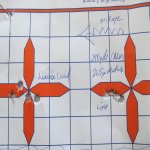
how I know my FX 120i is all the scale I am going to need. Note... I am not adjusting for the right to left pick up in mirage (I have noted it though). 2 loads tested at 250yds. FTR rifle and I sincerely doubt the 308win is going to shoot any tighter by anyone.

would I choose a RCBS... nope. but there is also the opposite limit where you can spend so much time and money in the gear, it distracts from the things that really matter.

The shooters abilities and how consistent they really are (if you are not practising every week and practising to win... you aren't gonna). The optic and how well it actually holds POA/zero. the wind reading ability in 3D. The bullet used. Even the primer and the lot has a more profound affect on your grouping vs the error in a quality scale.

If 1 kernel of Varget is the difference between getting on the podium and not, ALOT of winning National level shooters wouldn't..... but they do.

consistency, reliability, predictability. The rifle only has to be sub 1/2MOA accurate at 1000yds over the entire string. If your gear does these things... YOU are the weak link.

As it should be.

Jerry
 

Attachments

  • IMG_2008.jpg
    IMG_2008.jpg
    67.7 KB · Views: 143
According to JBM Ballistics...

Using a 0.500 G1 BC at 2900 FPS you will get 6.8 inches of drop at 250 yards
Using a 0.500 G1 BC at 2925 FPS you will get 6.6 inches of drop at 250 yards

Using a 0.500 G1 BC at 2900 FPS you will get 319.3 inches of drop at 1000 yards
Using a 0.500 G1 BC at 2925 FPS you will get 312.8 inches of drop at 1000 yards

Keep in mind that these numbers are rounded to the 0.1 inches.

0.2 inches of vertical at 250 yards is pretty good, but 6.5 inches of vertical at 1000 yards takes you well outside the V Bull especially in the corners. Keep in mind this is vertical dispersion by no other factor besides velocity spread.

To hold a 1/2 MOA 1000 yard V Bull at the widest part, you will need less than 15 FPS ES max to have any chance of it.

Environmentals factor in certainly. So unless you are shooting just as the fog clears, you need to hold even tighter velocity spreads. Once you commit to single digit ES, you need the tools to pull it off.
 
Last edited:
Back
Top Bottom