












































Reason for no4 Enfield receiver relief?

iain.quayle

CGN Regular
Rating - 100%
69   0   0
Location
ONT
Hello, I have a question that I have yet to find an answer to and wanted to see if someone may have a quick answer.

On no4s, some have a flat left side while others will have very shallow relief just behind the receiver ring. What is the exact reason?
(Edit: For those just seeing the post now, this is not my rifle, it is just an example. The consensus is that it is just a cut that was required after forging and it didn't matter if it left a mark)
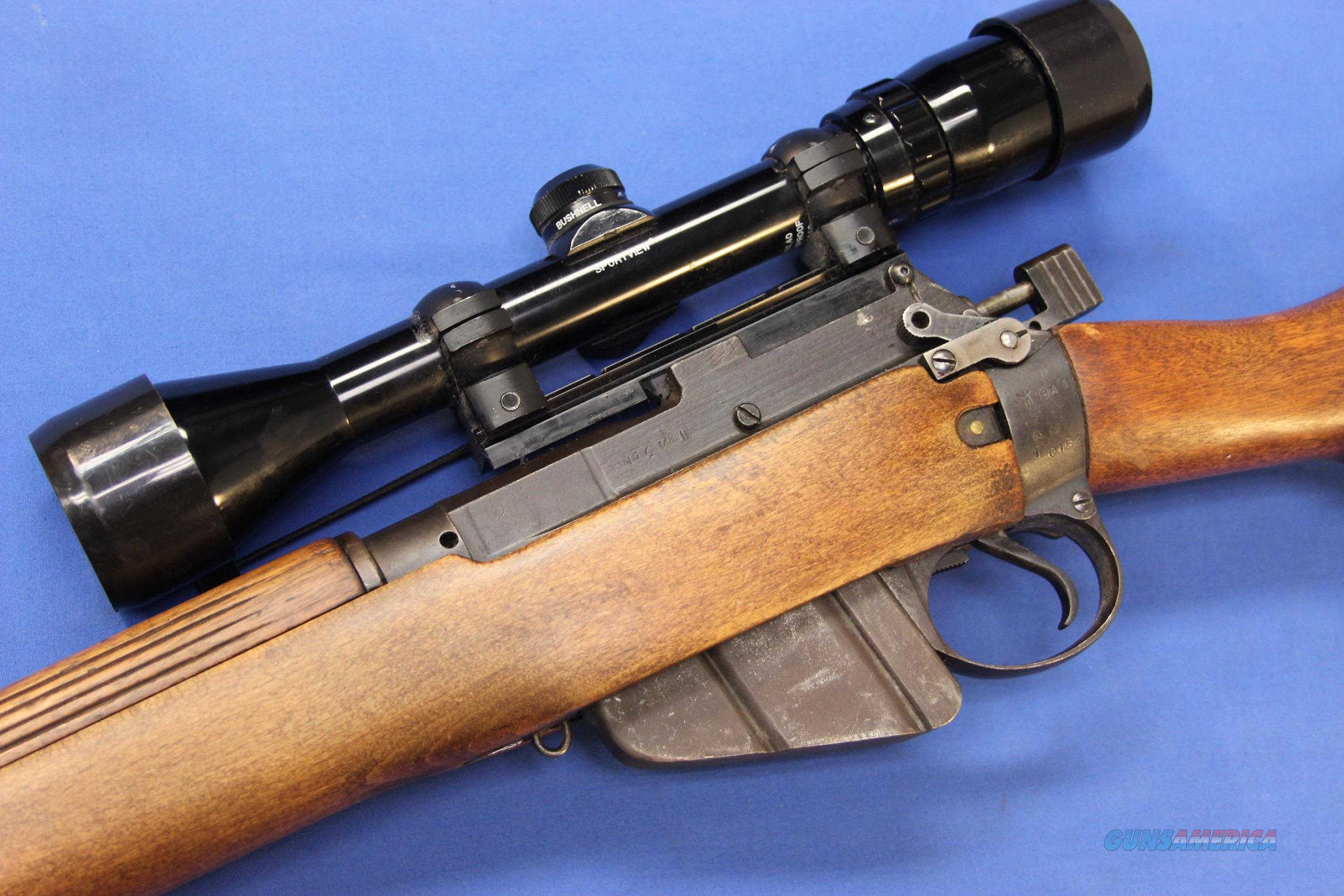
wm_8808595.jpg


The only reason I can think of was to remove markings, but I haven't seen markings on the flat-sided ones that would make sense to remove. Anyways a short explanation would be much appreciated.
 
Last edited:
Hi Iain. Its just a milling variance. A war time inspector would not get her panties in a bunch over over such a minor technicality.
You also have a SMLE magazine in your No.4. Some SMLE magazines, especially at the beginning of the war, were converted for
the No. 4 noticeably by milling off the spring and some of the guide rib at the back of the mag. It was an expedient to alleviate a shortage. JOHN
 
Thank you very much for the answer John! The question shall bother me no longer.
Rifle isn't mine, just was picture so people would know better see the cut I was looking at. That being said neat little bit of extra information.
 
The left sidewall would be milled flat when the receiver forging was machined. It would take an additional operation to machine that recess. You see quite a number of No. 4 bodies with that same uniformly made cut. Obviously it was made deliberately, for whatever reason.
 
Maybe does not help you, and perhaps a bit "tongue-in-cheek", but is like asking why does M1917 have offset sling swivels - they serve no purpose whatever - apparently the answer was because that is what the print showed, that the maker used - so you make what it says to make, not what you think is needed - at least at that time and place. Prints had stamps and approvals - contracts based on those prints - you got paid for making what the print showed. If somebody higher up the food chain forgot to update that part of the P14 blue print when converting production to M1917, then was not on the machinist or sub-contractor that was making the parts - his/her job was to make what the paper said to make.

I suspect was similar with the No. 4 machining of the forging - need to look at the approved prints that were being used, at that plant - then to who approved them. I think might have been 6 or 7 different plants, just in WWII, making No. 4's? Sub-contactor or machinist likely not going to do one iota more or less than called for - if they want to get paid for their work.
 
Last edited:
Doesn't answer any questions but here is a No. 4 assembled at Fazakerley using a No.4 "Trials" action body (with cut-off opening). You can see no additional machined area at the left front. Given that Sniper versions were being considered my suspicion is that the flat spot at the front left of bodies had something to do with that. One of the main steps at H&H was machining a deeper flat in this area- presumably to bring that area into alignment and position relative to the bore such that their "standard" front pad could be made to work with minimum of fuss.

milsurpo
 
Machining that flat might make sense - zooming in on OP picture, I think that is a Maltby marked receiver. For some reason, is in my mind that only Maltby receivers were used by H&H to make the "T's". I might be in error about that. But as per Post #7, I am sure that H&H re-machined that area to get their "pads" to precise location, to be able to "collimate" those scopes and ring mounts that were used.
 
Machining that flat might make sense - zooming in on OP picture, I think that is a Maltby marked receiver. For some reason, is in my mind that only Maltby receivers were used by H&H to make the "T's". I might be in error about that. But as per Post #7, I am sure that H&H re-machined that area to get their "pads" to precise location, to be able to "collimate" those scopes and ring mounts that were used.

Ive got a Faz and it also has that cut so not limited to manufacturer.
 
I suspect it has more to do with the gaugeing of actions and speeding up production

the area near the barrel has a higher finish while the rear is a rougher finish.

My suspicion is that the gauges were set up on the area with the higher finish while the tolerances on the rear half were not as tight, so to speed production were rough finished.
 
Looking at the receiver it might just be that area was cut away because the rest appears to have been cut in a shaper (hard to 100% say from the photos) and it would need to stop the cut somewhere. Just a thought, could simply be for production ease.
 
Hi Iain. Thanks Bearhunter for starting a BS rumour about milling for sniper pads. Which makes sense - milling every body or milling a small pad to fit? Honestly. The No. 4 rifle is assembled by machine torque of body to barrel. Anyone who has tried to get a No. 4 body off knows that often you can twist the body. Its a hard job and you either need the equipment for it or get really lucky. Just under the round chamber reinforce of the body there is a flat bottom and a flat on each side. To ensure that the two side flats are near parallel for the machine clamp to fit both flats milled to a standard distance in order for the body clamp to grasp appropriately. That milling produces a line. The line at the back is from a miller shaping the contour of the body reinforce and with the No. 4 ensuring that the top is flat. The milling stops a the end of the body contour producing a line before the other forward flat milling takes place. This is the way the Brits did it. The SMLE and Trials No 4
were done similar to each other in a peace time milling procedure. Long Branch, not being restricted to the entire British machine methods,
simply milled the body flat first then milled the left side contour which produced a flat body surface above the contour. The bodies were pretty hard and rather than go through tools its much easier to stamp, electro pencil, or paint over or beside original stampings for FTR markings.
I thought my first simple entry would suffice. Thats my 2 cents for today. JOHN
 
Even though I would like to take the blame for that, I didn't start it. Just mentioned that some folks believe that's what the cut is for.

Google it.

Even some reasonably knowledgeable folks on this site have heard or read the rumor and some even believe it.

Look at the post, it was mentioned that it was a "rumor"

The thing is, it also agreed with your post??????????????
 
Back
Top Bottom






















