










































You are using an out of date browser. It may not display this or other websites correctly.
You should upgrade or use an alternative browser.
You should upgrade or use an alternative browser.
Recommendations on a good shooters instruction manual.
- Thread starter freeflier
- Start date


Forget books. Buy ammo instead and go to a range. There is no substitute for range time.
^^^^
This, couldn't be explained better. hands on experience is going to do you better in the long run.
Good luck
Sure, it's a great idea to go to the range with no idea what you are doing, blow lots and lots of ammo trying to figure it out and end up learning lots of bad habits, definitely the ways to go....
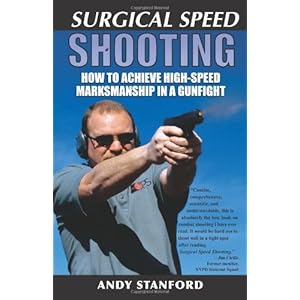
There are lots of good books out there, some have been around awhile but still are pretty useful. Most of the recent better ones have been written by IPSC shooters. You can ignore the parts that deal directly with IPSC and focus on the shooting parts. Practical Shooting; Beyond Fundamentals by Brian Enos. The Practical Shooting Manual by Matt Burkett, is also good and a bit easier to read.
There are lots of good books out there, some have been around awhile but still are pretty useful. Most of the recent better ones have been written by IPSC shooters. You can ignore the parts that deal directly with IPSC and focus on the shooting parts. Practical Shooting; Beyond Fundamentals by Brian Enos. The Practical Shooting Manual by Matt Burkett, is also good and a bit easier to read.

- Location
- Somewhere on the Hudson Bay Coast
Forget books. Buy ammo instead and go to a range. There is no substitute for range time.
A new shooter needs a starting point so he gets the basics right, without a good foundation he will quickly come to the conclusion that good pistol shooting is beyond him, or worse that handguns serve no practical purpose.
Much depends on the genre he'll be shooting in, but there are some elements that apply in all pistol shooting exercises. The gun should be held in a firm handshake grip, but not so hard as to cause tremors in the arm. The pistol should become a straight extension of the forearm, rather than cocked towards the thumb.
Stand quartering the target with your feet roughly shoulder width apart. Adjust your position until you find your natural point of aim. Think of a toy soldier and how you had to move him to get the rifle or pistol pointed at the target. To check your natural point of aim, check the sights against the target, close your eyes for a moment then see if you've swung off target when you open them. If you have to adjust your position, do so by moving your rear foot slightly and pivot on your front foot. To adjust your elevation move your feet slightly closer together or farther apart.
The front sight should be centered in the notch of the rear sight, and the height of the front sight should be even with the top of the rear sight. Once the sights have been correctly aligned on the target, the focus should shift to the front sight, allowing the rear sight and the target to blur. The front sight should be attached to the trigger finger, and unless you can see the front sight you should not make contact with the trigger.
Once the sight picture has been established the first pad of the forefinger should be placed on the trigger, and ideally there should be no contact with the frame of the gun, only with the trigger. The trigger finger does not squeeze the trigger, squeezing the trigger suggests something we don't mean, rather pressure on the trigger should be steadily increased until it breaks, and the new shooter must train himself to add pressure with his forefinger independently of the rest of his hand. This break should be a surprise, that is you won't know it s about to break until it does. You should not anticipate the break, although the break should not startle you. If you shoot an auto pistol, you must take yup the slack in the trigger without pulling the trigger right through the slack to the break.
Breath for each shot, do not hold your breath for a shot string. When you are about to shoot, hold your breath at the natural respiratory pause, without forcing all the air from your lungs, as doing so will cause your vision to blur quickly, cause arm tremors, and tempt you to rush the shot, You need to be relaxed and not tense up for the shot, it won't hurt you.
At home before you ever go to the range, dry fire your pistol until your front sight does not move off target with the trigger breaks. If you are shooting a rimfire pistol, use snap caps to protect the edge of the chamber. If your sights move off target, the bullet would have gone where the sights are now pointed. Be honest with yourself, and learn to call your shot.

- Location
- Just West of the GTA
This is the best that I have seen - the US Army Pistol Marksmanship Manual. If you apply what is in it you will avoid a lot of pitfalls and bad habits.
http://www.saveourguns.com/Ar_Marks_Un_Pistol_Train_Guide.pdf
If you are receptive to Zen philosophy read Zen and the Art of Archery. That one is not for everyone, but if you approach it with an open mind it willl help to improve the mental aspect of shooting, which the average shooter neglects.
http://www.saveourguns.com/Ar_Marks_Un_Pistol_Train_Guide.pdf
If you are receptive to Zen philosophy read Zen and the Art of Archery. That one is not for everyone, but if you approach it with an open mind it willl help to improve the mental aspect of shooting, which the average shooter neglects.
Here's something I posted awhile ago. I'll post it and a newer one I just put on my blog
Hmm can't get the other to copy, but here's the link
http:/ /patharrison.ca/content/accuracy-it’s-mandatory
I wrote this up awhile ago and posted it on a couple of forums. I thought I had put it here but somehow I missed that, so I'll throw it up now. There are a couple of things I'll add to this but I think I'll make another whole post about it.
So here goes!
Lets start with the grip, with the strong hand grip the pistol/revolver as high as possible. With a pistol you want the beavertail/tang at the rear to be right down in the web of your hand. The wrist needs to be right behind the grip. If you were shooting it one handed the forearm, wrist and pistol would form a straight line, in a two hand hold the forearm will be canted a bit to the side but the wrist will remain directly behind the pistol. The middle finger should be right tight up to the trigger guard, you will notice that on most newer 1911's this area is relieved and on competition guns we will hawg even more material out here if we can. the fingers should wrap around squarely and be able to get a good purchase on the left side grip (if shooting right handed, reverse this if not.) The trigger finger should be free to move and will contact the trigger somewhere on the first pad, where depends on the size of the shooters hand, the size of the gun and the need to pull the trigger directly to the rear. This can be found in dryfire, find out where your finger likes to be and you can pull the trigger without disturbing the sights. The thumb can rest on the safety, or rest at the top of the frame for now, unless I am shooting single handed I will usually leave it relaxed and high off the gun until my support hand mounts on the pistol and then it will rest on the base of the support thumb.The support hand now comes onto the pistol. The index finger will be right tight up under the trigger guard (some like it on the front of the trigger but for the most part this was a phase we went through because a small number of top shooters used it but most others found it didn't help, some notables are Chip McCormick, Jerry Barnhart, and Eric Grauffel ) the fingers will wrap around and overlap on the shooting hand. My left index ends up on the back of the lower portion of my right middle finger, I have a callous here from dry firing. The large pad at the base of my thumb will mount as high as possible on the left side grip. On a 1911 it will be right under the safety, on a Glock it will be just below the slide. The fingers of the right hand will be in the pocket made by the gap between the center of my left palm and the grip and the large pad at the bottom of the hand (below the pinkie finger) will be at the base of the grip. The heel of the left hand will be butted up against the heel of the right hand. You now have completely surrounded the grip on all sides with as much contact as possible. The right wrist is directly behind the pistol and the left hand is canted downwards roughly at 45 degrees. Both thumbs will be pointing towards the target, neither should bear on the gun. They should just be relaxed and pointing forwards.
The arms should be extended as far as you can without locking them. Locking the arms out will allow recoil to travel through the arms to your shoulders, keeping the unlocked will allow the arms to absorb some of the recoil. This is important, throughout the stance anything rigid will transmit recoil to the rest of the body. Both arms push forward giving the gun something to recoil against. The shoulders should be forward slightly and down. The torso should be leaning forward, the shoulders should be in front of your hips. I find I am leaning more aggressively these days, even with the Open guns and my .22s it helps return the gun from recoil. My torso and hips will be facing pretty much directly at the target I am shooting. Any movement to turn or get to the targets is done with the legs.
The legs should be bent, these days I am more aggressive here too, my stance is wide, with the left foot forward. The heel of the left foot is even with the toe of the right, perhaps slightly more forward. My weight is on the balls of my feet, I don't usually have to try to do this, the rest of the stance should cause this. If you find your weight is on your heels, you are likely too erect and leaning back. Even slight recoil will drive you back, either knocking you off balance or at the very least causing the gun to be slow to recover. You should be leaning progressively forward against the gun.
Now this stance is adaptable, by that I mean depending on the circumstances I can make it more or less aggressive. For fast close stuff I can lean in a bit more or if I'm shooting something that requires more accuracy and less speed I can stand more erect and reduce some of the stress on the body and shoot more relaxed. Also when shooting under or around ports, barricades etc. the basic parts of the stance don't change a whole lot and when they do the effect is in degrees. Overall it still works but it will be reduced. If I'm really kinked up behind cover, I will be leaning forward more and my arms will be bent more but I won't be off balance and recoil control will still be effective, just less.
Pat
Hmm can't get the other to copy, but here's the link
http:/ /patharrison.ca/content/accuracy-it’s-mandatory
A new shooter needs a starting point so he gets the basics right, without a good foundation he will quickly come to the conclusion that good pistol shooting is beyond him, or worse that handguns serve no practical purpose.
I cannot agree more. What you wrote are the fundamentals of good handgun shooting. In my understanding we're not questioning or discussing this. Our discussion is about where this knowledge should come from.
I said that there is no substitute for range time. Maybe I should explain myself a little further. One hour on the range under watchful eye of shooting instructor, like you Boomer, will produce much better results than countless hours of reading books, regardless of how well written and ilustrated they are.
I wouldn't bring it up if I didn't see it on daily bases. My gun club requires every new handgun shooter to complete club's Handgun Safety Course. It is an in class sessin plus several hours on the range with a cerified instructor. There is no book(s) in The World which can teach you what you learn from these guys.
Thanx very much guys for the the input. BTW, I do realize there is no substitute for practice nor are there shortcuts. I have a decade of martial arts training and know all about practice but... one absolutely needs to practice correctly or it's largely wasted tiime. I'll be looking for an instructor here in Vancouver but untill I find one I'd like to be headed the right way. BTW if anyone knows of a good intructor in Vancouver please let me know.
This is the best that I have seen - the US Army Pistol Marksmanship Manual. If you apply what is in it you will avoid a lot of pitfalls and bad habits.
http://www.saveourguns.com/Ar_Marks_Un_Pistol_Train_Guide.pdf
If you are receptive to Zen philosophy read Zen and the Art of Archery. That one is not for everyone, but if you approach it with an open mind it willl help to improve the mental aspect of shooting, which the average shooter neglects.
Dude! Am I receptive to Zen?...I read Zen in the Art of Archery decades ago on the recommendation of one of North America's greatest drum instructors (a guy named Jim Blackley). Currently I'm into my 10th year of serious Tai Chi training. Toaist principles are very similar (and in many ways identicial) to Zen Budhist principles (which probaby originated in China to begin with).

Ps. Thanx for the link. That's exactly what I'm after.

If you are receptive to Zen philosophy read Zen and the Art of Archery. .
BTW, it's sort of ironic that, the author, Eugen Herrigel was an Olympic marksman and, in trying to apply the "techniques" he had learned in his shooting career, COMPLETELY missed the point of the Zen training he was recieving.