













































You are using an out of date browser. It may not display this or other websites correctly.
You should upgrade or use an alternative browser.
You should upgrade or use an alternative browser.
refinishing a Rem 788 stock tips
- Thread starter mbogo3
- Start date
- Location
- Western Manitoba
A long time ago I did one - say circa 1977 or so - wood was more or less white as I recall - and very hard - would not take stain hardly at all. Was my impression, then, that it was birch wood. I think that one, then, had like a "sprayed on" finish from Remington. An acquaintance tells me they were available with walnut stocks, but if so, I do not think I have ever seen one. Is a few here - based on that one past experience, I am really hesitant to cut into them.
Perhaps before messing with that stock, see if you can get a chunk of birch fire wood - see if you can stain / finish that to your satisfaction - a way to learn what works and what does not?
Perhaps before messing with that stock, see if you can get a chunk of birch fire wood - see if you can stain / finish that to your satisfaction - a way to learn what works and what does not?
This one looks like it has an STD so anything will be an improvement. Birch or beech? Some models the floor plate was inletted into the stock other lie flat mine is the latter. Cera-coated flat black with a new 24" Bob Jury barrel 1-12 twist in .222 rem

gunrunner100
CGN Ultra frequent flyer
- Location
- NW Ontario
I've had luck mixing stain and finish together, letting it dry, then coating. Better luck using leather dye, soaks in very well.
- Location
- Western Manitoba
This one looks like it has an STD so anything will be an improvement. Birch or beech? Some models the floor plate was inletted into the stock other lie flat mine is the latter. Cera-coated flat black with a new 24" Bob Jury barrel 1-12 twist in .222 rem
Yes. The one I did was a 243 Win - it had the bottom metal on top of the wood - I scribed it and inletted it into the wood - then filed / sanded to make it look like it belonged in there. I was never sure if the bottom metal things were the same between the "lay on top" type, versus the "inletted into stock" type. I am really sure that it had a 1/4-28 NF front action screw and a #12, of some sort, rear screw - I am sure that rear one got drilled and tapped for 1/4" NF bolt - I ended up to make front and rear from hardware store bolts, after I managed to wreck originals when I tried epoxy bedding.

- Location
- SE corner Sk
I refinished a 788 with the pale stock, beech wood I think.
Used leather dye, I'd think would be better then wood dye.
Then went over with boat varnish.
Used leather dye, I'd think would be better then wood dye.
Then went over with boat varnish.


They had both walnut and birch stocks, depending on what Remington had at the time, I suppose. There were also a lot of walnut aftermarket wood stocks back in the day, Fajen and Bishop etc, that you come across on these rifles sometimes. - dan
Yes. The one I did was a 243 Win - it had the bottom metal on top of the wood - I scribed it and inletted it into the wood - then filed / sanded to make it look like it belonged in there. I was never sure if the bottom metal things were the same between the "lay on top" type, versus the "inletted into stock" type. I am really sure that it had a 1/4-28 NF front action screw and a #12, of some sort, rear screw - I am sure that rear one got drilled and tapped for 1/4" NF bolt - I ended up to make front and rear from hardware store bolts, after I managed to wreck originals when I tried epoxy bedding.
The first version had the surface mounted trigger guard - later ones were inletted. Also the surface rifles had straight bolt handles, the inletted ones bolt handles were modestly swept back. The straight bolts had a larger diameter bolt plug; smaller diameter for the swept ones. The latter type gave a longer peg for handle attachment, more area for the induction brazed joint. They could still be broken.
- Location
- Western Manitoba
I have WATCO Danish Oil Finish in Dark Walnut and Black Walnut as well as Danish Walnut wood stain. Do they need to be blended with something before application? Steel wool in between coats ETC? Wax coat ?
If you can not come up with scrap piece - like firewood - that you think is same wood, maybe try a "test" where it will not really show if it does not work - maybe bottom / inside barrel channel - if you can get desirable results there, maybe carry on to exterior? Don't forget to remove the butt plate and do under there, as well as the magazine well. I'm not sure what you have for sling swivels - if any - but might want to slosh a bit into their holes as well?
Danish oil will work pick your color (dark walnut).
Depending on how much work you want to put into it I would thin the oil with paint thinner or mineral spirits for the first 2 to 3 coats.
You can go 1-1 or 2oil-1.
Then 2 coats of straight D oil.
Enjoy.
Depending on how much work you want to put into it I would thin the oil with paint thinner or mineral spirits for the first 2 to 3 coats.
You can go 1-1 or 2oil-1.
Then 2 coats of straight D oil.
Enjoy.

Danish oil will work pick your color (dark walnut).
Depending on how much work you want to put into it I would thin the oil with paint thinner or mineral spirits for the first 2 to 3 coats.
You can go 1-1 or 2oil-1.
Then 2 coats of straight D oil.
Enjoy.
I will give it a whirl..should one wet sand or 0000 steel wool between coats ?


Cheap hard wood stocks...
Works best if the finish has colour in it... like a translucent paint...
Paint! Now there is an idea...
Coffee and tea for wood finishes is interesting,
- Location
- Western Manitoba
"neutralize it" - not really sure - I would think a fluid on an impregnable surface - like on a piece of glass - could be "neutralized" by adding opposite to it - not sure what happens if the stuff gets soaked into wood. I do not know how to get the neutralizing agent into the fibres to "neutralize" what soaked in there? Way back in Dark Ages, I recall using litmus paper to check if a fluid was acid or base - not sure if that is the "only" way to check that (?), and no clue how to do so when "soaked in" to something?
I would think besides "neutralize", there is also the option to flush it - to dilute it??
Go here - https://www.usgs.gov/media/images/ph-scale-0 - seems to be a decent discussion what is a base versus what is an acid - some pictures of various household stuff to show their relative acid / base pH number - opposite ends of that ought to cancel each other out - to "neutralize" them? Of note: a strong "base" is going to have a pH near 14.0; a strong acid is going to have a pH near 0.0 - water is "neutral" with a pH of 7.0 or so. You might want to note that is a logarithmic scale - going from one number to next is increase by 10 - so going from 5.0 to 9.0 is 10 x 10 x 10 x 10 - 10,000 times, not 4 units, as it would be on an arithmetic scale.
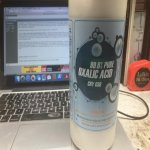
Not sure it is relevant to your instance, but there is some stuff here that I got from Amazon.ca - is called "oxalic acid" - is/was the active ingredient in "Bar Keeper's Friend" - like a granule or powder for cleaning wood - I think originally recommended for removing rust stains from deck wood screws - might only be for pulling metal stains from wood (?). I read that bee keepers use it to fight off a mite that can infect a hive of bees. An acquaintance used Bar Keepers Friend to pull a nasty stain from an SMLE stock - wood around that went "white" - as if all stain / colour removed - had to be re-stained to put colour back into that wood.
I would think besides "neutralize", there is also the option to flush it - to dilute it??
Go here - https://www.usgs.gov/media/images/ph-scale-0 - seems to be a decent discussion what is a base versus what is an acid - some pictures of various household stuff to show their relative acid / base pH number - opposite ends of that ought to cancel each other out - to "neutralize" them? Of note: a strong "base" is going to have a pH near 14.0; a strong acid is going to have a pH near 0.0 - water is "neutral" with a pH of 7.0 or so. You might want to note that is a logarithmic scale - going from one number to next is increase by 10 - so going from 5.0 to 9.0 is 10 x 10 x 10 x 10 - 10,000 times, not 4 units, as it would be on an arithmetic scale.
Not sure it is relevant to your instance, but there is some stuff here that I got from Amazon.ca - is called "oxalic acid" - is/was the active ingredient in "Bar Keeper's Friend" - like a granule or powder for cleaning wood - I think originally recommended for removing rust stains from deck wood screws - might only be for pulling metal stains from wood (?). I read that bee keepers use it to fight off a mite that can infect a hive of bees. An acquaintance used Bar Keepers Friend to pull a nasty stain from an SMLE stock - wood around that went "white" - as if all stain / colour removed - had to be re-stained to put colour back into that wood.
Attachments

Last edited:






















