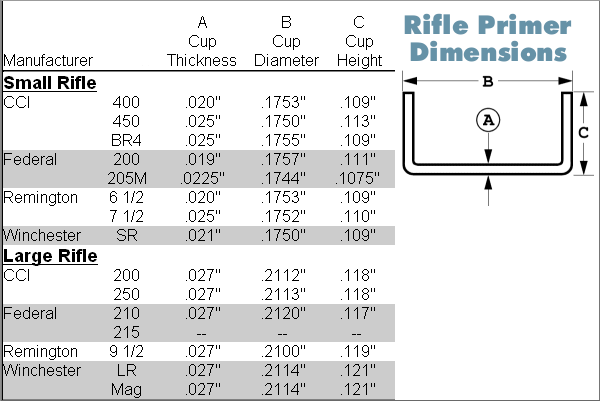
I've loaded thousands of rounds of 223 with CCI400 standard small rifle primers and have never had a slam fire. I don't think this is as big of an issue as some make it out to be but there's also nothing wrong with being a little more cautious since the price difference is negligible.
I wouldn't bother with a magnum primer though, it isn't needed and will increase the pressure created in the cartridge which will throw off your reloading data. This can again be worked around with good load development techniques but just don't use a magnum primer and go straight to a load just under book max.
It is recommended that you use primers with a cup thickness of .025 to help prevent slamfires. The firing pin was lightened on the M16 rifle during field testing to lower inertia. The highest probability of a slam fire is when loading a single round without the magazine in place to slow bolt velocity. "BUT" a dirty bolt with carbon buildup or small brass slivers around the firing pin can cause a flam fire.
I have a simple answer, Remington ran our American Lake City Army Ammunition Plant from 1941 until 1982 and used the 7 1/2 primer for the M16 rifle. The initial ammunition used in testing had the 6 1/2 primers but slam fires occurred. The firing pin was lightened and the primer was switched to the 7 1/2 primer to help prevent slam fires.
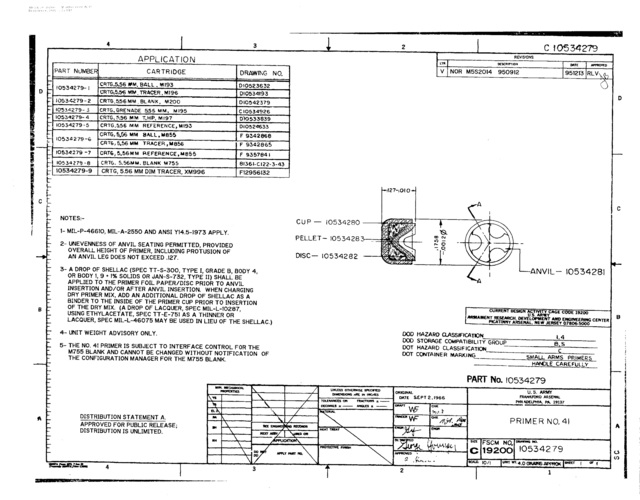
Below is the newer CCI #41 primer used at Lake City and you can see the primer cup is thicker in the base. The primer anvil is also shorter and the thicker cup and requires more force to set it off. That being said primer cups of .025 were used by Remington and then Winchester at Lake City until ATK got the contract in 2002 to produce ammunition at Lake City.
Below are the gas port locations and the port pressures, and I made sure my carbine had a mid-length gas system and not pound the rifle as hard.
Bottom line, use the reloading data for the M16/AR15 5.56 rifles as these loads have the proper port pressures.
Both the .223 and M193 5.56 ammunition was loaded to 55,000 psi "BUT" the later M885 5.56 ammunition is loaded to 58,700 psi and why you are told to not shoot it in .223 rifles.
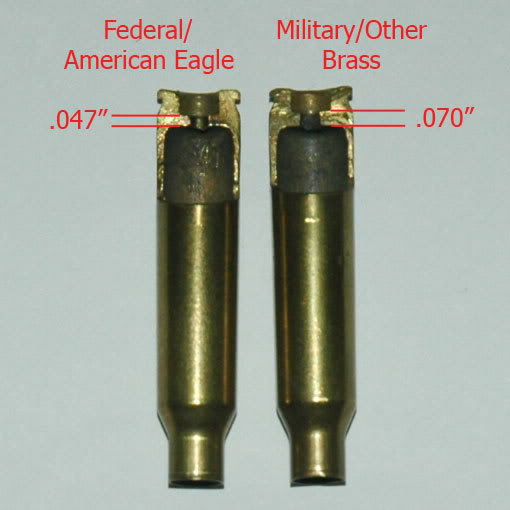
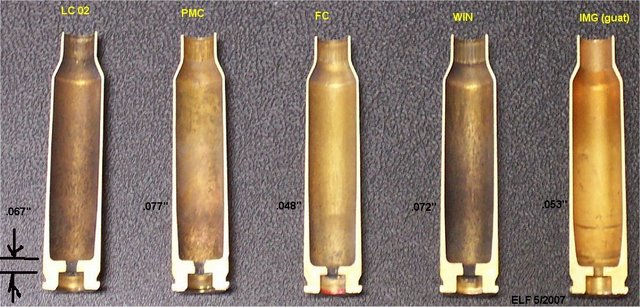
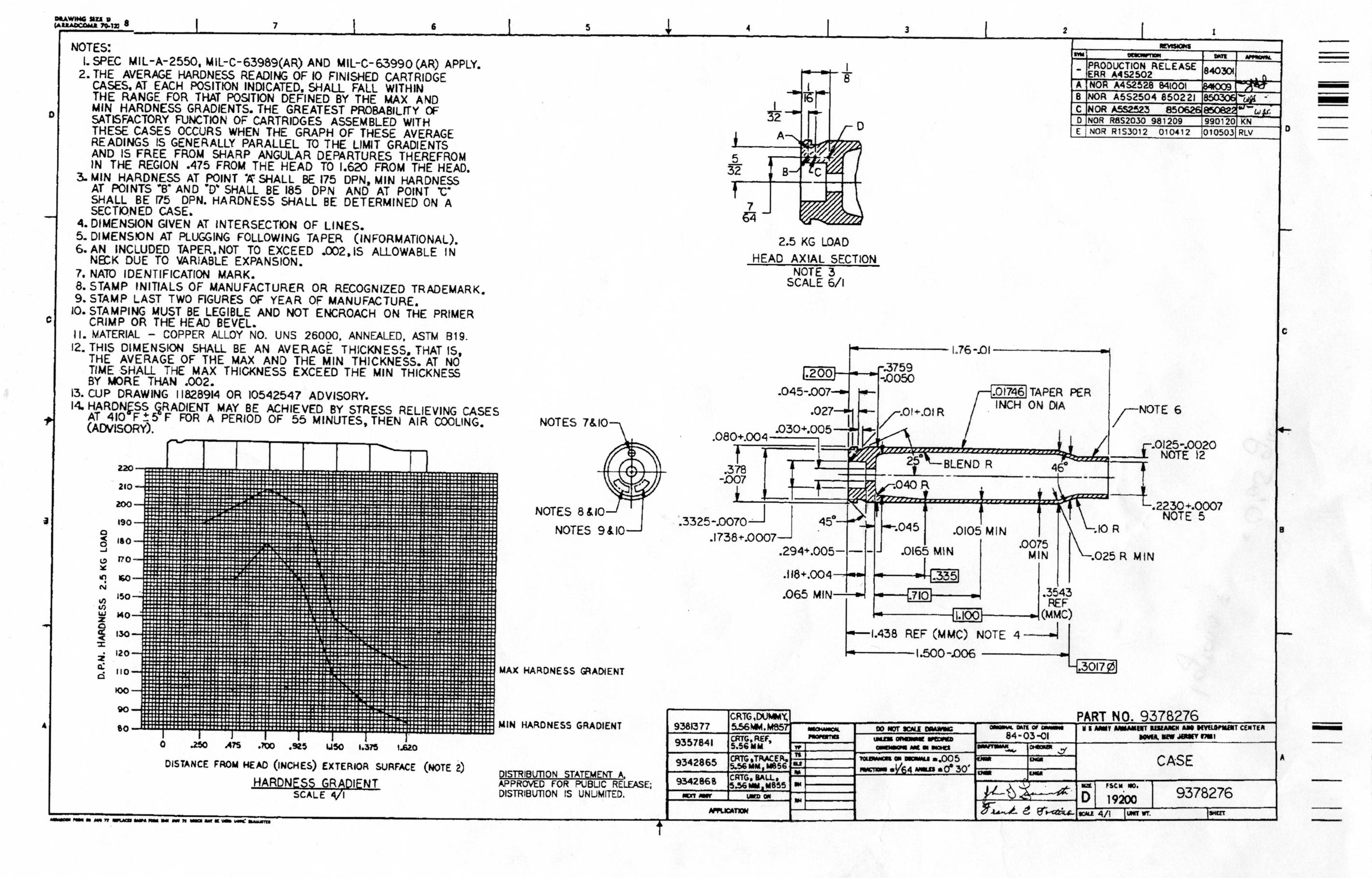
Also 5.56 Lake City military cases are made of harder brass and have a thicker flash hole web for added strength.
Below I have had brand new factory Federal .223/5.56 cases with oversized primer pockets after the first firing and could not be reloaded. Meaning pick good hard military type cases and your primer pockets will last a long time.
At the link below is some very good info on the .223/5.56 and free Sierra loading data on the .223 and 5.56.
223 Rem + 223 AI Cartridge Guide
http://www.accurateshooter.com/cartridge-guides/223rem/
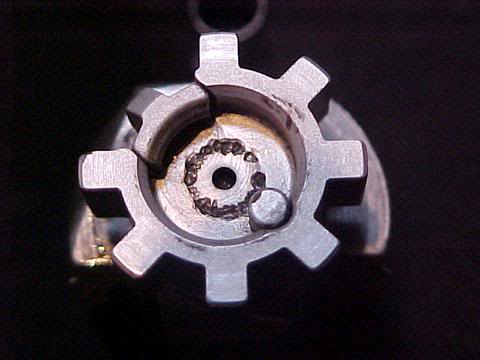
Below is what happens when you use cases with loose primer pockets. A over gassed AR15 can have the bolt moving to the rear while there is still pressure in the barrel. Meaning cause a etched bolt face and a primer can fall out of the primer pocket and jam the trigger group.
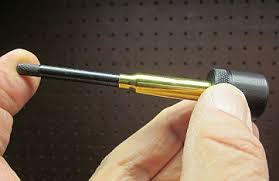
I use a Lee depriming tool to check the case if the primer seats easily, if I can move the primer with just finger pressure the case goes in the scrap brass bucket.














































 before let alone a direct impingment. I made up to loads last night. 21gr of imr4198 and 18.8gr of H4895 on a 55gr pill. The rifle is a DDM4V7 16" barrel. Mid length gas system. This is more of a general question to find out what to look for in my AR that may effect it negatively.