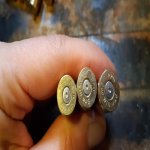
Reloading 300WM

TrevorJ

Regular
Uber Super GunNutz
Rating - 100%
38   0   0
Location
Saskatoon
Recently re-barreled a savage long action with a 30" JC Custom Barrel, 1" - .95" straight taper, and want to share my load development with you all, and hear your comments on my methods!

I had two suitable powders on hand H-1000, and H4831SC. Enough to load about 100 rounds each.
Using Berger 210 Grain VLD Bullets
COAL 3.579" (10 thou jump)


H4831SC
Starting load 66.5, working up in .3 grain increments to 69.8 grains (per the Berger Reloading Manual).
Started with new unfired PRVI brass, Body Sized, Neck Sized, Trimmed, and Chamfered, flash holes cleaned (this batch of brass had a number of brass with the flash hole partially obstructed).
Loaded 3 rounds of each powder weight

H1000
Starting load 71.5 grains, and working up in .3 grain increments to 74.8 grains (per the Berger Reloading Manual).
Used some fired brass (out of a different barrel), Body sized, Neck Sized, Trimmed, and Chamfered
Loaded 3 rounds of each powder weight

Range Day!
Jan 20/19, 10:40am, Clear Skies, -13C (w/o wind), Wind L-R ~20km/h (enough to blow targets and mitts of the shooting tables if they were not weighted down).
200m Target
Shooting from a Bench
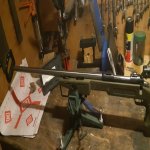
Front Rest: Caldwell "The Rock", with stock stop to ensure consistent placement on the rest.
Rear Rest: Integrated Rear Adjustment Screw in my rifle stock

Notes:
Scope has been remounted, first time firing rifle since I replaced the barrel, and re-assembled the rifle.
All of the H1000 loads were difficult to close the bolt, at first I thought it was the bullet being jammed into the lands (I assumed I didn't get the jump correct), after trying a few rounds, looks like perhaps headspace was too tight for this older brass and was headspacing off of the shoulder, and not the belt.
H4831SC loads chambered fine, except for a couple of rounds (it was cold, and I chalked it up to as weather related).
No sticky bolt on ejection, only on chambering.
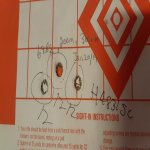
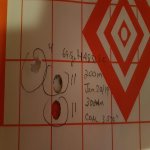
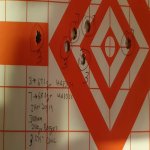
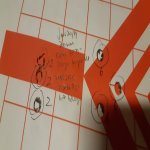
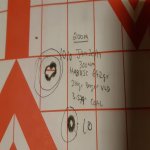
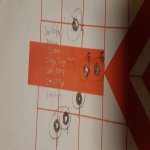
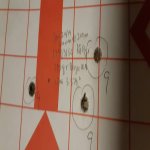
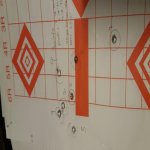
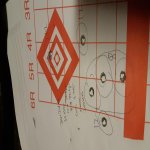
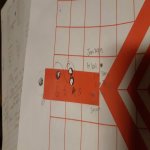
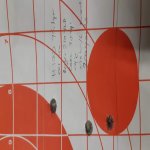
I would shoot 4 of the loads (12 rounds), at 4 targets (1 each), then walk down range, note each hit with a marker, and re-use the target. Typically I would use new targets each time, but this was quicker and less time with my hands out of my mitts, and the walking warmed me up.

Pictures!
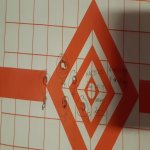
20190120_175729.jpg

20190120_175826.jpg

20190120_180048.jpg

20190120_180056.jpg

20190120_180332.jpg

20190120_180337.jpg

20190120_180550.jpg
 

Attachments

  • 20190120_175729.jpg
    20190120_175729.jpg
    33.8 KB · Views: 884
  • 20190120_175826.jpg
    20190120_175826.jpg
    38.8 KB · Views: 878
  • 20190120_180048.jpg
    20190120_180048.jpg
    27.2 KB · Views: 880
  • 20190120_180056.jpg
    20190120_180056.jpg
    35.9 KB · Views: 876
  • 20190120_180332.jpg
    20190120_180332.jpg
    32 KB · Views: 879
  • 20190120_180337.jpg
    20190120_180337.jpg
    28.1 KB · Views: 872
  • 20190120_180550.jpg
    20190120_180550.jpg
    24.5 KB · Views: 872
Last edited:
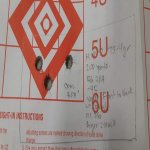
20190120_180558.jpg

20190120_180811.jpg

20190120_181104.jpg

20190120_181104.jpg

20190120_181251.jpg

Review
Each load was numbered 1-12 at the range, as it was easier than trying to scribble the details when downrange (also had the range to myself, and was not holding anyone up).
1 being the staring load.

H4831SC loads (shot second)
1 - 66.5gr (1" horizontal, .5" vertical)
2 - 66.8 gr ( , 1"+ vertical)
3- 67.1 gr ( 2" horizontal, .5" vertical)
4 - 67.4gr (1" horizontal, .5" vertical)
5 - 67.7 gr (1.5" horizontal, 1" vertical
6 - 68 gr (.5" horizontal, 1.5" vertical)
7 - 68.3gr (3" horizontal, .5" vertical)
8 - 68.6gr (3" horizontal, 1" vertical)
9 - 68.9gr (2" horizontal, 1" vertical)
10 - 69.2gr (1" horizontal, 1" vertical)
11- 69.5gr (.5" horizontal, 1" vertical)
12 - 69.8gr (1.5" horizontal, .5" vertical)

Not really sure what I would re-test in this group, probably 66.5 through 67.4 in smaller increments, 5 shot groups.

H1000 (shot first)
1 - 71.5 used for getting on paper, not shown
2 - 71.8 gr (4" vertical, 2" horizontal), probably me having the largest effect on this test
3 - No data, off paper
4 - No data, off paper
5 - 72.7 gr (large group horizontal, and vertical, probably a flier, or I pulled it)
6 - 73 gr ( horizontal stringing ~3 in, little to no vertical)
7 - 73.3 gr ( ~1in, nice grouping)
8 - 73.6 gr (little horizontal stringing, 2" vertical)
9 - 73.9 gr (2 on paper, 2" horizontal)
10 - 74.2 gr opened way up, only 1 on paper
11 - 74.5 starting to close up again, still a massive group
12 - 74.8 starting to close up more, still quite a large group

I think I will reload 72.7 through 73.6 in smaller increments, and shoot 5 shot groups.

I apologize for the out of focus, and poorly orientated images. I had not planned on posting pictures, but a thread is useless without photos!

20190109_175816.jpg

Thanks!
 

Attachments

  • 20190120_180811.jpg
    20190120_180811.jpg
    28.5 KB · Views: 871
  • 20190120_181104.jpg
    20190120_181104.jpg
    36.1 KB · Views: 878
  • 20190120_181251.jpg
    20190120_181251.jpg
    25.6 KB · Views: 872
  • 20190120_180558.jpg
    20190120_180558.jpg
    24.9 KB · Views: 863
  • 20190109_175816.jpg
    20190109_175816.jpg
    56.4 KB · Views: 871
Last edited:
Try actually putting some H1000 in the case. Nosler has 75 grains as the starting load with 210s and 79 as a maximum. Berger is notorious for light data. Screw them.

My thoughts exactly. I like H1000 for my .300 but I use quite a bit more for 200 grain Partitions and Accubonds
 
Thank you for the replies Dogleg, and rral22.
The only two manuals I have been using have been berger, and Hornady (and hornady doesn't list H1000 for their 208gr, and the load is similar for the 212 ELD-X).
I had stopped the H1000 test, I have more loaded with higher charges, but the groups seemed to be opening up even further so I had stopped, apparently too soon!
I will work up some more H1000 loads starting from where I finished and continue up (I see on the Hodgdon reload data it even goes up to 78 grains)

Would explain why I went with H4831SC on the last barrel, the H1000 loads were all low on the target. Same hold as the H4831SC but POI was several inches lower at 200m, and the groups were not anything special.
 
A change in point of impact after you change a component in a load (changing the powder type can make big changes in POI) mean nothing. Group size does, of course, mean something if you're trying for smaller groups, but a group that is "low on the target" means nothing at all. I also own a chronograph that I use whenever I'm working up a load. It is the cheapest method of getting some "real" numbers from which to make guesses about pressure levels you are getting, and I recommend getting one or finding a friend who has one.
 
Thank you for the feedback rral22. I do have a chronograph. I have not used it much, but the few times I have is when I am fine tuning a load. Right or wrong, but that is my current method.

Edit: Reading up on another thread on this forum about whether someone needs a chronograph or not, I am rethinking how I currently use my chronograph.
 
Last edited:
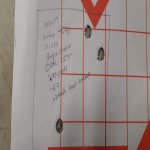
I had a few cases that were difficult to close the bolt on when I was at the range, so I decided last night to spend some time in my shed trying to pinpoint what was causing the issue.

What I found was interesting to me. The cases that would not chamber easily were all previously fired brass out of a different barrel. I had used a body die, neck sized them, trimmed, chamfered, and verified a few of them in my new barrel to see if they would work. That's where I went wrong. This bunch of brass I was using had been fired 5x, some of it had been fired less (I typically load in batches of 50, which is one bag of of PRVI brass, but when doing load development I don't always load up 50, meaning some get fired more once I find a load that works). I took a few of the brass that the bolt wouldn't close on and "Sharpied" the shoulder area, and in front of the belt, chamber the brass and see what rubs off. I had two theories, 1) the shoulder was blown out too far for this chamber (it would then headspace off the shoulder rather than the belt), or 2) the case had expanded in front of the belt, below where the body die can get at. Turns out it was the area near the belt that was the problem. I suspect that the other chamber was a bit on the larger side, and the extra few firings, or perhaps they were hotter loads during development, caused the case to expand in front of the belt. Either way, pitched the brass that wouldn't chamber, and went on to prep the rest of the brass for further load development, until I broke another decapping mandrel... Should have bought more than one, when I ordered my last replacement.

View attachment 240905

Thought I would share my experience with belted magnums that don't want to chamber fired brass, even after resizing.

Has anyone else had a similar experience?
 
Thanks rick357! I have read about those dies. I suspect I will end up with one at some point. I also see there are a few other threads of people who have used the Larry Willis dies and have paid "for themselves" by saving some bulged cases.
 
I don't use mine that often, but when I need to, it works. I have it set up in a Hornady LNL quick lock bushing. It is one of the 'special' dies I use in my Lee Classic Cast press. Yes, I know someone out there is going to say 'but it won't fit through the LNL bushing'. It took quite some persuasion with a file on a drill press but once it has been 'adjusted', it works just fine.
 
Well, I finally got around to rolling a few more test rounds of H-1000, cci250, PPU brass (new unfired), Berger 210gr VLD, COAL 2.579" (10 thou jump).
I took your advice "and put some powder in the case" Started at 75gr worked up to 79gr. 1 gr increments (I ran out of powder!) Plan on shooting these over my Chrony (hopefully not at, will be my second time trying a chrony), and watching for pressure signs.

Seeing how I have run out of powder, I am going to see how these loads shoot, and likely order more H-1000. Should I stick with the CCI250 primers, or go with WLRM? I can get either, for the same price, and haven't really gone that far down the ladder testing yet, and will have to re-test with the new lot of powder anyhow.
 
Use the CCI primer just because you shouldn't change components in the middle of testing. If you decide to try another primer, change only the primer and see what happens. The goal is to always change one variable at a time so you can tell (hopefully) that any change in performance is due to that change in components. I actually think choice of primer is not really important at the start of load development, and it would be one of my last changes to the experiment if I was looking for more accuracy for some reason.
 
Continued with the load development at the range today.
-4 degrees Celsius
~20km/h wind blowing in my face.
200 yards
COAL 3.579" (10 thou jump)
CCI 250
Berger 210 VLD

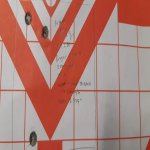
75.1gr H1000, this picture wants to be sideways for whatever reason, this is vertical spread.
20190202_115722.jpg

75.4gr H1000
20190202_115736.jpg

75.8gr H1000
20190202_115744.jpg

76.6gr H1000
20190202_115750.jpg

77.6gr H1000
20190202_115758.jpg

75.4gr is what I would be loading up based on these results, and on either side to see if I can fine tune it a bit more. I did bring my chronograph, but forgot my tripod. So was driving blind yet again on this test as far as velocities are concerned.
The final load that I shot was 77.6gr, and started to see pressure signs on the case (ejector imprinting on the case, primers starting to flatten), but no sticky bolt.
What would you folks do with these results? Sure velocities would be super useful, but I don't have them at this point.

77.6gr, first case no pressure sign, next one had some ejector mark, third had distinct pressure sign. No sticky bolt. Did not try the next load of 79 grains based on these cases.
20190202_142555.jpg
 

Attachments

  • 20190202_115722.jpg
    20190202_115722.jpg
    31.4 KB · Views: 378
  • 20190202_115736.jpg
    20190202_115736.jpg
    40.1 KB · Views: 377
  • 20190202_115744.jpg
    20190202_115744.jpg
    31.5 KB · Views: 379
  • 20190202_115750.jpg
    20190202_115750.jpg
    26.7 KB · Views: 383
  • 20190202_115758.jpg
    20190202_115758.jpg
    36.9 KB · Views: 378
  • 20190202_142555.jpg
    20190202_142555.jpg
    35.3 KB · Views: 379
Last edited:
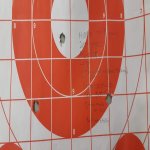
With 210 Matrix VLDs, which are similar to the Bergers, seated to cycle through a .375 H&H length magazine box, 79 grs of H-1000, was the hottest load I tried that didn't produce pressure signs. When I increased the load to 80 grs, I had extractor marks on the brass, and the bolt was sticky, but the group size shrunk to .75" with 2 holes overlapping and the third a half inch away. I've got some 210 gr LRABs loaded now with 79 grs of H-1000, but I might try 79.5 if the accuracy appears to replicate my observations with the VLDs. I had good success with 71 grs of Re-22 and 73.5 grs of Re-25, but I as dissatisfied with H-4831 and IMR-7828.
 
Thanks, Boomer.
Looks like I get pressure signs at lower charges than your rifle.
I will likely adjust powder levels around 75.4gr of H1000 to see if I am at or only near the accuracy node, and then adjust the seating depth by +/-.005 (per the barrel makers suggestion, thanks again!).
I will remember my chronograph, and tripod next trip.:runaway:

 
There are many variables that will affect group size. Better information can be had when testing at 200 yards (as you have done) and better yet 300 yards.
The OP has described the traditional way of finding a load with limited use of a chronograph. No slight here, on the method at all, we use the tools available to us.
I have used this method in the past ( and bagged a lot of big game animals) but now use all 'tools' available.
There are 3 tools that really changed the game for me, these are an accurate chronograph (Labradar), a precise lab grade digital scale that resolves to 0.02 grains and the study and use of the Quickload internal ballistic program.
A load is 'found' by calculation and testing, this takes 10 rounds, 5 for a base line in which to manipulate program to match velocities and 5 proof rounds.
The load will be on an Optimal Barrel Time ,display an Optimum Charge weight and Low Extreme Spread, preferably <10 ft/s
You may end up with an undesirable group. So what to do?
Check action screws, are they torqued properly, has over torquing crushed the wood or laminate, also some synthetic stocks. Savages respond to exact torquing as do most others especially if they are not bedded properly.
Next thing to look at is bedding, this can cause double grouping on 5 shots and 2 together one out on 3 shots.
Next will be how the scope is mounted eg: is it stress free, torqued within specs, all oil removed from bases, rings, screws etc.
The scope itself may not hold zero shot to shot or may hang up producing a good group then a so so group. Adjustments must be precise and linear. ( throwing money at a scope is not always a guarantee of a good scope).
Then there is bench technique whether using bags or a bi-pod, is the shooter doing things in a consistent manner shot to shot.

I have gone through all of the above over the last 5 or so years and my groups have shrunk to a point that a bad group is operator error. The savings on testing components are significant.

It all depends on your accuracy requirements, for hunting inside 300 yards you are on the right track.
 
Thanks BCBRAD!
I don't hunt much, when I do it is for waterfowl.
I am hoping for an accurate target load with the intention of participating in F-Open eventually (Maybe this year? Sailboat is sold, so I should have more time?)
I have a chrony, and have been reconsidering how I use it in my load development. I have looked at Quickload a few times, but was not sure how widely used it was by the average reloader.
Currently 200 yards is all I have access to.
 
Imo that group size variation at that distance is too big to simply be powder charge related.

Maybe increase the jump a bit. That should smooth out charge based variations, as well as likely raise the threshold for pressure signs.

Imo, those groups don't mean anything. I suspect the load has little to do with them and it's more so shooting technique, or brass prep consistency.

No offence meant at all.

When I started out, I went through it all as well.

Sorting brass by head stamp, weight and volume combined with annealing took groups like this and made them into bug holes and cloverleafs.

Sorting the brass was the biggest impact. There's no sense precicly weighing charges if the case capacity isn't the same because capacity will effect pressure as well.

Out of a 50pc lot that i reuse.. well over a dozen times now in my 300win mag.. my average charge weight with ccI magnum primers, 210berger hunting vld and federal brass is 77.4gr h1000.

This lot of brass has been sorted by weight and volume, chosen where a heavier case corresponds to lesser capacity and so fourth.
Average case weight is 254.4gr, ranging from 253.4-255.4. My charge weight is adjusted per capacity.. 0.1gr powder per 1.0gr brass.

My velocity spread from one extreme to the other is single digits. 7fps iirc.
 
Back
Top Bottom