














































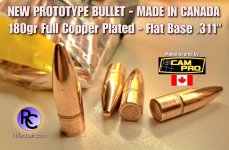
The following thread is a handloading related for a prototype .311" copper plated bullet manufactured by CAMPRO that can be used in the .303 British, 7.62X54R, 7.65×53mm Argentine, 7.7×58mm Arisaka and more. Safety is the number one consideration.
Introduction: For years I have recommended that Canadians write letters and e-mails to CAMPRO to recommend they consider manufacturing a domestically made bullet for the Lee Enfield. Since Canada applied tariffs to all US made ammunition and firearms having a domestic bullet source has never been so important.
The e-mails worked and CAMPRO has responded with a unique test bullet that they are considering. In response I will need to think outside the box and I need your help.
-----------------------------------------
QUESTION: What powder / charge & primer combination do you recommend exploring for this plated bullet in the 303 British? Before you answer please read below.
-----------------------------------------
The No1Mk3 and No4Mk1 iterations and variants of the Lee Enfield rifle were built to shoot the 303 British Mk VII 174 gr. FMJ Flat Base bullet travelling at 2,440 fps. This is the velocity and bullet weight that Lee Enfield sights are calibrated for. Is this too fast for a copper plated bullet?
The chemical dipping and flushing process of bonding copper to a lead core bullet has become more automated and manufacturers are able to apply thicker plating. Some manufacturing processes now allow plated bullets to safely attain velocities from 1,500 to 2,000 fps following the manufacturer's recommended specifications. CAMPRO suggests these bullets can go faster than that.
-----------------------------------------
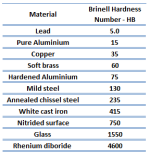
CAMPRO is plating these projectiles with 0.012'' of copper over a core of 2% antimony lead alloy with a Brinell Hardness Test (BHN) that resides some where between nine and ten.
-----------------------------------------
In general terms there is a large gap between most plated rifle bullet velocities and that of jacketed bullets. Where should the velocity line be drawn? This is the key question that must be answered. How close to the 2,440 fps velocity threshold can I get with this bullet to go in laboratory conditions?
Signs that you're nearing the point of plated bullet failure (an unsafe condition)
QUESTION: What powder / charge & primer combination do you recommend exploring (start / finish) for this plated bullet in the 303 British?
-----------------------------------------
Warm Regards and thanks to all of you.
Maple Leaf Up
RC
Introduction: For years I have recommended that Canadians write letters and e-mails to CAMPRO to recommend they consider manufacturing a domestically made bullet for the Lee Enfield. Since Canada applied tariffs to all US made ammunition and firearms having a domestic bullet source has never been so important.
The e-mails worked and CAMPRO has responded with a unique test bullet that they are considering. In response I will need to think outside the box and I need your help.
-----------------------------------------
QUESTION: What powder / charge & primer combination do you recommend exploring for this plated bullet in the 303 British? Before you answer please read below.
-----------------------------------------
The No1Mk3 and No4Mk1 iterations and variants of the Lee Enfield rifle were built to shoot the 303 British Mk VII 174 gr. FMJ Flat Base bullet travelling at 2,440 fps. This is the velocity and bullet weight that Lee Enfield sights are calibrated for. Is this too fast for a copper plated bullet?
The chemical dipping and flushing process of bonding copper to a lead core bullet has become more automated and manufacturers are able to apply thicker plating. Some manufacturing processes now allow plated bullets to safely attain velocities from 1,500 to 2,000 fps following the manufacturer's recommended specifications. CAMPRO suggests these bullets can go faster than that.
-----------------------------------------
CAMPRO is plating these projectiles with 0.012'' of copper over a core of 2% antimony lead alloy with a Brinell Hardness Test (BHN) that resides some where between nine and ten.
-----------------------------------------
In general terms there is a large gap between most plated rifle bullet velocities and that of jacketed bullets. Where should the velocity line be drawn? This is the key question that must be answered. How close to the 2,440 fps velocity threshold can I get with this bullet to go in laboratory conditions?
Signs that you're nearing the point of plated bullet failure (an unsafe condition)
- Groups opening up (poor accuracy)
- Leading in the barrel (plating failure)
- In extreme circumstances bullet structural failure
QUESTION: What powder / charge & primer combination do you recommend exploring (start / finish) for this plated bullet in the 303 British?
-----------------------------------------
Warm Regards and thanks to all of you.
Maple Leaf Up
RC
Attachments
Last edited:
























