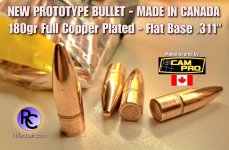
Reloading for The anticipated CAMPRO 180gr .311" Full Copper Plated Bullet

Riflechair

CGN Ultra frequent flyer
Rating - 99.7%
369   1   2
Location
BC
The following thread is a handloading related for a prototype .311" copper plated bullet manufactured by CAMPRO that can be used in the .303 British, 7.62X54R, 7.65×53mm Argentine, 7.7×58mm Arisaka and more. Safety is the number one consideration.

Introduction: For years I have recommended that Canadians write letters and e-mails to CAMPRO to recommend they consider manufacturing a domestically made bullet for the Lee Enfield. Since Canada applied tariffs to all US made ammunition and firearms having a domestic bullet source has never been so important.

The e-mails worked and CAMPRO has responded with a unique test bullet that they are considering. In response I will need to think outside the box and I need your help.
-----------------------------------------
QUESTION: What powder / charge & primer combination do you recommend exploring for this plated bullet in the 303 British? Before you answer please read below.
-----------------------------------------
The No1Mk3 and No4Mk1 iterations and variants of the Lee Enfield rifle were built to shoot the 303 British Mk VII 174 gr. FMJ Flat Base bullet travelling at 2,440 fps. This is the velocity and bullet weight that Lee Enfield sights are calibrated for. Is this too fast for a copper plated bullet?

The chemical dipping and flushing process of bonding copper to a lead core bullet has become more automated and manufacturers are able to apply thicker plating. Some manufacturing processes now allow plated bullets to safely attain velocities from 1,500 to 2,000 fps following the manufacturer's recommended specifications. CAMPRO suggests these bullets can go faster than that.
-----------------------------------------
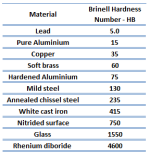
CAMPRO is plating these projectiles with 0.012'' of copper over a core of 2% antimony lead alloy with a Brinell Hardness Test (BHN) that resides some where between nine and ten.
-----------------------------------------
In general terms there is a large gap between most plated rifle bullet velocities and that of jacketed bullets. Where should the velocity line be drawn? This is the key question that must be answered. How close to the 2,440 fps velocity threshold can I get with this bullet to go in laboratory conditions?

Signs that you're nearing the point of plated bullet failure (an unsafe condition)
  1. Groups opening up (poor accuracy)
  2. Leading in the barrel (plating failure)
  3. In extreme circumstances bullet structural failure
-----------------------------------------
QUESTION: What powder / charge & primer combination do you recommend exploring (start / finish) for this plated bullet in the 303 British?
-----------------------------------------
Warm Regards and thanks to all of you.
Maple Leaf Up
RC
CAMPRO_MOD.jpg
 

Attachments

  • table-brinell-hardness-numbers.png
    table-brinell-hardness-numbers.png
    3.7 KB · Views: 26
Last edited:

Tbh, while I really appreciate all of your efforts in bugging campro to bring this to market, I have zero interest in a plated bullet that cannot be shot to full velocity as intended. If I were you, I would be seeing how fast I can get them, right to the point of fmj velocity or failure (whatever comes first). I am shooting powdercoated cast projectiles in the 303 brit right up to 2500 fps with absolutely zero signs of leading.
 
Didn’t they used to make proper fmj bullets?
They should just make them again and be done with it, they make 308 ones so why not?
As for reloading these probably a case full of trail boss would work plus the powder is available again
 
Tbh, while I really appreciate all of your efforts in bugging campro to bring this to market, I have zero interest in a plated bullet that cannot be shot to full velocity as intended. If I were you, I would be seeing how fast I can get them, right to the point of fmj velocity or failure (whatever comes first). I am shooting powdercoated cast projectiles in the 303 brit right up to 2500 fps with absolutely zero signs of leading.
It sounds to me like you are suggesting that I should not be too worried about testing at full velocities?
I don't think any of us were expecting a coated bullet but it's worth trying.
 
Tbh, while I really appreciate all of your efforts in bugging campro to bring this to market, I have zero interest in a plated bullet that cannot be shot to full velocity as intended. If I were you, I would be seeing how fast I can get them, right to the point of fmj velocity or failure (whatever comes first). I am shooting powdercoated cast projectiles in the 303 brit right up to 2500 fps with absolutely zero signs of leading.
41-42gr IMR 4895 reproduces Mk7 with a 174-180gr

https://sites.google.com/site/britmilammo/-303-inch/-303-inch-cordite-ball-mark-vi-to-viiiz
Mk7 velocity is 2440+/-40 fps
Mk8z velocity is 2550fps+/-40fps

so if you are doing velocity testing a realistic velocity is 2600fps out of a 25.2" barrel.

what about a Ross or Long Lee 30" barrel?
 
Last edited:

Riflechair, you should be able to shoot those bullets well up to velocities approaching 2300+ fps IMHO.

That means I would start with a powder such as Varget or similar burn rate, over your choice of primers.

Because they are plated, which isn't a bad thing, considering most of them are going through paper targets, 200yds or less away, there won't be much, if any leading issues, as can happen with powder coated projectiles at those velocities and pressures.

The load will be stout enough to satisfy most needs, especially from a bench rest or prone position, and they will obturate into the grooves very well.

Yes, lots of people hunt with their venerable 303 British chambered rifles, but those bullets are not intended for "hunting" anything other than the elusive "X" ring on the target paper.

I've got a lot of properly dimensioned bullets for the amount I will be shooting these days, so I won't be buying any of these new Campro offerings.

If I were younger, with better eyes, I would be purchasing a few thousand for a year or two of shooting.

I think they will shoot very well in most rifles, from .308 diameter to .314 diameter, which can be found in all of the rifles mentioned above.

I also believe those bullets would be great to have on hand for milsurp enthusiasts who shoot any 30 caliber cartridges, from 30-30 to 30-06, to 303 British, etc.

Many of the South American 98 Mausers were just made up by having their original chambers recut from the 7.65X53 to 30-06, or 7.62 Nato.

They have oversize bores, and I often reload them with .310 or 312 bullets for best accuracy.

Campro has a good idea with these bullets.

Cost should be less than full metal jackets, so shooting should be cheaper, which equates to more load development and more shots down range.
 
Considering the Mk VII bullet was/is 174 grs, use that mass. Then increase the diameter to what it should be - 0.312" -0.3135". Plate the bullet thick enough so that it can be shot without detriment at ~2,500 fps.
Why re-invent the wheel?
Finally, considering that RL15 is now unobtainium, ~42.0 gr. Varget, or the same of N140 / N540.
 
41-42gr IMR 4895 reproduces Mk7 with a 174-180gr

https://sites.google.com/site/britmilammo/-303-inch/-303-inch-cordite-ball-mark-vi-to-viiiz
Mk7 velocity is 2440+/-40 fps
Mk8z velocity is 2550fps+/-40fps

so if you are doing velocity testing a realistic velocity is 2600fps out of a 25.2" barrel.

what about a Ross or Long Lee 30" barrel?
I am sure I can push powdercoated lead a bit past 2500fps but, that's what 3 of my Enfield's like. I think the exact number my loads are shooting is actually 2552 but I would have to pull out my books to verify.
My go to for enfields is however not cast, its the 180 grain sierra pro hunter. 41 grains of varget lands me around 2450 fps.
 
For me, I'm just shooting on the range to no more than 125m or so (aging eyes).

But I have long been looking for an option for loading 7.62x54R for cheaper. Years ago I bought 7.62x39 pulls downs from Canada Ammo and I'm still going through those. I can cast bullets, but I'd rather not.

Velocity means less to me than accuracy. I don't need the thump of full military loads.

So long as they don't fail before hitting the berm I'd be interested. I had some Frontier plated .223 that I think were exploding when I switched to a faster twist barrel LOL - couldn't hit a poster at 50M
 
I would work up to 2440 fps incrementally and see if problem signs arise. Personally, I would use 3031, it’s identical to the post-cordite factory powder for MK VII ammo. It just makes sense to stress test these bullet to see if they can be a drop in substitution.

Why guess? Just try it.
 
I would work up to 2440 fps incrementally and see if problem signs arise. Personally, I would use 3031, it’s identical to the post-cordite factory powder for MK VII ammo. It just makes sense to stress test these bullet to see if they can be a drop in substitution.

Why guess? Just try it.
Claven, the only fly in that ointment, is these are not MkVII bullets.

The plating is thin, almost a skim coat, and will have different harmonics at all velocities.

That's why I suggested shooting them around 2300fps.

I've shot "plated" bullets before, and faster was never better in the rifles I shot them from. They were .308 diameter, out of 7.62 Nato/30-06 chambered rifles.
 
Claven, the only fly in that ointment, is these are not MkVII bullets.

The plating is thin, almost a skim coat, and will have different harmonics at all velocities.

That's why I suggested shooting them around 2300fps.

I've shot "plated" bullets before, and faster was never better in the rifles I shot them from. They were .308 diameter, out of 7.62 Nato/30-06 chambered rifles.
This confirms the research that I have done as well. I understand there is a velocity barrier for all bullets but most thresholds are substantially lower for copper plated bullets. I'm asking if .012" of plating is enough protection to avoid a compounding lead fouling problem at jacketed velocities. I'm researching powders to pop that pill between 2300 and 2375 fps as possibly being the limits but would like to try and test that barrier (carefully). IMR-3031 sounds like a good powder choice to me as well and have a bit left over.
 
Last edited:

This confirms the research that I have done as well. I understand there is a velocity barrier for all bullets but most thresholds are substantially lower for copper plated bullets. I'm asking if .012" of plating is enough protection to avoid a compounding lead fouling problem at jacketed velocities. I'm researching powders to pop that pill between 2300 and 2375 fps as possibly being the limits but would like to try and test that barrier (carefully). IMR-3031 sounds like a good powder choice to me as well and have a bit left over.
.012 plate is appx .008 inches thicker than the grooves are deep in most rifles.

That's plenty deep enough and strong enough so the jackets won't strip away or be penetrated by the sharp edge of the rifling.

Lead fouling would be the least of my worries.

Hopefully, the copper plate isn't pure soft copper, but type L, or hard copper.

Even if it is pure soft copper, it will be better than lead and as good, or better than powder coating, which is also very good and better, IMHO, than lubricated lead.
 
IMR4198 is your friend, drop the usual reloading manuals and reach for the lyman cast bullet manual.
Plated bullets run the faster of the cast bullet loads, which is easier to load up to then the starting loads for jacketted bullets that are likely already over the speed threshold you're restricted to.

I've shot the .308 diameter plated bullets between 2400 and 2600 in 30 caliber barrels with zero issue, and that was the older thin plating, again, all with IMR4198. If you don't have access to the lyman cast bullet manual, drop me a PM, will snap a picture of the appropriate load data to start with

The funny thing about accuracy, case bullets, and plated bullets is, IMR4198 is the common denominator
 
.012 plate is appx .008 inches thicker than the grooves are deep in most rifles.
That's plenty deep enough and strong enough so the jackets won't strip away or be penetrated by the sharp edge of the rifling.
Lead fouling would be the least of my worries.
Hopefully, the copper plate isn't pure soft copper, but type L, or hard copper.
Even if it is pure soft copper, it will be better than lead and as good, or better than powder coating, which is also very good and better, IMHO, than lubricated lead.
This was very informative thank you. You make a lot of good points from a risk management point of view. Even though I take care of my rifles and am very choosy about barrel condition I also have to take into consideration the various barrel conditions these rounds might be shot out of. If the Enfield's bore is rough (as many of them are) then will the copper plating integrity be maintained? These are all really great things to test. I might need to acquire a test Enfield with a shoddy bore just for this!

Here are some copper jacket thicknesses (by model and manufacturer) to compare with a .012" plated bullet (source is reputable).

* Nosler BT, AB, LRAB– .185" (tapering out to .028").
* Hornady ELD-X and SST – .051" (tapering to various thicknesses).
* Hornady Interlock SP - .037".
* Hornady AMAX (also ELD-M) - .024"
* Hornady A-tip- .022"
* Hornady .338 AMAX (also ELD-M) – .051"(tapers .030"). This version also has an interlock ring
* Sierra SMK, TMK, GK – .026".
* Sierra Tipped GameKing- .046"
* Berger VLD- .035" (ogive up to .047"). The ogives became thicker after changes to the manufacturing process in 2011.
* Berger Hybrid ogive- .026" (has internal ribbing at the ogive). The ribs measure .031"
* ALCO Rebated Boat Tail Aluminum Tip (RBAT)- .022"
 
Last edited:

RC, now you're asking for guarantees. You should know better, with all the water under your bridge.

Call them and ask about the composition of their jacket gilding material.

They won't foul any worse than monolithic bullet composites.
 
Back
Top Bottom