Results Patterning 28 Gauge Hand Loaded Bismuth at 40 Yards

28 gauge 2

Regular
Rating - 100%
2   0   0
The following are the results of patterning at 40 yards in a 30 inch circle with number 5 Bismuth.The two guns used were a Winchester Model 12 full fixed choke and a Franchi 48AL with choke tubes.Both loads were bullet225ho's loads.The number is the average of pellets in a 30 inch circle.

48AL :1 ounce Full average 89.5 ; 1 ounce X-F average 88.0 ; 7/8 ounce Full buffered average 96.5 ; 7/8 ounce buffered X-Full 94.5


Model 12 :1 ounce full average 114 ; 7/8 ounce full buffered 85.5

Seems interesting that the old Model 12 did better with the 1 ounce load than the 48 AL.Also that the 48AL did better with the full choke than the X-Full choke.

If I were to use these loads on ducks next fall, I believe I would go with the 1 ounce load in the Model 12 and 7/8 ounce buffered load in the 48AL with the full choke tube.

Thought it interesting that the old Model 12 had the best for any of the 1 ounce loads, with an average of 114.However,it had the worst of any of the loads using the 7/8 ounce buffered load at 85.5

I did pattern some number 5 Bismuth 3/4 ounce loads,but was not happy with the results for use on ducks out to 40 yards.Probably good out to 30 or 35 yards,but did not pattern them at those distances.Also,had some non buffered 7/8 ounce Bismuth that I did not pattern or the other loads with improved modified or modified chokes.Shortage of pattern paper,being the reason why.:)

Would of been interesting to compare the 7/8 ounce buffered load to the 7/8 ounce non buffered load.

Looking forward to hearing comments and opinions.
 
Hey 28 gauge 2… when I played patterning I bought 40 inch wide rolls of newsprint paper and also rolls of paper used for covering banquet tables. I would stretch out a length of the width of our club and shoot up to 10 patterns at a time. When you walked up you had an immediate visual comparison of performance. Didn’t need to count holes and do calculations. The good patterns stood out!! Tried a multitude of different loads, powders, wads, brands of shot and shot sizes and dozens of different buffers from granulated polyethylene, lubricants like STP, various organic fillers like flour and cornmeal and melted Crisco. 99% patterns at 40 yards with some combinations.

I can’t remember the exact formulas but if you want to go down that rabbit hole to the extreme just remember that depending on what you use can and will up you chamber pressures. Start low and slow with powder charges and shot payloads. There were many pro and cons with these loads, mostly negative and to be perfectly honest not worth the effort. As an experienced shooter once said… full choke is a demanding mistress, modified choke is a forgiving friend. Have fun…in the rabbit hole. lol. Cheers….
 
Probably not going to get overly anal on the topic,just looking for a good load for black ducks, out to 40 yards with the 28 gauge 2 3/4 inch.Most of my shots should be less than 40 yards,but nice to know I have a ;little extra range if I need it.:)

At some point ,I will get a 3 inch 28 gauge self loader ,but at present time ,I will have to make do with 2 3/4 inch.:)

Not fond of the Beretta and Benelli 28 gauge 3 inch self loaders , with their rotating bolts.In the past I have had rotating bolt guns and had trouble with all of them.So a bit gun shy, to get another.If Winchester would just come out with a 28 gauge 3 inch Super-X Model 4 ,I would have one in a heart beat.:)
 
Probably not going to get overly anal on the topic,just looking for a good load for black ducks, out to 40 yards with the 28 gauge 2 3/4 inch.Most of my shots should be less than 40 yards,but nice to know I have a ;little extra range if I need it.:)

At some point ,I will get a 3 inch 28 gauge self loader ,but at present time ,I will have to make do with 2 3/4 inch.:)

Not fond of the Beretta and Benelli 28 gauge 3 inch self loaders , with their rotating bolts.In the past I have had rotating bolt guns and had trouble with all of them.So a bit gun shy, to get another.If Winchester would just come out with a 28 gauge 3 inch Super-X Model 4 ,I would have one in a heart beat.:)
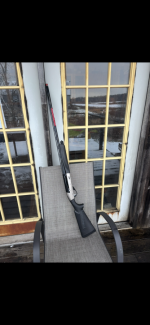
Don’t give up on the Benelli shotguns. I own ‘several’ and some are very high mileage guns. I shot a Benelli Super Sporter, 20g in Argentina on doves. Some had 200,000 shells within 2 years and are still going strong. Remington 1100 break within 2 weeks and Beretta 391 all have cracked frames by end of year one. All outfitters in Argentina switched to Benellis as rental shotguns. Only downside for me is picking up 28g empties off the ground at the club. I have ‘prettier’ 28g shotguns but this little 28g in the pic is a beast.
 

Attachments

  • IMG_7091.png
    IMG_7091.png
    386.3 KB · Views: 4
Either of you guys feel like offering a bit of guidance on where to start for patterning a 28 for grouse and pheasant. I’ve been shooting upland for a few years now but haven’t gotten serious on patterning and planning. I have a double barrel in the mail right now with 2-3/4 chambers. I was planning on trying 4 or 5 lead(or plated lead) in one barrel to hopefully get out to 35-40 yards and 6 or 7.5 for the closer stuff at 20-25 yards.

From what I’ve been reading I should be setting up clean targets at these distances and swapping chokes to get a nice 30” pattern? Am I on the right path? Or should I be using a different shot size?
 
Never hunted pheasants much,so cannot say much about them.Ruffed grouse are usually hunted in thicker stuff.For myself ,a modified choke has worked best over all on them.In thicker stuff or in the early season, improved cylinder works.Later on in the season ,the full choke can be used for longer more open shots.All just my opinion.:)

If I were you ,I would start at 30 yards with number 6 shot and pattern to see what it looks like with a modified choke and lead.As good as place as any to start patterning, for ruffed grouse.Most will be bagged closer than 30 yards.:)

Does the 28 gauge you have coming have tubes or fixed chokes?
 
Either of you guys feel like offering a bit of guidance on where to start for patterning a 28 for grouse and pheasant. I’ve been shooting upland for a few years now but haven’t gotten serious on patterning and planning. I have a double barrel in the mail right now with 2-3/4 chambers. I was planning on trying 4 or 5 lead(or plated lead) in one barrel to hopefully get out to 35-40 yards and 6 or 7.5 for the closer stuff at 20-25 yards.

From what I’ve been reading I should be setting up clean targets at these distances and swapping chokes to get a nice 30” pattern? Am I on the right path? Or should I be using a different shot size?
The very best advice i can give you is to get out to the club abd shoot some skeet with us.
Many of us use sub gauge guns for ruffed grouse and pheasants .
Shooting clays starting g from the low gun position is fantastic practise for birds.
The pattern board does not areas give you a precise evaluation of the killing potential of a liad what i use it for us for point of impact evaluation .
One of the very best loads tgat BPI used for years for ducks was one the the worst as far as shoiting at the pattern board was concerned .
Cat
 
Never hunted pheasants much,so cannot say much about them.Ruffed grouse are usually hunted in thicker stuff.For myself ,a modified choke has worked best over all on them.In thicker stuff or in the early season, improved cylinder works.Later on in the season ,the full choke can be used for longer more open shots.All just my opinion.:)

If I were you ,I would start at 30 yards with number 6 shot and pattern to see what it looks like with a modified choke and lead.As good as place as any to start patterning, for ruffed grouse.Most will be bagged closer than 30 yards.:)

Does the 28 gauge you have coming have tubes or fixed chokes?
It comes with changeable choke tubes. My dog likes to hunt the thick stuff too. Every time I bring him out in the grass he takes off to crash the nearest bush. And I mostly hunt ruffed grouse so I find myself in the thickest brush around.

We’ve been out after pheasant a couple of times now and that’s why I went with a double barrel and a step up from 410 to 28 gauge. The 410 with 7.5 shot wasn’t quite enough unless I got the barrel on them right away or knocked them out of a tree.
 
The very best advice i can give you is to get out to the club abd shoot some skeet with us.
Many of us use sub gauge guns for ruffed grouse and pheasants .
Shooting clays starting g from the low gun position is fantastic practise for birds.
The pattern board does not areas give you a precise evaluation of the killing potential of a liad what i use it for us for point of impact evaluation .
One of the very best loads tgat BPI used for years for ducks was one the the worst as far as shoiting at the pattern board was concerned .
Cat
I was planning on sending you a message in the next couple weeks to see if you wanted to learn me on some of the finer details of shotgunning. I’ll get some boxes of shells and see if we can make our schedules line up.
 
Pheasants are a tough bird, #6 shot is recommended and in a small gauge much past 25 yards is pushing your luck. It’s send the dog because crippled birds hit the deck running and hiding. As for grouse #6 works but 7-1/2 skeet loads are cheaper. Some grouse are shot flying and some are shot on the ground sitting still. Skilled shooter try to hold high and put pellets in the head and some can’t even hit a sitting bird on their first try. Iron Cat’s suggestion to shoot some skeet GUN DOWN is excellent and IC and Mod choke recommendations prevail. 28 Gauges seem to pattern tight for their configurations and their short shot strings hit game hard.

Shooting game farm birds behind a pointing dog is okay for a 28g but if your invited to a ‘tower shoot’ for pheasants and pigeons then bring a 12g and use #6 & #5 shot… You will be pushing 50-60 yard shots because so will everyone else there.
 
I agree with Mr. Bill, have no issues using standard 3/4 oz skeet loads for ruffies over a good dog.
I was using a 3/4 oz load of 9's with Longshot and AA wads this day with skeet chokes in this 28 gauge tubed Tikka.
Cat
 

Attachments

  • Screenshot_20231117_083738_Facebook.jpg
    Screenshot_20231117_083738_Facebook.jpg
    131.4 KB · Views: 1
Sounds like I have lots to learn. I’ll shoot some skeet with the Iron cat and see where that takes me.

My wife and I both got our limit of pheasant one day with the 410 and 7.5 steel shot so it’s not impossible if the birds are around. This is the first time my dog started figuring out these pheasants, it was a bit of a learning curve for him. I told the wife I wasn’t buying anymore guns, but maybe a 20 or 12 is in my future… lol.

I’d rather shoot birds off a branch of a tree instead of filling them full of holes anyways. My dog is a bit of a savage. He doesn’t retrieve but any bird hits the ground not dead and he cruises by, rips it’s intestines out and keeps going to the next bird.
 
Back
Top Bottom