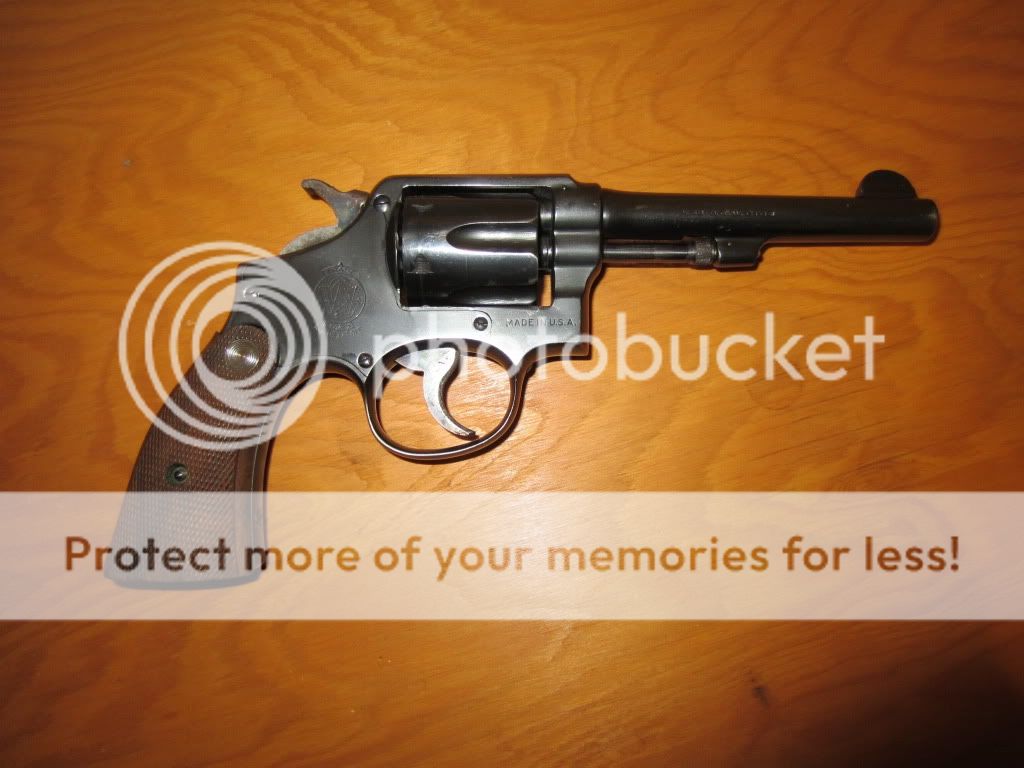
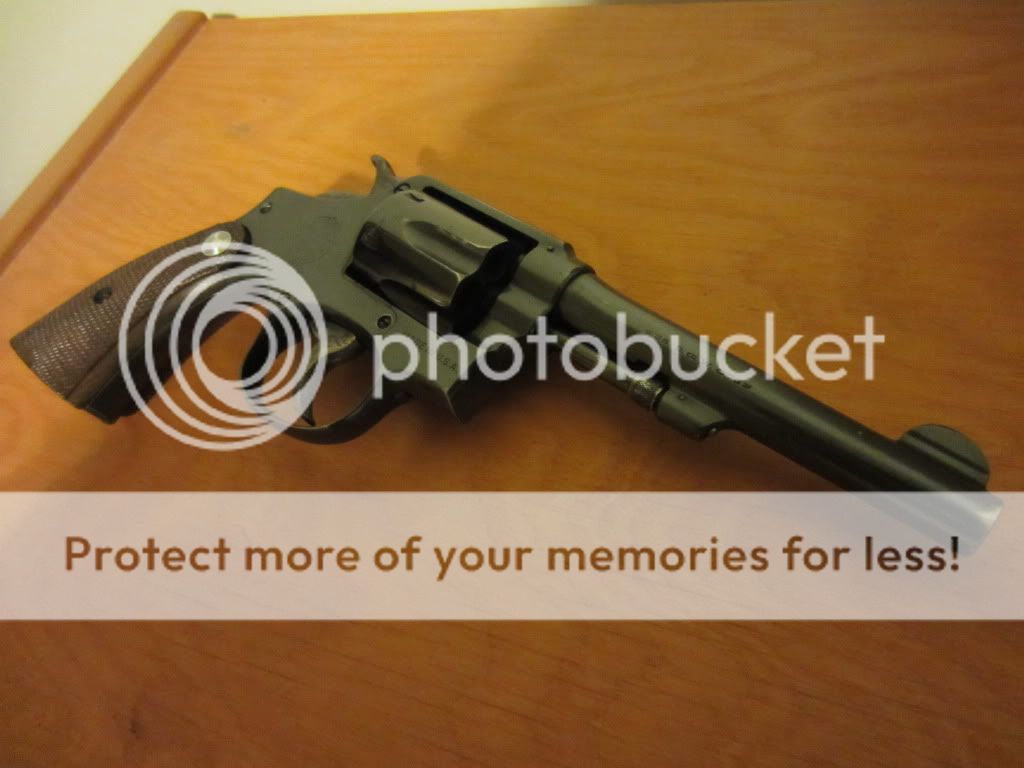
.38 S&W Chambers are bigger diameter than .38 special, but shorter, as others here have alluded to. The barrel is clearly marked .38 S&W. You need to check the cylinder. Not too many people have .38 S&W to test with, but if you can find a 9mm round and it fits (disappears) into the cylinder, you have a .38 S&W that has been reamed out to .38 special as others here have suggested. That is the most likely reason for the severe obturation and sticking on extraction.
If only the first half or so of the 9mm cartridge fits, it's a .38 Special cylinder and a .38 S&W barrel.
This would mean that the cylinder was replaced, in which case the extractor star will most likely have been retained to preserve the timing, and is usually slightly mis-aligned, since it wasn't cut with the same reamer that cut the chambers. Take a pencil and run it on the inside of the chamber toward the extractor. Test each cylinder, you're looking for ledges and mis-matches. If you find any, that's the reason for sticky extraction.
Lastly, check the pins that hold the extractor in place in the cylinder. Make sure there are two and that they are in good condition, the fit is sound, and that there is no undue movement. If this is a .38 special cylinder, the extractor can be held in place and will time OK with 6 shells in the cylinder holding it in place. If the pins are missing, the extractor may be jammed up when you fire the revolver, and again, the cartridges expand. This happens randomly based on individual cylinder bore, which can vary quite a bit with older revolvers.
That's all I can think of at the moment.