Revolver Spits Lead

I've only loaded a few hundred of each and never experienced that, though my crimp was fairly light with the Campros being plated. As others have said I suspect it's too aggressive of a crimp cutting into the plating. Side note, I like the 158s but don't care for the 148 WCs because of how fast you have to drive them vs cast lead (at least with Titegroup).
 
I used up one 500 count order of Campro, 158grn FC FCP

I ran into a similar issue as Ganderite did on the first 50 rounds, which were used in 3 different revolvers.

Two were MP10 38 specials and one was a 686.

All three pistols "spit" gilding metal and I quit shooting them before the original batch was finished.

The loads were appropriate for cast lead with a gas check.

I took the rest home and with an intertia puller, broke down the remaining rounds.

I notices "streaks" below the indentation left by the crimp.

The copper coating was coming off and the lead underneath was showing through.

I used the 38 Special rounds in all three handguns, didn't load any to magnum specs.

So, I loaded another 50 bullets into cases with belled mouths and seated them without any crimp.

This set of dies is made to ''tight tolerances"

After sizing, and inserting bullets there is always a bit of a bulge on the case, at the base of of the bullet. The loads really don't require crimping.

If I were using them in a lever action rifle, I would use a crimp and likely never notice that the gilding material was scraping off.

The cartridges that were loaded without the crimp were just fine in the same three revolvers, when I tried them again.

As long as you know what might happen, and adjust the dies accordingly you should be OK to go.

The Campro bullets shoot well in my revolvers and lever action carbine. They aren't tack drivers by any means, but plenty good enough for what I'm using them for, at the ranges I shoot.

IMHO, the Campro are a great alternative for those that don't want to be bothered to cast/powdercoat, or just cast/lube.

Slightly more expensive than doing it yourself but only slightly, for those that are buying their materials to make up the bullets.

If you can scrounge materials, then things change, but I've noticed very few hand casters do a good job, properly sizing, lubing, coating.

 
Last edited:
Forgot to add, were you alone, who says it was from your gun. I had a flake in the eye once, hurt like hell. Since you were directly behind your gun I would think it not from your gun.

When something happens 50+ times, you know it is your own gun and the shot you just fired.

Pretty sure it was the heavy crimp cutting the plating.

Changes made. I will go back with the guns that were spitting.

S&W and Ruger spit. Taurus and Colt did not.
 
The good thing about shooting 10-20 guns with the same ammo, you pretty well know the ammo is the problem.
What I don't under stand is how the hell do you carry that many to the range? slaves?
I can mange 4 or 5 .Old age crap.

I only take 4 or 5 at a time. This test was ongoing. I thought I would run several different loads with both bullets through all the 357s and get a feel for what worked. It soon became a flinching fest with a bleeding cheek.


 
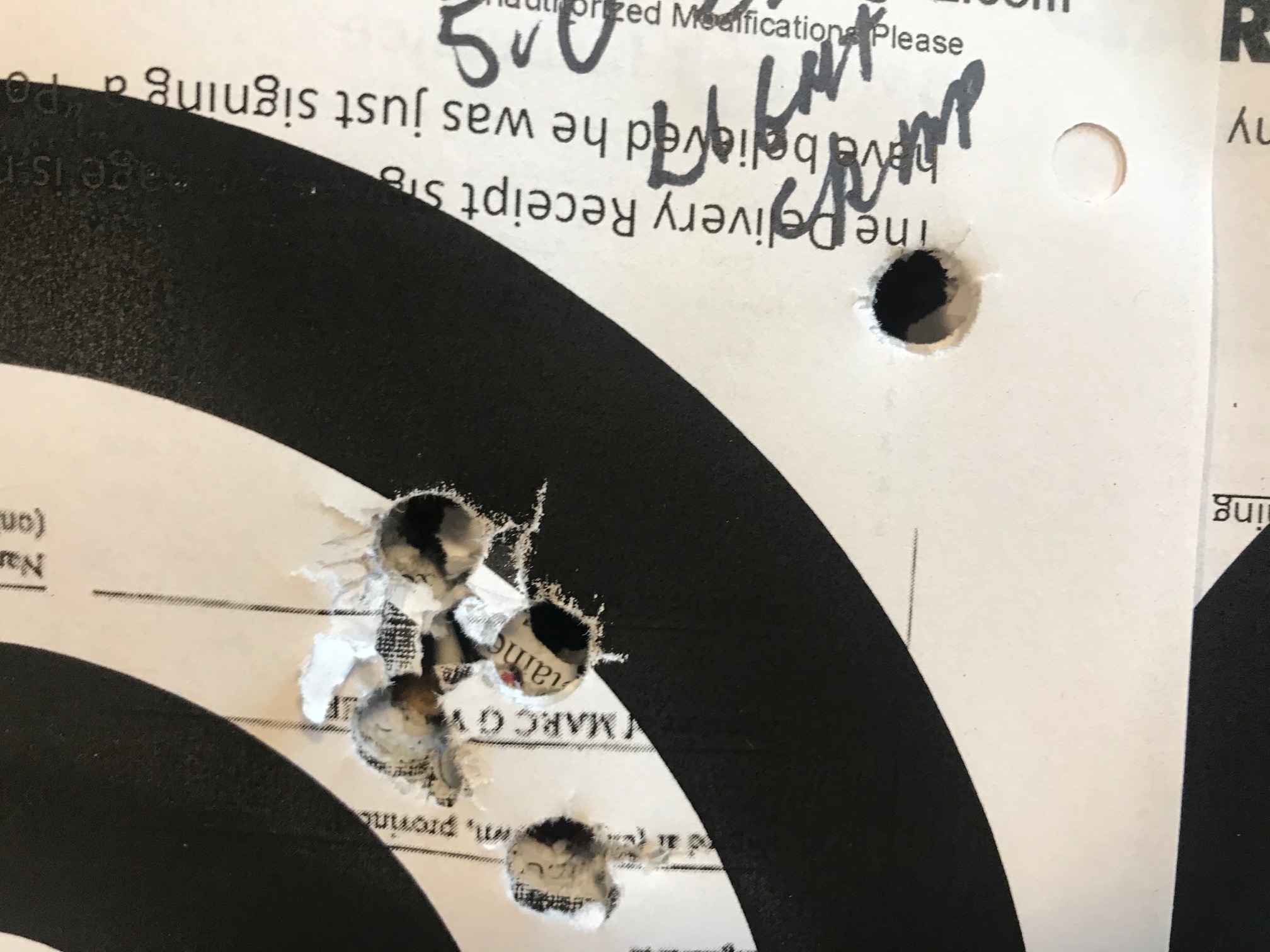
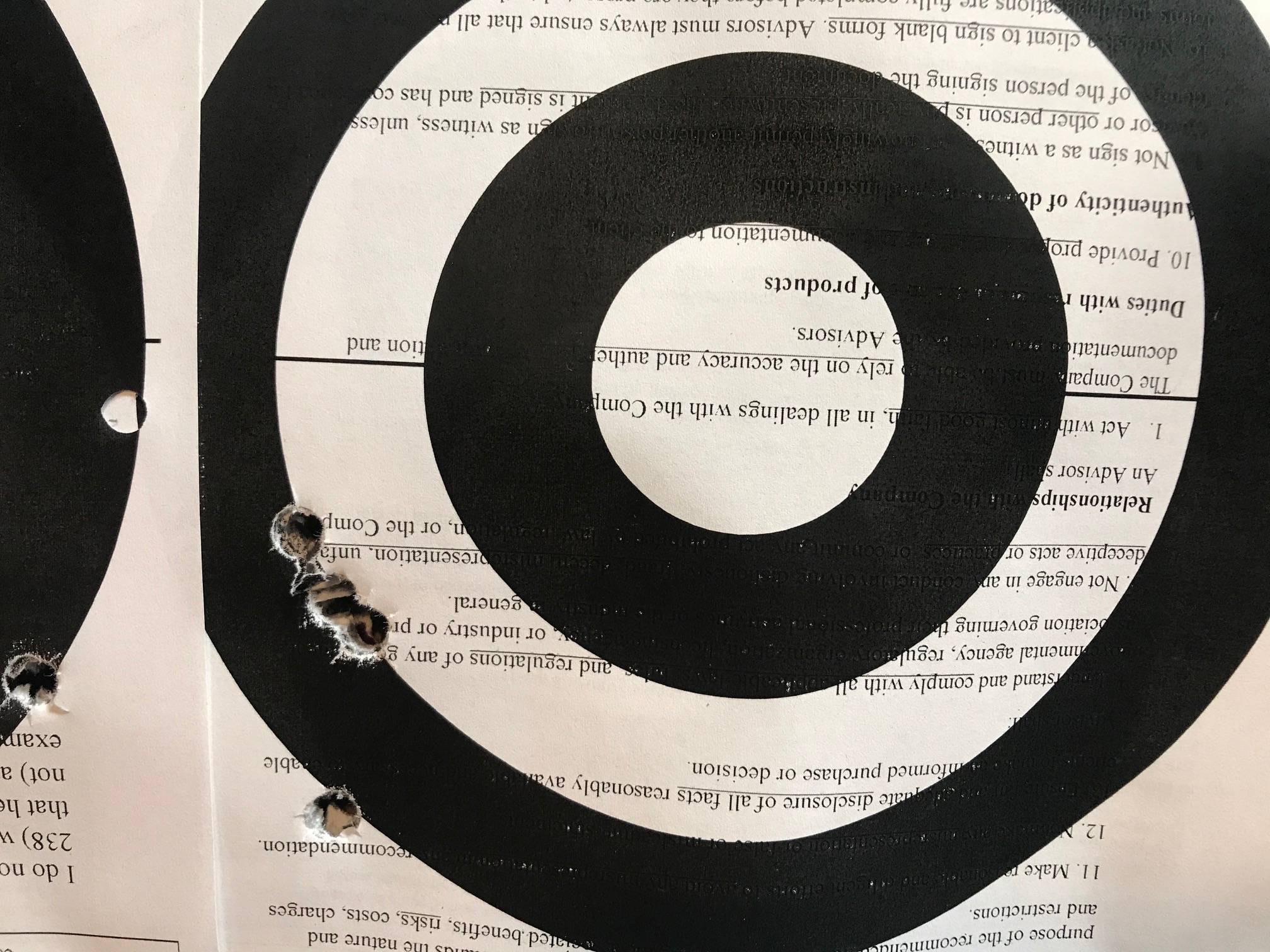
Not only do the guns no longer spit, but the accuracy has improved dramatically.

Ruger Security Six - 3" barrel, 25 yards, off a bag
ZIgx9mS.jpg


S&W M36 2"
2s4sxWv.jpg
 
You may benefit from testing your plated HBWC bullets seated farther out than typically seen. Not only have I noticed that reloading quickly is much easier but my accuracy improved to the point where cloverleaf groups are normal. Specific OAL depends on whether I am using Bullseye or 231 and I only crimp enough to remove the flare. It's definitely worth investigating for yourself. Not that your current results are anything to complain about!
 
You may benefit from testing your plated HBWC bullets seated farther out than typically seen. Not only have I noticed that reloading quickly is much easier but my accuracy improved to the point where cloverleaf groups are normal. Specific OAL depends on whether I am using Bullseye or 231 and I only crimp enough to remove the flare. It's definitely worth investigating for yourself. Not that your current results are anything to complain about!

When I used to try to compete, I loaded ammo for a specific gun. Now, one lot suits all.

I have 20 to 30 guns in each caliber, so the OAL is determined by the shortest throat. Typically a Norinco or a CZ.
 
Last edited:
I find plated bullets need a good amount of case flaring before seating, otherwise I find those semi-circular copper pieces on the bench more than usual...
 
Weird. I've loaded thousands of .347" Campros, 125 and 158 grain, in a variety of loads including full house magnums and powder puff specials, and never had this problem. Running a fairly aggressive roll crimp from a Lee FCD too. Shooting them out of a Smith 686 and a Smith 627.

Lucky I guess?
 
I don't like to do anything that will cause deformation or damage to the base of the bullet. Crimping lead and plated lead bullets can do do both.

I realize, in some instances crimping is necessary to increase pressures and help burn rate consistency but I still avoid it every chance I get.
 
Back
Top Bottom