
I have a small mystery. I have a Ross Mk III (with 'e' stamp) M-10 1916. It is intact and serviceable. But it is too short! The normal length is 50 1/2 inches and mine is 44 1/2 inches overall. The distance between the upper band and lower band is 6 inches too short. If this is a modification it is not recent, is not a "sporterize" and is done well. Has anyone seen something like this? I have pictures but I don't know how to attach them here.













































You are using an out of date browser. It may not display this or other websites correctly.
You should upgrade or use an alternative browser.
You should upgrade or use an alternative browser.
Ross M-10 - Too short
- Thread starter Icebox
- Start date

Icebox said:I have pictures but I don't know how to attach them here.
If you email the pics to me, I'll "host" them for you and email you back the required "code", so you can cut-n-paste it into the thread to display them.
Regards,
Badger
Take advantage of BadgerDog's offer.
There MAY have been some experimental shortened rifles made up. It is most likely though that the alteration was done by a previous owner. Have you disassembled it, to inspect how the alteration was performed? Was a lathe used when the front sight base was set back?
There MAY have been some experimental shortened rifles made up. It is most likely though that the alteration was done by a previous owner. Have you disassembled it, to inspect how the alteration was performed? Was a lathe used when the front sight base was set back?

PerversPépère
CGN Ultra frequent flyer
- Location
- Shawinigan (Quebec)
WOW!
A genuine shortened experimental rifle would be something to find!
Probability of it being in good shape would be better anyway, as an experimental rifle would not be troop issued for regular service.
If such, you're a happy clam!
Pics, please!
PP.
A genuine shortened experimental rifle would be something to find!
Probability of it being in good shape would be better anyway, as an experimental rifle would not be troop issued for regular service.
If such, you're a happy clam!
Pics, please!
PP.

More info on 'Short" Ross
I've taken up Badger on his kind offer and sent three pictures. One of the overall rifle. One of the front sight that has evidence of being reworked. And one of the right stock with the mark and regimental ident. We have guessed this refers to the 30th Wellington.
Upon closer inspection the muzzle is totally square - no evidence of a chamfer inside or out. Very faint marks of light grinding (probably from dressing after the barrel was cut).
Don't have much history on the rifle. My father purchased it approximately 25 years ago from the widow of a WWII veteran who belonged to the Paisley, Ontario Legion. I got possession when my father passed away a couple of years ago. Didn't actually notice how much shorter it was until I started reading some of the Ross rifle literature I have picked up in the last few months.
I'm curious about the Veteran Guard association.
Icebox Bob
I've taken up Badger on his kind offer and sent three pictures. One of the overall rifle. One of the front sight that has evidence of being reworked. And one of the right stock with the mark and regimental ident. We have guessed this refers to the 30th Wellington.
Upon closer inspection the muzzle is totally square - no evidence of a chamfer inside or out. Very faint marks of light grinding (probably from dressing after the barrel was cut).
Don't have much history on the rifle. My father purchased it approximately 25 years ago from the widow of a WWII veteran who belonged to the Paisley, Ontario Legion. I got possession when my father passed away a couple of years ago. Didn't actually notice how much shorter it was until I started reading some of the Ross rifle literature I have picked up in the last few months.
I'm curious about the Veteran Guard association.
Icebox Bob
Since this post is about Ross Rifles, if anybody is interested a person in Toronto area has had the Ross Rifle Story reprinted and has copys for sale.
The email address is ross.rifle.story@sympatico.ca
I now the orignal copys were gone a few years ago and just heard about this
The email address is ross.rifle.story@sympatico.ca
I now the orignal copys were gone a few years ago and just heard about this
Icebox said:I've taken up Badger on his kind offer and sent three pictures.
As of writing this, they haven't appeared in my email in-box.
Email is badger@tacticalgamer.com
I'll put them up for you when they arrive.....
Regards,
Badger
Icebox said:The pictures are enroute to your email address. I think the first one may have gone via this forum?
Icebox Bob
Ok Bob, I just got 3 pics, but unfortunately, you sent the same one twice............
I sent you an email with the duplicated pic name.
So, here's the two that I did get, resized smaller for the folks with narrow dial-up bandwidth. If you send me the missing third one, I'll post it as well.
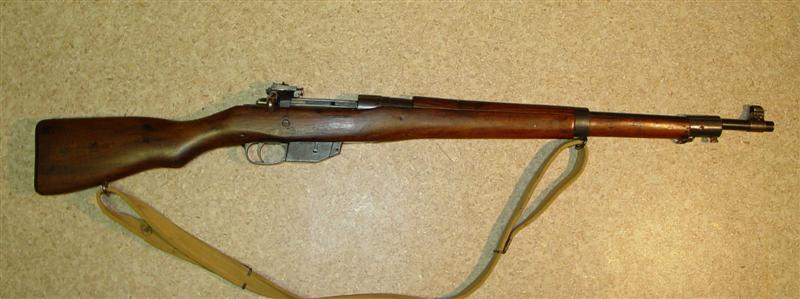 (Click PIC to Enlarge)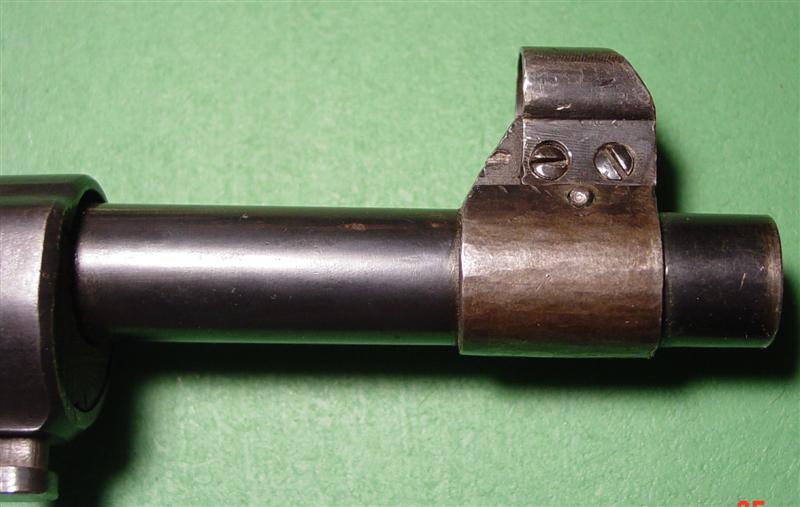
EDIT: third pic received and added..........
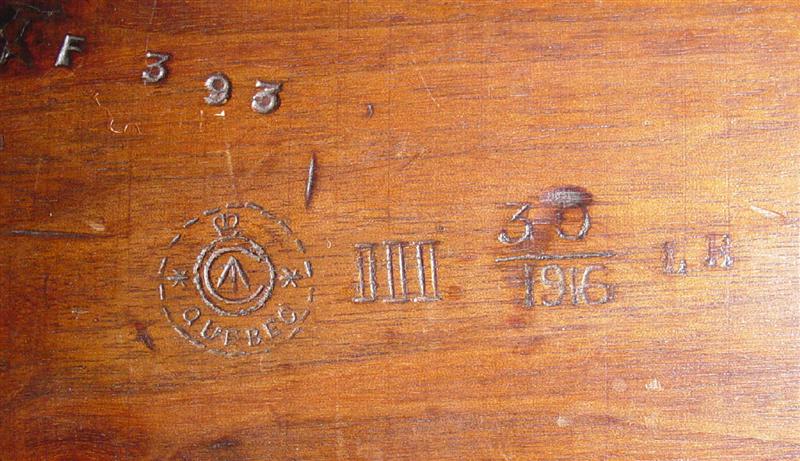
(Click PIC to Enlarge)
Regards,
Badger
Last edited:

The Veterans' Guard rifles had both barrel and forestock shortened.
A couple of comments from the gunsmithing side of things. IF such a conversion were done as an official experiment, the work would have been done in an ordnance workshop, factory toolroom, etc. While some Mk.II barrels have flat crowns, Mk. III crowns have a radius. I would expect a workshop job to have tool marks from a lathe, whether flat or radiused. The crown described suggests handwork. Similarly, to set the front sight base back on the barrel, either the barrel diameter would need to be reduced, or the sight base's bore would have to be enlarged. The front sight base illustrated seems to have numerous light peening marks. This is a way of enlarging a band. Peen lightly all over the band, tap the base further onto the barrel, repeat until the base is in the desired location. This technique works. It is also the only explanation I can think of for the surface texture of the band. A modification done officially would likely have involved either the barrel being reduced on a lathe, probably while being crowned, or the sight base would have been reamed to fit.
I suspect that the conversion was unofficial. IF the conversion was done by the military or the Ross factory, this would be a very rare rifle, so careful investigation is appropriate.
Just out of curiosity, is the bolt sleeve pinned to prevent incorrect assembly? If it is, the rifle was certainly still in service during WW 2. Will a bayonet fit?
I suspect that if the Mk. III Ross had been manufactured with an overall length similar to the SMLE's, the rifle would have been more popular.
A couple of comments from the gunsmithing side of things. IF such a conversion were done as an official experiment, the work would have been done in an ordnance workshop, factory toolroom, etc. While some Mk.II barrels have flat crowns, Mk. III crowns have a radius. I would expect a workshop job to have tool marks from a lathe, whether flat or radiused. The crown described suggests handwork. Similarly, to set the front sight base back on the barrel, either the barrel diameter would need to be reduced, or the sight base's bore would have to be enlarged. The front sight base illustrated seems to have numerous light peening marks. This is a way of enlarging a band. Peen lightly all over the band, tap the base further onto the barrel, repeat until the base is in the desired location. This technique works. It is also the only explanation I can think of for the surface texture of the band. A modification done officially would likely have involved either the barrel being reduced on a lathe, probably while being crowned, or the sight base would have been reamed to fit.
I suspect that the conversion was unofficial. IF the conversion was done by the military or the Ross factory, this would be a very rare rifle, so careful investigation is appropriate.
Just out of curiosity, is the bolt sleeve pinned to prevent incorrect assembly? If it is, the rifle was certainly still in service during WW 2. Will a bayonet fit?
I suspect that if the Mk. III Ross had been manufactured with an overall length similar to the SMLE's, the rifle would have been more popular.
tiriaq - You have described the work done to the foresight sleeve very well. There is peening all around the sleeve. There is no sign of lathe work on the barrel. By the way, the muzzle is now .697 of an inch.
There is no radius on the muzzle. It is square. The work doesn't look amateurish but on the other hand doesn't look like proper factory work either. Perhaps a field depot?
I'm curious about the reference to the shortening of Ross rifles for issue to the Veteran Guards in WWII.
I don't have a bayonet to try. The distance from the front of the bayonet lug to the front of the sight sleeve is 3 inches.
Icebox
There is no radius on the muzzle. It is square. The work doesn't look amateurish but on the other hand doesn't look like proper factory work either. Perhaps a field depot?
I'm curious about the reference to the shortening of Ross rifles for issue to the Veteran Guards in WWII.
I don't have a bayonet to try. The distance from the front of the bayonet lug to the front of the sight sleeve is 3 inches.
Icebox
There are photos of the Veterans' Guard and Rangers shortened Mk. IIIs in The Ross Rifle Story. There is also a photo of what MAY be an experimental shortened Mk. III for cavalry use, but it has a 26 I/2" barrel.
I suppose an armourer at a field depot could have performed the work, but then the question is whether the conversion was officially sanctioned. Such major alteration of a service rifle which was on inventory is not something that would be encouraged. I wondered about the bayonet because if the alteration was official, in all likelihood it would have been considered important that the bayonet could still be mounted.
I suppose an armourer at a field depot could have performed the work, but then the question is whether the conversion was officially sanctioned. Such major alteration of a service rifle which was on inventory is not something that would be encouraged. I wondered about the bayonet because if the alteration was official, in all likelihood it would have been considered important that the bayonet could still be mounted.

...did Canada use tanks in WW1?....
Nope, but my Great-Grandfather was in tanks at Cambrai with the British Army.
Just a note the shortened Ross MKIII used by the Veteran Guards in WW2 could not fix a bayonet. Old joke I remember reading is these rifles were issued with a piece of string to tie on the bayonet (sorry can't remember the source for this).






















