












































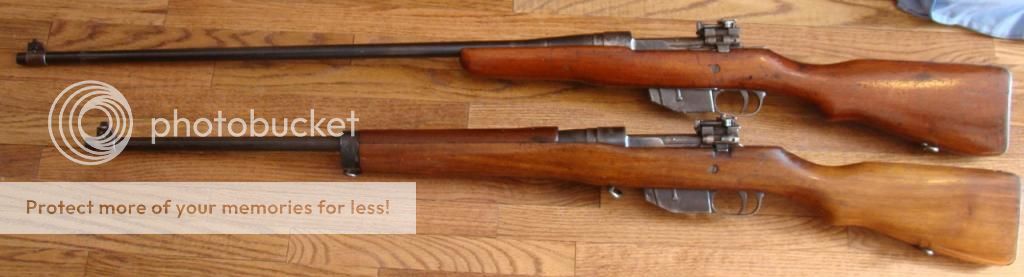
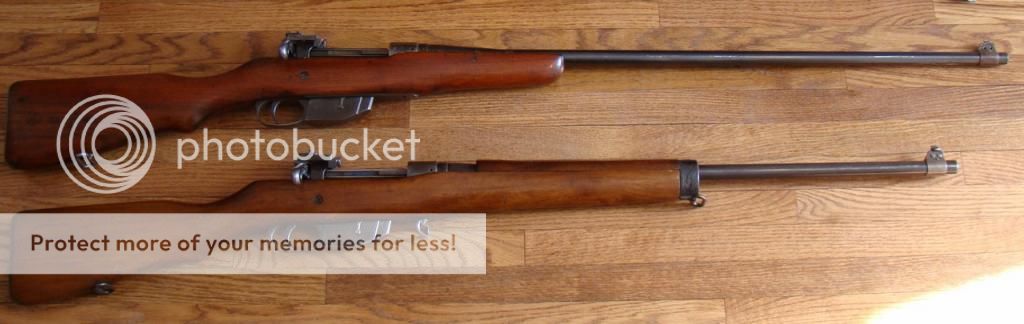
Hello I acquired my first ross about a year ago, and have recently begun collecting a few more, they have been sporterized, but I believe one to be full length and restorable. It wasn't until I had a few that I noticed some different markings that I was hoping someone could enlighten me on. Here are the rifles.
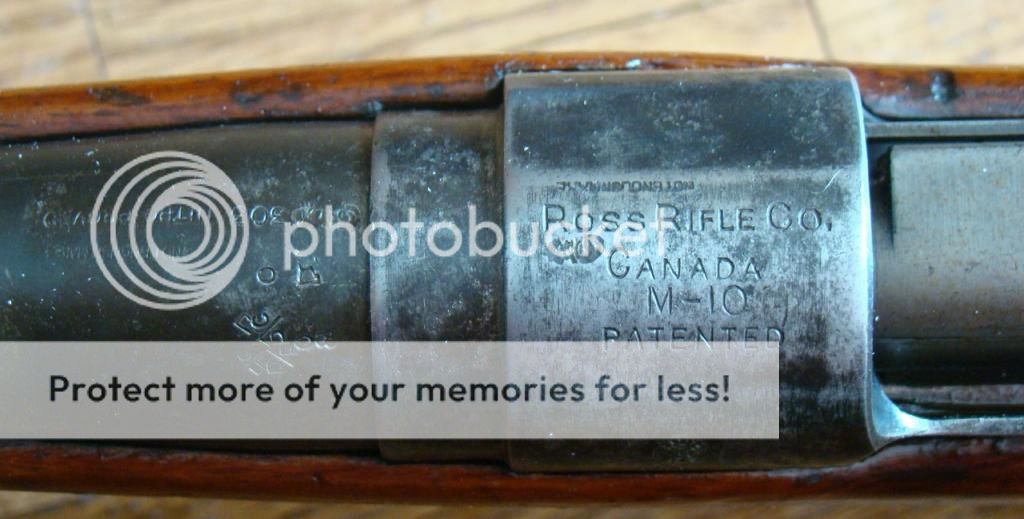
On the full length sporter, I can see, the Nitro proof mark, the not English made mark, and the "E"nlarged chamber mark. as well as the DCP proof.
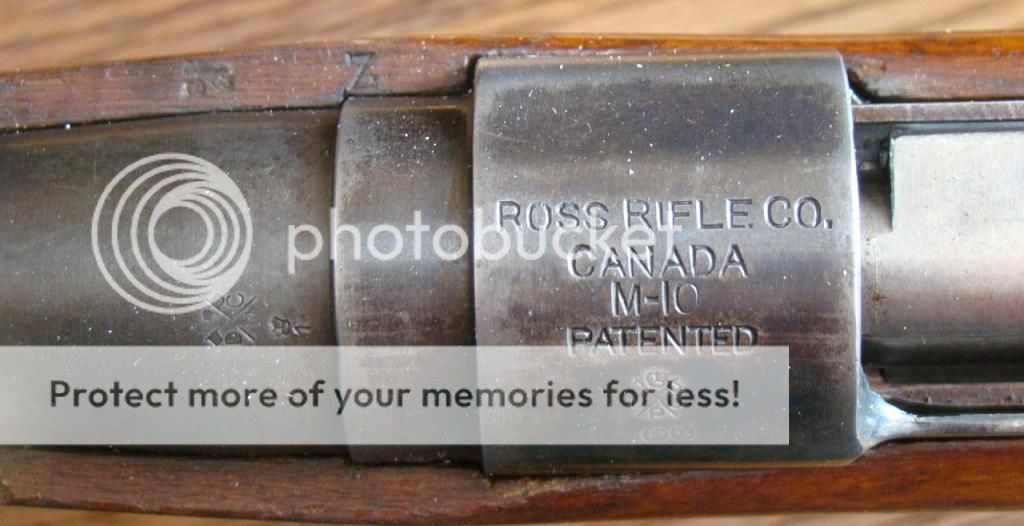
on the shortened sporter, there is no Nitro proof, no Enlarged chamber markings, and the writing appears different. There is also a strange "R" stamp
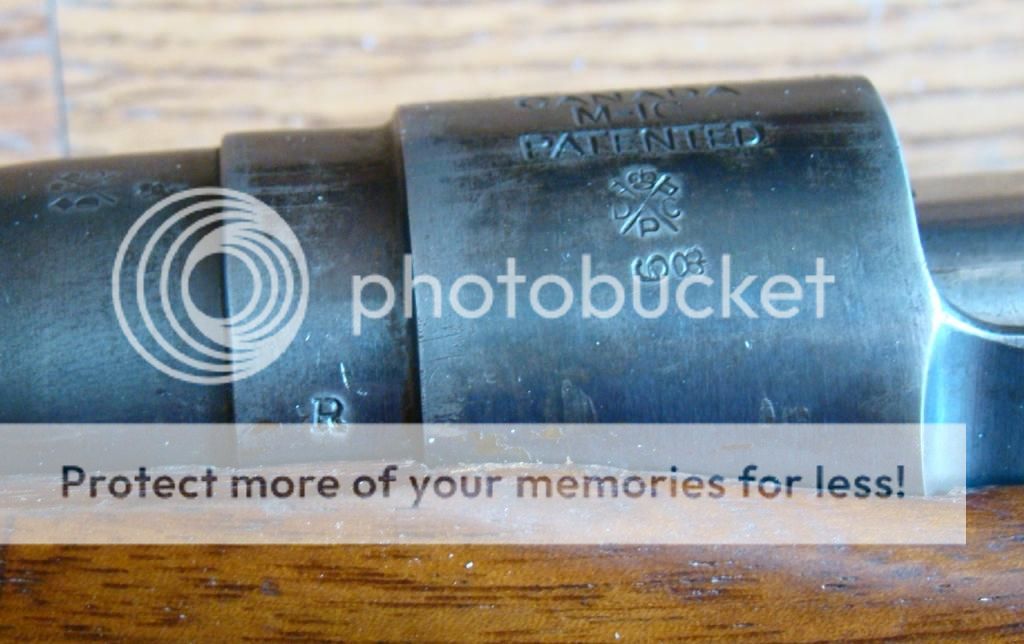
When the shortened sporter came to me it the stock had these markings.

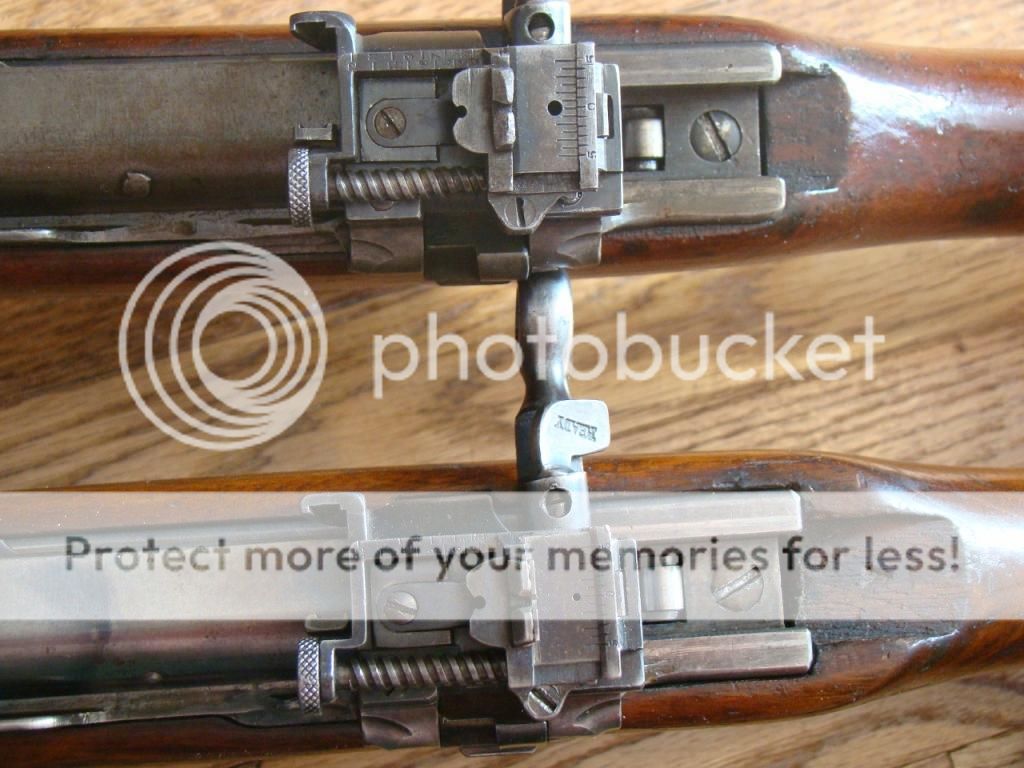
The next strange thing I noticed was the rear sights, the aperture on the shorty is about half the diameter of the f/l sporter.
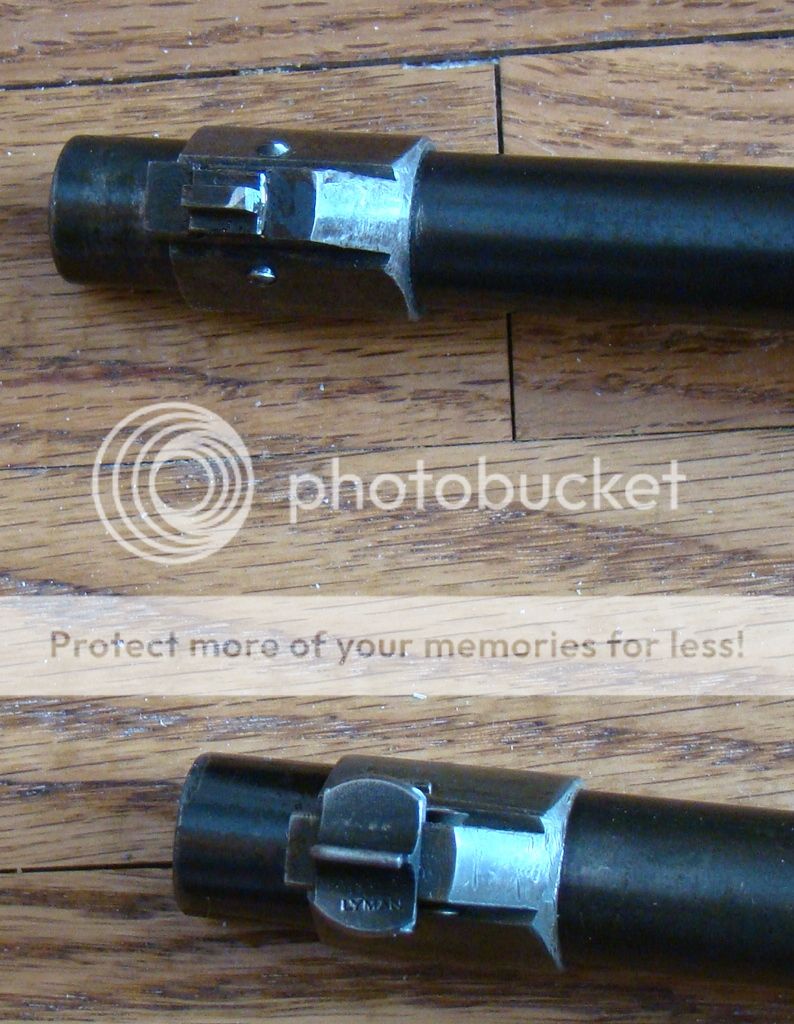
The front sights were also different and I'm fairly certain this was the work of bubba one is a Lyman sight.
So my question is about the shorty, why no nitro proof, what does the R signify, was it normal for the M10 lettering to change over the years. I would appreciate any info, thay you can tell me.
Thanks.
On the full length sporter, I can see, the Nitro proof mark, the not English made mark, and the "E"nlarged chamber mark. as well as the DCP proof.
on the shortened sporter, there is no Nitro proof, no Enlarged chamber markings, and the writing appears different. There is also a strange "R" stamp
When the shortened sporter came to me it the stock had these markings.
The next strange thing I noticed was the rear sights, the aperture on the shorty is about half the diameter of the f/l sporter.
The front sights were also different and I'm fairly certain this was the work of bubba one is a Lyman sight.
So my question is about the shorty, why no nitro proof, what does the R signify, was it normal for the M10 lettering to change over the years. I would appreciate any info, thay you can tell me.
Thanks.























