Ross rifle m10 bolt trouble

Tupolef

New member
Rating - 0%
0   0   0
Hello everyone,

I have some trouble with my Ross rifle m10 bolt.

First of all, the bolt is correctly assembled, but I think it is slightly worn out.

When the bolt is fully backward, the bolt’s head tends to rotate. The lugs rest on the receiver rail.

It doesn't happen when the cut-off is on, because the ejector prevent the bolt head to rotate.

This is annoying, because you have to exert a certain amount of force to close the bolt.
I disassembled the bolt, and I didn't see anything special, no wear, everything is clean.
Any idea how to fix this?
I will add pictures soon.
I thought about making a different shaped ejector out of carbon steel.
It would prevent the bolt head from rotating, in the same way as when the cut-off is activated.
What do you think?
 
Do you have any access to spare parts?
Hello,

Yes and no, a friend have two Ross m10, but he doesn't want to disassemble his bolts.

Maybe I should try one of his bolt in my rifle.

If it works properly, I would have liked to be able to take it apart and compare it, but I don't think he will accept it.

Apart from that, spare parts for Ross rifles are fairly rare in Europe.
 
Parts are not hard to find here, but I have no idea what would be involved in mailing pieces to France.
It might be worth trying one of your friend's bolt assemblies in your rifle.
I'll have a look at one of my rifles, see if I can see what might be going on with yours.
 
Hi Tupolef. Without having your bolt on my work bench I will venture a cure. I think your extractor spring has weakened
and needs to be reset to put more pressure on the bolt head. Extractors are easy to remove. Just dislocate it from the extractor groove using any tool. Its much easier to do when the bolt head is in return travel. Extractors are easily bent so you can try making the arc a bit more significant with yout hands or set in a vice. Not too much now.Put it back in and test extraction. I usually use a cartridge to separate extractor from its groove location. I usually bend at a centre location. With more pressure from your extractor the bolt head should stay in place upon withdrawal (return travel). Trying another bolt from another rifle in your rifle is not a good idea. Often bolt heads were hand filed to fit. JOHN T.
 
Parts are not hard to find here, but I have no idea what would be involved in mailing pieces to France.
It might be worth trying one of your friend's bolt assemblies in your rifle.
I'll have a look at one of my rifles, see if I can see what might be going on with yours.
Thank you for your answer. It is fairly easy, to buy parts in Europe, but you need specific licence for the other countries (only for the gunsmiths and professional).

I just learned that a Belgian gunsmith has a bolt available (I live in the north of France, on the border with Belgium, it's not very far from my home).
 
Hi Tupolef. Without having your bolt on my work bench I will venture a cure. I think your extractor spring has weakened
and needs to be reset to put more pressure on the bolt head. Extractors are easy to remove. Just dislocate it from the extractor groove using any tool. Its much easier to do when the bolt head is in return travel. Extractors are easily bent so you can try making the arc a bit more significant with yout hands or set in a vice. Not too much now.Put it back in and test extraction. I usually use a cartridge to separate extractor from its groove location. I usually bend at a centre location. With more pressure from your extractor the bolt head should stay in place upon withdrawal (return travel). Trying another bolt from another rifle in your rifle is not a good idea. Often bolt heads were hand filed to fit. JOHN T.
Thank you very much,

I will try after work to bend the extractor. I think it’s a good idea, because my rifle is in very good condition (nice finish, shiny barrel with very good rifling). It doesn't seem to have been used much, so I don't understand why the bolt would be worn. However, over time the springs can weaken.

Also, thanks for your warning about hand adjustment. So I won't be trying my friend's bolt in my rifle.
 
Thank you very much,

I will try after work to bend the extractor. I think it’s a good idea, because my rifle is in very good condition (nice finish, shiny barrel with very good rifling). It doesn't seem to have been used much, so I don't understand why the bolt would be worn. However, over time the springs can weaken.

Also, thanks for your warning about hand adjustment. So I won't be trying my friend's bolt in my rifle.
John, it works!
I put the ejector in a vice (with leather piece to protect it). I lightly tap with a nylon mallet.
It’s really need a fine tune to have a smooth action, neither too much nor too little.

I found the steel too easy to bend I hope this repair will be lasting.

It may need a new heat treatment (quench in oil and tempered).

Or else I have to find a new extractor (this part is free in France, no licence needed, I don’t know if it’s the same thing in Canada).
 
John, it works!
I put the ejector in a vice (with leather piece to protect it). I lightly tap with a nylon mallet.
It’s really need a fine tune to have a smooth action, neither too much nor too little.

I found the steel too easy to bend I hope this repair will be lasting.

It may need a new heat treatment (quench in oil and tempered).

Or else I have to find a new extractor (this part is free in France, no licence needed, I don’t know if it’s the same thing in Canada).
As your extractor is 100 years old plus and it is made of quality steel I think the original extractor will be fine for another 100 years even if you have to make the minor adjustment again a few times. I'm happy it worked for you. John
 
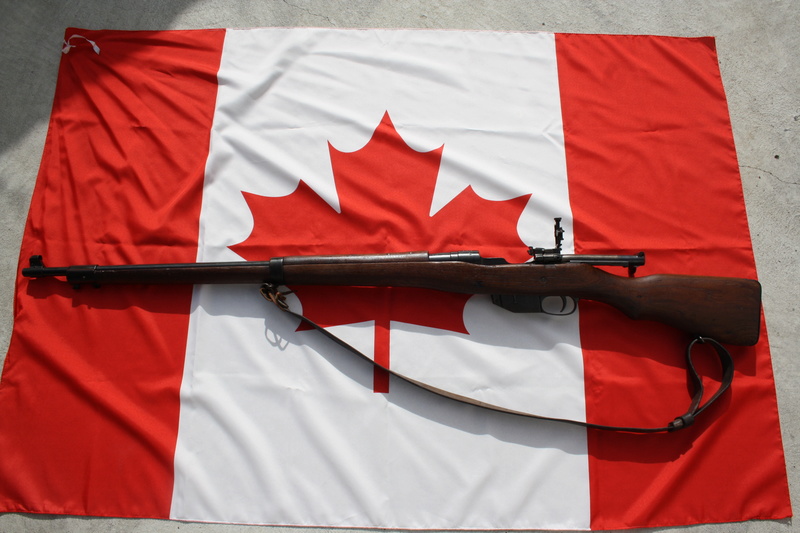
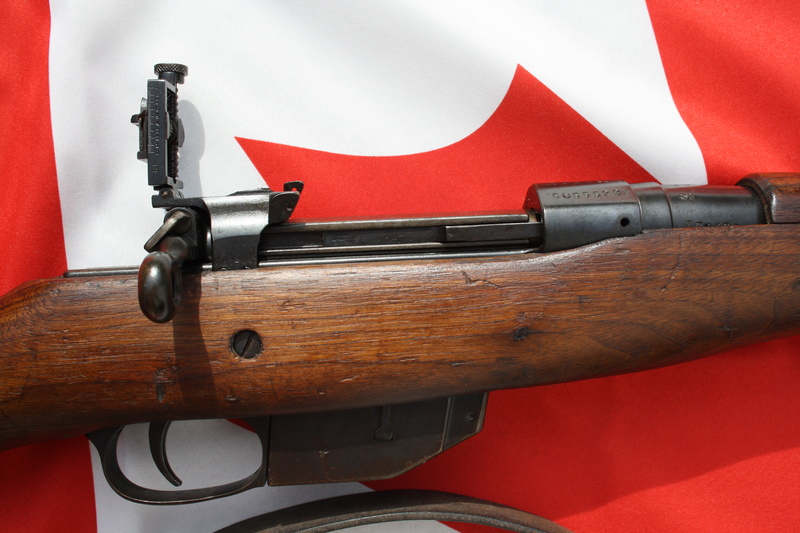
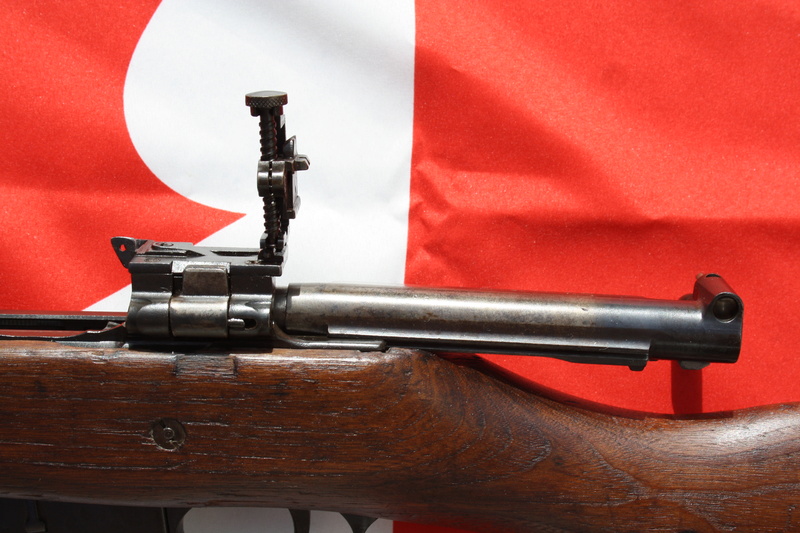
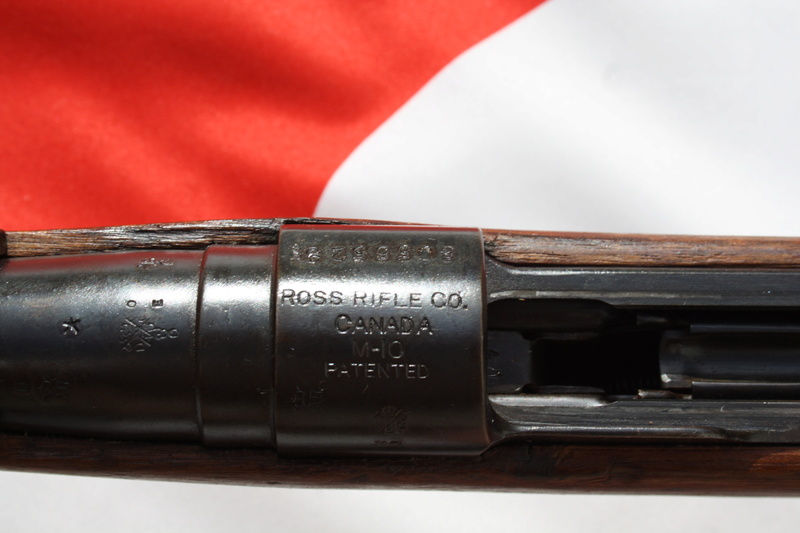
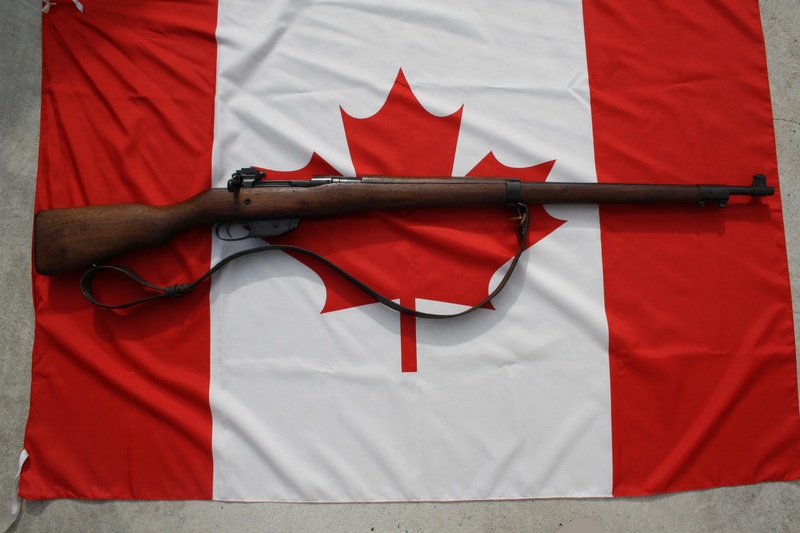
Thank you very much. Some pictures of the rifle before fixing. We can see clearly that the bolt go down when fully open due to the bolt head rotation. Now is it straight.

Another question, the rear sight was full of grease, I degrease it, but now, the drift adjusment is very loose, no play but it is very easy to turn the wheel adjustment, I think it could be moove during shooting with the recoil effect. Does a little shim between the aperture plate and the grooves can help?

img_2211.jpg


img_2382.jpg


img_2310.jpg

img_2381.jpg


img_2311.jpg


img_2386.jpg
 
I’ve had a couple of those rear sights loosen up like that after cleaning. On my shooter I left it alone and it seems to stay put but I’m also not running around with it in the field. If grease, dirt and corrosion were adding tension, you could try greasing it back up again and see if that helps.
 
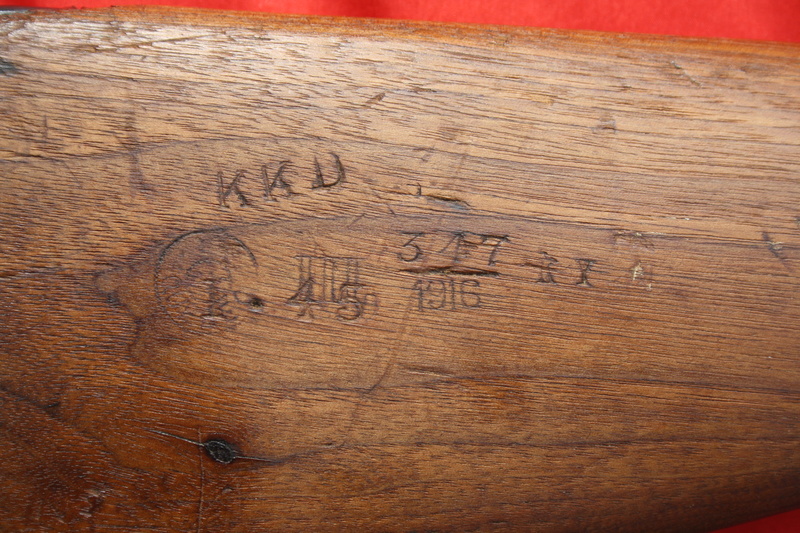
Hi Tupolef.Your Ross Mk III service rifle is serial 347 series KX made in late 1916. It has been in an Indian arsenal identified by
KKD in 1945. A few of these came in to Canada decades back absolutely drenched in rangoon oil. I left mine out on the back deck for days in the hot summer sun trying to bleed it off then wipe it off. It didn't work. Too long to put in an oven so I sold it. The windage adjustment plate will come right out with contant turning of the agjustment wheels. I would turn it out completely and bend it a smidge then put back in. In the armoury the gents would often stake the plate with a punch at the centre position which often disabled adjustment. The stakes would often be below the plate just touching. The choice is yours- bend it or stake it. You can also adjust magazine feed if needed using pliers to adjust (bend) the front feedway extension and also the back curved extension ( be sure not too much as it can interfere with bolt travel). The front sight
cover always is secured with the angle at the front intending to produce a dark profile of the sight. Keep your rifle at the ready in your trench with bayonet on to dispell surprise attack. If target shooting keep a toothbrush in your shooting box to clean locking lugs. If a burr occurs in the lugs use a stone and/or emery to remove. The scale on the right side of the battle sight is minutes of angle for those so educated. Enjoy. John T.
 
John thank you so much for your knowledge and advices.

So, I used a punch on each corner at the bottom of the plate. It pushed out a little metal, then I adjusted it very gently with the stone. It works perfectly now.
Another detail, to satisfy old french laws, the chamber has been modified. Few decade before rifle chambered in « military calibers » needed specifics authorizations. So, rifles were re-chambered in civilian or wildcat calibers (if you look at the CIP website you can find 30-284 nolasco or 30-06 cartry court, these two gunsmtihs developped these calibers in this goal).

Now we can have the rifles in their original caliber.

So, my Ross rifle has been rechamberer in « 7,7x57r » it’s not a CIP or a SAAMI caliber.

The gunsmith used a custom 8x57r reamer in the chamber, which allows rechambering without modifying the neck portion of the chamber. The cartridge has a 8x57r body with a 303 neck and bullet.

The rifle has been proofed, and the work was really well done. The rifle is very accurate.

I prefer use 7x57r brass because the rim thickness is the same as the 303, and de diameter is slighly smaller than the 303 but bigger than the 8x57r. I perform a fireforming, after I have to turn the neck to reduce the wall thickness, because 7x57r brass are thicker than the 303 at the neck.

I have some problems with the feeding of the first 2 rounds, no problems with the last three. Is this a magazine spring or feed lip problem? The cartridge has a slighly superior base diameter than the original 303.
 
That sounds like an interesting cartridge. It also would have eliminated the enlarged chamber that your rifle had.
I was aware of the cartridge restrictions. Mini-14s in .222, .300 Savage conversions for AR-10 rifles.
As jtaylor mentioned, the magazine feed lips can be adjusted. Maybe that would help with the feeding of the first two rounds.
 
Back
Top Bottom