S&W revolvers > Rugers?

biggerair said:
To say that Rugers are not used in compitition is B.S. and yes I do like to push my revolver to the edge like many other shooters. A trigger job is under $ 100.00 and now I have a better gun than the S/W
I didn't say they were NEVER used - I said they are almost unseen in competitive matches where high levels of accuracy/accuracy at speed are required.

Now, if you're going to tell everyone that Rugers are commonly seen in PPC, Bullseye, etc at levels above novices shooting whatever they happen to have in order to try it out... then I'M the one who's going to call bull####. They're so rare at even the Master level and above that they almost qualify as curiosities. Perhaps you need to get out there and tell shooters like Jerry Miculek and Michael Plaxco what dummies they are for not shooting Rugers with trigger jobs...

Other than that, I'm happy for you that you enjoy pushing revolvers to the edge of safety and think you have the best gun out there. Just don't shoot your edgy loads next to me at the range, please. You'll probably never have a Ka-boom, but if you do I'd just as soon not be next to you.
 
Rick said:
I didn't say they were NEVER used - I said they are almost unseen in competitive matches where high levels of accuracy/accuracy at speed are required.

Now, if you're going to tell everyone that Rugers are commonly seen in PPC, Bullseye, etc at levels above novices shooting whatever they happen to have in order to try it out... then I'M the one who's going to call bulls**t. They're so rare at even the Master level and above that they almost qualify as curiosities. Perhaps you need to get out there and tell shooters like Jerry Miculek and Michael Plaxco what dummies they are for not shooting Rugers with trigger jobs...

Other than that, I'm happy for you that you enjoy pushing revolvers to the edge of safety and think you have the best gun out there. Just don't shoot your edgy loads next to me at the range, please. You'll probably never have a Ka-boom, but if you do I'd just as soon not be next to you.

Who cares what the pros use. They are all custom guns anyways. If I spent as much on my Ruger as those guys spend on their Smiths it would be a equal gun if not better. You sound jealous that I can run heavy loads, I guess you should have bought a RUGER !
 
biggerair said:
Who cares what the pros use. They are all custom guns anyways. If I spent as much on my Ruger as those guys spend on their Smiths it would be a equal gun if not better. You sound jealous that I can run heavy loads, I guess you should have bought a RUGER !
Now there's an excuse: "they are all custom guns anyways". Miculek, for one, doesn't use a "custom gun" with modifications that would cost any more than that $100 trigger job of yours. Which you would know, of course, if you had a clue about what you're talking about.

Furthermore, if you had HALF a clue about what you're talking about, you'd know that in the Distinguished program you CAN'T shoot a "custom gun" no matter how much money you'd like to pour into it. Change the grips and smooth up the action; otherwise has to be unmodified - no custom sights, barrels, etc.

Which pretty much illustrates how much weight can be given to your blithering about "custom guns" as an excuse for why Ruger revolvers are merely curiosities in those shooting disciplines and everybody uses S&W's.

However, assuming that if one merely spent as much building a custom Ruger as they do building a custom Smith, one would have just as good or even a better revolver... you have to ask why competitive shooters don't do just that so they can save themselves the difference in cost for the base gun between the Smith and a cheap Ruger. I guess they're all dummies who don't know a superior revolver for competition when they see it... a smart guy with a Ruger should be able to clean up shooting against them!

As for envying you because your Ruger will apparently take frame-straining loads that a Smith will not... not hardly. I never caught that form of ##### envy, and seeing which particular rifle, shotgun, handgun or whatever would shoot maximum loads the longest without suffering damage never did interest me much. If that's what makes you firm, then go for it, but it's just not something that I have any interest in. My approach is to just buy a bigger gun than see how far I can push the one I have without damaging it. Too each his own, I guess.

BTW, do those heavy loads of yours make holes in paper any better? Take down the rams in handgun silhouette more effectively? We know you aren't handgun hunting on Vancouver Island... Or do you just enjoy the feel of the increased recoil? I'm not even sure what "heavy loads" are to you as you report purchasing your ammunition from Russell's and SIR, and generally the ammunition companies don't particularly spend much time in the business of manufacturing "heavy loads". It's that liability thing...

And tell us how many "heavy loads" you have put through that Ruger so far: what the load is and if you've actually fired enough to be able to reliably report that the revolver will stand up to an extended diet of those "heavy loads". Are you even over the 2000 round mark yet?

Anyways, I see you list owning exactly one rimfire rifle, one centerfire rifle, one shotgun, one handgun, and are thinking about starting to get into reloading. I think I have a pretty good idea on how much experience you have with shooting in general and revolvers in particular, and will file your opinion and comments accordingly.

For the original poster: there is nothing wrong with Ruger revolvers, and I don't believe anybody has suggested that. But if the best double action trigger pull you can get is something that interests you, and if you're thinking you might like to shoot Distinuished or one of the other similar sports, you're going to be better off with a Smith. I am sure if you sink enough money into a Ruger you may come up with a Ruger that is comparable to a Smith, but in my opinion that amounts to trying to make a silk purse out of a sow's ear.

If you're going to shoot mostly single action, perhaps in handgun silhouette, or you get your jollies seeing just how much pressure your handgun will take, then you might very well be far ahead choosing a Ruger. And if you're never going to take revolver shooting that seriously and just want to bang away at reasonably close range and kill some tin cans, play around doing a little "tactical shooting" or whatever, then again, a Ruger might be a much smarter and less expensive choice.

The bottom line is you're going to be the guy footing the bill for the purchase and the guy shooting it for as long as you own it, so the decision is pretty much yours and as long as you're happy with what you end up with, then you made a good choice.
 
biggerair said:
Who cares what the pros use. They are all custom guns anyways. If I spent as much on my Ruger as those guys spend on their Smiths it would be a equal gun if not better. You sound jealous that I can run heavy loads, I guess you should have bought a RUGER !

Some ruger products are solid performers, some are lemons. Mini14/30---lemon, 10/22 good gun, ruger bolt actions---mostly lemon, ruger no.1-- nice guns, ruger .22 pistols are nice guns, centerfire semi auto pistols---pretty crappy, single action revolvers---great stuff, double action revolvers---nothing special....
I'm not into sXs so no comment on their shotties:)
Bill Ruger was a **** and screwed the gun industry royally in the US before he did us a favor and dropped dead.
 
Christ on a crutch! Give it a f-ing rest. You're all sucking the fun outta revolvers for me. Less gum flapping, more shooting.

arguing_on_the_internet.jpg
 
SPI, you clearly have no clue what you're talking about. The links that you provided in your last post have nothing to do with the subject we are discussing (which is comparing the strength of forgings and castings). I'm curious why you bothered including them at all? Did you think that linking to random articles about the carbon composition of various cast alloys or the properties of 4140 steel was going to make your post sound more intelligent?

It is common knowledge that forgings are generally stronger than castings. That’s why barrels are made out of hammer forged steel (your comment about cast muskets/cannon barrels is laughable – do you seriously think that the pressures generated by old black powder loads is even remotely compared to those generated by modern ammunition?). And that’s also why forged steels are used almost exclusively in machine and hand tool industry. Ever heard of cast drill bits? If you’re still not convinced, look at the performance parts industry. How many top fuel dragsters use cast pistons and crankshafts? None.

Instead of acting like a ####, why don’t you do a google search on the differences between cast and forged materials. It wouldn’t hurt to have at least some basic knowledge of the matter that you’re so passionately arguing about.
 
Say Rick, you seem to have the attitude that people who are pro-Ruger are anti-S&W. Correct me if I am wrong about that. I feel that you are lumping my comments in with that sentiment. Again, correct me if I am wrong.

With that in mind, I'd like to talk about a few things that bear on this discussion. You seem to think that I am promoting the Ruger over the S&W.

I am not. I have tried to correct the mistaken impressions of other posters that castings are inherently weaker than worked stock. I have not said that castings are better than worked stock, that would be untrue. What I have tried to demonstrate is that properly cast steel parts are as good as parts milled from rolled stock, which is true.

You seem to think that I (and others) are saying that the Ruger action is "better" than the S&W. Well, first of all, "better" is a highly subjective thing that I haven't actually addressed. But I do think that the Ruger is a more advanced design, and I don't see any question of that. It is more modern, you can't argue that.

So basically, you are trying to argue something that wasn't being argued until you brought it up.
 
Big JD-From the hills said:
Wasn't the forged frame/slide of the .40s&w bhp being beaten up, so they siched to cast? I think the cast ruger frames would be more riged, and less prone to streaching?

The old BHP were beaten up because the steel was too soft as a result of poor heat treating (which has nothing to do with forging vs. casting). It is true that the newer cast BHP frames are stronger, but not because the casting process is superior to forging. And by the way, new BHP slides are still forged.
 
capp325 said:
SPI, you clearly have no clue what you're talking about. The links that you provided in your last post have nothing to do with the subject we are discussing (which is comparing the strength of forgings and castings). I'm curious why you bothered including them at all? Did you think that linking to random articles about the carbon composition of various cast alloys or the properties of 4140 steel was going to make your post sound more intelligent?

Says the idiot that cannot read stress and property tables.

capp325 said:
It is common knowledge that forgings are generally stronger than castings. That’s why barrels are made out of hammer forged steel (your comment about cast muskets/cannon barrels is laughable – do you seriously think that the pressures generated by old black powder loads is even remotely compared to those generated by modern ammunition?). And that’s also why forged steels are used almost exclusively in machine and hand tool industry. Ever heard of cast drill bits? If you’re still not convinced, look at the performance parts industry. How many top fuel dragsters use cast pistons and crankshafts? None.

Instead of acting like a ####, why don’t you do a google search on the differences between cast and forged materials. It wouldn’t hurt to have at least some basic knowledge of the matter that you’re so passionately arguing about.

Capp, you can't even recognize the strain data in the links that I provided.

Do you understand that for a second?

You - that is you - can not even understand the strain data in the links that I provided you. And you think I need to learn more?

Go get some schooling, fool.
 
LOL, I don't think you yourself understand what those tables mean, otherwise you wouldn't have posted them. What exactly does all that "strain data" have to do with the forged vs. cast debate? Please enlighten me.
 
capp325 said:
LOL, I don't think you yourself understand what those tables mean, otherwise you wouldn't have posted them. What exactly does all that "strain data" have to do with the forged vs. cast debate? Please enlighten me.

Christ, you are stupid aren't you?

Let's look at the mechanical tensile strength of say, 4130, widely regarded as a decent ordnance steel for small arms, with a cast carbon steel of the same carbon content: 4130: 560.5 mpa base, .030 carbon cast steel unworked, between 483 and 621 mpa, but probably a median value of 552 mpa. That is data from those tables. Data that indicates that cast steel and worked steel tensile strength is very similar.

Now, tell me how I misunderstand those tables?

Tell me how that data has nothing to do with the forged/cast debate.
 
Last edited:
mr00jimbo said:
Smith & wesson seems to charge a considerable increase in price for their revolvers compared to Ruger. Is this extra price hike justified through increases in quality, or would you go for the Ruger bang for buck? Ruger makes some cool .22 revolvers too! :cool:
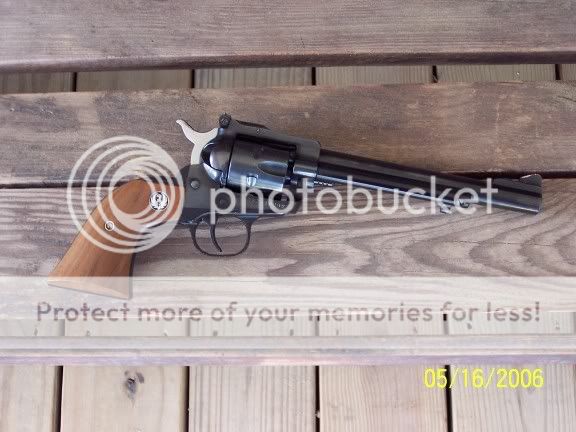

I bought this Single-Six Convertible for my Son about 18-20 years ago.

100_5175.jpg


I'm NOT a fan of Ruger pistols, but I have a healthy appreciation for their revolvers..

Best Wishes,

J. Pomeroy
 
spi said:
Christ, you are stupid aren't you?

Let's look at the mechanical tensile strength of say, 4130, widely regarded as a decent ordnance steel for small arms, with a cast carbon steel of the same carbon content: 4130: 560.5 mpa base, .030 carbon cast steel unworked, between 483 and 621 mpa, but probably a median value of 552 mpa. That is data from those tables. Data that indicates that cast steel and worked steel tensile strength is very similar.

Now, tell me how I misunderstand those tables?

Tell me how that data has nothing to do with the forged/cast debate.

And bear in mind that you are the dolt that suggested that castings were "30-40% less dense" than foundry workings.
 
Last edited:
Detective_Special said:
Don't discount the Ruger double actions, the GP's design is both innovative and functional. The Security-Six and Speed-Six are still very sought after revolvers in the used gun market. I'll have to admit that the Smith trigger in general is smoother, and in PPC competition I used a S&W K-frame. But one Grand Master shooter with a Security Six framed PPC gun, had a trigger that was unbelievable, so they are tunable, in the right hands.
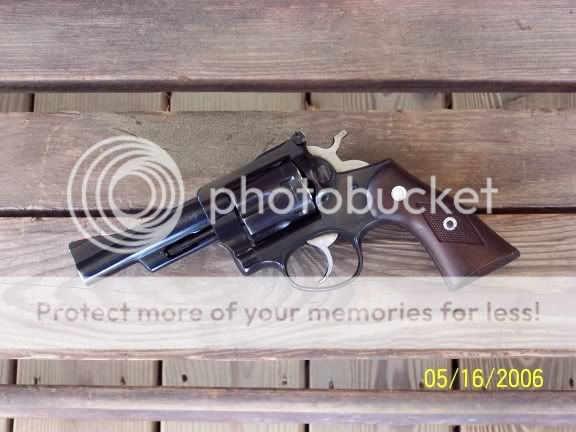

FWIW:

I've had this Security-Six for over 30 years, and no matter what new guns I get my wife prefers this one in the nightstand by her bed.... It's her "bump in the night" weapon of choice.

100_5166.jpg


I see lots of Security, and Speed-Six's for sale on www.gunsamerica.com at very reasonable prices. I often wonder why they aren't more appreciated by the firearm community.. I think both are excellent values, and quality revolvers.

JMOFO

Best Wishes,

J. Pomeroy
 
spi said:
Christ, you are stupid aren't you?

Let's look at the mechanical tensile strength of say, 4130, widely regarded as a decent ordnance steel for small arms, with a cast carbon steel of the same carbon content: 4130: 560.5 mpa base, .030 carbon cast steel unworked, between 483 and 621 mpa, but probably a median value of 552 mpa. That is data from those tables. Data that indicates that cast steel and worked steel tensile strength is very similar.

Now, tell me how I misunderstand those tables?

Tell me how that data has nothing to do with the forged/cast debate.
And you call me an idiot? 4130 is the name of the alloy. An item made of 4130 steel can be cast, forged, pulled, injection molded or whatever. The first article speaks of the properties of steel castings in general. The second article talks about the properties of the 4130 alloy, in general. Comparing the numbers from those two articles is like comparing oranges to truck tires.

And by the way, easy on the personal insults, keyboard warrior. Something tells me you wouldn't be speaking like that to me in a face to face conversation.
 
capp325 said:
And you call me an idiot? 4130 is the name of the alloy. An item made of 4130 steel can be cast, forged, pulled, injection molded or whatever. The first article speaks of the properties of steel castings in general. The second article talks about the properties of the 4130 alloy, in general. Comparing the numbers from those two articles is like comparing oranges to truck tires.

Umm, Capp, your ignorance is showing. The second link discusses the properties of 4130 annealled. It doesn't discuss the properties of 4130 in any other state because as you shouted ALL OTHER THINGS BEING EQUAL there is no difference. I pointed out the two articles to you so that you could see that typical cast alloys of steel have similar properties to alloys normally worked from stock. I did that because you clearly have little understanding of metal.

capp325 said:
And by the way, easy on the personal insults, keyboard warrior. Something tells me you wouldn't be speaking like that to me in a face to face conversation.

*edited*

You know, on second thought you are correct. I probably wouldn't, because I probably would have walked away from this conversation long before it got to this point. And I will do so now.
 
Last edited:
Ummm, guys? Deep breaths here, count to 100 (or higher...) We really don't need the war in here, there's enough people out side nutz who will attack us all for free. Rugers and Smiths, different, and each good OK? I prefer smiths, but I'd still like to have a GP100 (make mine a 4" please)

Castings aren't as strong as forged. Smiths aren't forged.
Castings as ruger does them are 99% as strong as billet (smith)
Rugers cast frames are bigger than smiths, ergo, rugers are stronger
You could easily cast barrels in ordanance grade steel, it's just not economical to do so. Most barrels are not forged, they are rolled bar stock that is machined.

How bout those Leafs eh?:runaway:
 
spi said:
Say Rick, you seem to have the attitude that people who are pro-Ruger are anti-S&W. Correct me if I am wrong about that. I feel that you are lumping my comments in with that sentiment. Again, correct me if I am wrong.
Yeah, you are wrong - all the way wrong.

I don't care whether anybody is pro or anti anything. As for lumping you in, I haven't been paying any attention to your posts and your angle in the discussion as it doesn't interest me in the slightest, and I have no expertise in the strengths of metals to begin with. Both firearms reliably function, and both manufacturers make handguns that are safe within the SAAMI specifications for the calibers they are built in. With that in mind, I don't care what type of manufacture was used or what is a more advanced design. When they're both reliable and safe, it comes down to what other differences there are between them - in my opinion, anyways.

With that in mind, I'd like to talk about a few things that bear on this discussion. You seem to think that I am promoting the Ruger over the S&W.
I'll repeat again. I haven't the slightest interest in the angle you are pursuing in this discussion, and as I'm not paying attention to that angle I don't care and am not interested in who is or isn't promoting what.

If I have been addressing ANYBODY's comments, it would be Mr. BiggerAir's. Those I have indeed been addressing, and I think a review of my posts since the original would make that clear enough.

Castings vs milled... not personally interested, although I appreciate the prospective purchaser who asked the original question might well be. I have no knowledge to contribute to that discussion, and therefore I won't be posting addressing it.

So basically, you are trying to argue something that wasn't being argued until you brought it up.

Clearly, you don't have a clue about what I was talking about in the first place. My discussion to this point had nothing to do with the inherent strength of the action or which is or isn't more "advanced". That's your baby, and I'll leave you to it.

When it comes to which ergonomics and trigger stroke cycle are more superior, I stand by what I have already said. The results in the assorted competitive events where revolvers are fired double action speak for themselves. S&W revolvers rule those events, and Rugers are almost unheard of - no matter how "advanced" their trigger design may or may not be. If you can name even one major championship where the Distinguished event was won by somebody shooting a Ruger, I'd be interested in hearing about it.

If the quality of the double action trigger pull doesn't matter to you, or a "good enough" trigger pull is good enough, then the Ruger might very well be the perfect choice for somebody, and the money saved can be put towards a Dillon press or whatever.

I hope that adequately clarifies my position for you.
 
Back
Top Bottom

































































