I have a Savage bolt in 243Win,The barnes book minimum is 42grns of R19 for a85grn tsx.The max is 46.I loaded some at 43 and my primers look flatened.I also had problems with a few of the Win brass splitting at the neck .I have only been FL resizing.Any ideas where Im going wrong like working the brass too much or should something else be up?













































You are using an out of date browser. It may not display this or other websites correctly.
You should upgrade or use an alternative browser.
You should upgrade or use an alternative browser.
School me on excessive pressure
- Thread starter #49
- Start date
Trashblaster
New member
- Location
- West Coast
Pressure signs are not just primers. Look for extractor and ejector marks and sticky bolt lift. Winchester brass I have used likes to crack necks without annealing.

vagrantviking
CGN Ultra frequent flyer
- Location
- Southern Alberta
Cracked necks shouldn't be related to high pressure generally.
Flattened primers are subjective so you will get better feedback if you post some pictures.
If there are no other marks or sticky bolt you are probably still in safe territory but want to proceed with caution if you go any hotter.
Flattened primers are subjective so you will get better feedback if you post some pictures.
If there are no other marks or sticky bolt you are probably still in safe territory but want to proceed with caution if you go any hotter.

ultimate_monkey
CGN Ultra frequent flyer
- Location
- victoria BC
Primers are a bad indicator , in my .284 I just built the Berger reloading manual says 51 (if I remember correctly) max load for the powder I’m using. I started at 48 using federal primers and they were flattened and cratered (this is common , just how they are ) but there was way to much empty space in the case and I’m now at 54gn using cci with no pressure signs
Hard bolt lift, ejector marks , case separation (felt from the inside ) are better indicators
Hard bolt lift, ejector marks , case separation (felt from the inside ) are better indicators

What kind of primers? Win Primers tend to flatten (for me) - that is not always an indicator of excessive pressure.
Cracked neck - how many times has the brass been reloaded? Crimping or neck tension only for your bolt gun reloads?
Cracked neck - how many times has the brass been reloaded? Crimping or neck tension only for your bolt gun reloads?

http://www.hodgdonreloading.com/rel...-trick-monitoring-pressure-your-rifle-reloads
SIMPLE TRICK FOR MONITORING PRESSURE OF YOUR RIFLE RELOADS
One of the first rules of handloading is to always follow the approved reload data. The cautious reloader gradually works up to approved maximum loads to ensure his particular gun does not show pressure signs. Generally this is visual observation of the fired shell case head and primer. There is another slick way to check for pressure signs if you are interested.
Using a blade micrometer that measures in ten thousandths (.0001"), new, unfired cases can be gauged before and after firing to determine reasonably accurate maximum loads. Micrometers measuring in thousandths (.001") are insufficiently accurate to perform these measurements, and should not be used. Previously fired cases cannot be used accurately due to various levels of brass hardening. Measurement is taken just ahead of the extractor groove on the case head and must be taken at the same place on the case before and after firing. By placing a small mark on the case head – entering the cartridge in the chamber with mark at 12 o’clock – a consistently accurate measurement can be taken with each firing.
Lower pressure rounds, like the .30-30 Winchester, usually yield maximum pressures at .0003"-.0004" expansion. Modern cartridges, like the .223 Remington, will show maximum pressure at .0004"-.0005", while .308 Winchester, .270 Winchester, etc., typically yield .0005"-.0006" expansion at max pressure. Magnums, like the .300 Winchester Magnum, show maximums at .0006”-.0007” expansion, and should be measured on the belt.
In conjunction with these measurements, case head signs of pressure should be monitored as well. These signs include very flat primers, slightly cratered primers, ejector marks on the case head, and stiff extraction. All these case head signs indicate high pressure, and loads should be reduced until these signs disappear.
As always, start with the beginning load listed, and cautiously work up to the maximum shown for that set of components, using the methods listed herein.
SIMPLE TRICK FOR MONITORING PRESSURE OF YOUR RIFLE RELOADS
One of the first rules of handloading is to always follow the approved reload data. The cautious reloader gradually works up to approved maximum loads to ensure his particular gun does not show pressure signs. Generally this is visual observation of the fired shell case head and primer. There is another slick way to check for pressure signs if you are interested.
Using a blade micrometer that measures in ten thousandths (.0001"), new, unfired cases can be gauged before and after firing to determine reasonably accurate maximum loads. Micrometers measuring in thousandths (.001") are insufficiently accurate to perform these measurements, and should not be used. Previously fired cases cannot be used accurately due to various levels of brass hardening. Measurement is taken just ahead of the extractor groove on the case head and must be taken at the same place on the case before and after firing. By placing a small mark on the case head – entering the cartridge in the chamber with mark at 12 o’clock – a consistently accurate measurement can be taken with each firing.
Lower pressure rounds, like the .30-30 Winchester, usually yield maximum pressures at .0003"-.0004" expansion. Modern cartridges, like the .223 Remington, will show maximum pressure at .0004"-.0005", while .308 Winchester, .270 Winchester, etc., typically yield .0005"-.0006" expansion at max pressure. Magnums, like the .300 Winchester Magnum, show maximums at .0006”-.0007” expansion, and should be measured on the belt.
In conjunction with these measurements, case head signs of pressure should be monitored as well. These signs include very flat primers, slightly cratered primers, ejector marks on the case head, and stiff extraction. All these case head signs indicate high pressure, and loads should be reduced until these signs disappear.
As always, start with the beginning load listed, and cautiously work up to the maximum shown for that set of components, using the methods listed herein.


No marks from ejector or extractor
Cracked necks shouldn't be related to high pressure generally.
If there are no other marks or sticky bolt you are probably still in safe territory but want to proceed with caution if you go any hotter.
Primers are a bad indicator , in my .284 I just built the Berger reloading manual says 51 (if I remember correctly) max load for the powder I’m using. I started at 48 using federal primers and they were flattened and cratered...
Hard bolt lift, ejector marks , case separation (felt from the inside ) are better indicators
I think I'd try a few different loads you've used before, using the same primers and see if the results are the same. My Federal primers are quite often flattened, more so as I get close to book max loads. What kind of primers are you using?
I'll occasionally have a fired case that the bolt lift is a bit harder, but that's one in the middle of a 20 shot string that isn't part of a load development process. If a round is snug chambering, I'd expect the bolt lift to be a bit harder than normal.
Have you checked your powder scale against another one? Test weights?
If you're using a chronograph, what's it saying? Velocity isn't the last word by any means, but it's something to factor in to the equation.
As mentioned earlier, be careful! If you can, get some advice from someone you trust locally that knows what they're doing. The internet is a poor substitute for an experienced mentor.
Last edited:


The Max in the book refers to THEIR rifle.
Each rifle/chamber/barrel is different. If their rifle happens to be be big (low pressure) and yours happens to be tight (high pressure) you can easily get into high pressure long before their MAX.
The best you can hope for is a safe START load. After that, develop your load, working up, looking for accuracy and pressure signs.
Each rifle/chamber/barrel is different. If their rifle happens to be be big (low pressure) and yours happens to be tight (high pressure) you can easily get into high pressure long before their MAX.
The best you can hope for is a safe START load. After that, develop your load, working up, looking for accuracy and pressure signs.
Last edited:
Mystic Precision
CGN Ultra frequent flyer
- Location
- Summerland, BC
I have a Savage bolt in 243Win,The barnes book minimum is 42grns of R19 for a85grn tsx.The max is 46.I loaded some at 43 and my primers look flatened.I also had problems with a few of the Win brass splitting at the neck .I have only been FL resizing.Any ideas where Im going wrong like working the brass too much or should something else be up?
If you are sizing the cases too much, excessive headspace can show up as flattened primers. The primer is pushed backwards and out of the case before the case swells to fill the gap. The primer is then squished back into the case as the case expands and thus you have a flat primer at moderate pressures.
Get a good quality chronograph and compare velocities vs printed data. This tends to be a decent pressure indicator.
Jerry
If you are sizing the cases too much, excessive headspace can show up as flattened primers. The primer is pushed backwards and out of the case before the case swells to fill the gap. The primer is then squished back into the case as the case expands and thus you have a flat primer at moderate pressures.
Get a good quality chronograph and compare velocities vs printed data. This tends to be a decent pressure indicator.
Jerry
Yes. If you are using an appropriate powder, the two (pressure and velocity) are the same thing. And it is easy to measure velocity.
There is no free lunch. If your velocity is excessive, so is your pressure.
In a well made rifle, excessive pressure may not show any signs at all. I tested a Win M70 in 308 that showed no signs until 75,000 psi.

I have a Savage bolt in 243Win,The barnes book minimum is 42grns of R19 for a85grn tsx.The max is 46.I loaded some at 43 and my primers look flatened.I also had problems with a few of the Win brass splitting at the neck .I have only been FL resizing.Any ideas where Im going wrong like working the brass too much or should something else be up?
Always average the start load from several reloading manuals and work upward. In doing this and carefully examining each fired case you will learn more about "your" rifle.
When you do this you will see and feel the primers protruding from the base of the case with the start loads with new brass. Then as the load increases you will see that the primers become flush with the base of the case. At this point the chamber pressure was great enough to cause the brass to stretch to meet the bolt face. At this point you should pay more attention to how the primer and case looks like.
Below is a photo from accurateshooter.com that a long range competitive shooter posted. This shooter stated he increased the load until he had brass flow into the ejector and then backed off 1 or 2 grains. This let the shooter know the elastic limits of his cases and this will vary by the case manufacture and hardness of the brass. Meaning softer cases like Federal will show brass flow sooner at a lower chamber pressure. Looking at primers and measuring base expansion are not a true sign of a given chamber pressure. They are simply telling you how much pressure the primer and case can take before deforming.
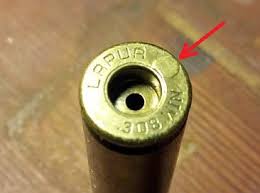
Bottom line do not arbitrarily pick a load you think may be safe. Start with the suggested start load and work up just like the reloading manuals tell you to do. And by doing this you will learn more about "your rifle" pressure signs and reading primers and cases for excess pressure.
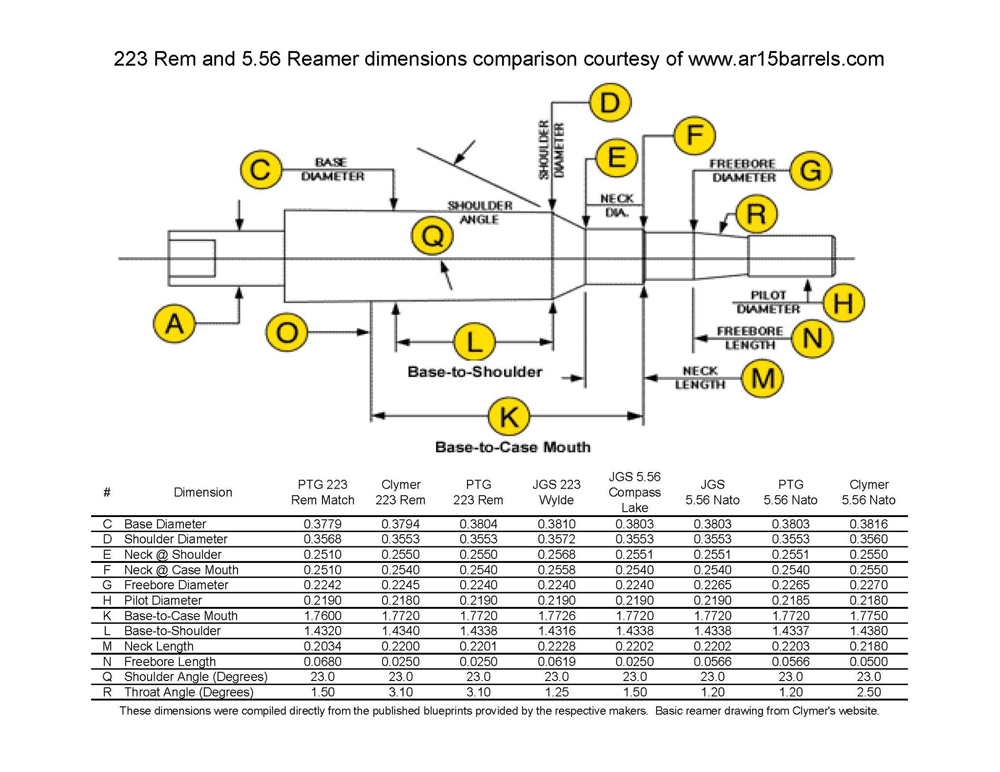
Example, I have a factory Savage bolt action .223 with a 1 in 9 twist that has a longer throat than my AR15 rifles have. And this rifle can be loaded "warmer" than reloading manuals for short throated .223 rifles with 1 in 14 or 1 in 12 twist rates. Reloading manuals are not written in stone and each rifle can be different along with the reloading components used.
Look at a Lyman reloading manual and you will see two methods of measuring chamber pressure. One method listed will be a pressure test barrel and a universal receiver. The pressure test barrel will have minimum SAAMI chamber and bore dimensions to generate the highest possible pressure. The other method is to glue a strain gauge to the barrel of the listed firearm and calibrate with a cartridge of a known chamber pressure. With the last method the type firearm as a example will say "Winchester Model 70" or Remington 700 etc. And this is why the reloading manuals vary so much and why they are just "guidelines" and not written in stone.
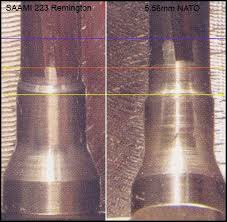
Example, look at the variations below in .223/5.56 chambers and throats and why chamber pressure can vary between rifles.
FirearmsEnthusiast
CGN frequent flyer
- Location
- Kingston, ON
How many times loaded on the brass OP? If you don't anneal and are Fl resizing with lots of working of the brass, neck splitting is inevitable after a few loadings...
I invested in a good induction annealer (Annie) and that has extended my brass life...
I invested in a good induction annealer (Annie) and that has extended my brass life...


And you can also get lots of powder that may be a hair faster or slower than what was tested in the manuals, that will reach peak pressures differently than what was tested in the manuals. A different bullet may have a longer or shorter engagement surface in the rifling, you may have a tighter or looser barrel. Starting loads are there for a reason,every once in a while a batch of powder gets out that can be a whole bunch different than it is supposed to be. I ran into that once, before the internet existed as we know it now, the recall on that powder didn't show up in the gun rags til a few months later. It made me a believer in starting loads, as the starting loads made the gun pretty difficult to open. Also very glad I was doing a new workup, or I may not have got it open again, or be wearing some pieces of it.
Likely the best article around on reading cases, and how not to.
http://www.primalrights.com/library/articles/understanding-pressure
Likely the best article around on reading cases, and how not to.
http://www.primalrights.com/library/articles/understanding-pressure





















