












































You are using an out of date browser. It may not display this or other websites correctly.
You should upgrade or use an alternative browser.
You should upgrade or use an alternative browser.
Shiny Ring on Belted Magnum Brass
- Thread starter conor_90
- Start date

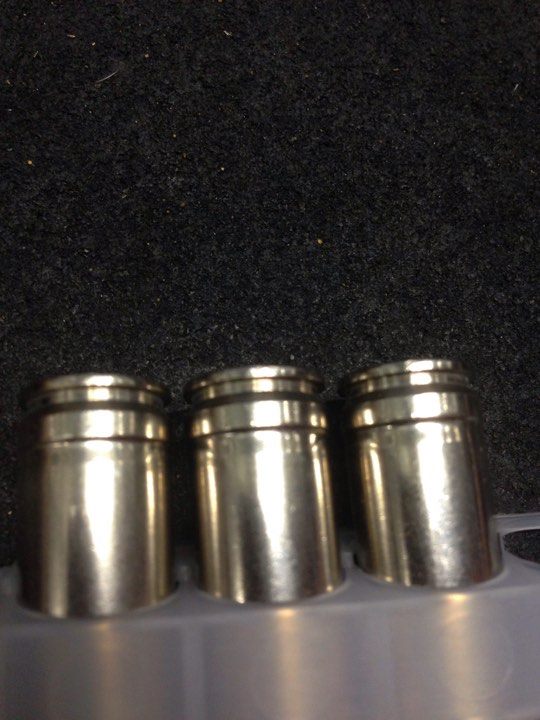

In your photo this is the thinner part of the case that expands and contacts the chamber walls and I would conceder this normal. The only real problem you "might" have is if your sizing die does not reduce this area enough and causes extraction problems. This is why some belted magnum cases need to use a collet die that reduces belted case more just above the belt.
Below are two British .303 cases fired in the same Enfield rifle, the smaller diameter case expander more to contact the chamber walls. Both fried cases are normal and meet the SAAMI min or max case diameter.
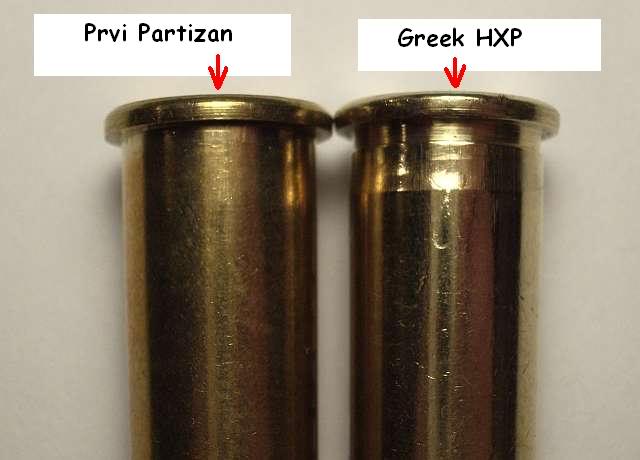
Below are two British .303 cases fired in the same Enfield rifle, the smaller diameter case expander more to contact the chamber walls. Both fried cases are normal and meet the SAAMI min or max case diameter.

Thanks for your response, I love this gun and never intend to sell it. I was worried I had 300+ pieces of brass (figured this should last a while so I just kept stacking it) that I would not be able to safely reload.
Is this a bolt gun? If so then only neck size, the life of your brass will go way up, they will not be as bad as something like a Lee Enfield with a massive chamber but neck sizing does a lot less to your brass which makes the brass last a lot longer.


If you look at the SAAMI cartridge and chamber drawings you can have .010 difference between the chamber diameter and cartridge diameter. The ring in the OP photo is where the brass in the base of the case was thin enough to show expansion from chamber pressure.
Chambers, cases and dies vary in size and the expansion ring can vary in diameter, like in my first posting.
Below is the same type expansion ring on a standard non-belted case and is normal. And the same case fired in a larger diameter military chamber would be more pronounced.

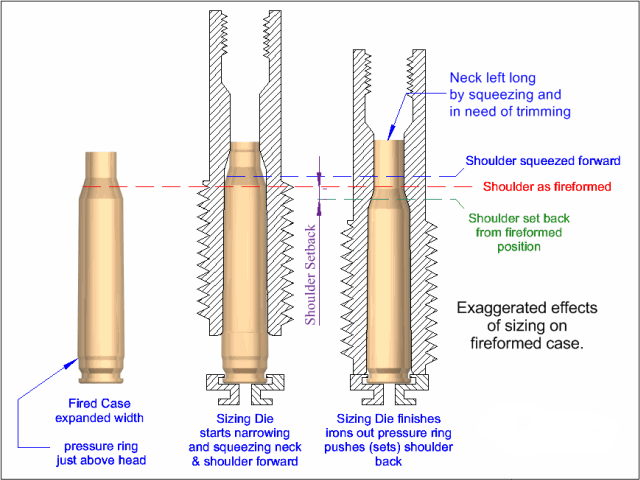
Below the pressure ring is shown in the left hand illustration, and then when full length resized the expansion is reduced in diameter. As a example a full length resized case fired in a semi-auto needs to be .003 to .005 smaller in diameter than its fired diameter for the brass to "spring back" from the chamber walls and extract reliably.
Chambers, cases and dies vary in size and the expansion ring can vary in diameter, like in my first posting.
Below is the same type expansion ring on a standard non-belted case and is normal. And the same case fired in a larger diameter military chamber would be more pronounced.
Below the pressure ring is shown in the left hand illustration, and then when full length resized the expansion is reduced in diameter. As a example a full length resized case fired in a semi-auto needs to be .003 to .005 smaller in diameter than its fired diameter for the brass to "spring back" from the chamber walls and extract reliably.





















