













































You are using an out of date browser. It may not display this or other websites correctly.
You should upgrade or use an alternative browser.
You should upgrade or use an alternative browser.
shooting low left
- Thread starter jsgog
- Start date
 , but can anyone tell me why I shoot reasonably decent with both my revolvers but majority of shots from the semis are low left ?

Get a friend to load the firearm and sometimes actually load it and other times leave the chamber empty -- and then you shoot it. That front sight should not waver when the gun goes *CLICK* even though you thought it would go *BANG!*. You should be able to balance a dime on that front sight. If it wavers -- if you flinch -- then there's your problem. Everyone can flinch. Everyone also learns to control their tendency to flinch or they never become decent shooters. This is done through a combination of proper trigger control and concentration.
Revolvers generally have better single-action triggers than most semi-autos and that may be a contributing factor to your better success with revolvers. But give the old "flinch test" a try. In the Mexican Clubs, we always had a lot of dummy rounds available in the calibers we were using to "flinch test" just about anyone at any time if the issue came up. Also, the "balancing a coin" on your front sight when you dry-snap can help you understand the focus and concentration you need to apply on each and every shot to keep the gun from moving at hammer-fall.
Otherwise, shooting would be easy.
Revolvers generally have better single-action triggers than most semi-autos and that may be a contributing factor to your better success with revolvers. But give the old "flinch test" a try. In the Mexican Clubs, we always had a lot of dummy rounds available in the calibers we were using to "flinch test" just about anyone at any time if the issue came up. Also, the "balancing a coin" on your front sight when you dry-snap can help you understand the focus and concentration you need to apply on each and every shot to keep the gun from moving at hammer-fall.
Otherwise, shooting would be easy.

Are you shooting your revolvers in DA or SA? The super short/light single action trigger on my Smith revolvers would be a terrible indicator of an issue with finger placement, as there's just less time/movement for things to go wrong.
90% it’s a striker fire.
You always get a trigger jerk at the end most people don’t notice. It’s because of the mushy takeup and then the break which requires just a tad more force. Remedy is to make the trigger lighter or adjust for the jerk is what worked for me
You always get a trigger jerk at the end most people don’t notice. It’s because of the mushy takeup and then the break which requires just a tad more force. Remedy is to make the trigger lighter or adjust for the jerk is what worked for me

I had the same problem with my first semi, Girsan MC28. The trigger was a bit heavy and gritty at first and I was shooting low and left. Tried A CGNer's competition CZ Shadow and it was much better. He helped coach me about isolating my trigger finger and being smooth on the trigger and my shooting has improved immensly. It also helped that I ended up with better semis that have much smoother and lighter triggers. But the key is not moving the pistol as you reach the point the trigger breaks. Compared to the super crisp and light SA trigger break on revolvers it's night and day. I tried a Colt Pyton and the shot was a surprise almost every time it went off as the trigger broke so cleanly.

Look up the wheel of misfortune target and you will see what the issue is.
The group here is very knowledgeable and will steer you in the right direction. While it does take time to develop a proper grip try dry firing at home it helps a lot. I have seen a few people at my gun club print a wheel of misfortune target and actually shoot so it will give them instant feed back. Dont get frustrated.

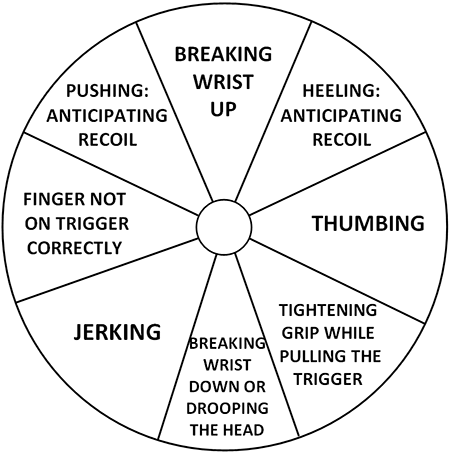

definitely in the jerk area lol ,I am by no means a seasoned shooter but do much better with the revolvers , was just wondering if it is a common issue and might had have something to do with the grip shape , but trigger weight does make sense , shots are definitely more accurate in single action
Yes, it is very common with new shooters. The worst thing you can do is use the adjustable sights if you have them, and start moving your 7 o'clock flinches to the middle of the target. I know a guy who did this, and once I fixed the sights, I banned him from touching them again! lol!
Trigger type can have a lot to do with this, not just weight. Just happened the other week at my range with a fairly new shooter who was shooting his CZ P10F and had trouble with stray shots. He tried my red dot Shadow in SA, and had amazing accuracy. Tried my iron sighted Shadow in SA and shot well again. Then I got him to shoot a mag from the 7-lb pull DA on the Shadow, and he again, shot very well. We burned the idea in his mind of consistently building pressure on the trigger as the hammer was moving back. Be smoooooooooooth. "Like dragging your finger through peanut butter", as Annette Evans, a coach in the USA says.
He shot very well!
Then we moved back to his CZ P10F, and carried the idea of a consistent pressure buildup on his very different feeling, but lighter, trigger. His group size was almost cut in half. Massive transformation!
So do the ball & dummy drill every time you're at the range. Each time you flinch, I want you to pause, and refocus your mind on what you are doing. Stable grip, with a smooth, deliberate trigger pull. Keep that finger isolated, and go for the surprise break. Keep your other fingers out of it. lol!
Trigger type can have a lot to do with this, not just weight. Just happened the other week at my range with a fairly new shooter who was shooting his CZ P10F and had trouble with stray shots. He tried my red dot Shadow in SA, and had amazing accuracy. Tried my iron sighted Shadow in SA and shot well again. Then I got him to shoot a mag from the 7-lb pull DA on the Shadow, and he again, shot very well. We burned the idea in his mind of consistently building pressure on the trigger as the hammer was moving back. Be smoooooooooooth. "Like dragging your finger through peanut butter", as Annette Evans, a coach in the USA says.
He shot very well!
Then we moved back to his CZ P10F, and carried the idea of a consistent pressure buildup on his very different feeling, but lighter, trigger. His group size was almost cut in half. Massive transformation!
So do the ball & dummy drill every time you're at the range. Each time you flinch, I want you to pause, and refocus your mind on what you are doing. Stable grip, with a smooth, deliberate trigger pull. Keep that finger isolated, and go for the surprise break. Keep your other fingers out of it. lol!
Get a friend to load the firearm and sometimes actually load it and other times leave the chamber empty -- and then you shoot it. That front sight should not waver when the gun goes *CLICK* even though you thought it would go *BANG!*. You should be able to balance a dime on that front sight. If it wavers -- if you flinch -- then there's your problem. Everyone can flinch. Everyone also learns to control their tendency to flinch or they never become decent shooters. This is done through a combination of proper trigger control and concentration.
Sorry, I must disagree, even the most seasoned shooters will "flinch" as you say, on a empty cylinder or dummy round, its called recoil management, and this only becomes an issue if it happens before the click of the trigger instead of after.

Sorry, I must disagree, even the most seasoned shooters will "flinch" as you say, on a empty cylinder or dummy round, its called recoil management, and this only becomes an issue if it happens before the click of the trigger instead of after.
Sorry, I must disagree...
OP: You're flinching.
Gotta agree with 4n2t0.Sorry, I must disagree...
OP: You're flinching.
No reason for a post-ignition push when doing slow fire as in the OP's case.
If I had a dummy in a mag during an attempt at a new personal best for a Bill Drill, sure, you'll see me moving the gun on the dummy. We aren't talking about a case like that though. This is slow fire fundamentals training, and the gun should not move on a dummy.


Milofficer
CGN Regular
- Location
- Vancouver, BC
In my experience, a right-handed shooter pulling their shots low and left indicates a flinch / jerk on the trigger.
Check out this segment from Jeff Cooper on the 'surprise break'. It's a bit dated, but the technique and explanation is very good and it should help you get back to hitting point of aim. (Skip to 26:50)
Check out this segment from Jeff Cooper on the 'surprise break'. It's a bit dated, but the technique and explanation is very good and it should help you get back to hitting point of aim. (Skip to 26:50)






















