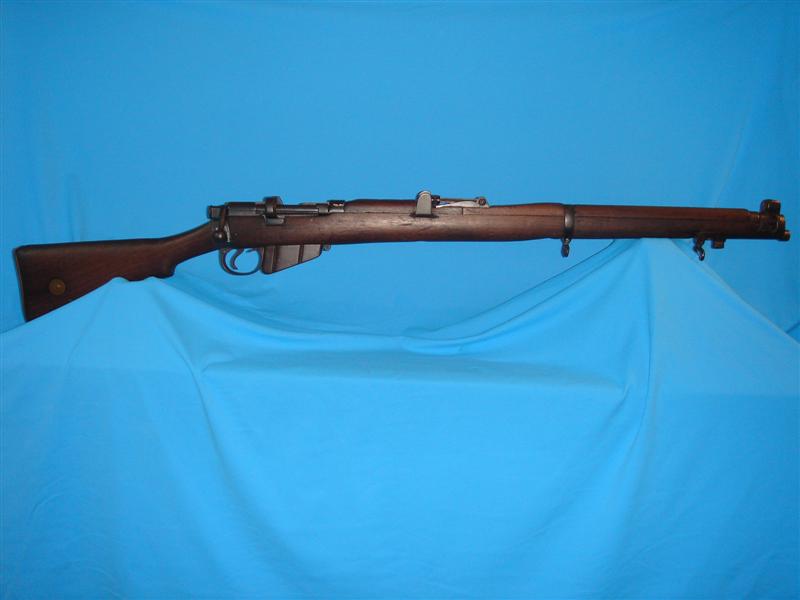
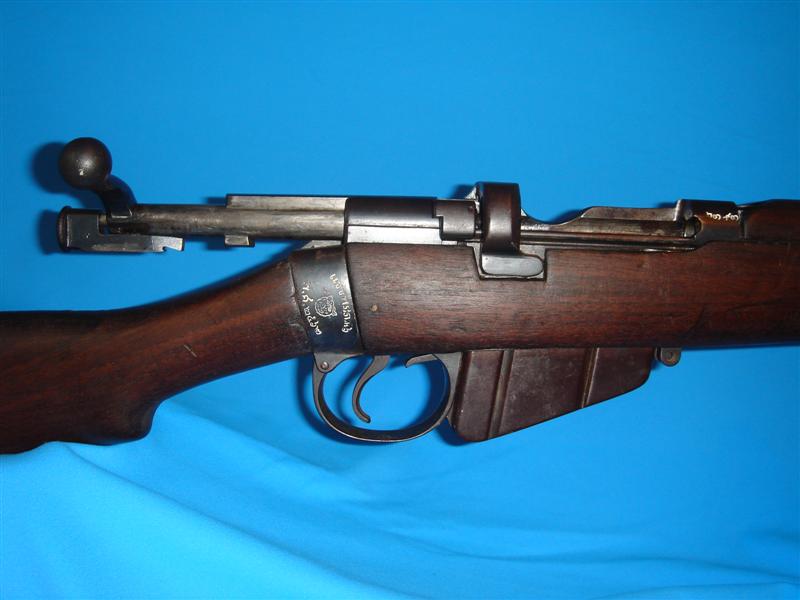
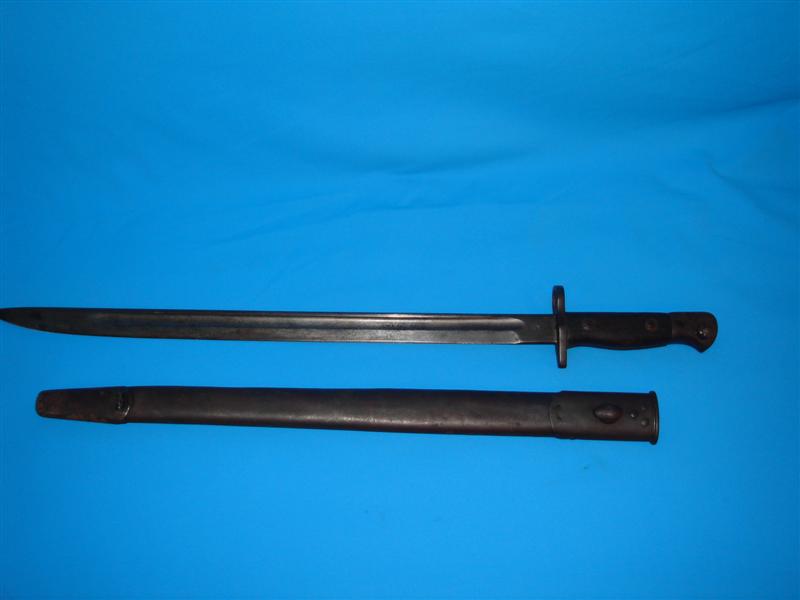
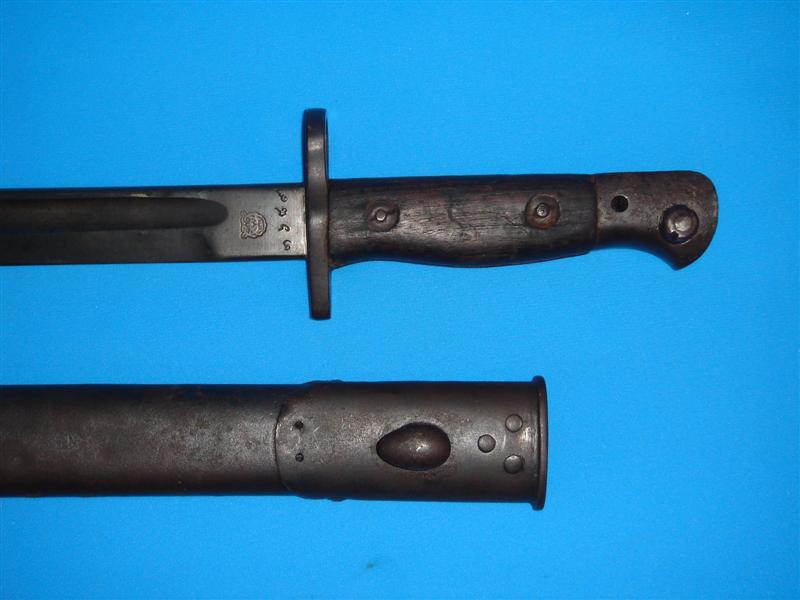
Siamese No.I Mk.III Enfield Bayonet

Drachenblut

BANNED
BANNED
BANNED
EE Expired
Rating - 100%
91   0   1
Location
Smithers, B.C.
Hello All,

A question, I have a Siamese Contract bayonet, 1920 for Rama the IV of Siam from BSA. The blade is blued and the tiger icon is still almost in the white. Were these blades originally shipped to Siam blued, or was that done by the Siamese, the same as the scabbard leather being replaced with metal?

Cheers,
Dracheblut

P.S. To avoid double posting, please check under March Purchases for my bayonet picture.
 
All the ones I've seen were in the white. I understand BSA used surplus bayonets, and simply stamped the teddy bear on them before shipping them. That vintage of P'07 bayonet would have been either polished or sandblasted, not blued, so it was most likely done in Siam, or in Canada by a previous owner.
 
If it was, sir, the bayonet itself would be rough? I think the bayonet was actually blued as part of the conversion, or "Siamification", of the bayonets (namely, the scabbard leather replaced with metal and the blade blued possibly?)
 
Bushman, the blade is black, and does not even look blue, even around the tip where it's worn away, definitely black in colour. What do you think this means?
 
It's funny, Aussie bayonets often had that black finish. This seems very odd to me, as the Siamese didn't really maintain their L-E rifles that well. It may have been refurbished in later years when their industry was a bit more developed. After the war, they were more self sufficient, and performed some conversions of other rifles, etc. so they would certainly have had the facilities to re-finish things.
 
Well, it's certainly an idea! They re-whited the markings too, because they are still partially "in the white" as if the stamping had white liquid paper brushed on it long ago. Maybe that is original? I really don't know. Another of Milsurp History's Great Mysteries!
 
That line from Men of Harlech reminded me of the four races of theUK

The Scots who are verry careful with their money, and anyone else's they can get hold of
The Irish who will fight to the death, but have forgotten the reason why
The Welsh, who pray in church on sunday and prey on their neighbors the rest of the week
And The English who consider themselves self-made men, thereby saving God the trouble
 
Ah-ha! I knew it! That blade is exactly like mine, blackened like that. Ideas as to what that is? Some sort of really deep hot blue?

Btw, an odd question, what kind of white "crayon-like-thing" would I want to use to put some white on the markings, just to help them stand out a bit?
 
Drachenblut,

"in the white" means polished steel with no finish applied, more acurately it's "in the silver"
If there is something actually white in the stampings on your bayonet it is most likely paint or crayon applied by some previous owner to make the markings stand out. You'll find the collecting community sharply divided on the practice, some think it makes the piece more attractive to be able to see the markings clearly, others think it's an abomination. Certainly it is not original to the piece. I have used a white tire marker (very similar to a big white crayon used to re-whiten the lettering on car tires) to highlight markings in order to photograph them. It has the advantage of being easily removed with some WD 40 and a rag.

My Siamese bayo has a blued ricasso with the remainder of the blade in the white.
Bluing (a form of rusting) can be anywhere from black through a deep blue to a purple depending on the steel invold and the bluing process involved.
 
Thank you Cottage Hill Bill. Your information is helpful. I will look into it, personally, I do not plan to sell the items, but collect them so putting a little make-up on my old gals does not seem wrong. I believe "in the silver" should be a proper terminology for a non-blued piece of metal, as you could see my confusion.
 
Back
Top Bottom