





























- Location
- On a resonably direct route in NS
I have a Sig Sauer P229R, ca. 2008-9 manufacture, 9mm, factory stock plain model (no Elite or DAK and such). I picked up a .22LR Conversion Kit on the EE, and I am having trouble making it function.
Well, this is what happens:
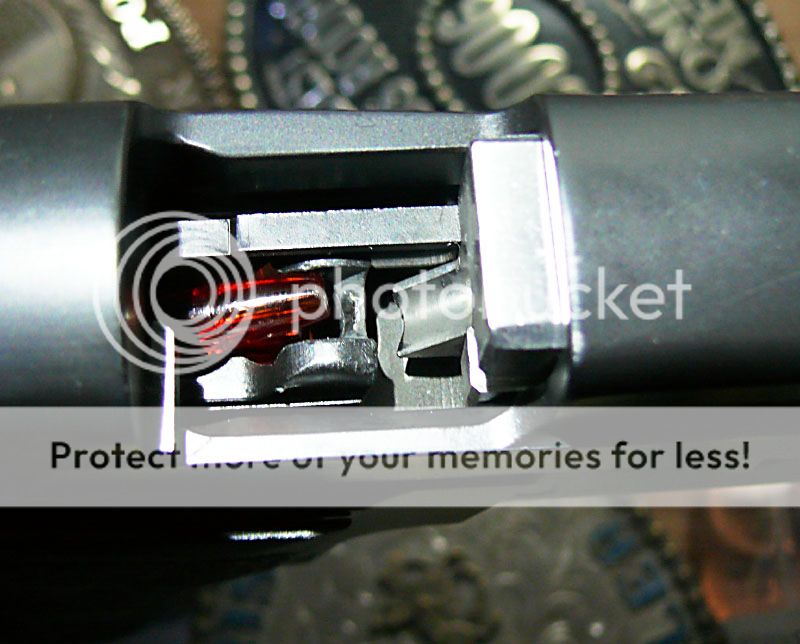
When I install the slide and lock it in with the take-down lever, it will not move freely, and binds if I let the recoil spring take it back. You may note the guide rod tends to bend out of position from the pressure; I have attempted to re-position the guide before and after locking, with no satisfaction. Installing the slide without the recoil parts does result in some tightening up when locked down, and the slide alone seems to be just fine.
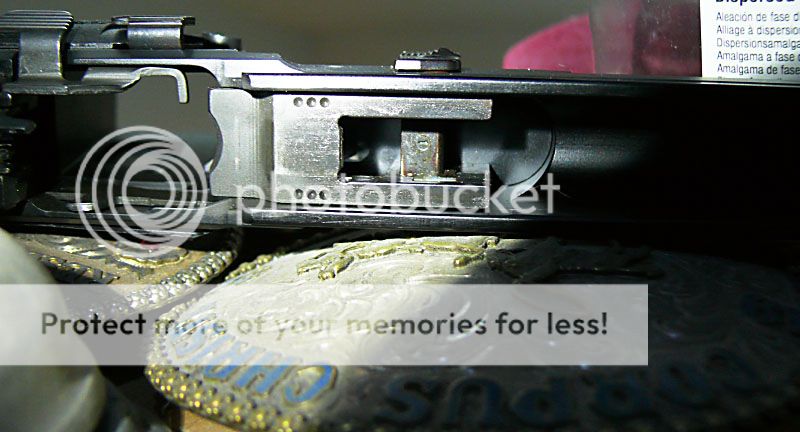
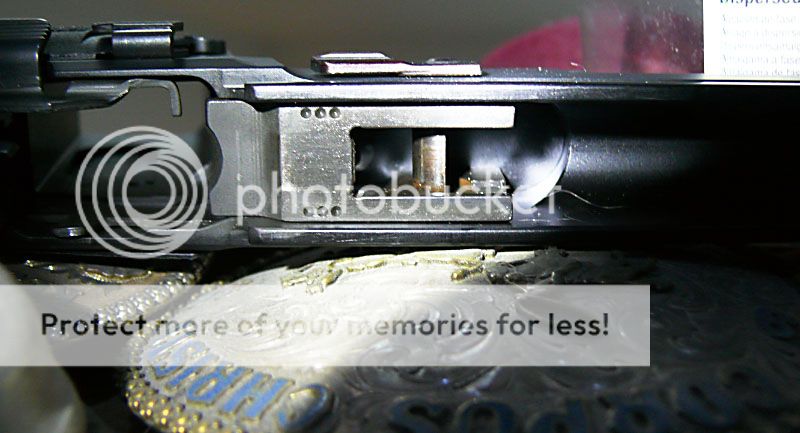
Apparently Sig uses the same barrel in all their .22 kits, and inserts a different locking lug corresponding to the intended pistol model by pinning it in the bottom of the barrel. Mine is marked ‘29’ on the lug, that should be good. Comparing to other pictures on-line, the lug on mine is correct and pinned in the correct orientation. However, comparing it to the stock 9mm barrel, the lug seems reversed:
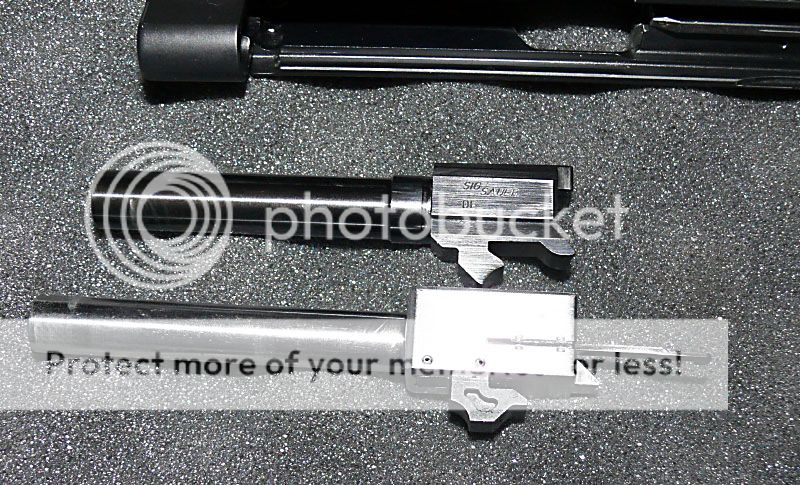
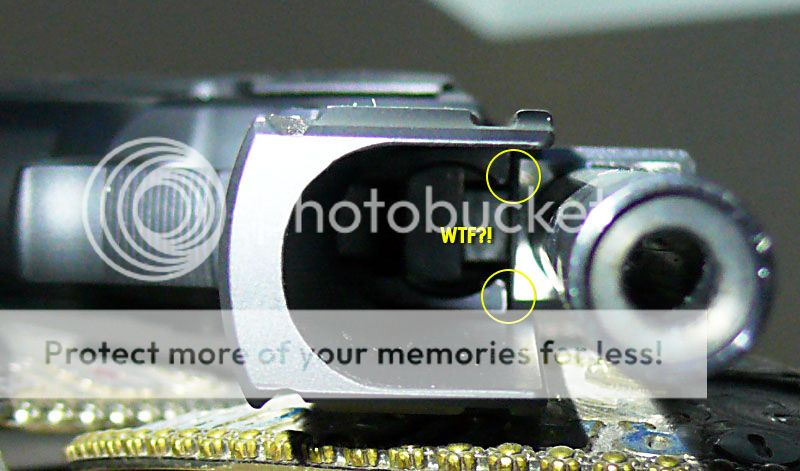
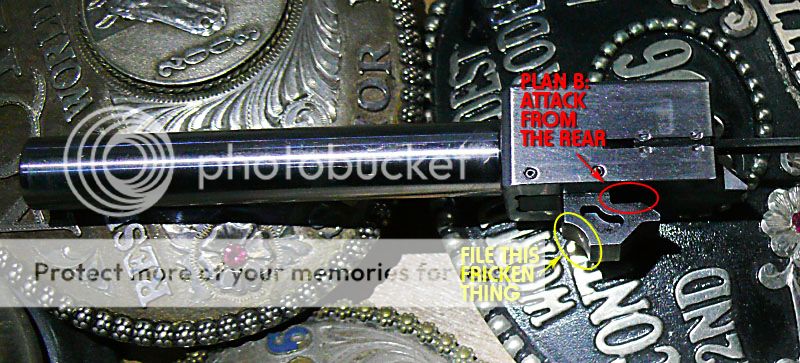
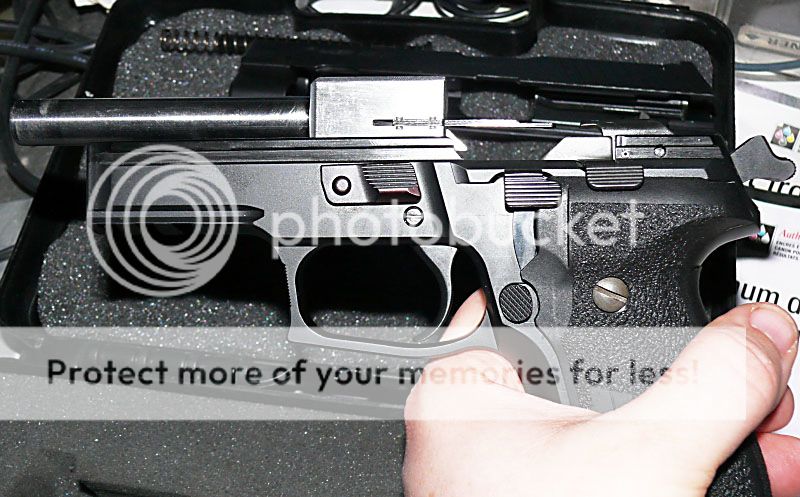
You can see my 9mm barrel's lug is flat on the front and round on the rear, whereas the .22LR barrel is round in front, flat in rear. This reverse arrangement allows the conversion barrel to lock in place with the half-moon shape of the take-down pin, something the stock barrel doesn't do:
I haven't shot it, because it doesn't seem like it will operate (safely).
Is the conversion kit defective? Is my pistol defective (it spits 9mm just fine, thanks)? Is this a problem of different versions of Sig's design, where the conversion kit is intended for a different generation of P229? Can I make it work by judicious filing, or changing some small parts (take-down pin on the frame, recoil system on the slide)?
---
dmc
Well, this is what happens:
When I install the slide and lock it in with the take-down lever, it will not move freely, and binds if I let the recoil spring take it back. You may note the guide rod tends to bend out of position from the pressure; I have attempted to re-position the guide before and after locking, with no satisfaction. Installing the slide without the recoil parts does result in some tightening up when locked down, and the slide alone seems to be just fine.
Apparently Sig uses the same barrel in all their .22 kits, and inserts a different locking lug corresponding to the intended pistol model by pinning it in the bottom of the barrel. Mine is marked ‘29’ on the lug, that should be good. Comparing to other pictures on-line, the lug on mine is correct and pinned in the correct orientation. However, comparing it to the stock 9mm barrel, the lug seems reversed:
You can see my 9mm barrel's lug is flat on the front and round on the rear, whereas the .22LR barrel is round in front, flat in rear. This reverse arrangement allows the conversion barrel to lock in place with the half-moon shape of the take-down pin, something the stock barrel doesn't do:
I haven't shot it, because it doesn't seem like it will operate (safely).
Is the conversion kit defective? Is my pistol defective (it spits 9mm just fine, thanks)? Is this a problem of different versions of Sig's design, where the conversion kit is intended for a different generation of P229? Can I make it work by judicious filing, or changing some small parts (take-down pin on the frame, recoil system on the slide)?
---
dmc