











































Single Action Revolvers for Serious Self-Defense
Phil Elmore
You've seen the movies. The steely-eyed, stubbled hero chews his thin cigar, pulls back the hammer of his six-gun, and the click-click-click of Sam Colt's single-action revolver signals the impending doom of some black-hearted, black-hatted scoundrel. Most of the time, when I watch Westerns, the man behind the gun is Clint Eastwood. Regardless of which silver screen hero you venerate, there's no denying that many of us have worshiped at the altar of these cinematic fantasies. All Westerns, my wife once told me, are about "dirty men and guns." She's absolutely correct. What would a Western be without the single-action revolver, wielded by men who look like they bathe in peat moss? For that matter, without the six-gun, what would the West have been in real life?
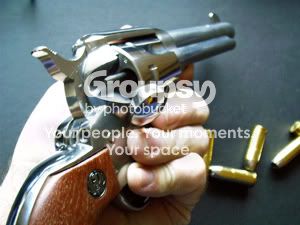
The single-action revolver is a conceptually simple, mechanically reliable design. Revolvers are inherently more reliable than automatics because there are fewer ways in which they can fail. There are no magazines, no magazine springs, no feed ramps, no extraction of cases, and therefore no potential for many of the jams that can occur in a semi-automatic pistol. A revolver can be fed a steady diet of diverse ammunition brands and bullet types without difficulty, meaning the shooter can choose the round he or she finds most effective in self-defense - rather than the round most likely to feed reliably through the weapon (which might be simple "ball" ammo). None of this is news to most of you reading this. I am, quite literally, preaching to a choir of gun owners who may or may not have selected revolvers over automatics for self-defense.
I am proposing, however, using the single-action revolver for self-defense. At first glance this will strike many shooters as hopelessly archaic, if not absurd. The typical single-action six-gun is the size of a boat anchor and seriously hindered in its firepower... isn't it? A single-action revolver would be the type of gun someone with cowboy fantasies would select for self-defense... wouldn't it?
Well, the answer to these questions is, "yes and no." Let's look at the single-action wheelgun's major criticisms, real or unfounded, and rebut each of them in turn.
Single-action revolvers are big and heavy. There's no denying this; it's a fact. A Ruger Vaquero or a Colt Single Action Army is a monster of a handgun, even in the smaller versions of these guns available (such as the Bisley Vaquero, which has a more compact profile, or the various short-barreled gamblers' guns marketed for six-guns). This makes such a gun harder to conceal and less comfortable to carry for daily self-defense. The styling of these guns makes concealment that much more difficult, from their protruding hammers to the ejector rod levers under their barrels (which tend to catch on clothing). The up-side to all this is that big, heavy guns are easier to control in recoil when firing even large calibers. The traditional single-action revolver also points very naturally and is regarded by many shooters (at least those with large hands) as very comfortable. I once spoke with a gun store owner who swore by the Single Action Army as the most comfortable gun he had ever held.
Single-action revolvers are difficult to fire under stress. Those who believe - perhaps correctly, up to a point - that you will turn into a lobster-clawed, club-footed dolt under stress believe that cocking and firing a pistol is beyond the gross motor abilities you will be able to manage in a self-defense scenario. While it's true that fine motor skills degrade during an altercation, I think some well-meaning trainers overstate the deleterious effects of adrenaline. All that making equal of men that Sam Colt managed to accomplish was done with the single-action mechanism - and many very famous gunmen didn't seem to have a problem operating such a weapon under stress. If all you'd ever known was a single-action, you'd learn to #### and fire the weapon by habit. The same is true of practicing with a Ruger Vaquero or an Uberti Cattleman. The advantage of the single-action mechanism is, ironically, a safer gun. It's very difficult to shoot yourself accidentally with a weapon that must be hand-cocked before each shot. Modern mechanisms such as those found in the Ruger Vaquero also make these guns safe to carry with six rounds loaded (rather than keeping the hammer down over an empty chamber). This will vary from gun to gun, however.
Single-action revolvers are seriously limited in their firepower. For most self-defense scenarios, six rounds is sufficient to neutralize the threat you will face. Any more than that and you're engaged in a serious gunfight - or you're expending enough ammunition that your chances of successfully defending your actions in a court of law are diminishing with each additional shot. (Contemporary wheelgun shooters who think a single-action revolver is too complex to be fired under stress are kidding themselves if they think they'll be able to manipulate a speedloader or a speedstrip under those same conditions.) It's true that clearing spent shells and reloading through the loading gate is painfully slow in a single-action - so if you're really worried, you may not want to go with such a gun when you can tote an automatic holding at least ten rounds. On the other hand, a Ruger Vaquero chambered for .45 Long Colt and loaded with hollowpoints is a serious piece of hardware spitting heavy pieces of lead. Six of those should be enough to drop a man and then some.
Single-action revolvers are relics of a bygone era. This may well be true, too, but the single-action revolver is not much more long-in-the-tooth than, say, the 1911-pattern .45. Think about it - one of the most popular automatics on the market today is a design that, with minor changes, is roughly a century old. How much difference does a couple of extra decades make if the age of the design is of concern to you? If the single-action has all but disappeared from the Earth, you also might want to tell the thousands of Cowboy Action Shooters currently enjoying the sport. One of the reasons it occurred to me to consider the single-action six-gun for self-defense is the immense popularity of this hobby, on which participants spend a great deal of money in hardware and accessories. If you've already kitted yourself out like an Old West gunfighter, why not use the same guns, with which you've practiced extensively, to defend hearth and home? There's no law that says you've got to switch to a Glock 19 in your nightstand just because you're driven home after a weekend of shooting lever-guns and Long Colts. Leverage the skills you've already developed, I say.
Some time ago I was watching an old episode of Cops that was filmed, if I remember correctly, in Texas. If it wasn't Texas, it should have been. The police responded to a shooting at someone's home and found a wounded man on the floor, alive and alert despite having been shot. Someone had attacked him using deadly force and he had responded in kind. "I shot one of 'em," he stated to the cops, still holding the handgun with which he'd done it. That handgun was a Colt Single Action Army (SAA). I remember thinking, "What is he, some sort of cowboy?" Then I thought to myself, "Hey, it worked. He's alive and he drove off the shooters." I also remember reading somewhere, "Carry the biggest damned gun you're comfortable with, even if it's a Single Action Army."
The Colt SAA, the Ruger Vaquero, and the many single-action six-gun clones on the market are not for everyone. They won't be comfortable for all shooters and they'll strike some as antiques rather than effective weapons. Those inclined to shoot these guns for fun, however, would do well to consider shooting them for self-defense as well. There was a time when the design ruled an often lawless frontier. It did, indeed, make men equal - or as equal as they were likely to get when violence was offered. Big, heavy guns firing big, heavy cartridges, single-action revolvers can be used to good effect for self-defense. They should not be dismissed simply because they conjure up Old West imagery.
Phil Elmore is the publisher of The Martialist: The Magazine For Those Who Fight Unfairly. He is a martial artist and professional technical writer who has published countless articles on self-defense, preparedness, politics, and philosophy. Visit him online at: www.philelmore.com.
Phil Elmore
You've seen the movies. The steely-eyed, stubbled hero chews his thin cigar, pulls back the hammer of his six-gun, and the click-click-click of Sam Colt's single-action revolver signals the impending doom of some black-hearted, black-hatted scoundrel. Most of the time, when I watch Westerns, the man behind the gun is Clint Eastwood. Regardless of which silver screen hero you venerate, there's no denying that many of us have worshiped at the altar of these cinematic fantasies. All Westerns, my wife once told me, are about "dirty men and guns." She's absolutely correct. What would a Western be without the single-action revolver, wielded by men who look like they bathe in peat moss? For that matter, without the six-gun, what would the West have been in real life?
The single-action revolver is a conceptually simple, mechanically reliable design. Revolvers are inherently more reliable than automatics because there are fewer ways in which they can fail. There are no magazines, no magazine springs, no feed ramps, no extraction of cases, and therefore no potential for many of the jams that can occur in a semi-automatic pistol. A revolver can be fed a steady diet of diverse ammunition brands and bullet types without difficulty, meaning the shooter can choose the round he or she finds most effective in self-defense - rather than the round most likely to feed reliably through the weapon (which might be simple "ball" ammo). None of this is news to most of you reading this. I am, quite literally, preaching to a choir of gun owners who may or may not have selected revolvers over automatics for self-defense.
I am proposing, however, using the single-action revolver for self-defense. At first glance this will strike many shooters as hopelessly archaic, if not absurd. The typical single-action six-gun is the size of a boat anchor and seriously hindered in its firepower... isn't it? A single-action revolver would be the type of gun someone with cowboy fantasies would select for self-defense... wouldn't it?
Well, the answer to these questions is, "yes and no." Let's look at the single-action wheelgun's major criticisms, real or unfounded, and rebut each of them in turn.
Single-action revolvers are big and heavy. There's no denying this; it's a fact. A Ruger Vaquero or a Colt Single Action Army is a monster of a handgun, even in the smaller versions of these guns available (such as the Bisley Vaquero, which has a more compact profile, or the various short-barreled gamblers' guns marketed for six-guns). This makes such a gun harder to conceal and less comfortable to carry for daily self-defense. The styling of these guns makes concealment that much more difficult, from their protruding hammers to the ejector rod levers under their barrels (which tend to catch on clothing). The up-side to all this is that big, heavy guns are easier to control in recoil when firing even large calibers. The traditional single-action revolver also points very naturally and is regarded by many shooters (at least those with large hands) as very comfortable. I once spoke with a gun store owner who swore by the Single Action Army as the most comfortable gun he had ever held.
Single-action revolvers are difficult to fire under stress. Those who believe - perhaps correctly, up to a point - that you will turn into a lobster-clawed, club-footed dolt under stress believe that cocking and firing a pistol is beyond the gross motor abilities you will be able to manage in a self-defense scenario. While it's true that fine motor skills degrade during an altercation, I think some well-meaning trainers overstate the deleterious effects of adrenaline. All that making equal of men that Sam Colt managed to accomplish was done with the single-action mechanism - and many very famous gunmen didn't seem to have a problem operating such a weapon under stress. If all you'd ever known was a single-action, you'd learn to #### and fire the weapon by habit. The same is true of practicing with a Ruger Vaquero or an Uberti Cattleman. The advantage of the single-action mechanism is, ironically, a safer gun. It's very difficult to shoot yourself accidentally with a weapon that must be hand-cocked before each shot. Modern mechanisms such as those found in the Ruger Vaquero also make these guns safe to carry with six rounds loaded (rather than keeping the hammer down over an empty chamber). This will vary from gun to gun, however.
Single-action revolvers are seriously limited in their firepower. For most self-defense scenarios, six rounds is sufficient to neutralize the threat you will face. Any more than that and you're engaged in a serious gunfight - or you're expending enough ammunition that your chances of successfully defending your actions in a court of law are diminishing with each additional shot. (Contemporary wheelgun shooters who think a single-action revolver is too complex to be fired under stress are kidding themselves if they think they'll be able to manipulate a speedloader or a speedstrip under those same conditions.) It's true that clearing spent shells and reloading through the loading gate is painfully slow in a single-action - so if you're really worried, you may not want to go with such a gun when you can tote an automatic holding at least ten rounds. On the other hand, a Ruger Vaquero chambered for .45 Long Colt and loaded with hollowpoints is a serious piece of hardware spitting heavy pieces of lead. Six of those should be enough to drop a man and then some.
Single-action revolvers are relics of a bygone era. This may well be true, too, but the single-action revolver is not much more long-in-the-tooth than, say, the 1911-pattern .45. Think about it - one of the most popular automatics on the market today is a design that, with minor changes, is roughly a century old. How much difference does a couple of extra decades make if the age of the design is of concern to you? If the single-action has all but disappeared from the Earth, you also might want to tell the thousands of Cowboy Action Shooters currently enjoying the sport. One of the reasons it occurred to me to consider the single-action six-gun for self-defense is the immense popularity of this hobby, on which participants spend a great deal of money in hardware and accessories. If you've already kitted yourself out like an Old West gunfighter, why not use the same guns, with which you've practiced extensively, to defend hearth and home? There's no law that says you've got to switch to a Glock 19 in your nightstand just because you're driven home after a weekend of shooting lever-guns and Long Colts. Leverage the skills you've already developed, I say.
Some time ago I was watching an old episode of Cops that was filmed, if I remember correctly, in Texas. If it wasn't Texas, it should have been. The police responded to a shooting at someone's home and found a wounded man on the floor, alive and alert despite having been shot. Someone had attacked him using deadly force and he had responded in kind. "I shot one of 'em," he stated to the cops, still holding the handgun with which he'd done it. That handgun was a Colt Single Action Army (SAA). I remember thinking, "What is he, some sort of cowboy?" Then I thought to myself, "Hey, it worked. He's alive and he drove off the shooters." I also remember reading somewhere, "Carry the biggest damned gun you're comfortable with, even if it's a Single Action Army."
The Colt SAA, the Ruger Vaquero, and the many single-action six-gun clones on the market are not for everyone. They won't be comfortable for all shooters and they'll strike some as antiques rather than effective weapons. Those inclined to shoot these guns for fun, however, would do well to consider shooting them for self-defense as well. There was a time when the design ruled an often lawless frontier. It did, indeed, make men equal - or as equal as they were likely to get when violence was offered. Big, heavy guns firing big, heavy cartridges, single-action revolvers can be used to good effect for self-defense. They should not be dismissed simply because they conjure up Old West imagery.
Phil Elmore is the publisher of The Martialist: The Magazine For Those Who Fight Unfairly. He is a martial artist and professional technical writer who has published countless articles on self-defense, preparedness, politics, and philosophy. Visit him online at: www.philelmore.com.