Sizing issue/question

laker415

CGN Ultra frequent flyer
Rating - 100%
139   0   0
I'm currently loading some 308 rounds for a semi auto. In the name of ensuring function is 100%, I use a chamber gauge for my rounds to ensure they are sized correctly.

I have some hornady match brass and some Remington brass. I keep them seperate for loads, hornady for match bullets, Remington for the fmj stuff. All were sized on a LEE full length sizing die, as well as trimmed to the same length.

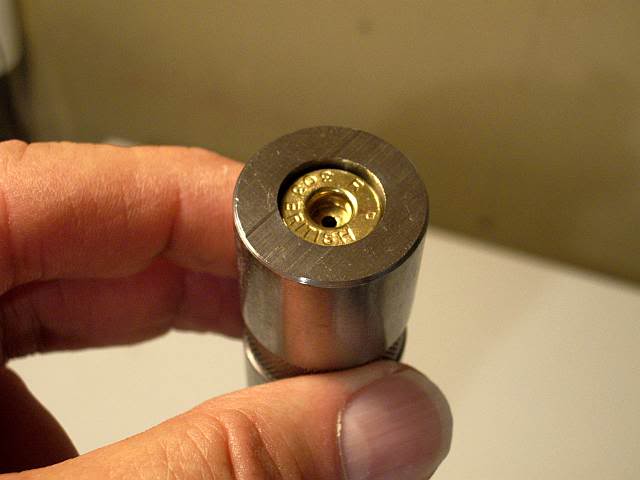
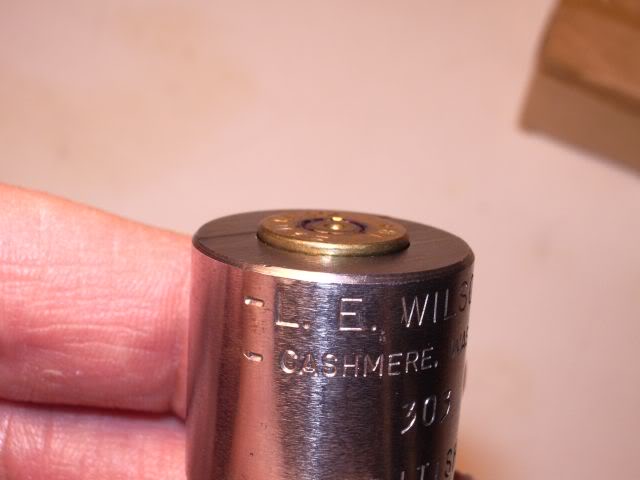
Now during my loading, I'm noticing the hornady brass sticks out of my chamber gauge, while the Remington brass drops right in. I checked headspace on the Remington and the hornady and they read the same. So my question is, why is the hornady brass not sizing the same as my Remington. Keep in mind I full length sized all this brass prior to first running in the semi and all chambered fine. I included a pic of the Remington vs the hornady. Thanks
View attachment 368344
View attachment 368345
 
Some cases can get a ding in the rim and will prevent the case from dropping all the way into the gauge.

Simple check, put the base of the case into the gauge and if it doesn't go in the gauge then the rim is damaged, and a small file can be used to remove the ding.

If the base of the case goes into the gauge but will not drop in when the case is placed in normally it may mean the case diameter is too large.

And some case gauges will not tell you anything, below a brand new British .303 case in a Wilson case gauge. And on a rimmed case all this tells me is the case shoulder was made shorter "BUT" a new rimmed case does not headspace on its shoulder.

RBeuevm.jpg


Below a fired case in the Wilson case gauge and all this shows is the British Enfield chamber is longer than "American" SAAMI standards.

HrqwFOG.jpg
 
Fair enough, I'm used to that method for pistols. I was reluctant to chamber one of these but in hindsight it makes the most sense. I will see if these chamber ok. For some reason I was hung up on the idea that if it didn't chamber in the gauge it would end up getting hung up in the chamber of the gun. Thanks guys.
 
I have never been on the "two way range", ever. But I have gone into the bush where failure to chamber was not going to happen. Every single load I carry in those circumstances has been through my chamber previously - every one. Not so concerned with it about going to range to shoot targets, but for "real" stuff, or at least as "real" as I do, I do not trust gizmos...
 
I have never been on the "two way range", ever. But I have gone into the bush where failure to chamber was not going to happen. Every single load I carry in those circumstances has been through my chamber previously - every one. Not so concerned with it about going to range to shoot targets, but for "real" stuff, or at least as "real" as I do, I do not trust gizmos...

I'm just looking to punch some paper or steel, not defend my life. I don't want an issue where I have to pound out a round that's stuck. I will make a dummy round with my current sizing setup and see if it chambers and extracts/ejects. Then I can rest knowing my sizing will be sufficient for my rifle
 
Here is a case that I tried both ways. Base fits in fine it seems, then when I drop it in its the same scenario where its proud. Is this telling me I'm not sized enough?

Dies, chambers and case gauges vary in size, my guess is the case diameter is what is holding it from dropping all the way into the gauge. I have the same problem when I buy bulk once fired military Lake City cases. And some of these cases are fired in fat chambered machine guns and they spring back more after sizing. Normally cases fired in your rifles are formed to your chamber and resizing reduces their diameter enough to chamber in your rifle. But if your die is on the plus side of SAAMI diameter you might have problems.

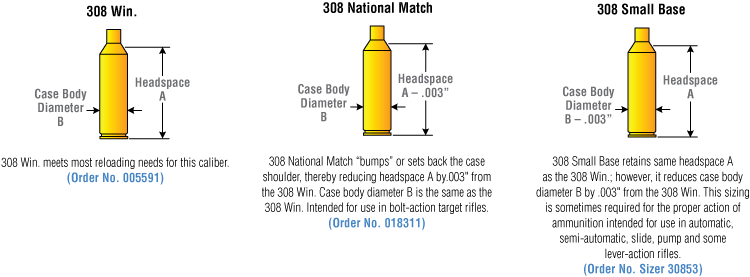
See what happens if you size the case again and pause at the top of the ram stroke for 4 or 5 seconds. This reduces brass spring back after sizing "BUT" sometimes a small base die is needed.

Bottom line, chamber the case and see if it binds in the chamber or chambers all the way. If it chambers OK then reload, fire again and see how the case fits the gauge and your chamber.

Again chambers and dies vary in size, I have a standard .223 Lee full length die that will reduce the case diameter more than my RCBS .223 small base die.

Below three types of Forster .308 dies made for different type of chambered rifles.

gFCObJR.png


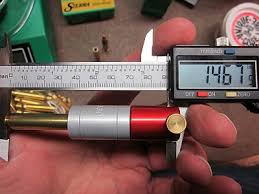
Below my Hornady cartridge case headspace gauge with a "FIRED" Lake City 5.56 case in the gauge, I measure the fired case and then set my die up for .003 shoulder bump for my AR15 rifles. With most drop in case gauges you can not check the shoulder location of a fired case and the Hornady gauge is more accurate and they will fit any normal cartridge.

H0SXHH8.jpg


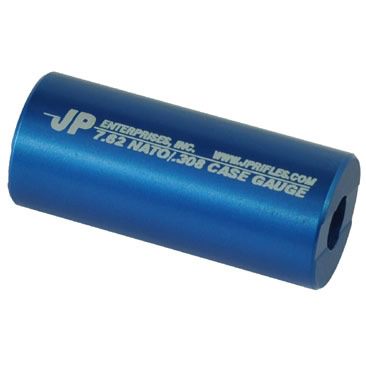
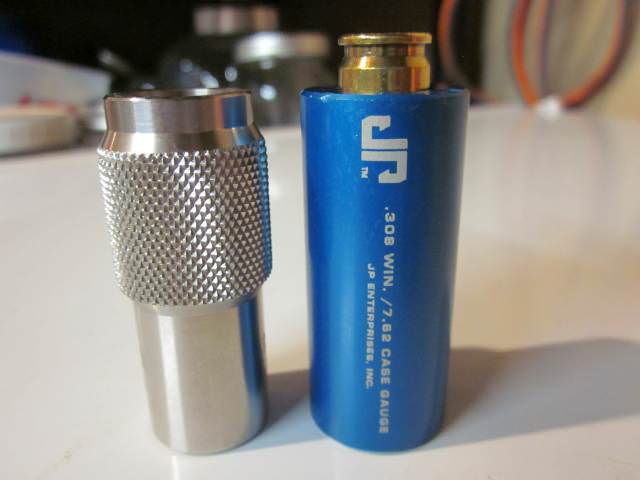
I use my JP Enterprise gauges to check the resizied case diameter, these gauges are smaller in diameter and closer to minimum SAAMI diameter.

KjiYYEi.jpg


Example below a "FIRED" Lake City 7.62 case in a Dillon case gauge. And the case diameter is keeping the case from dropping all the way into the gauge.

UPCvxyL.jpg


Below the same "FIRED" case in my JP Enterprise gauge showing its small diameter. Meaning if the case fits in the JP Enterprise gauge the case will chamber in any rifle. I load for several .223/5.56 and .308/7.62 rifles and I want to make sure the case will chamber in any of my rifles.

zOVqgmU.jpg


So again if the case does not drop all the way into a drop in case gauge it either has a ding in the rim or the case body is too fat. And that does mean it won't chamber in "YOUR" rifle, it just means the case failed testing in the gauge you have. And the majority of case gauges are closer to maximum SAAMI diameter and only check the amount of shoulder bump.

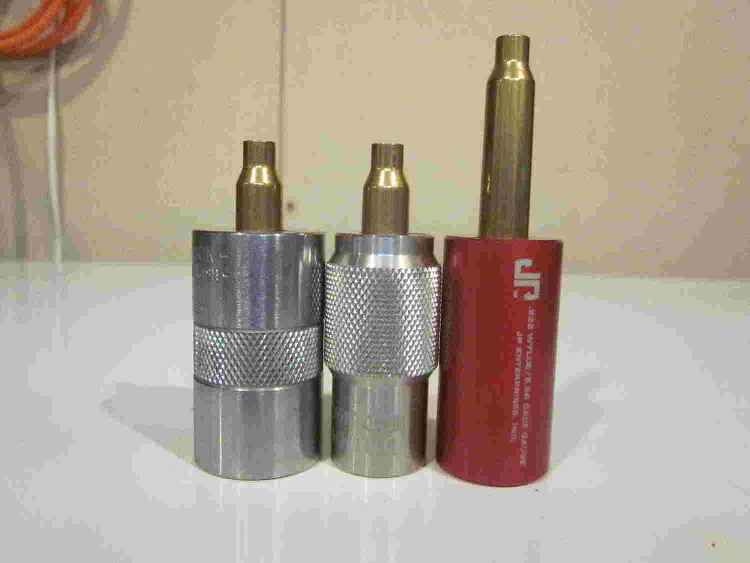
Below .223 case gauges and the red JP Enterprise gauge is smaller in diameter.

KSB3ZvP.jpg
 
Last edited:
Many reloaders do not trim their pistol cases and the longer cases will bulge below the crimp. Also the more the case is reloaded the harder the brass gets and it springs back more after sizing.

Most competitive pistol shooters use case gauges to check their loaded ammo. And this is to prevent chambering and extraction problems during competition and lower scores.

On the flip side of this if I was hunting dangerous game (Tyrannosaurus Rex, or BIG bears that can eat you) I would check my loaded rounds in every gauge I have and in the chamber also.

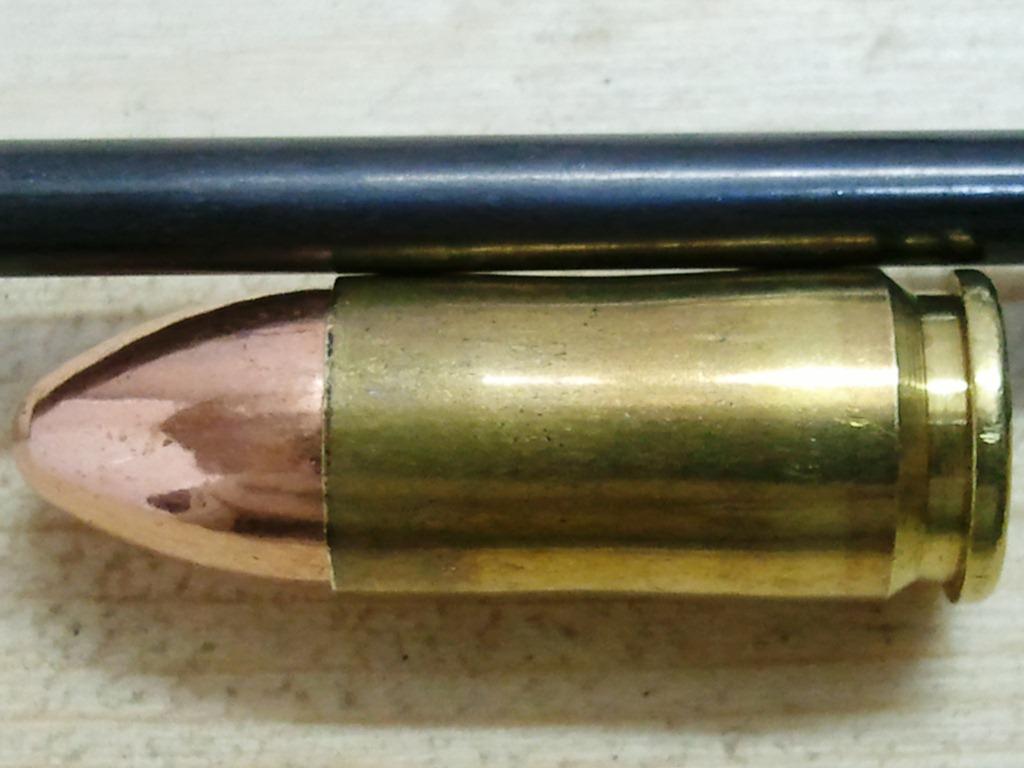
Below a 9mm that was resized in a Lee Under Size Die that reduces the case diameter .002 to .003 more than a standard die. This provides more bullet grip on harder well used cases that spring back more after sizing. So again chambers and dies vary in size and also the crimping methods. And if you change brands of cases or type bullets this can effect the case diameter.

MfcwIQB.jpg
 
A chamber gauge is not necessarily a cast of your actual gun's chamber unless you have a custom one done up for you.

So, it does not really tell you much pertaining to your specific firearm.
 
Back
Top Bottom