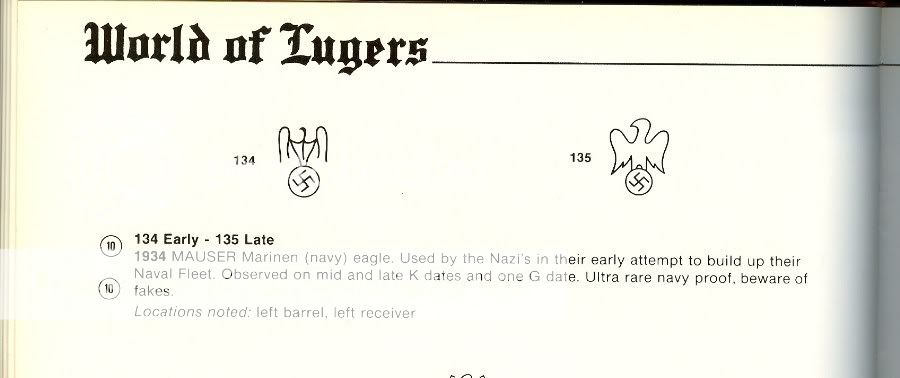
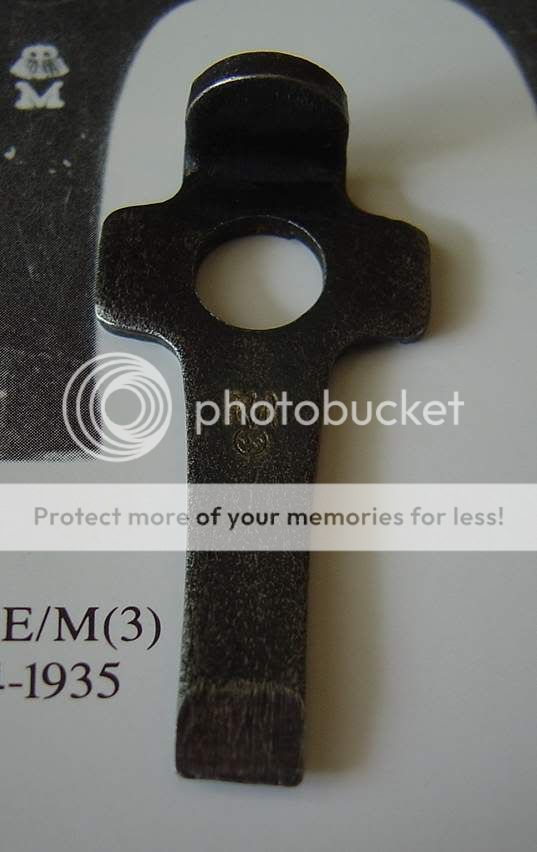
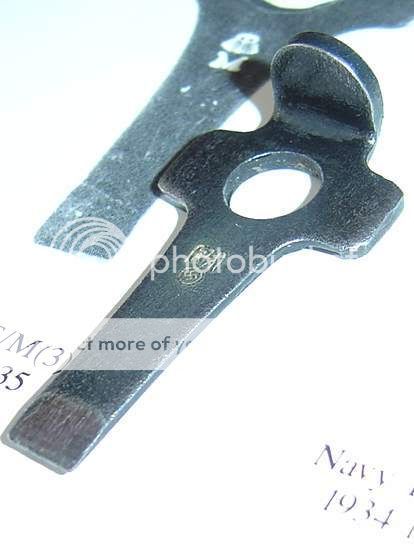
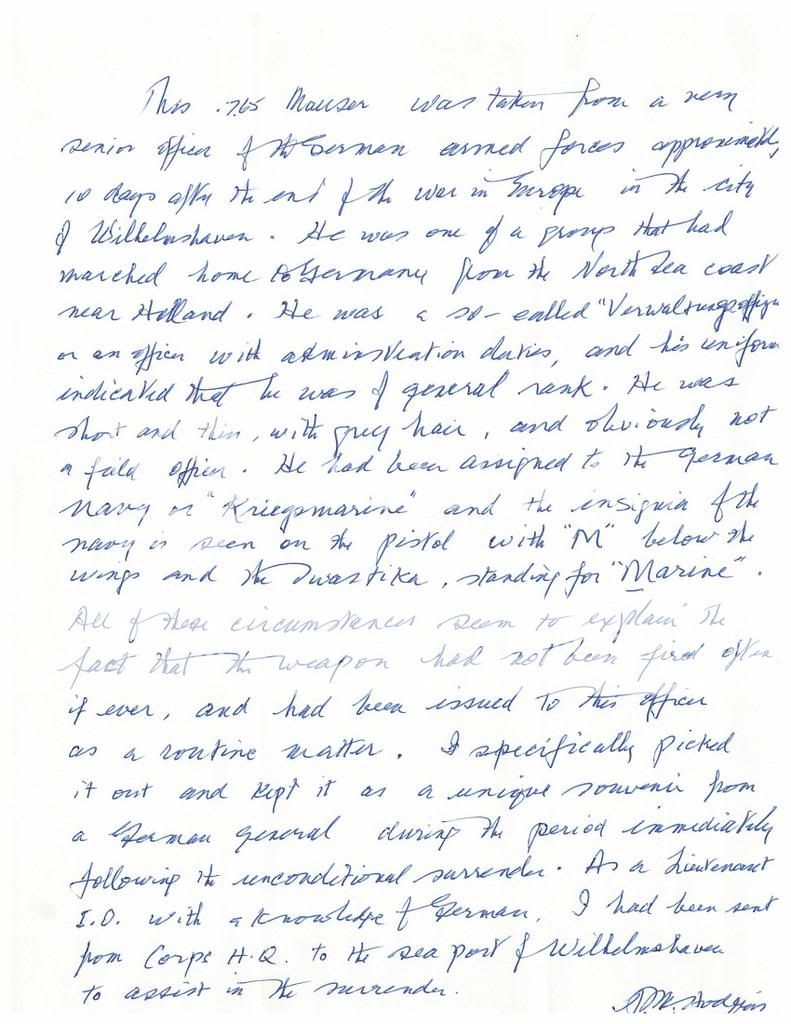
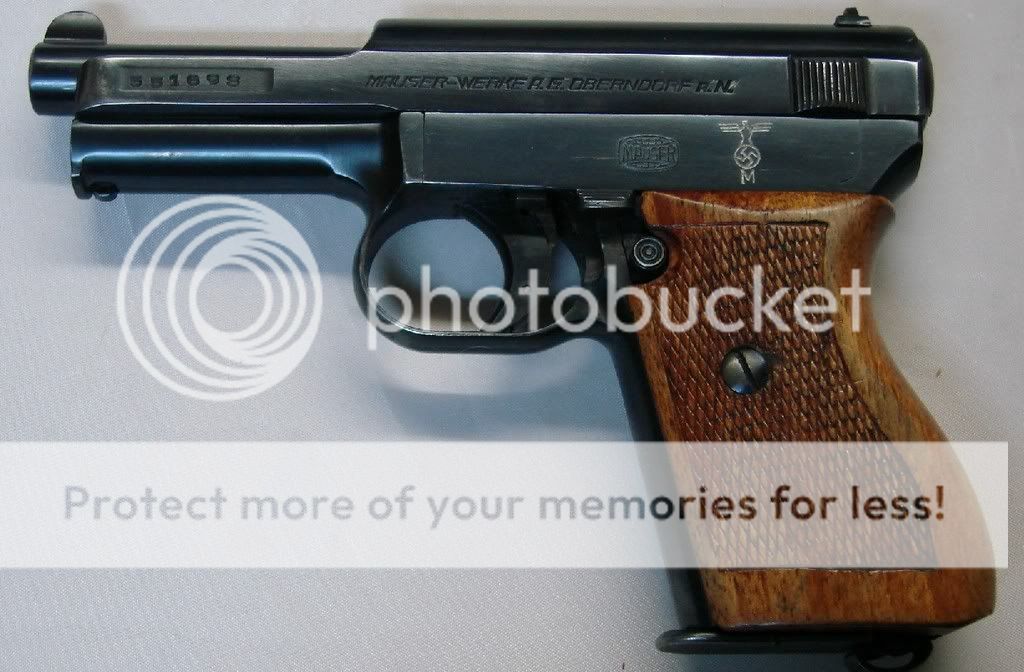
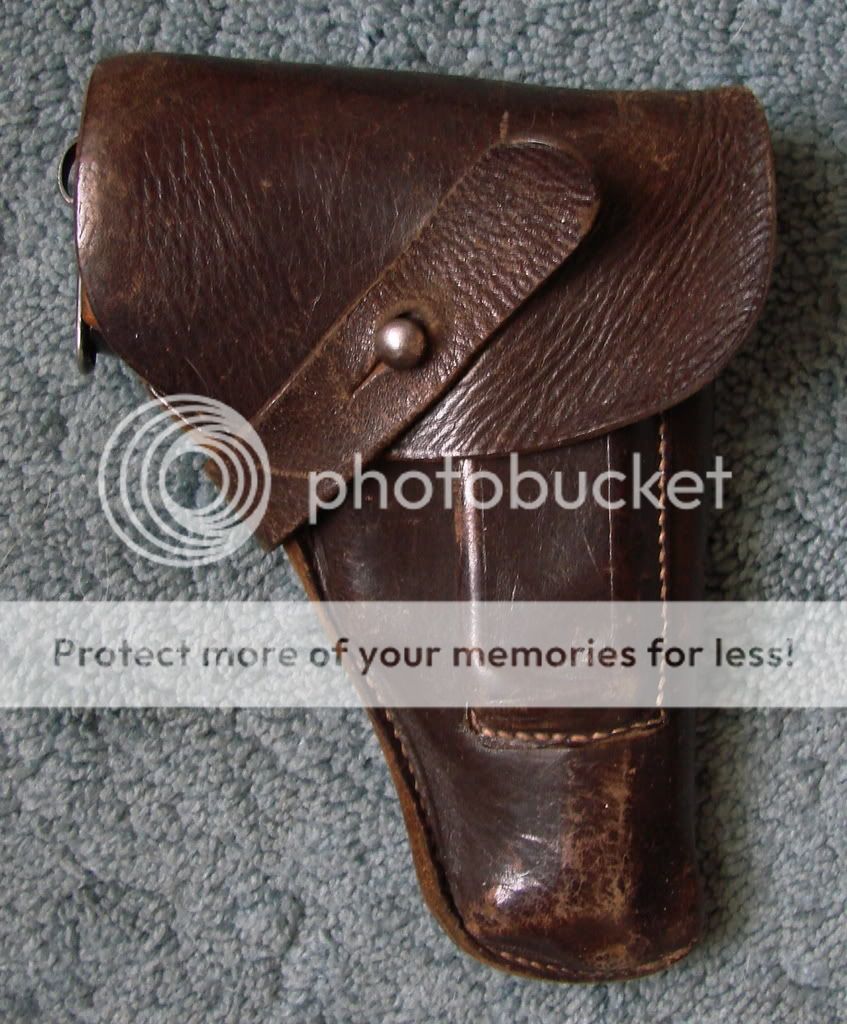
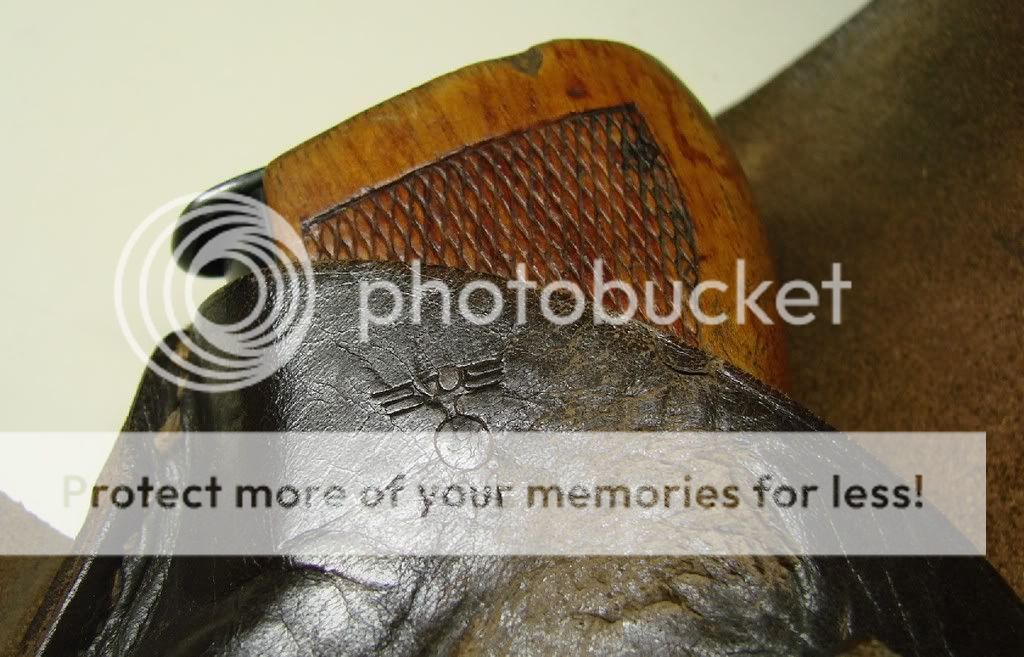
A Mauser S/42 code Luger (P.08) pistol and rig, manufactured in 1937.
The holster is manufactured by R. Ehrhardt, Poessneck, dated 1937, and acceptance stamped WaA 186.
This gun came with two matching serial numbered magazines.
____________________________________________________________________________
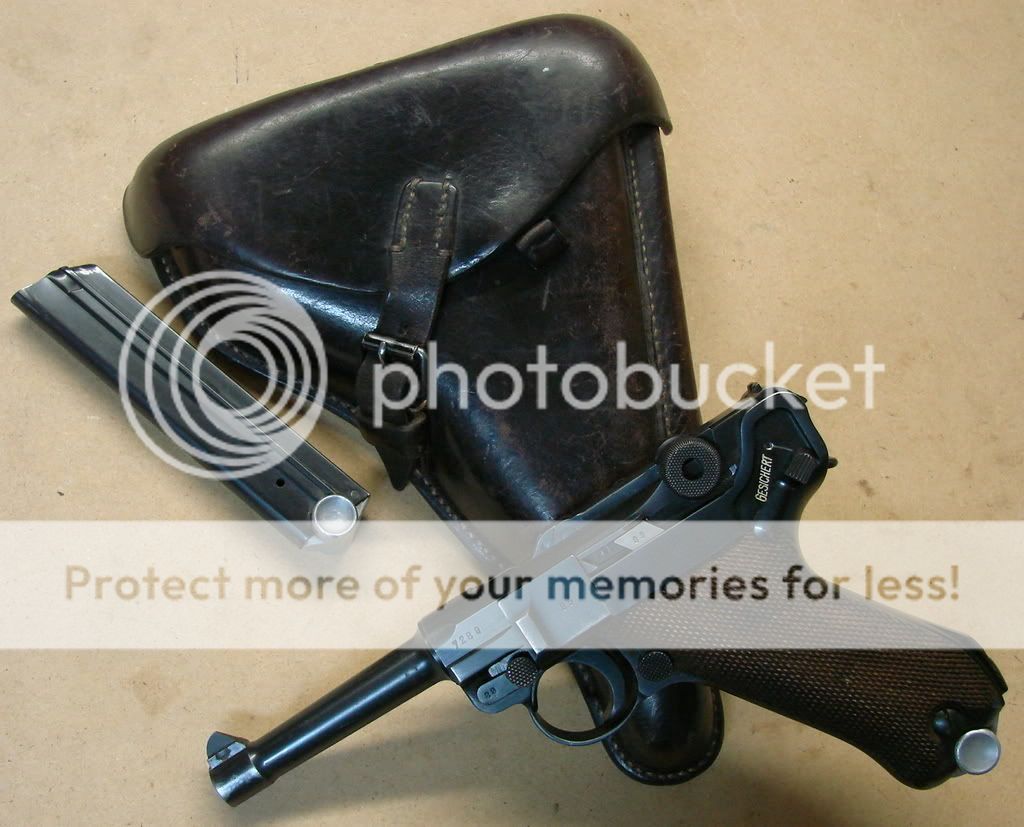
Radom Pistol and rig, (Vis model 1935) The Germans referred to this model as P 35 (p). (Poland)
This gun is a Grade 2 German Vis in the first alphabet series.
This gun was manufactured 1st or 2nd quarter of 1942.

The black cowhide holster is in V.G + condition and is marked in ink on the inside flap “bnz” (The manufacturers’ code for Steyr-Daimler-Puch, Austria.)
P 35 (p) - the (p) is very faint. A military acceptance stamp Eagle over WaA—82 (the Eagle is very clear but the numbers are hard to read, it should be WaA 182.)
These “bnz” holsters were supposedly manufactured in 1944.
Radom holsters also came in different shades of brown.” WaA” army acceptance markings on these holsters are not that easy to find.

I have four magazines for this pistol, one is unmarked, two have E/189, and one has E/77 stamped on the bottom of the magazine floor plate.
The E/189 is the late code for the Warsaw rifle factory.


This gun really has a deeper blue finish that this photo does not show accurately.

A close-up of the markings.

Assembly marks on the right side trigger web.

_________________________________________________________________________________
FN High Power M1935 (Belgium) (P.640b)
E/WaA140 German Army acceptance stamp.
Holster---"dla",(manufacturers code) , WaA195 acceptance stamp.
Karl Barth, Militaereffekten-Fabrik , Waldbrol/ Rhineland.
One magazine has E/WaA140 acceptance stamp.


______________________________________________________________________________
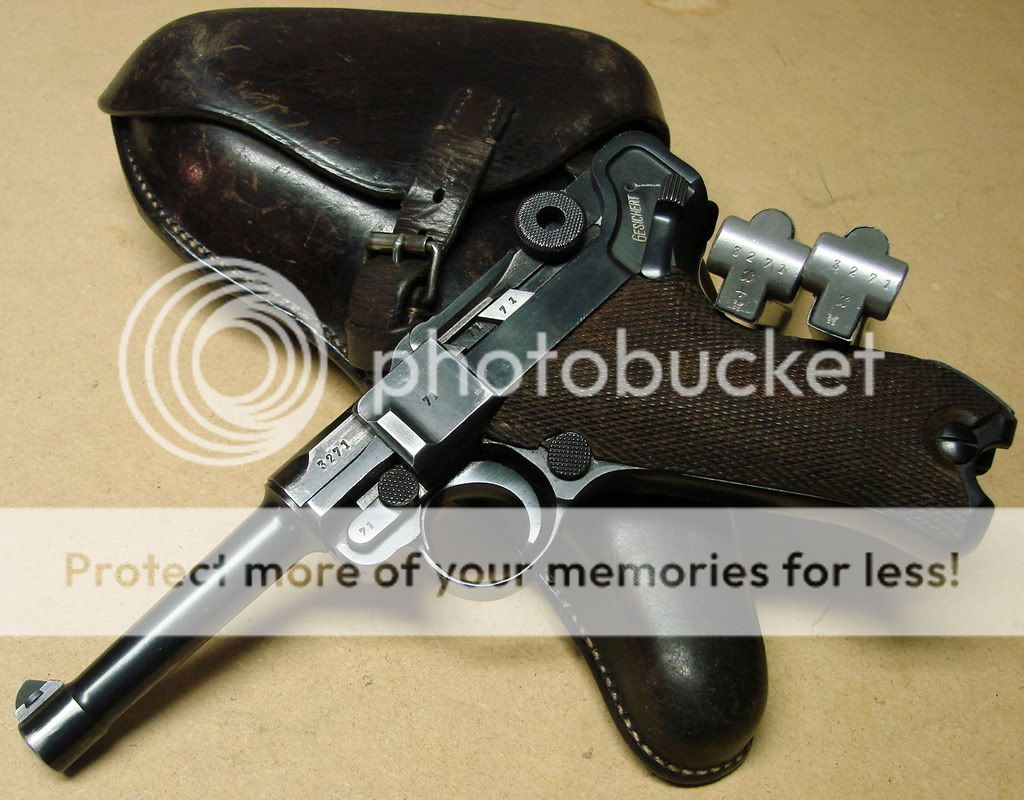
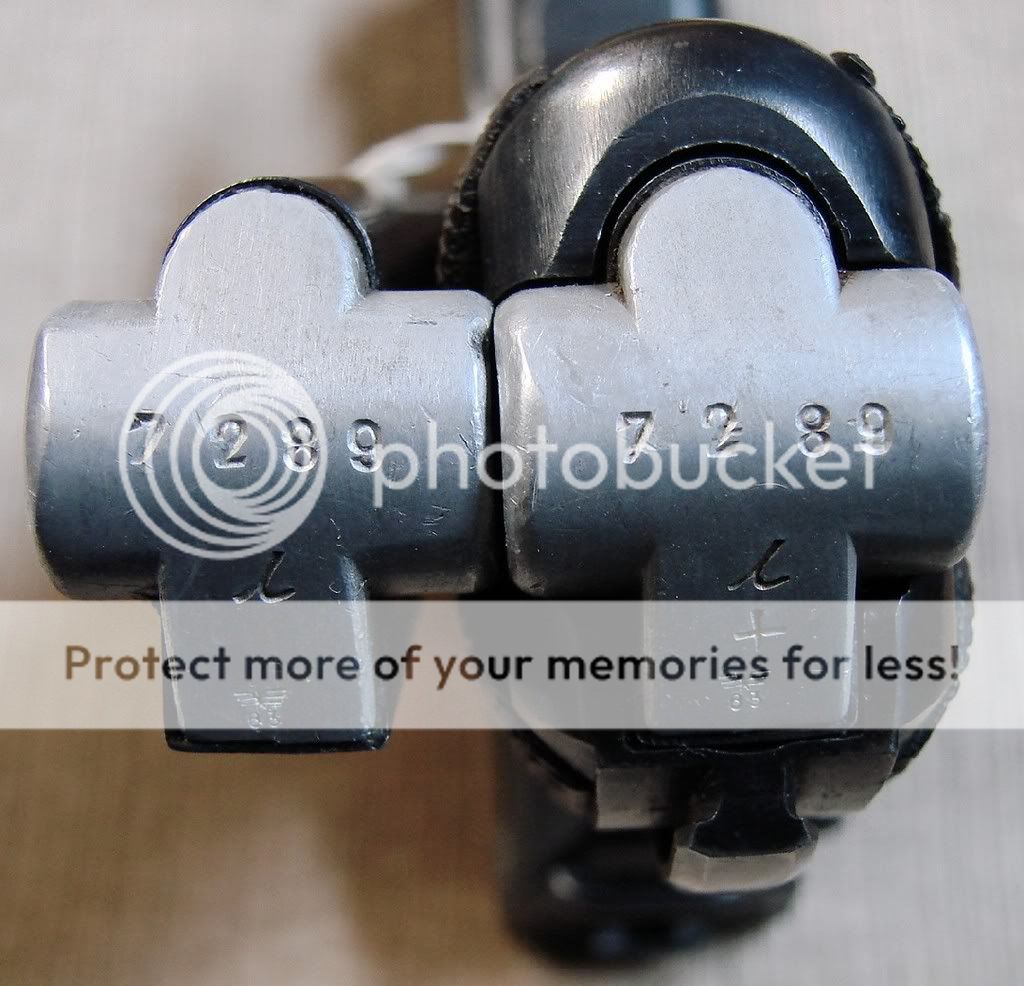
A Mauser S/42 code Luger (P.08) pistol and rig, manufactured in 1938.
The holster is manufactured by Karl Bocker, Waldbrol, dated 1936, and acceptance stamped WaA 387.
This gun came with two matching serial numbered magazines.

__________________________________________________________________________
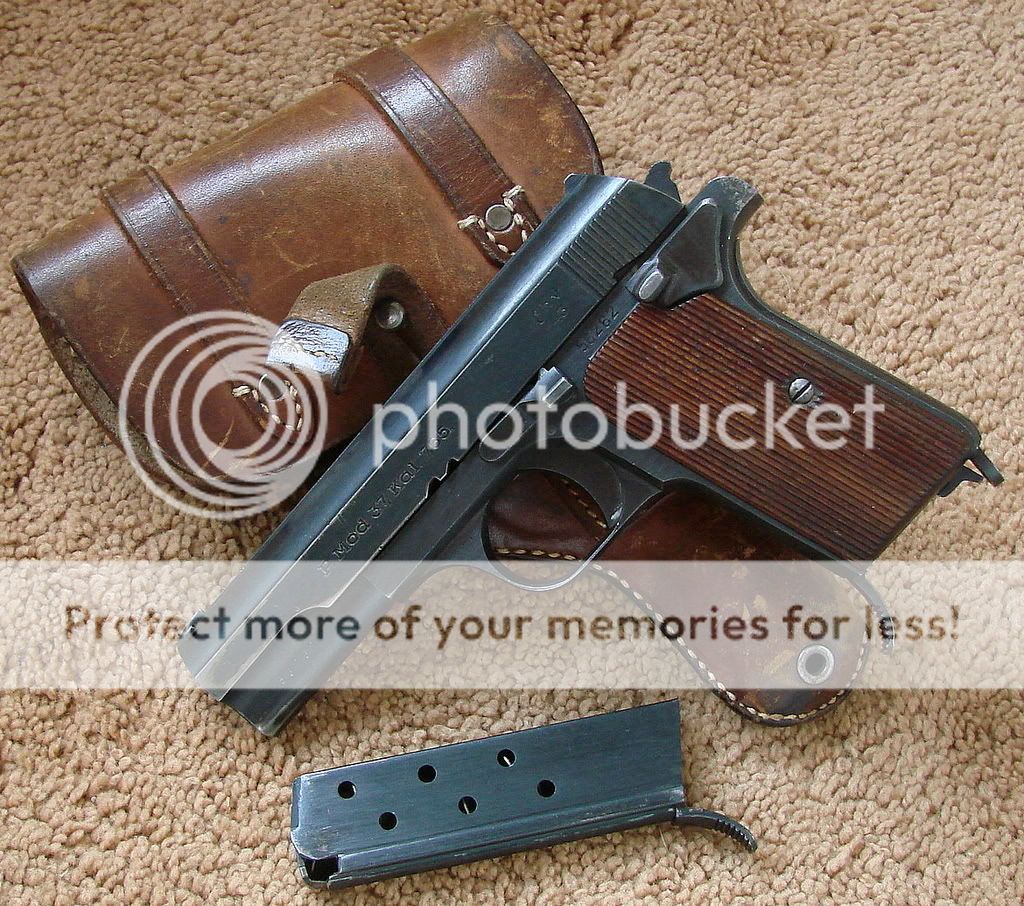
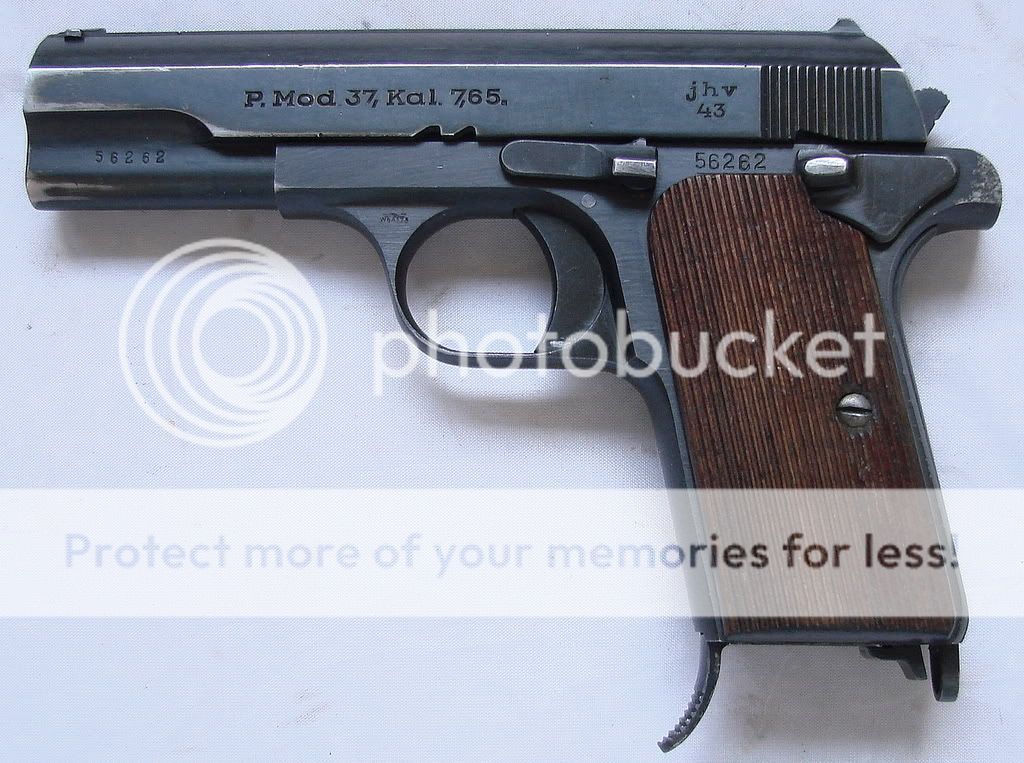
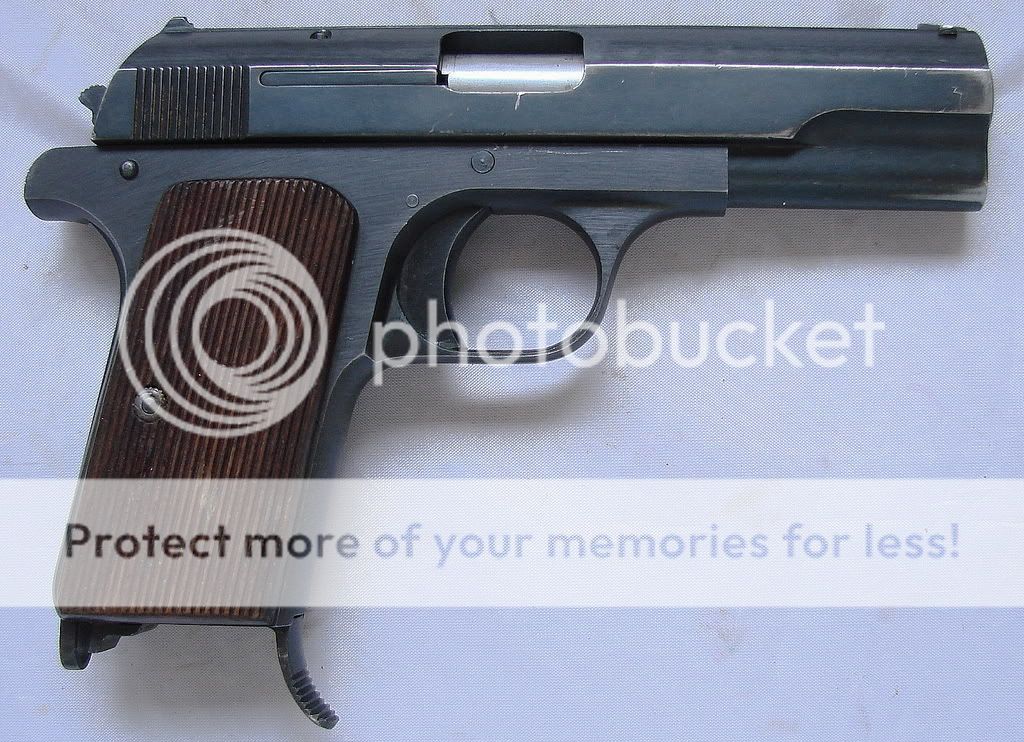
Femaru M1937 (Hungarian) (P.37 u)
Femaru-Fegyver-es Gepgyar R.T. Budapest, Hungary.
The German code “jhv” 43 is for Metallwaren, waffen und Machinefabrik AG, Budapest, Hungary produced in 1943.
This pistol is a “jhv” 43, which is the Second Contract pistol.
7.65 mm (.32 caliber) 7 round magazine.
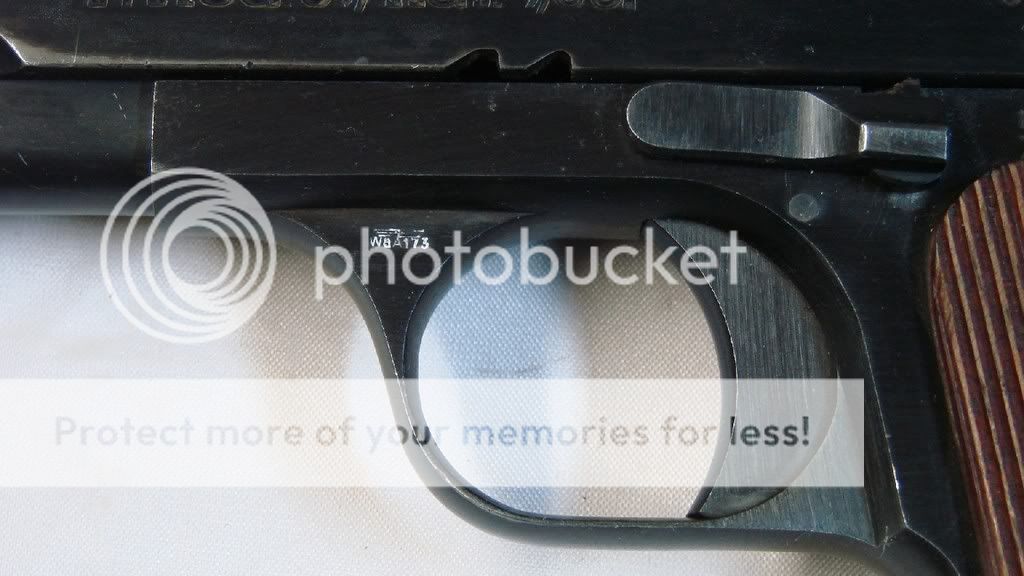
-E/WaA173 German acceptance stamp on the left trigger guard web.
Estimated production was approx.30,000 with serial number ranges from 50,000 to 80,000.
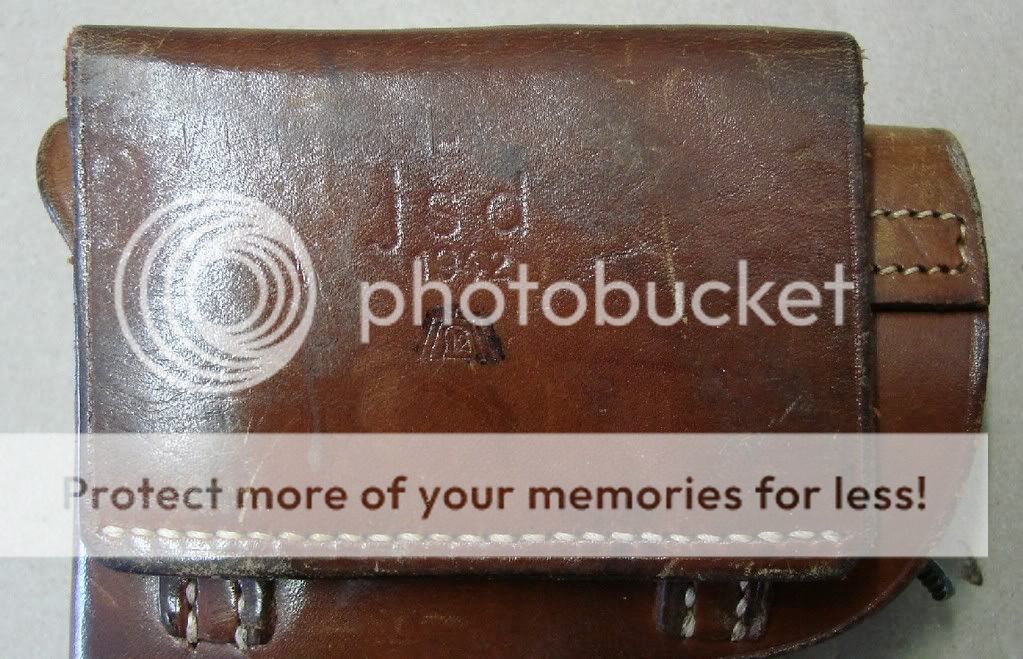
The holster markings;
“jsd” 1942 with Luftwaffe acceptance stamp Eagle over L2.
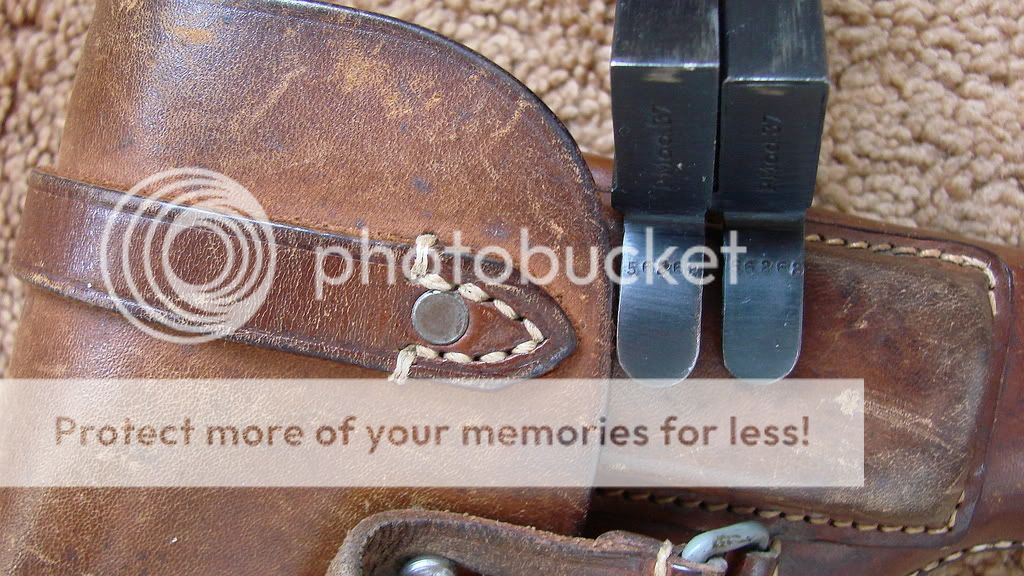
This pistol came with two serial numbered magazines.
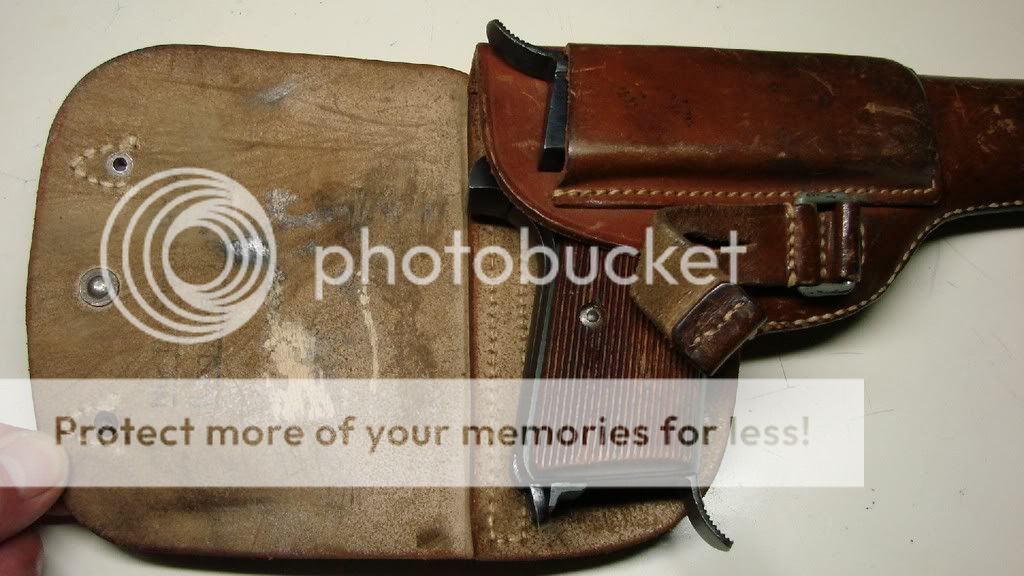
The holster is a Theuermann Patent for the P.37 (u) pistol.
Ink markings inside the flap “ Nur fur Pistole 37 M (Ung.) Kal. 7.65 m/m”
with a Luftwaffe acceptance stamp (E/2) on the rear of the holster under the manufacturers code “jsd”and 1942 date.
Hungary was an ally of Germany, and Hungarian troops joined in the attack on the Soviet Union in 1941.
In 1941, the Luftwaffe, through the German Army Acceptance Office (Heereswaffenamt) placed an order for 50,000 Model 1937 Femaru in caliber 7.65
with a manual safety.
The jhv 41 variation or First Contract had a high gloss finish and a variety of slide legends.
In 1943, a contract for an additional 60,000 pistols was placed with Femaru.
Only about 30,000 were delivered prior to the plant’s being evacuated before the advancing Russian armies.
They are identified by the jhv 43 on the left slide and military-blue finish.
Most of the jhv 41 variation M37 went to the Luftwaffe.
All of the M37 holsters bear Luftwaffe acceptance stamps; however, it is probable that some of the jhv variation went to the German Army.
______________________________________________________________________
A Walther manufactured P.38 "ac42" shown with a Spreewerk (code "cyq") manufactured P.38
(1943)... and an assortment of P.38 soft shell and hard shell holsters.
Walther's code "ac42" for 1942.
A magazine marked with a single eagle/359 (359 being Walther's numeric code) on the upper spine with P.38 stamped on the left side of the magazine which is correct for a "k" block pistol.
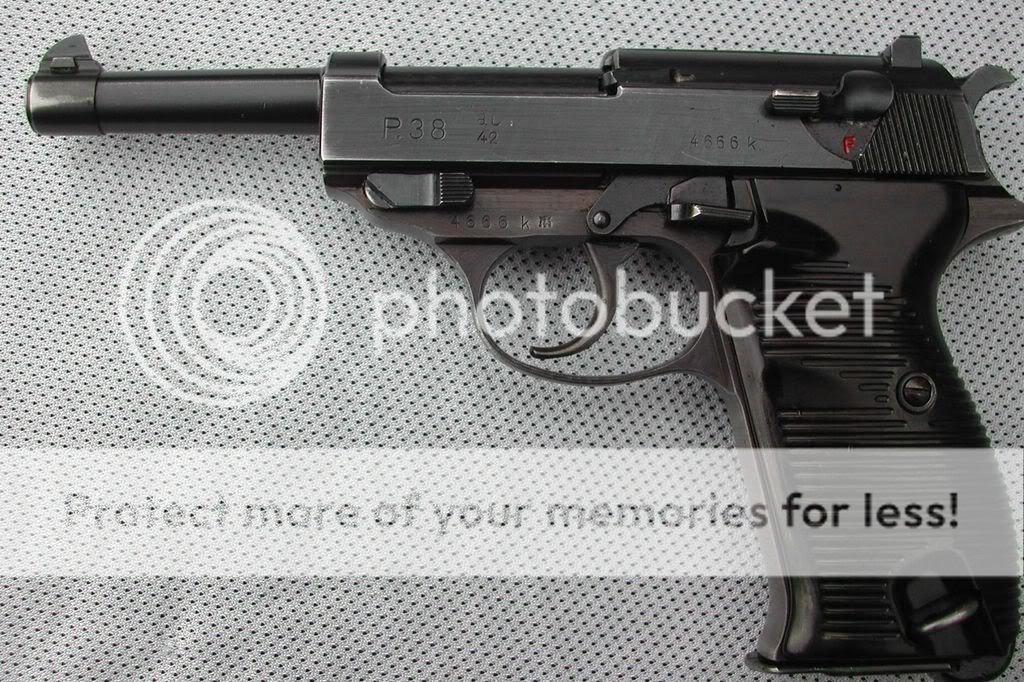
Shown in the two photos below are the Walther "ac42" eagle/359 marked magazine with P.38 stamp on the left side of the mag on top,.... with the eagle/88 Spreewerk marked magazine on the bottom.
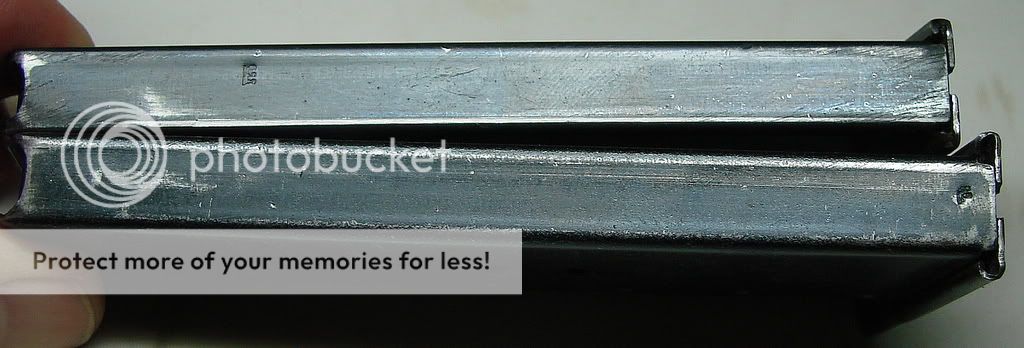
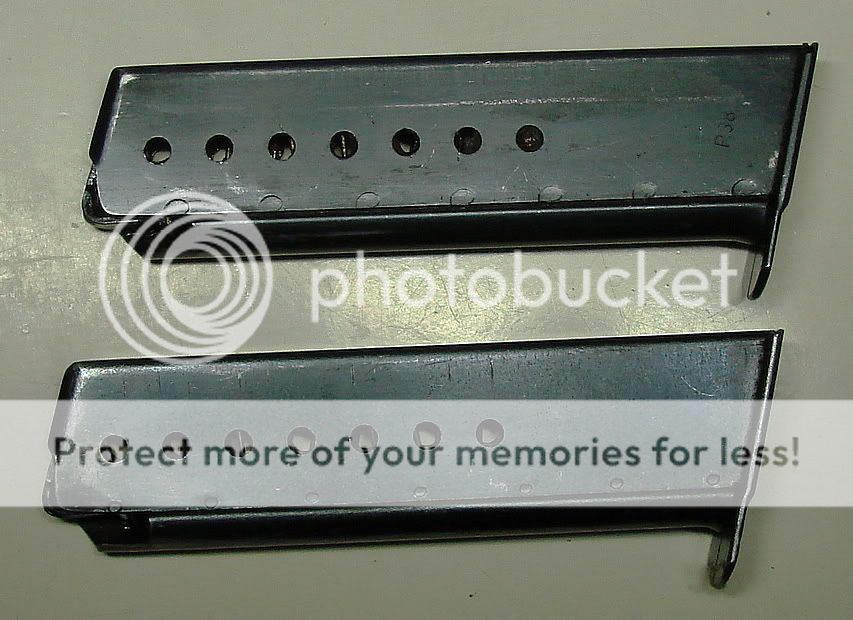
The second magazine for the "ac42" has two eagle/359 acceptance stamps on the spine.

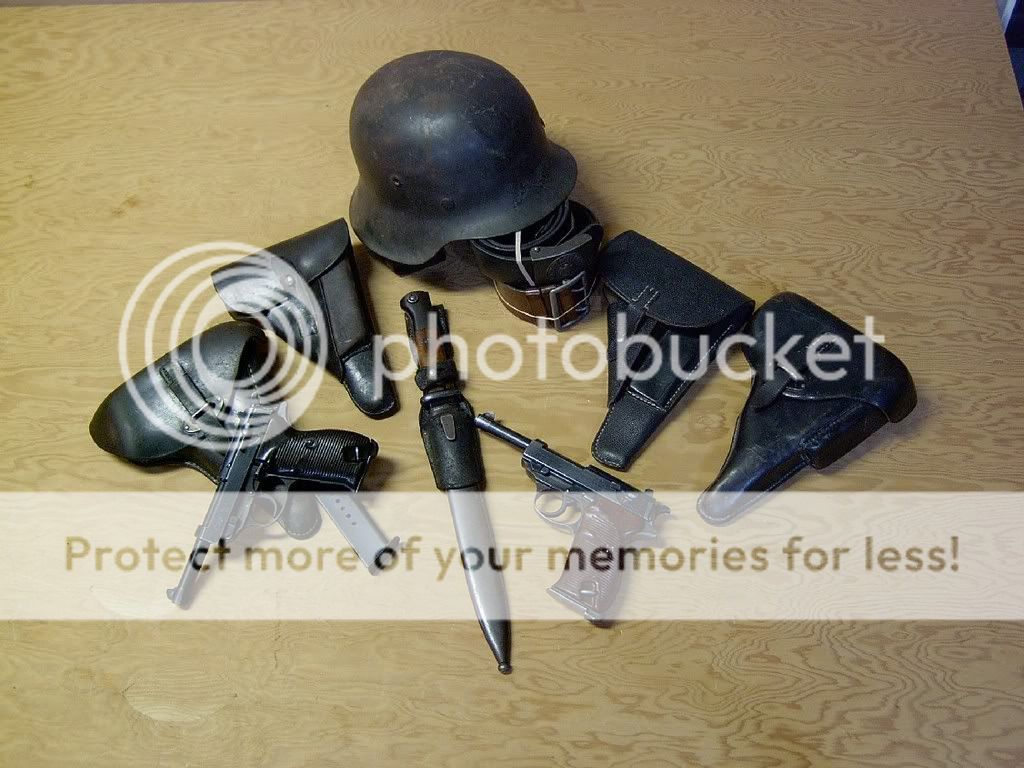
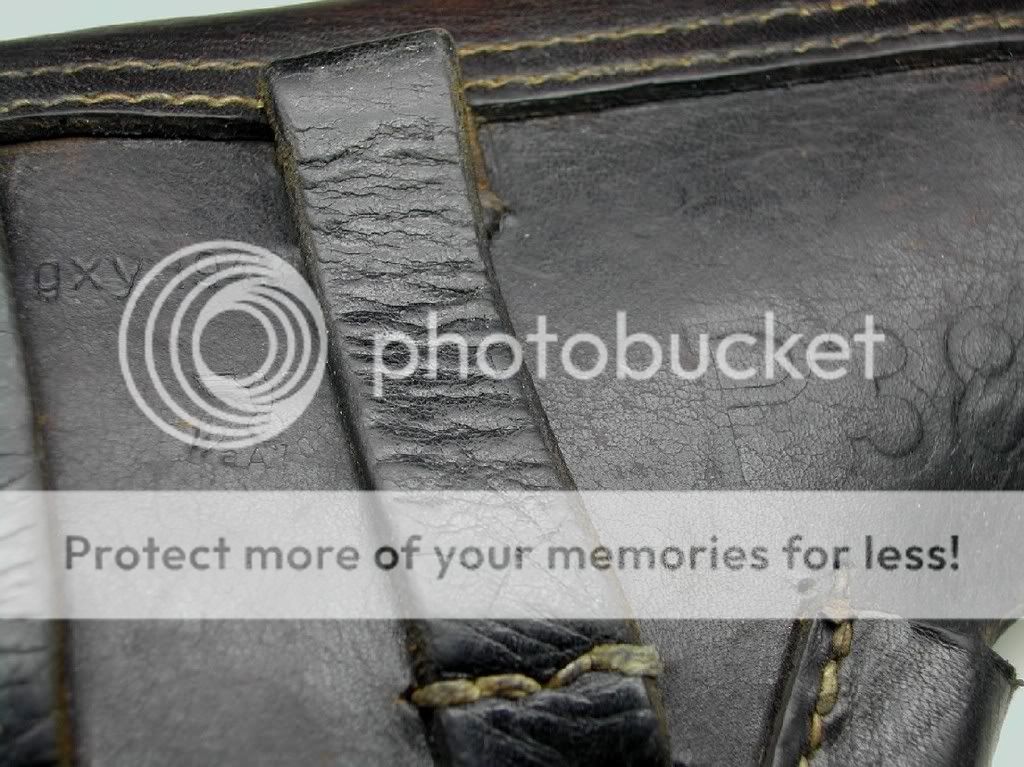
Spreewerk manufactured P.38 in a 1943 dated "softshell" holster, manufacturer's code "gxy" with a WaA706 acceptance stamp.
These 1943 dated soft shell holsters are 'somewhat rare' as the real production of the soft shell holsters started in 1944.
The 1943 dated soft shell holsters generally had an upward closing strap, while the 1944 and later holsters had a downward closing strap.
One of the magazines is stamped "jvd" on the left side of the magazine with eagle/88 at the base of the spine, the second one just has eagle/88 at the bottom of the spine which indicates Spreewerk production.
"jvd" was a sub-contractor for P.38 magazines. (Nordbohmismiche Metallwarenfabrik)
Spreeweke marked P.38 pistols were manufactured in Grottau - Czechoslovakia
after the German army invaded the country.
("88" was the Spreewerk numeric code found on pistols produced by this manufacturer.)
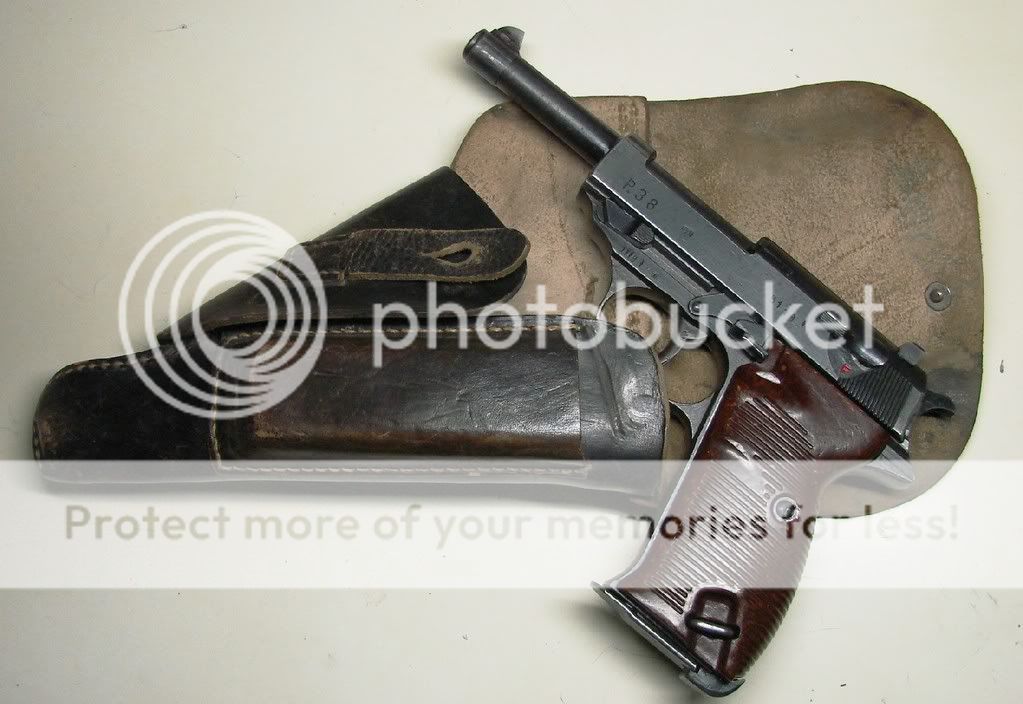
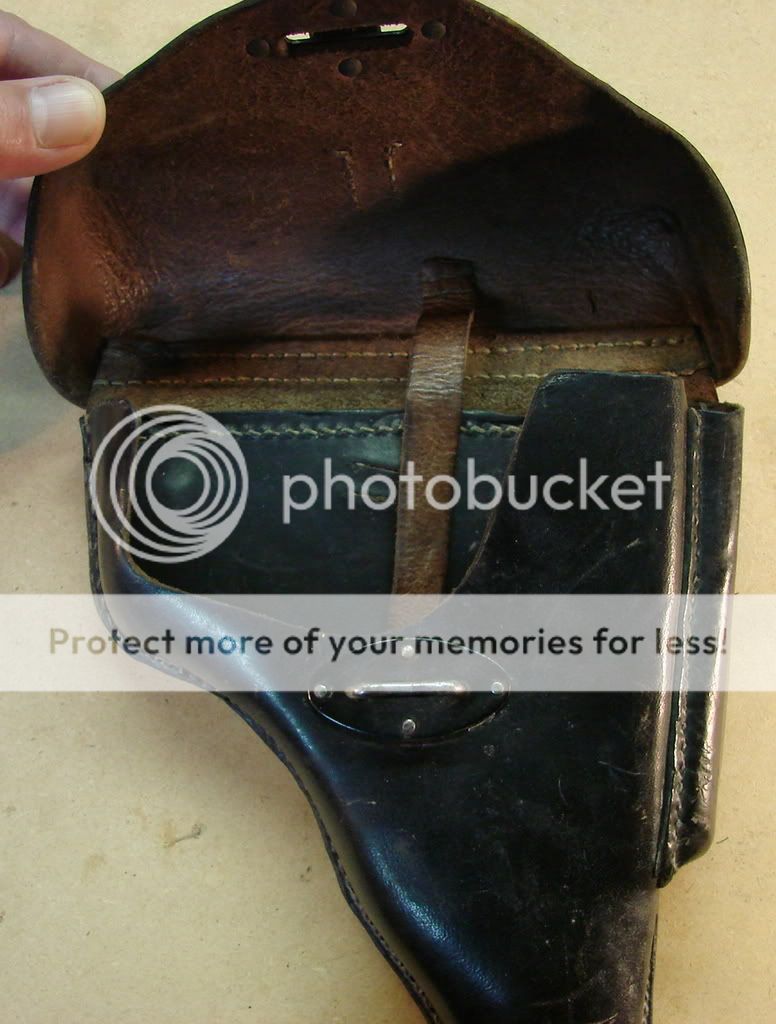
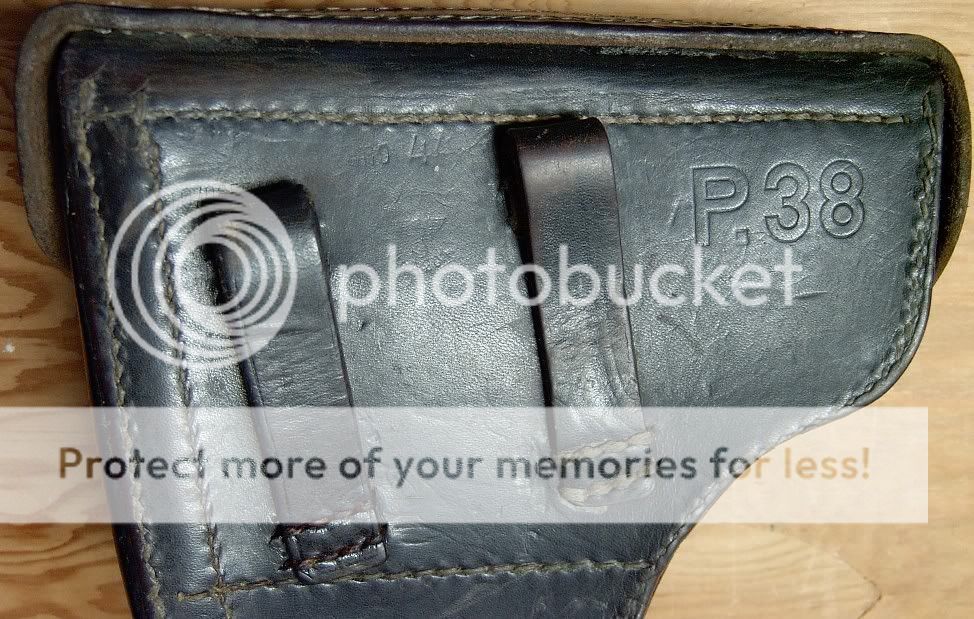
As 1943 dated soft shell holsters are somewhat rare, so are 1944 dated hard shell holsters as the hard shell model was phased out in 1943.
It is unusual to find a holster with both WaA and RBNr markings.
“gmo” is the code for Rahm&Kampmann Lederwarenfabriken, Werk. Kaiserslautern, Rheinland-Pfalz
WaA 204 is their WaA number. (These markings are somewhat faint...but they are there.)
There are RBNr numbers for (“Reichs-Betriebs-Nr”) above and partially covered by the front belt loop. “0/0655/0013”
All German plants received such a number late in WW2, and it seems this code should replace the one to three letter code.
However, the war was over before this change was finished, so both kinds of codes can be found on certain kinds of military items.
______________________________________________________________________________
This pistol has Kriegsmarine markings. (German Navy- (KM)
Mauser Model 1934 (Variation 2), engraved Eagle/M on the right frame panel with matching Navy Property markings on front grip strap and magazine floor plate O.2325
“O” for Marine Station der Ostee (Baltic Fleet)
There were two navy markings Ostsee (“O”) Baltic Sea and Nordsee (“N”)
North Sea and Baltic Sea. These are divided into the North Sea and the Baltic Sea. At the north tip of Denmark the boundary is marked through a line between the seas.
Reported serial range for these 2nd variation guns was 532780 to 587534; reported property number range O.2273 to O.5730.
The serial number on this pistol is 532668
Estimated production of these (Variation 2) Kriegsmarine marked guns was 3,000.
(Reference; Jan Still –Axis Pistols)
I believe this pistol was manufactured in 1938. (Axis Pistols.)
The holster is in “well used” condition, however it has the Kriegsmarine Eagle / M acceptance stamp.
This pistol is in stunning condition.


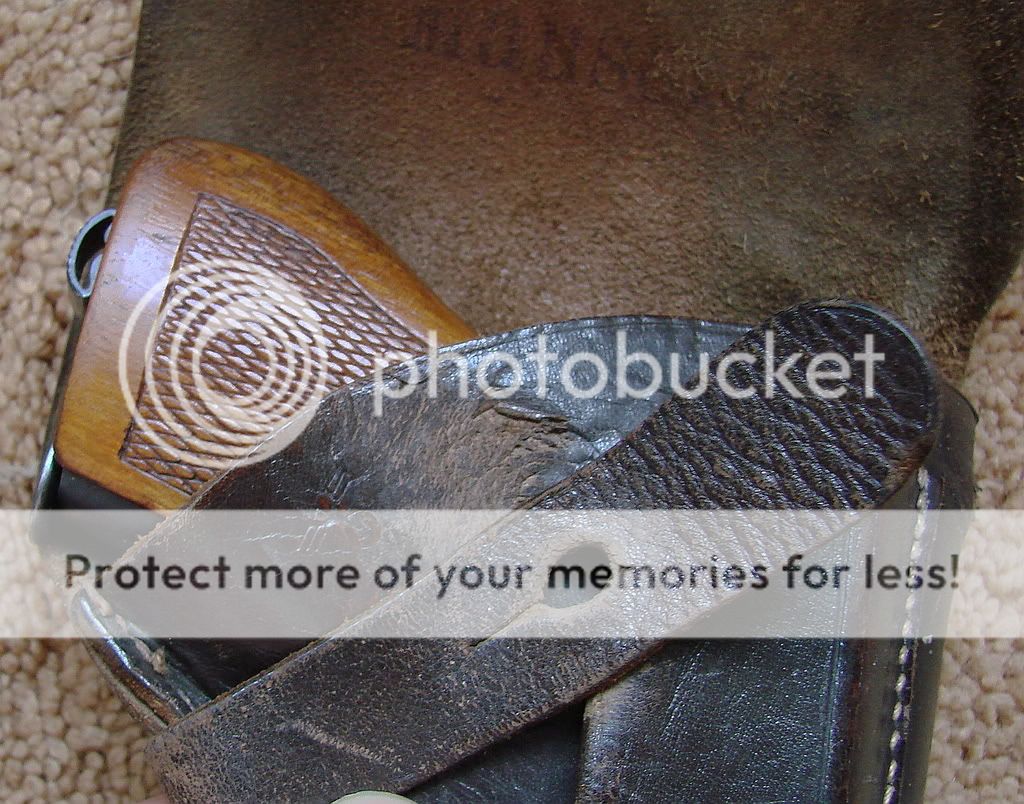
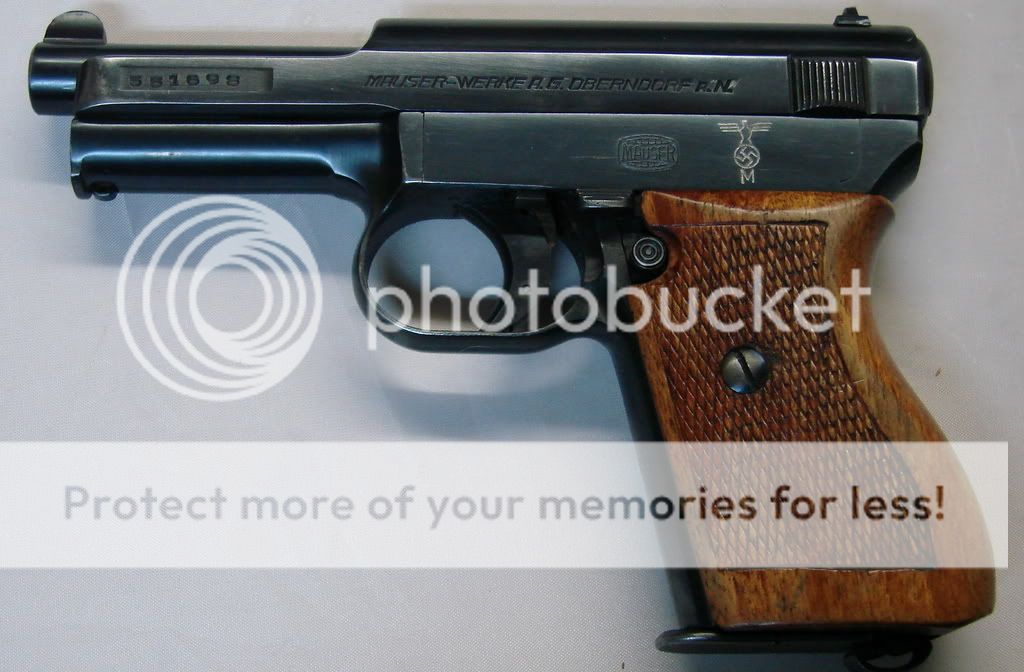
In the year 1934, Mauser introduced a final version of this line, Model 1934. Its major change from the Model 1914 was the shape of the grip panels, with curved, rather than straight backstrap. The Model 1934 was adopted by German armed forces as a substitute standard, and also was used by various police and security forces. Key military buyers for Mauser 1934 pistols were Kriegsmarine (Navy) and Luftwaffe (Air force).
The first 1934 Mauser pistols obtained for military use were procured independently by the Kriegsmarine. (Navy)
The pistol shown below is a Mauser Model 1934 (Variation 1) Sn. 551698 manufactured in 1940.
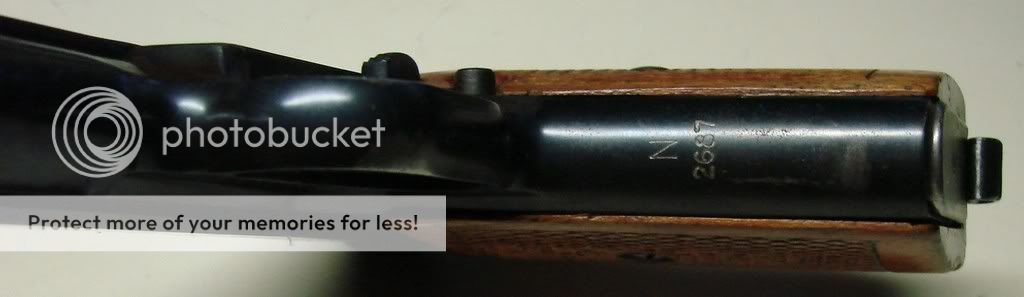
Variation 1, engraved E/M on the left frame panel and N2687 property number on the front grip strap and N2676 on the magazine floor plate.
Not matching numbers but reasonably close.
“N” for Marine Station der Nordsee (North Sea Fleet)
Total estimated procurement by the Kriegsmarine: 8,000 (Axis Pistols - Jan Sill)

Another photo of the holster showing the Kriegsmarine Eagle/M acceptance stamp.
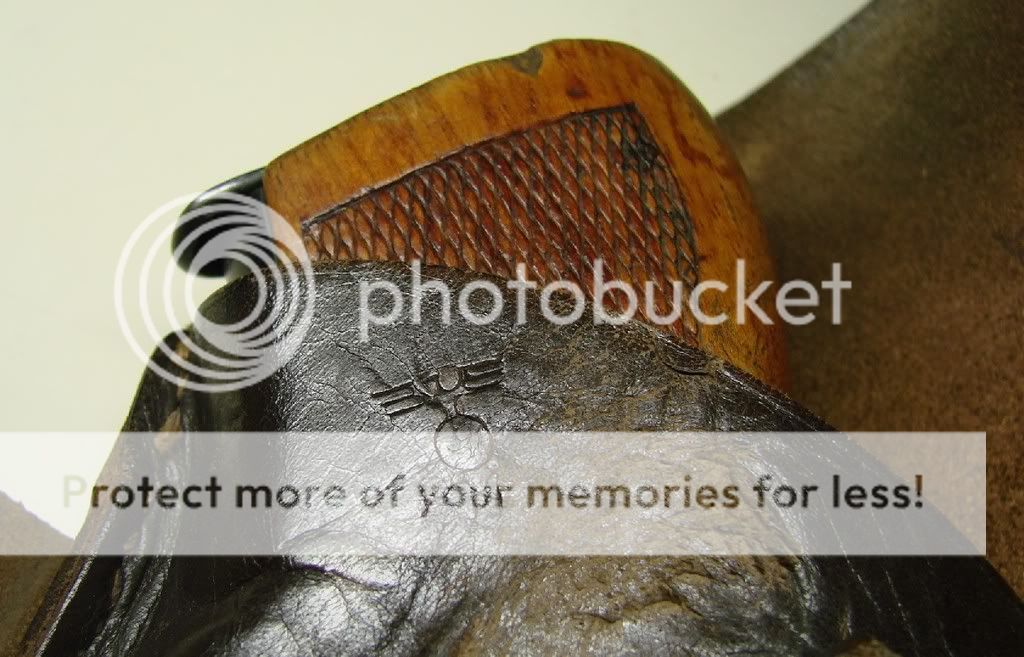
I only have one KM marked holster for these two pistols and it is not the condition that I would prefer.

Both the Variation 1 and Variation 2 pistols together showing the different Kriegsmarine E/M markings.
The “M” marking on the Variation 2 has little feet on top and at the bottom of the “M” which is not the case with the Variation 1 marking.


_____________________________________________________________________________
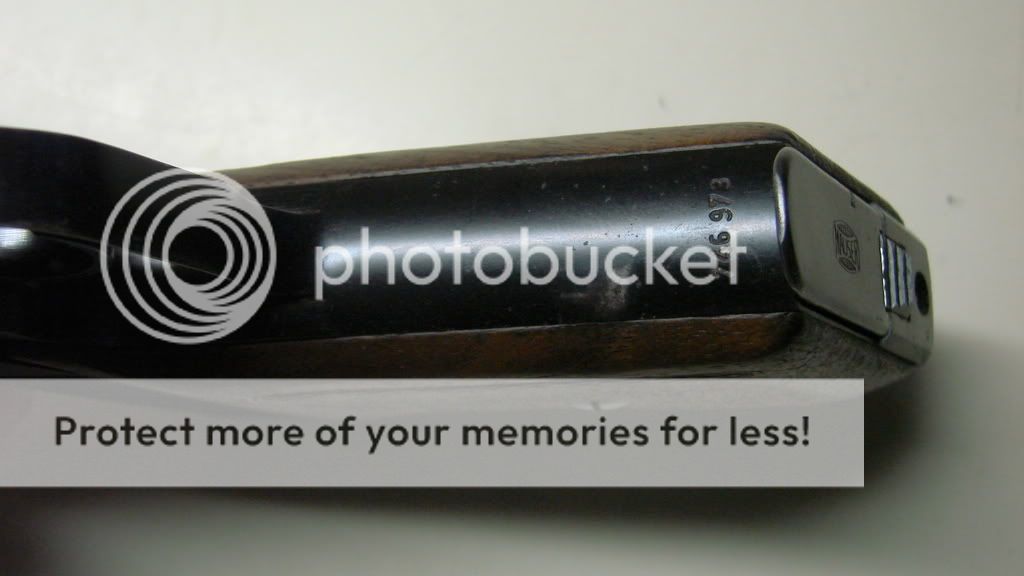
Mauser HSc, Third Variation, serial number 746973.
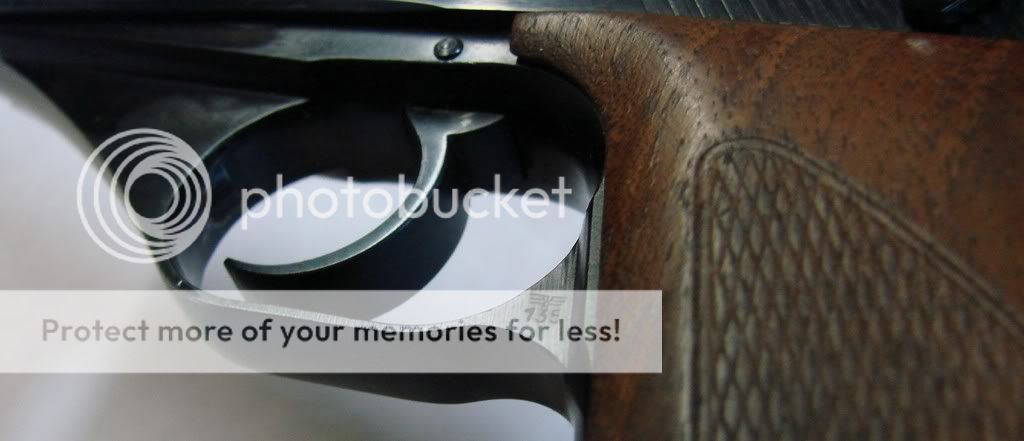
Eagle/135 army acceptance stamp on the left trigger guard web.
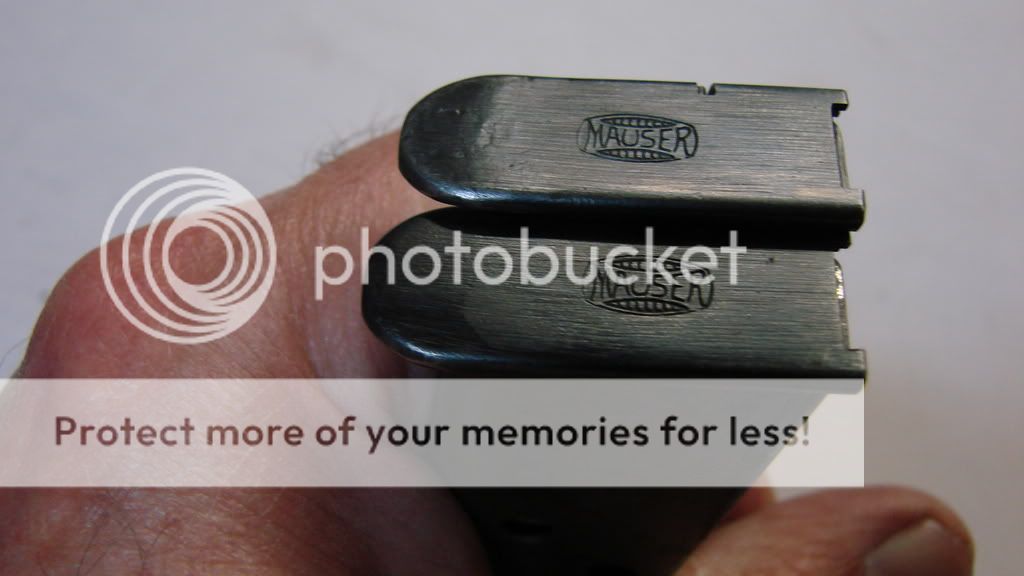
This pistol came with two Mauser Banner floorplate marked magazines.
HSc serial numbers started at 700,000 and ran to 951,000. Those HSc Mausers in the 745,338 to 781,415 serial number range that were marked with the Eagle/135, about 4000 produced in all, had the high-polish blue finish of earlier commercial models.
Three different holsters for the HSc pistol….., the one on the far right has an army acceptance stamp WaA938.
The holster on the far left is an unmarked “Ersatz” holster, and the middle holster is marked “A FISCHER” Berlin C.2, 1942, BERLIN C.2 1942 , with a Police Eagle stamp underneath (faint).
The army marked holster was manufactured by Lederfabrik Christof Neuner, An der Walk 6 in Klagenfurt, Austria.
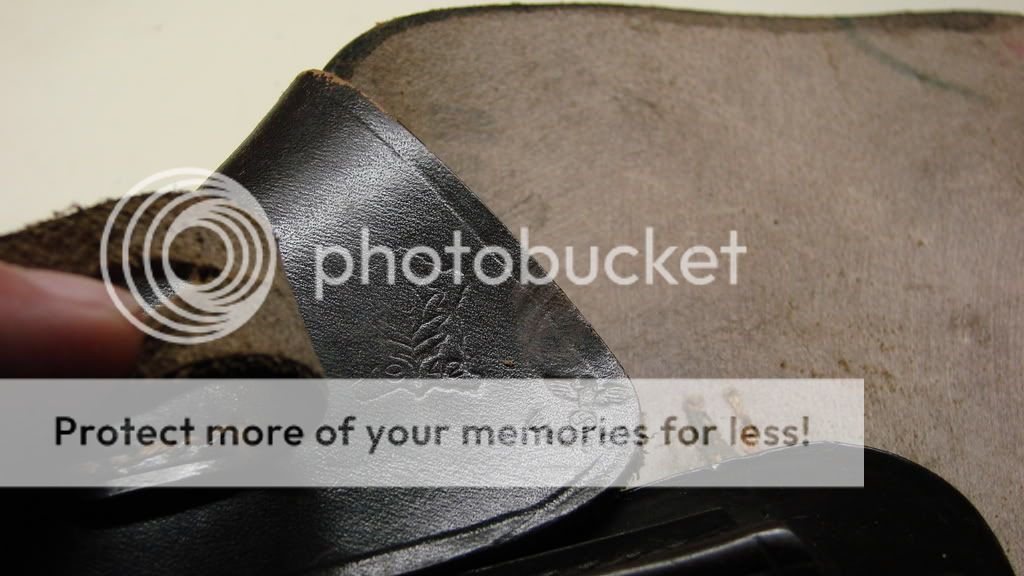
Markings beneath the closing strap are a leaf-bearskin design with the number “9” in the middle, and under this motif, the date “1942”, and an army acceptance stamp (WaA938)

I hope that some of this stuff might be of interest to you.
David
The holster is manufactured by R. Ehrhardt, Poessneck, dated 1937, and acceptance stamped WaA 186.
This gun came with two matching serial numbered magazines.
____________________________________________________________________________
Radom Pistol and rig, (Vis model 1935) The Germans referred to this model as P 35 (p). (Poland)
This gun is a Grade 2 German Vis in the first alphabet series.
This gun was manufactured 1st or 2nd quarter of 1942.
The black cowhide holster is in V.G + condition and is marked in ink on the inside flap “bnz” (The manufacturers’ code for Steyr-Daimler-Puch, Austria.)
P 35 (p) - the (p) is very faint. A military acceptance stamp Eagle over WaA—82 (the Eagle is very clear but the numbers are hard to read, it should be WaA 182.)
These “bnz” holsters were supposedly manufactured in 1944.
Radom holsters also came in different shades of brown.” WaA” army acceptance markings on these holsters are not that easy to find.
I have four magazines for this pistol, one is unmarked, two have E/189, and one has E/77 stamped on the bottom of the magazine floor plate.
The E/189 is the late code for the Warsaw rifle factory.
This gun really has a deeper blue finish that this photo does not show accurately.
A close-up of the markings.
Assembly marks on the right side trigger web.
_________________________________________________________________________________
FN High Power M1935 (Belgium) (P.640b)
E/WaA140 German Army acceptance stamp.
Holster---"dla",(manufacturers code) , WaA195 acceptance stamp.
Karl Barth, Militaereffekten-Fabrik , Waldbrol/ Rhineland.
One magazine has E/WaA140 acceptance stamp.
______________________________________________________________________________
A Mauser S/42 code Luger (P.08) pistol and rig, manufactured in 1938.
The holster is manufactured by Karl Bocker, Waldbrol, dated 1936, and acceptance stamped WaA 387.
This gun came with two matching serial numbered magazines.
__________________________________________________________________________
Femaru M1937 (Hungarian) (P.37 u)
Femaru-Fegyver-es Gepgyar R.T. Budapest, Hungary.
The German code “jhv” 43 is for Metallwaren, waffen und Machinefabrik AG, Budapest, Hungary produced in 1943.
This pistol is a “jhv” 43, which is the Second Contract pistol.
7.65 mm (.32 caliber) 7 round magazine.
-E/WaA173 German acceptance stamp on the left trigger guard web.
Estimated production was approx.30,000 with serial number ranges from 50,000 to 80,000.
The holster markings;
“jsd” 1942 with Luftwaffe acceptance stamp Eagle over L2.
This pistol came with two serial numbered magazines.
The holster is a Theuermann Patent for the P.37 (u) pistol.
Ink markings inside the flap “ Nur fur Pistole 37 M (Ung.) Kal. 7.65 m/m”
with a Luftwaffe acceptance stamp (E/2) on the rear of the holster under the manufacturers code “jsd”and 1942 date.
Hungary was an ally of Germany, and Hungarian troops joined in the attack on the Soviet Union in 1941.
In 1941, the Luftwaffe, through the German Army Acceptance Office (Heereswaffenamt) placed an order for 50,000 Model 1937 Femaru in caliber 7.65
with a manual safety.
The jhv 41 variation or First Contract had a high gloss finish and a variety of slide legends.
In 1943, a contract for an additional 60,000 pistols was placed with Femaru.
Only about 30,000 were delivered prior to the plant’s being evacuated before the advancing Russian armies.
They are identified by the jhv 43 on the left slide and military-blue finish.
Most of the jhv 41 variation M37 went to the Luftwaffe.
All of the M37 holsters bear Luftwaffe acceptance stamps; however, it is probable that some of the jhv variation went to the German Army.
______________________________________________________________________
A Walther manufactured P.38 "ac42" shown with a Spreewerk (code "cyq") manufactured P.38
(1943)... and an assortment of P.38 soft shell and hard shell holsters.
Walther's code "ac42" for 1942.
A magazine marked with a single eagle/359 (359 being Walther's numeric code) on the upper spine with P.38 stamped on the left side of the magazine which is correct for a "k" block pistol.
Shown in the two photos below are the Walther "ac42" eagle/359 marked magazine with P.38 stamp on the left side of the mag on top,.... with the eagle/88 Spreewerk marked magazine on the bottom.
The second magazine for the "ac42" has two eagle/359 acceptance stamps on the spine.
Spreewerk manufactured P.38 in a 1943 dated "softshell" holster, manufacturer's code "gxy" with a WaA706 acceptance stamp.
These 1943 dated soft shell holsters are 'somewhat rare' as the real production of the soft shell holsters started in 1944.
The 1943 dated soft shell holsters generally had an upward closing strap, while the 1944 and later holsters had a downward closing strap.
One of the magazines is stamped "jvd" on the left side of the magazine with eagle/88 at the base of the spine, the second one just has eagle/88 at the bottom of the spine which indicates Spreewerk production.
"jvd" was a sub-contractor for P.38 magazines. (Nordbohmismiche Metallwarenfabrik)
Spreeweke marked P.38 pistols were manufactured in Grottau - Czechoslovakia
after the German army invaded the country.
("88" was the Spreewerk numeric code found on pistols produced by this manufacturer.)
As 1943 dated soft shell holsters are somewhat rare, so are 1944 dated hard shell holsters as the hard shell model was phased out in 1943.
It is unusual to find a holster with both WaA and RBNr markings.
“gmo” is the code for Rahm&Kampmann Lederwarenfabriken, Werk. Kaiserslautern, Rheinland-Pfalz
WaA 204 is their WaA number. (These markings are somewhat faint...but they are there.)
There are RBNr numbers for (“Reichs-Betriebs-Nr”) above and partially covered by the front belt loop. “0/0655/0013”
All German plants received such a number late in WW2, and it seems this code should replace the one to three letter code.
However, the war was over before this change was finished, so both kinds of codes can be found on certain kinds of military items.
______________________________________________________________________________
This pistol has Kriegsmarine markings. (German Navy- (KM)
Mauser Model 1934 (Variation 2), engraved Eagle/M on the right frame panel with matching Navy Property markings on front grip strap and magazine floor plate O.2325
“O” for Marine Station der Ostee (Baltic Fleet)
There were two navy markings Ostsee (“O”) Baltic Sea and Nordsee (“N”)
North Sea and Baltic Sea. These are divided into the North Sea and the Baltic Sea. At the north tip of Denmark the boundary is marked through a line between the seas.
Reported serial range for these 2nd variation guns was 532780 to 587534; reported property number range O.2273 to O.5730.
The serial number on this pistol is 532668
Estimated production of these (Variation 2) Kriegsmarine marked guns was 3,000.
(Reference; Jan Still –Axis Pistols)
I believe this pistol was manufactured in 1938. (Axis Pistols.)
The holster is in “well used” condition, however it has the Kriegsmarine Eagle / M acceptance stamp.
This pistol is in stunning condition.
In the year 1934, Mauser introduced a final version of this line, Model 1934. Its major change from the Model 1914 was the shape of the grip panels, with curved, rather than straight backstrap. The Model 1934 was adopted by German armed forces as a substitute standard, and also was used by various police and security forces. Key military buyers for Mauser 1934 pistols were Kriegsmarine (Navy) and Luftwaffe (Air force).
The first 1934 Mauser pistols obtained for military use were procured independently by the Kriegsmarine. (Navy)
The pistol shown below is a Mauser Model 1934 (Variation 1) Sn. 551698 manufactured in 1940.
Variation 1, engraved E/M on the left frame panel and N2687 property number on the front grip strap and N2676 on the magazine floor plate.
Not matching numbers but reasonably close.
“N” for Marine Station der Nordsee (North Sea Fleet)
Total estimated procurement by the Kriegsmarine: 8,000 (Axis Pistols - Jan Sill)
Another photo of the holster showing the Kriegsmarine Eagle/M acceptance stamp.
I only have one KM marked holster for these two pistols and it is not the condition that I would prefer.
Both the Variation 1 and Variation 2 pistols together showing the different Kriegsmarine E/M markings.
The “M” marking on the Variation 2 has little feet on top and at the bottom of the “M” which is not the case with the Variation 1 marking.
_____________________________________________________________________________
Mauser HSc, Third Variation, serial number 746973.
Eagle/135 army acceptance stamp on the left trigger guard web.
This pistol came with two Mauser Banner floorplate marked magazines.
HSc serial numbers started at 700,000 and ran to 951,000. Those HSc Mausers in the 745,338 to 781,415 serial number range that were marked with the Eagle/135, about 4000 produced in all, had the high-polish blue finish of earlier commercial models.
Three different holsters for the HSc pistol….., the one on the far right has an army acceptance stamp WaA938.
The holster on the far left is an unmarked “Ersatz” holster, and the middle holster is marked “A FISCHER” Berlin C.2, 1942, BERLIN C.2 1942 , with a Police Eagle stamp underneath (faint).
The army marked holster was manufactured by Lederfabrik Christof Neuner, An der Walk 6 in Klagenfurt, Austria.
Markings beneath the closing strap are a leaf-bearskin design with the number “9” in the middle, and under this motif, the date “1942”, and an army acceptance stamp (WaA938)
I hope that some of this stuff might be of interest to you.
David
Last edited: