












































You are using an out of date browser. It may not display this or other websites correctly.
You should upgrade or use an alternative browser.
You should upgrade or use an alternative browser.
Spencer 56 pic's
- Thread starter tokguy
- Start date


I would suggest doing a search on the Spencer 56 caliber gun.
There are not really enough of these sold in Canada to establish an "average" price.
There were not many these made, fewer survived.
I would hesitate to put a value on this one without having examined it carefully.
The rifle pictured should be a rimfire - you can "update" the gun with a center fire breech block. RCBS has 56-50 dies.
This is an indication of what one company is asking.
http://www.cabelas.com/gun-inventory---lehi---antique---876988-spnr50-leh.shtml
There are not really enough of these sold in Canada to establish an "average" price.
There were not many these made, fewer survived.
I would hesitate to put a value on this one without having examined it carefully.
The rifle pictured should be a rimfire - you can "update" the gun with a center fire breech block. RCBS has 56-50 dies.
This is an indication of what one company is asking.
http://www.cabelas.com/gun-inventory---lehi---antique---876988-spnr50-leh.shtml

- Location
- St. Paul AB
The only Spencer I've ever seen for sale was a 20 gauge shotgun built at the factory on surplus actions after military orders dried up. This was 2 years ago in Glendive MT. The vendor was asking $1800 for it. It was in similar condition, but I don't know if the sporting models can be classed in the same price range.

- Location
- Algoma region
Very handsome rifle!!
I had a chance a few months ago to get a project piece alot like the example here for 700 bucks...of course the only time deals like that are available to me is when Im dirt poor.
I would love a untouched unrotted rimfire.....alas .......
Anyhow, this example looks quite handsome, if grandpa will sell it to you, enjoy her!!
...Great rifles
I had a chance a few months ago to get a project piece alot like the example here for 700 bucks...of course the only time deals like that are available to me is when Im dirt poor.
I would love a untouched unrotted rimfire.....alas
.......Anyhow, this example looks quite handsome, if grandpa will sell it to you, enjoy her!!
...Great rifles
That one looks fair cond. Hammer is broke and no mention on what rifleing looks like. I understand Canada had a different cal.for which no ammo exists. There are conversions too. $700 someone said and that sounds about right depending on rifleing and workability. I think 95,000 carbines were made and around 10,000 for the full length model which in working order go for minimum 2500 bucks and up.

Spencers
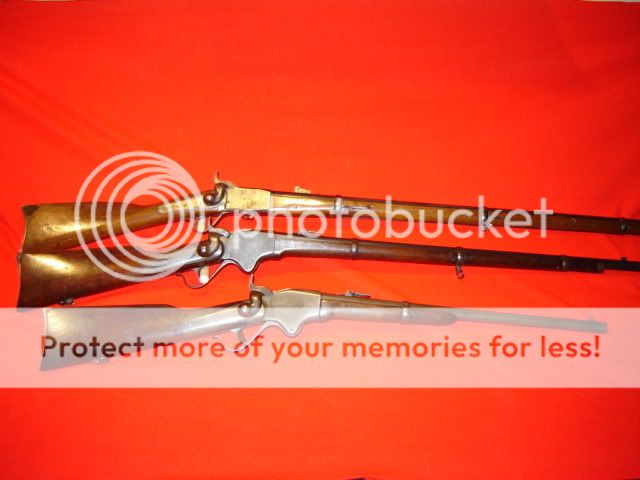
Just sold these two Spencers, both were 1860 models, rifle for $3500 and Carbine for $2500. Carbine was Civil War issued and most likely used on the Battlefield in anger. Oh yes the Peabody has been sold also.
Valve of Spencers depend on the models, condition and bore sizes. Model 1865s usually bring less money.
Road King
Just sold these two Spencers, both were 1860 models, rifle for $3500 and Carbine for $2500. Carbine was Civil War issued and most likely used on the Battlefield in anger. Oh yes the Peabody has been sold also.
Valve of Spencers depend on the models, condition and bore sizes. Model 1865s usually bring less money.
Road King

Id like one so PM me if your serious about selling it.
I want a orignal 50 70 sharps carbine to.
I see lotsa Repo sharps in the EE but never any orignals.
I seen a Spencer in the USA recently went for $800 but i missed it.
I wonder why no one is buying or importing some of theses old guns into Canada.
I never seen and orignal sharps in the EE ever maby one spencer.
do people not like them much up here?
I want a orignal 50 70 sharps carbine to.
I see lotsa Repo sharps in the EE but never any orignals.
I seen a Spencer in the USA recently went for $800 but i missed it.
I wonder why no one is buying or importing some of theses old guns into Canada.
I never seen and orignal sharps in the EE ever maby one spencer.
do people not like them much up here?
Road King,
Thanks for your comments regarding the current value of these types of guns in Canada....if you sold them in Canada?
The gun shown below is a Model 1860 that was modified in 1867 for use by the U.S. cavalry during the Indian War period before the adoption of the Model 1873 Springfield Trapdoor carbine.
The inspector's cartouches on the stock indicate its Civil War use and its later conversion.
I am curious what kind of interest you had from buyers in Canada?

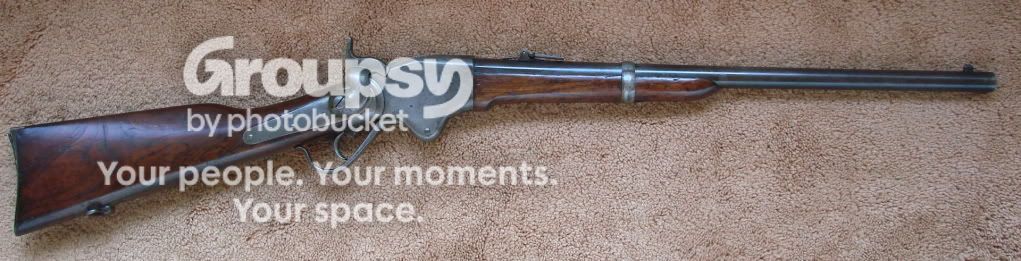
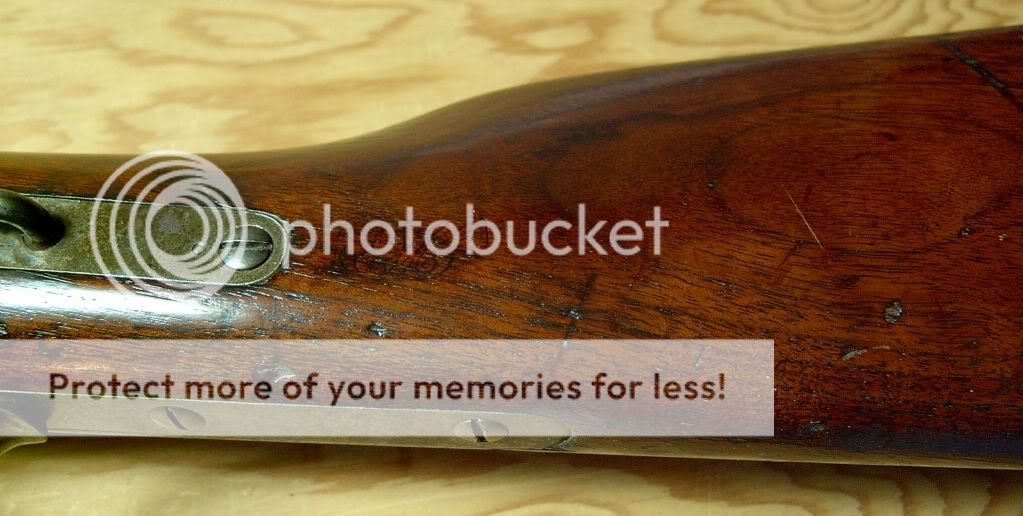
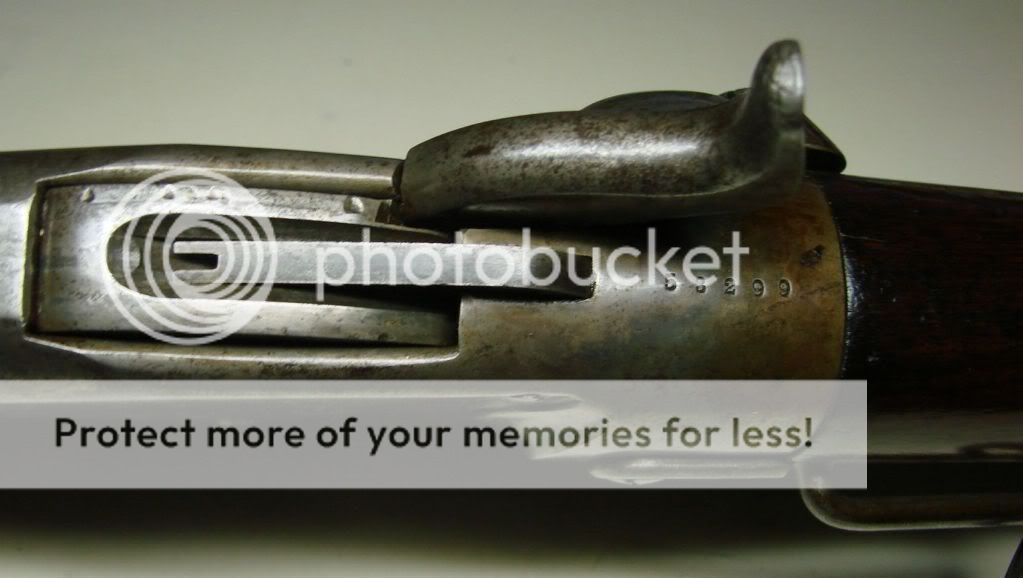
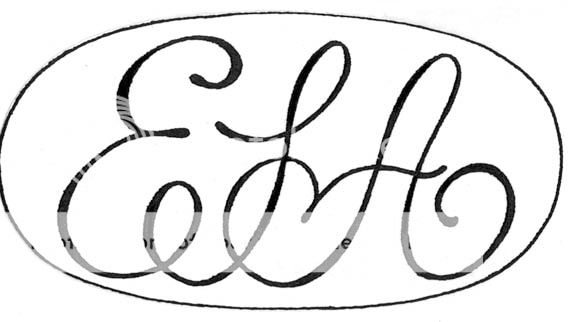
The Spencer carbines that were converted have an oval cartouche with ESA inspectors ‘marking’. (Erskine S. Allin) as shown on the gun above.
As Master Armorer, Erskine Allin indicated his acceptance of a completed rifle by the imprint on the stock of the weapon of an oval cartouche bearing his initials.
A little history.
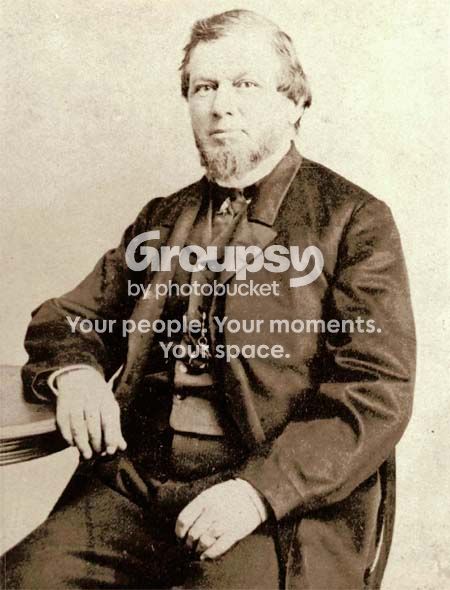
Erskine S. Allin created the breechloader .45-70 Trapdoor by redesigning the breech of the standard rifle-musket.
Erskine Seleuca Allin (1809-1879)
In 1865, Master Armorer Erskine Allin introduced the "Allin Conversion", which incorporated the far more advanced design of breech-loading into the now-obsolete muzzle-loaders, thereby extending their service life.
Allin’s positions at Springfield Armory from 1829 to 1879, as recorded in his own hand written Recapitulation dated May 1, 1873: Mechanic – 11 10/12 years; Clerk – 1 1/12 years; Foreman – 5 9/12 years; Acting Master Armorer – 5 11/12 years; Master Armorer – 25 6/12 years; Acting Superintendent – 7/12 years. Promoted to Master Armorer – 1853. Total time at Springfield Armory: 50 years.
Accomplishments at Springfield Armory: “During the period I was Foreman, as well as after, I made some valuable improvements and suggestions in machining & tools, among which are the small tilt hammers driven by belts, and which are used up to the present time, the change in the method of case hardening, change for simpifying rifling machine, change in Colt’s drop hammer, and various other changes and improvements to simplify and reduce the cost of manufacture. I might perhaps state that the breech loading gun, the leading principle of which is my own innovation, I assigned to the government without royalty or pecuniary benefit; [its] standing after the trial, one of the best for the Military Service.”
Erskine S. Allin, Master Armorer, Springfield Armory, 1853-1878.
-----------------------------------------------------
After the Civil War the Spencer carbine was one of the guns that were chosen for alteration by the Springfield Armory between 1867-1874.
Over 11,000 carbines were altered to accommodate the 50-caliber copper cased rimfire (56-52 and 56-50 interchangeable) cartridge.
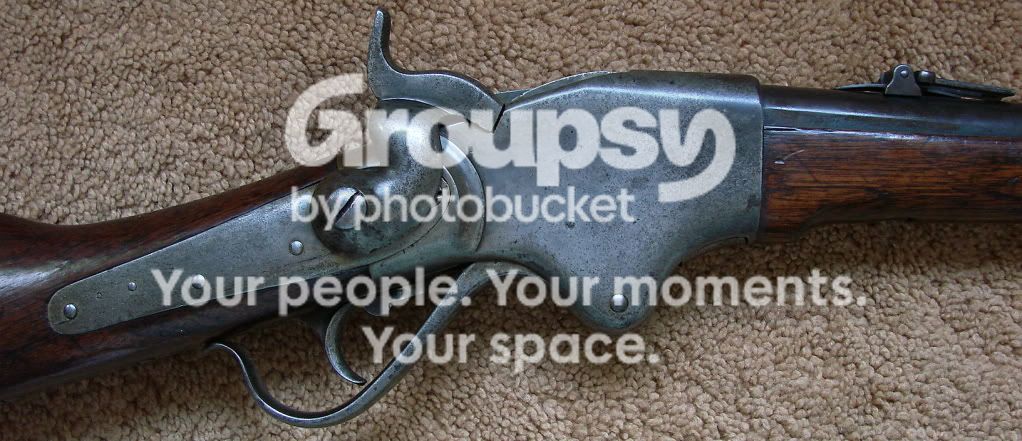
A small swivel device known as the “Stabler cut-off “was added forward of the trigger (see photo) to allow for use as a single shot (it keeps the breech from opening completely).
The modified carbines bear an “ESA” inspectors mark in an oval cartouche on the left side of the stock.
The usual markings on top of the frame “SPENCER REPEATING/ RIFLE CO. BOSTON, MASS/ PAT’D MARCH 6 1860”, have long since worn off. (Only slight traces left)
This seven shot repeater was fed through a tubular magazine in the butt and into the receiver. Lowering the operating lever and opening the breech automatically feeds a copper rimfire cartridge into the chamber. The hammer is then cocked and the arm is fired. Dropping the lever after firing then ejects the spent cartridge and brings the next round into position for the next firing.
The Model 1860 Spencer carbine was widely used during the Civil War, and also saw substantial duty during the Indian Wars until the arrival of the Model 1873 Springfield Trapdoor 45-70 caliber carbine.
The Spencer and the Sharps carbines were two of the Civil War carbines that ended up doing double duty throughout the Civil War and post war period.
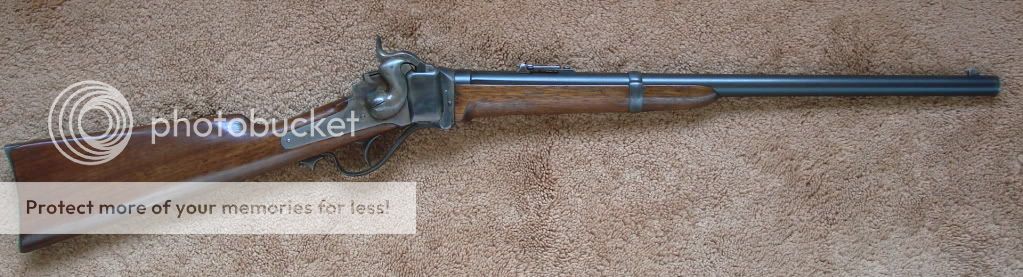
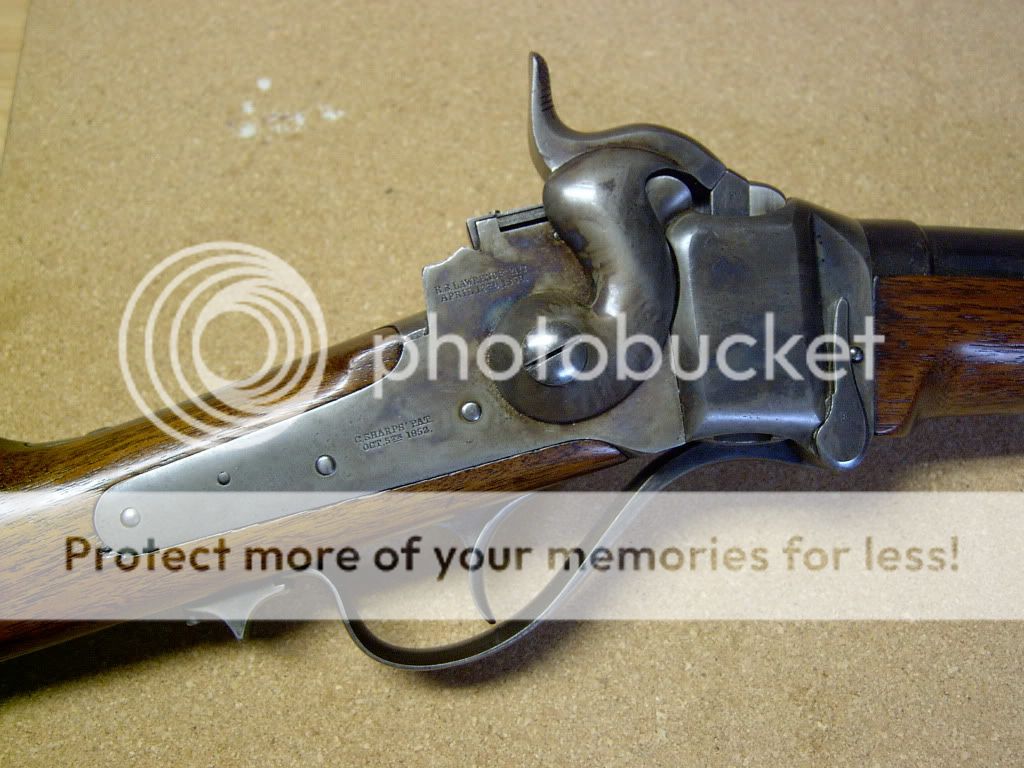
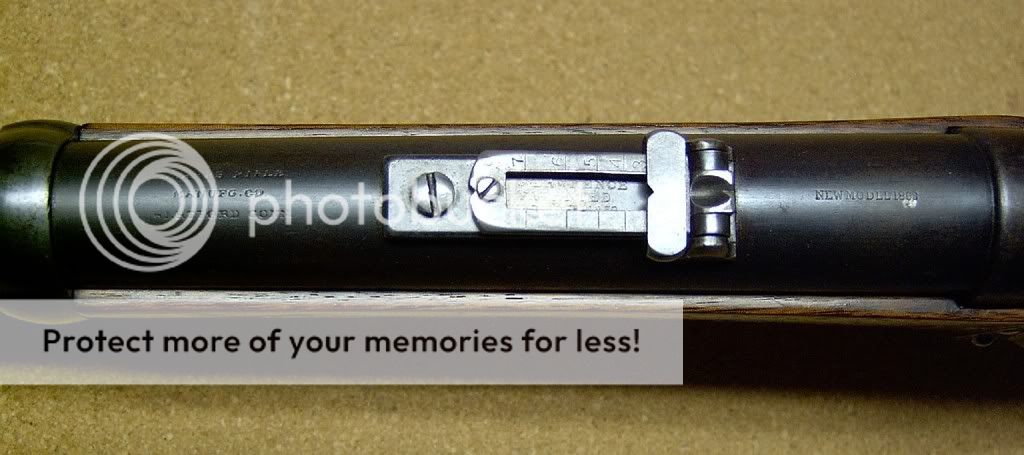
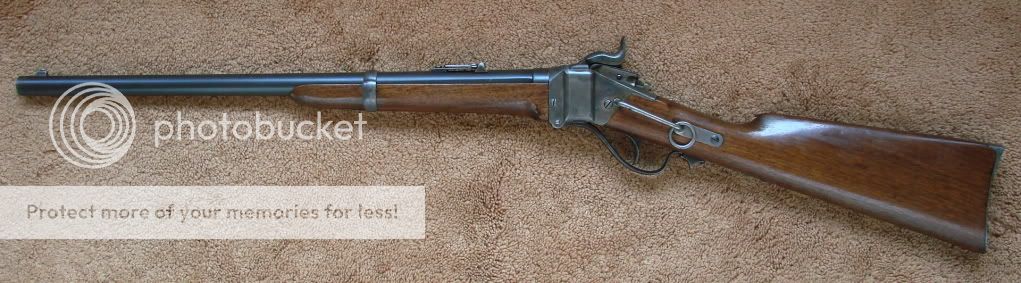
The New Model 1863 Sharps carbine shown below was one of the .50-70 centerfire conversions after the Civil War that along with the Spencer saw extended use during the Indian War period.
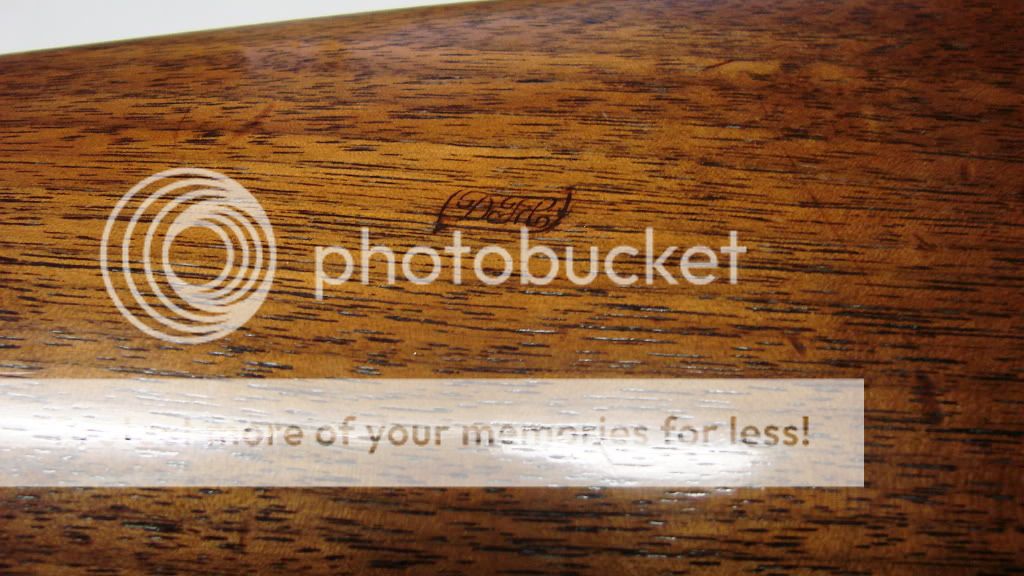
A total of 31,098 Sharps carbines were converted after the war in 1867. In addition to the normal inspector markings found on Sharps percussion carbines, an extra inspection stamp "DFC" (David F. Clark) in a ribbon cartouche was marked in the center of the left side of the buttstock of the converted guns.
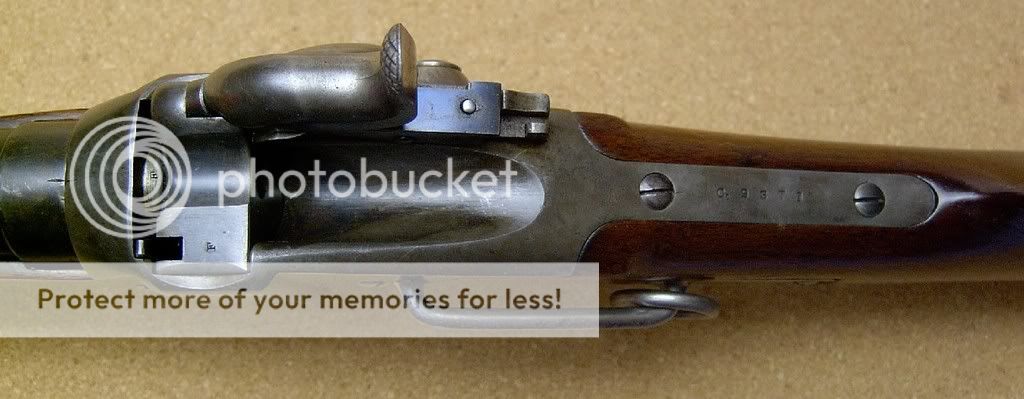
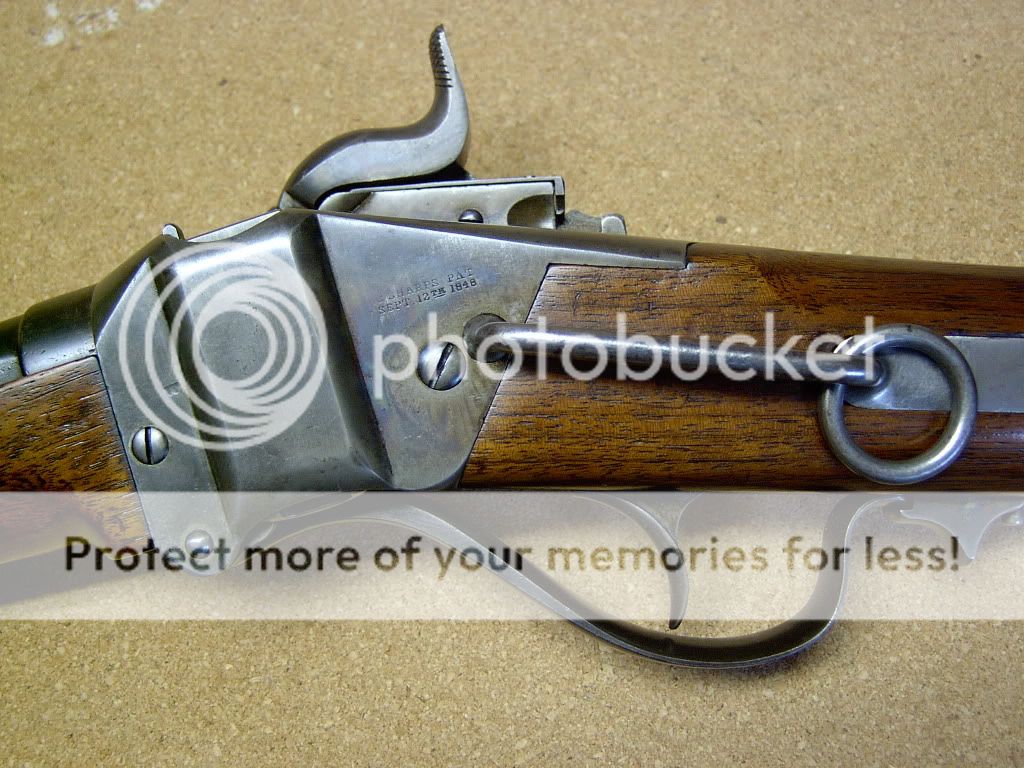
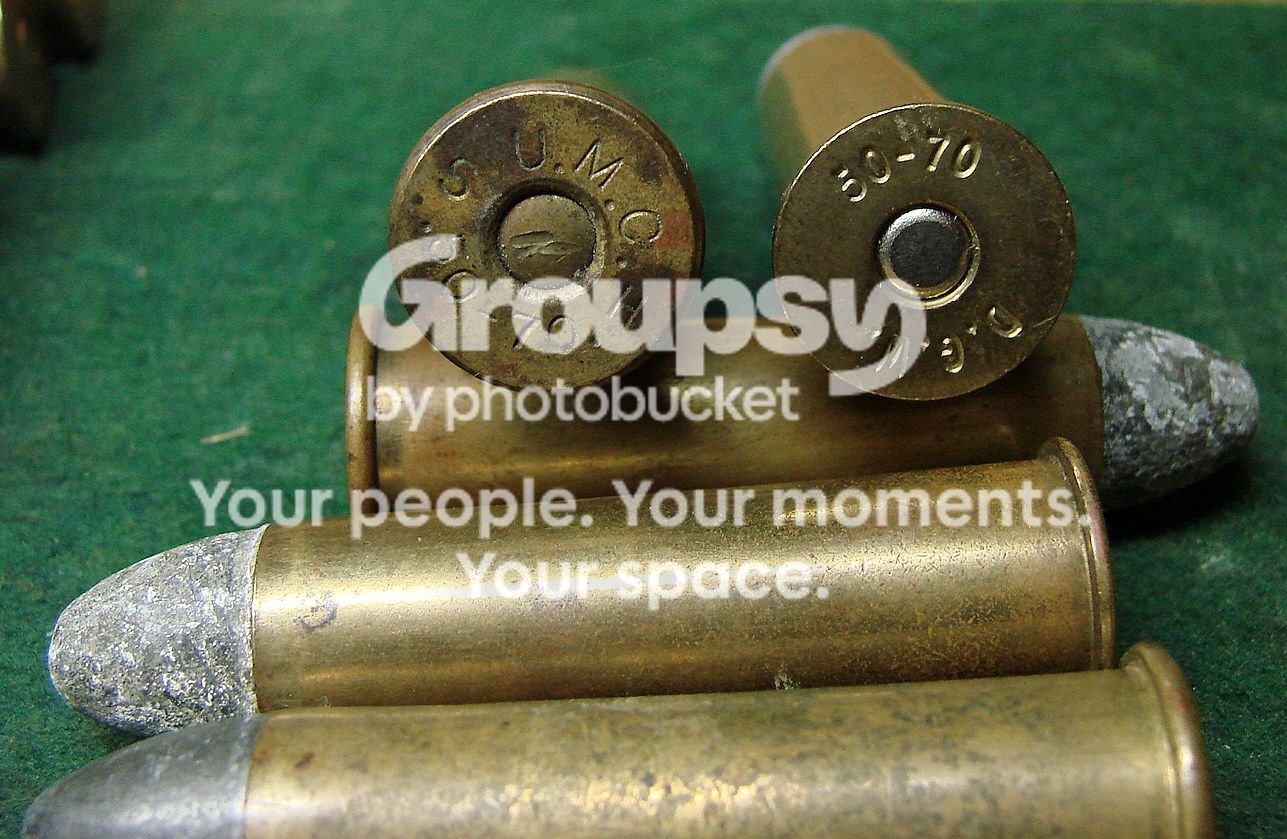
Original .50-70 centerfire cartridges together with a Dixie Gun Works head stamped cartridge.
A Civil War era carbine cartridge box converted to accomodate centerfire and rimfire cartridges.
Marked "J. DAVEY & CO NEWARK NJ. "

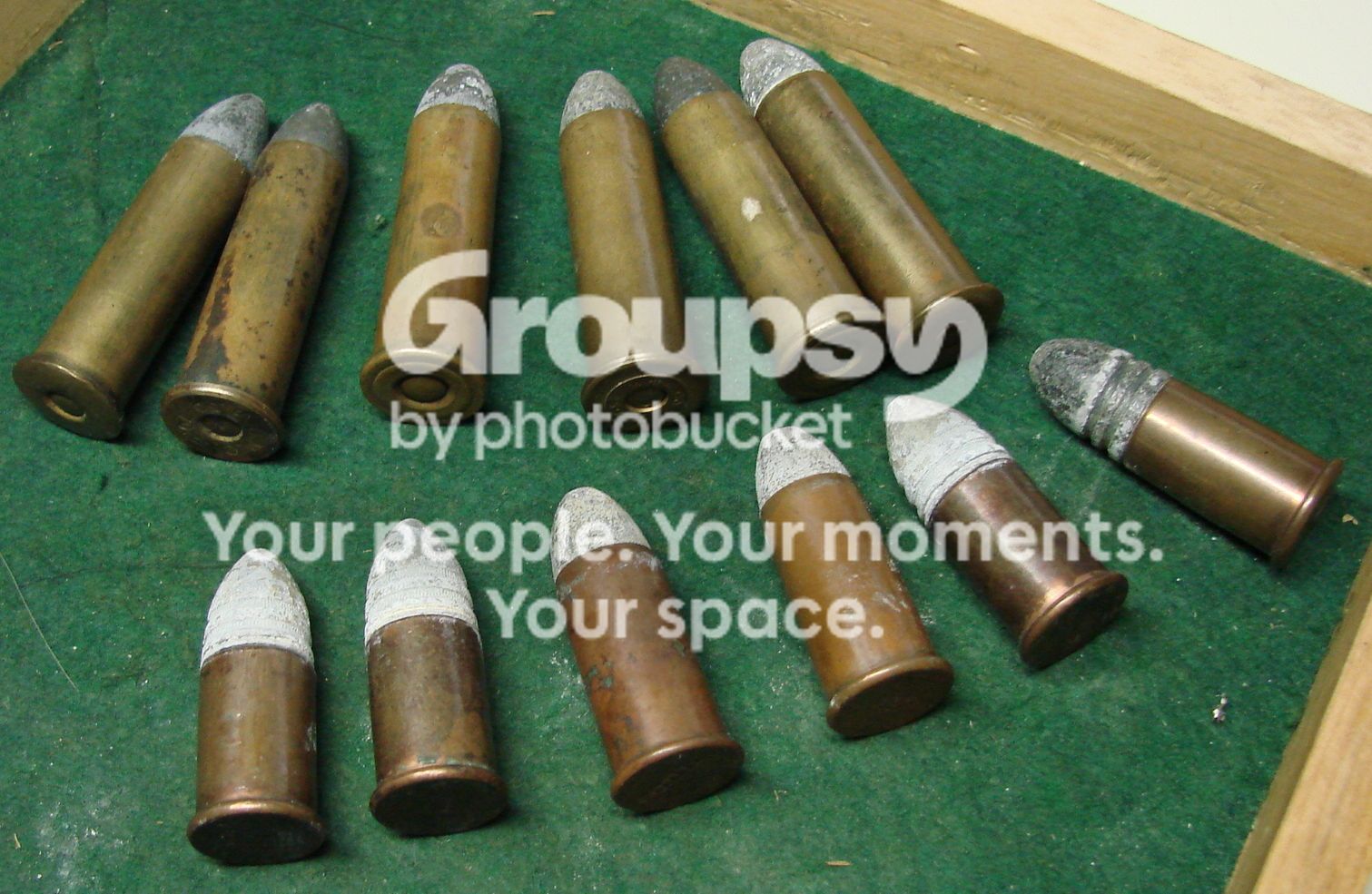
The photo below shows a mix of Spencer rimfire (bottom) and Sharps 50-70 centerfire carbine cartridges.(top)
Thanks for your comments regarding the current value of these types of guns in Canada....if you sold them in Canada?
The gun shown below is a Model 1860 that was modified in 1867 for use by the U.S. cavalry during the Indian War period before the adoption of the Model 1873 Springfield Trapdoor carbine.
The inspector's cartouches on the stock indicate its Civil War use and its later conversion.
I am curious what kind of interest you had from buyers in Canada?
The Spencer carbines that were converted have an oval cartouche with ESA inspectors ‘marking’. (Erskine S. Allin) as shown on the gun above.
As Master Armorer, Erskine Allin indicated his acceptance of a completed rifle by the imprint on the stock of the weapon of an oval cartouche bearing his initials.
A little history.
Erskine S. Allin created the breechloader .45-70 Trapdoor by redesigning the breech of the standard rifle-musket.
Erskine Seleuca Allin (1809-1879)
In 1865, Master Armorer Erskine Allin introduced the "Allin Conversion", which incorporated the far more advanced design of breech-loading into the now-obsolete muzzle-loaders, thereby extending their service life.
Allin’s positions at Springfield Armory from 1829 to 1879, as recorded in his own hand written Recapitulation dated May 1, 1873: Mechanic – 11 10/12 years; Clerk – 1 1/12 years; Foreman – 5 9/12 years; Acting Master Armorer – 5 11/12 years; Master Armorer – 25 6/12 years; Acting Superintendent – 7/12 years. Promoted to Master Armorer – 1853. Total time at Springfield Armory: 50 years.
Accomplishments at Springfield Armory: “During the period I was Foreman, as well as after, I made some valuable improvements and suggestions in machining & tools, among which are the small tilt hammers driven by belts, and which are used up to the present time, the change in the method of case hardening, change for simpifying rifling machine, change in Colt’s drop hammer, and various other changes and improvements to simplify and reduce the cost of manufacture. I might perhaps state that the breech loading gun, the leading principle of which is my own innovation, I assigned to the government without royalty or pecuniary benefit; [its] standing after the trial, one of the best for the Military Service.”
Erskine S. Allin, Master Armorer, Springfield Armory, 1853-1878.
-----------------------------------------------------
After the Civil War the Spencer carbine was one of the guns that were chosen for alteration by the Springfield Armory between 1867-1874.
Over 11,000 carbines were altered to accommodate the 50-caliber copper cased rimfire (56-52 and 56-50 interchangeable) cartridge.
A small swivel device known as the “Stabler cut-off “was added forward of the trigger (see photo) to allow for use as a single shot (it keeps the breech from opening completely).
The modified carbines bear an “ESA” inspectors mark in an oval cartouche on the left side of the stock.
The usual markings on top of the frame “SPENCER REPEATING/ RIFLE CO. BOSTON, MASS/ PAT’D MARCH 6 1860”, have long since worn off. (Only slight traces left)
This seven shot repeater was fed through a tubular magazine in the butt and into the receiver. Lowering the operating lever and opening the breech automatically feeds a copper rimfire cartridge into the chamber. The hammer is then cocked and the arm is fired. Dropping the lever after firing then ejects the spent cartridge and brings the next round into position for the next firing.
The Model 1860 Spencer carbine was widely used during the Civil War, and also saw substantial duty during the Indian Wars until the arrival of the Model 1873 Springfield Trapdoor 45-70 caliber carbine.
The Spencer and the Sharps carbines were two of the Civil War carbines that ended up doing double duty throughout the Civil War and post war period.
The New Model 1863 Sharps carbine shown below was one of the .50-70 centerfire conversions after the Civil War that along with the Spencer saw extended use during the Indian War period.
A total of 31,098 Sharps carbines were converted after the war in 1867. In addition to the normal inspector markings found on Sharps percussion carbines, an extra inspection stamp "DFC" (David F. Clark) in a ribbon cartouche was marked in the center of the left side of the buttstock of the converted guns.
Original .50-70 centerfire cartridges together with a Dixie Gun Works head stamped cartridge.
A Civil War era carbine cartridge box converted to accomodate centerfire and rimfire cartridges.
Marked "J. DAVEY & CO NEWARK NJ. "
The photo below shows a mix of Spencer rimfire (bottom) and Sharps 50-70 centerfire carbine cartridges.(top)
Last edited:
Road King,
Thanks for your comments regarding the current value of these types of guns in Canada....if you sold them in Canada?
The gun shown below is a Model 1860 that was modified in 1867 for use by the U.S. cavalry during the Indian War period before the adoption of the Model 1873 Springfield Trapdoor carbine.
The inspector's cartouches on the stock indicate its Civil War use and its later conversion.
I am curious what kind of interest you had from buyers in Canada?
Hi drm3m
I have found over the past year that there has been a new interest in the Spencer Carbines in Canada and I have a few buyers waiting now for me to aquire one for them. There are lots to pick from in the US at gun shows and the interest has died off there over the past few years.
Your gun is one of the Springfield conversions with the Stabler magizine cut off. These are still very collectable and diserable to the Spencer collector trying to round out a collection. The 1860 has a 22" barrel and the 1865 has a 20" barrel.
Road King
Road King,
Thanks for your comments.
I was thinking about your Spencer and Peabody rifles and I remember some research I was doing a couple of years ago on the subject of the Fenian Raids.
Some history.
"Steps were quickly taken to acquire newer breech loading weapons. The Canadian government purchased 3,000 Peabody rifles, with bayonets, from the Providence Tool Company of Providence, R.I. Starr carbines and Spencer repeating rifles were also acquired in the United States. The farmers of the St. Armand area, concerned about their lack of defence during the Fenian raid of 1866, sent two representatives south to Massachusetts, where they bought 40 Ballard sporting rifles. It is curious to note that the U.S. government took no steps to impede those arm sales to a foreign government with whom relations were strained."
At the time I had the pleasure of corresponding with Joe Bilby the American author of many titles...including the Irish Brigade During the Civil War.
In one of his emails he wrote this;
"Having written a book on the Irish Brigade, and being of Irish American heritage myself, I am very familiar with the Fenians, as well as the perpetual bungling that characterized their efforts.
The 1866 invasion was actually tactically successful, if I recall, but the victorious Fenians suffered the usual leadership lapse after the Battle of Ridgeway. At that point most Fenian troops were Civil War vets. By 1870, the vets had better things to do, and the Fenian force that crossed into Canada with weird looking conversions of CW muskets (designed by a Brit and made in a factory in Trenton NJ by a firm that had a Fenian leader as secret partner) were a lot of unemployed kids swept up off the streets of NYC -- of course the Canadians had no way of knowing that. Am familiar with the Ballard story -- they chose wisely -- very accurate long range guns, and the long range fire from the Ballards, if I recall, made the Fenians decide they had business elsewhere."
This is Joe Bilby;
If you have an interest in Civil War history and the guns that were used....Google him...and explore the books he has written.
http://www.civilwarguns.com/01bilbypage.html
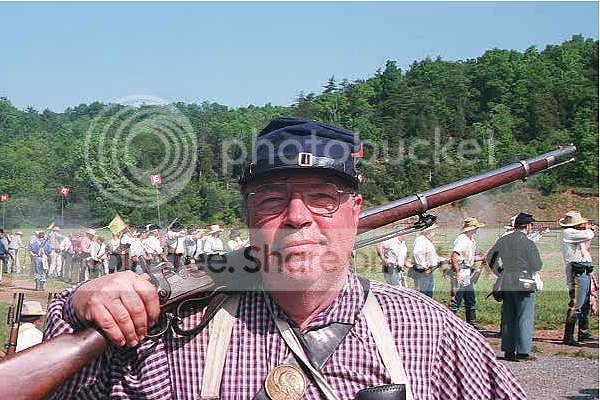
This conversation with Joe took place because my mother’s great grandfather James Pell was one of the two men that went to Mass. to purchase the Ballard rifles and participated in the Battle of Eccles Hill against the Fenians.
The type of Ballard rifle they purchased....I think.
One of the surviving Ballards is marked Brown Mfg. Co Newburyport, Mass.
Ballard’s Patent
Nov.5, 1861.
The top of the barrel is stamped No.44 which refers to the caliber.
Ballard target rifles turned out by Brown Mfg. Co. were supplied in .38 rim-fire long and .44 rim-fire long calibers.
The overall length of the rifle is 45 ½ inches.
These Ballard rifles were probably purchased in the U.S. between 1866 and 1869.
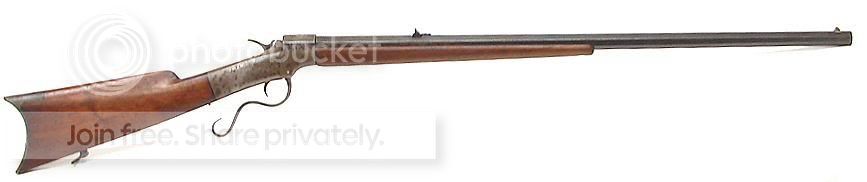
I wonder if your Peabody and Spencer rifle had anything to do the Fenian adventure???
David
Photos following the Battle of Eccles Hill against the Fenians May 25th 1870.
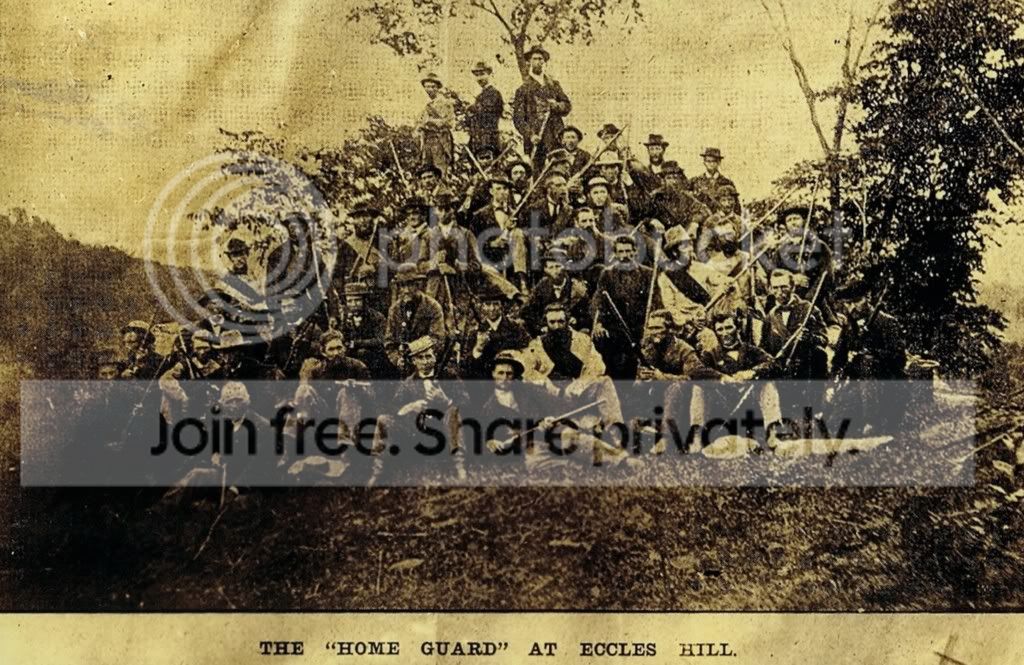
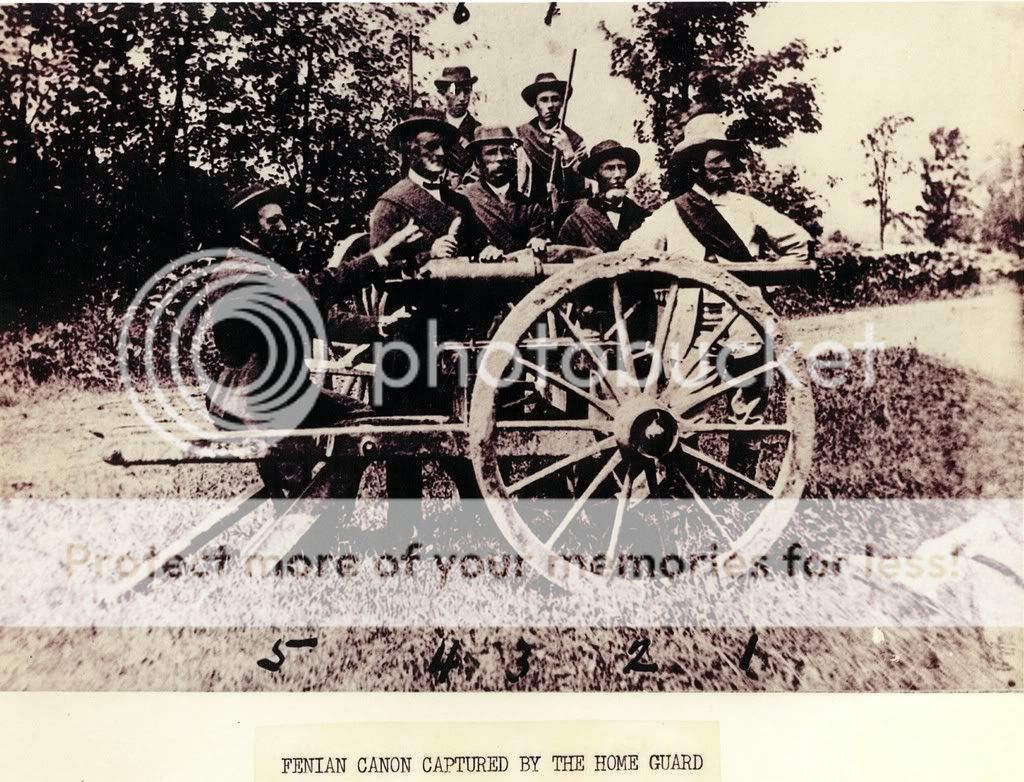
The Battle of Eccles Hill- May 25th 1870.
Another raid occurred in 1870 at Eccles Hill (not far from Pigeon Hill), when 400 Fenians under the command of "General" John O'Neill, President of the Fenian Brotherhood, were repulsed by a much smaller group of Canadian home-guard and militiamen who were waiting there to meet them. Two Fenians were killed and nine were injured. No Canadians were hurt or killed. O'Neill's words to his troops were these: "Men of Ireland, I am ashamed of you."
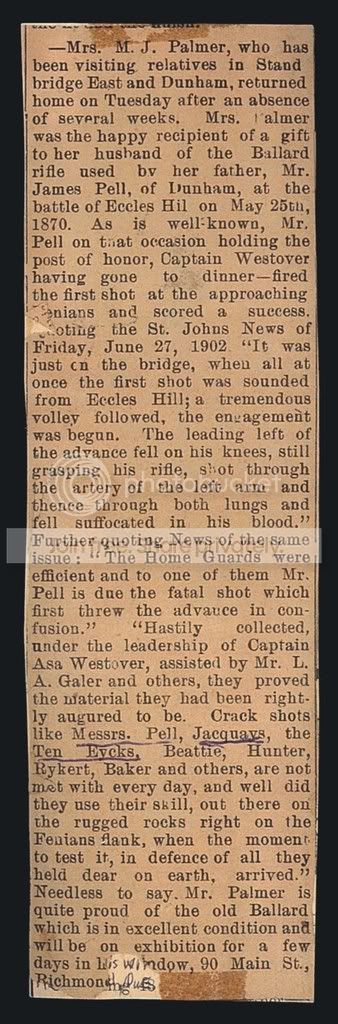
Following the Fenian Raid of 1866 a well-to-do farmer Asa Westover, called a meeting of his immediate neighbours and they agreed to form a Home Guard Unit (The Red Sashes). Asa Westover and my mother’s great grandfather James G. Pell, both excellent marksmen, were authorized to purchase arms for the Home Guard, and traveled to Massachusetts to visit various arms makers. They ended up purchasing 40 Ballard Rifles, which were used against a force of 400 Fenians on May 25 1870 at the Battle of Eccles Hill which is located in the Eastern Townships of Quebec just across the Northern Vermont border.
James Pell supposedly fired the first shot in that battle according to the newspaper article shown below; he is dressed in white in the photo above with the captured cannon and in the group photo.
A little more background on the early Fenian raids...for they that may be interested.
http://www.acsu.buffalo.edu/~dbertuca/g/FenianRaid.html
Thanks for your comments.
I was thinking about your Spencer and Peabody rifles and I remember some research I was doing a couple of years ago on the subject of the Fenian Raids.
Some history.
"Steps were quickly taken to acquire newer breech loading weapons. The Canadian government purchased 3,000 Peabody rifles, with bayonets, from the Providence Tool Company of Providence, R.I. Starr carbines and Spencer repeating rifles were also acquired in the United States. The farmers of the St. Armand area, concerned about their lack of defence during the Fenian raid of 1866, sent two representatives south to Massachusetts, where they bought 40 Ballard sporting rifles. It is curious to note that the U.S. government took no steps to impede those arm sales to a foreign government with whom relations were strained."
At the time I had the pleasure of corresponding with Joe Bilby the American author of many titles...including the Irish Brigade During the Civil War.
In one of his emails he wrote this;
"Having written a book on the Irish Brigade, and being of Irish American heritage myself, I am very familiar with the Fenians, as well as the perpetual bungling that characterized their efforts.
The 1866 invasion was actually tactically successful, if I recall, but the victorious Fenians suffered the usual leadership lapse after the Battle of Ridgeway. At that point most Fenian troops were Civil War vets. By 1870, the vets had better things to do, and the Fenian force that crossed into Canada with weird looking conversions of CW muskets (designed by a Brit and made in a factory in Trenton NJ by a firm that had a Fenian leader as secret partner) were a lot of unemployed kids swept up off the streets of NYC -- of course the Canadians had no way of knowing that. Am familiar with the Ballard story -- they chose wisely -- very accurate long range guns, and the long range fire from the Ballards, if I recall, made the Fenians decide they had business elsewhere.
"This is Joe Bilby;
If you have an interest in Civil War history and the guns that were used....Google him...and explore the books he has written.
http://www.civilwarguns.com/01bilbypage.html
This conversation with Joe took place because my mother’s great grandfather James Pell was one of the two men that went to Mass. to purchase the Ballard rifles and participated in the Battle of Eccles Hill against the Fenians.
The type of Ballard rifle they purchased....I think.
One of the surviving Ballards is marked Brown Mfg. Co Newburyport, Mass.
Ballard’s Patent
Nov.5, 1861.
The top of the barrel is stamped No.44 which refers to the caliber.
Ballard target rifles turned out by Brown Mfg. Co. were supplied in .38 rim-fire long and .44 rim-fire long calibers.
The overall length of the rifle is 45 ½ inches.
These Ballard rifles were probably purchased in the U.S. between 1866 and 1869.
I wonder if your Peabody and Spencer rifle had anything to do the Fenian adventure???
David
Photos following the Battle of Eccles Hill against the Fenians May 25th 1870.
The Battle of Eccles Hill- May 25th 1870.
Another raid occurred in 1870 at Eccles Hill (not far from Pigeon Hill), when 400 Fenians under the command of "General" John O'Neill, President of the Fenian Brotherhood, were repulsed by a much smaller group of Canadian home-guard and militiamen who were waiting there to meet them. Two Fenians were killed and nine were injured. No Canadians were hurt or killed. O'Neill's words to his troops were these: "Men of Ireland, I am ashamed of you."
Following the Fenian Raid of 1866 a well-to-do farmer Asa Westover, called a meeting of his immediate neighbours and they agreed to form a Home Guard Unit (The Red Sashes). Asa Westover and my mother’s great grandfather James G. Pell, both excellent marksmen, were authorized to purchase arms for the Home Guard, and traveled to Massachusetts to visit various arms makers. They ended up purchasing 40 Ballard Rifles, which were used against a force of 400 Fenians on May 25 1870 at the Battle of Eccles Hill which is located in the Eastern Townships of Quebec just across the Northern Vermont border.
James Pell supposedly fired the first shot in that battle according to the newspaper article shown below; he is dressed in white in the photo above with the captured cannon and in the group photo.
A little more background on the early Fenian raids...for they that may be interested.
http://www.acsu.buffalo.edu/~dbertuca/g/FenianRaid.html
Last edited:
Tokguy,
If your grandfather’s gun is meaningful to you, do your best to make a deal with him....if not let it go.
--------
In the story above....if I had a chance to purchase my great great grandfather's Ballard....I would make a serious effort to do so.
My family has kept an old rifle that for years they thought was his rifle....not even close.
The passing of time with an inaccurate understanding of the specific history can have a tendency .... of distorting reality.
His old Ballard rifle is out there somewhere????
D.
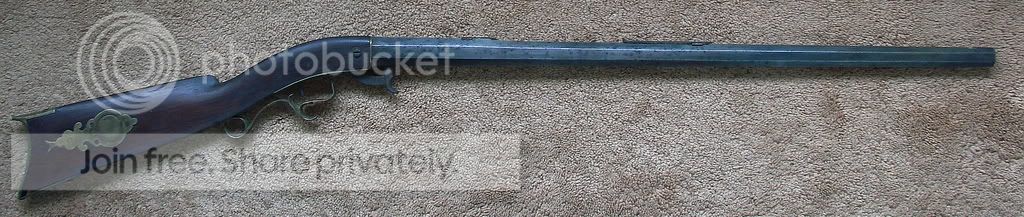
This is the rifle that the family thought James Pell used at the Battle of Eccles Hill.
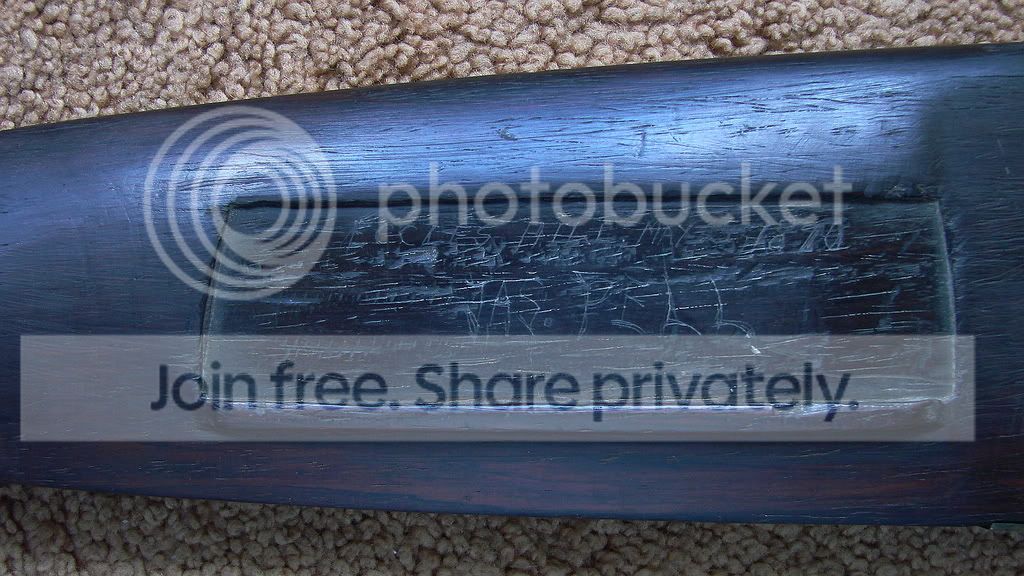
It may well have been one of his guns....but it is definitely not one of the Ballard rifles that he went to the U.S. to purchase for the "Red Sashes" Home Guard.
The scratched markings on the stock refer to the event.
These were not gun people and I am sure many stories of grandpa's old gun get confused over the years.
-----------------------
Scratched history on guns is not really what collectors want to see…generally.
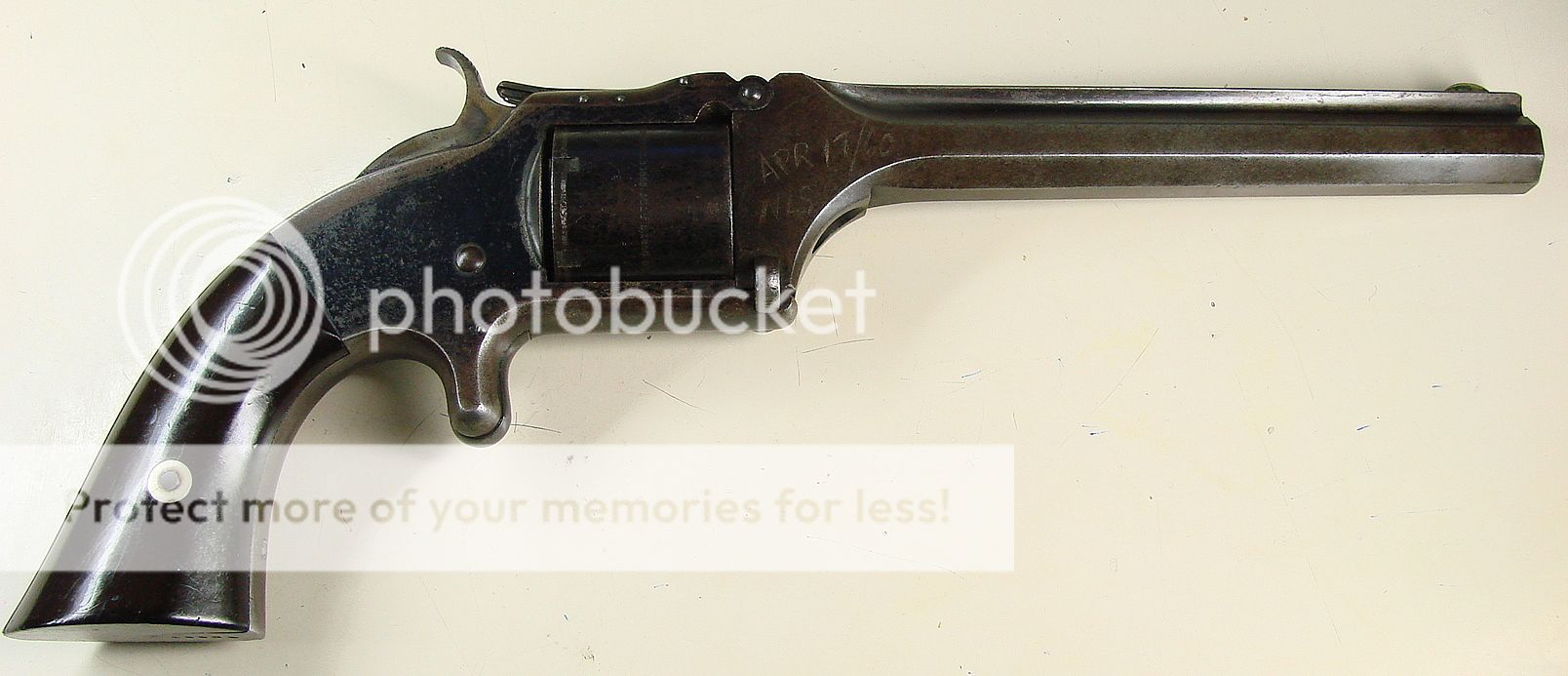
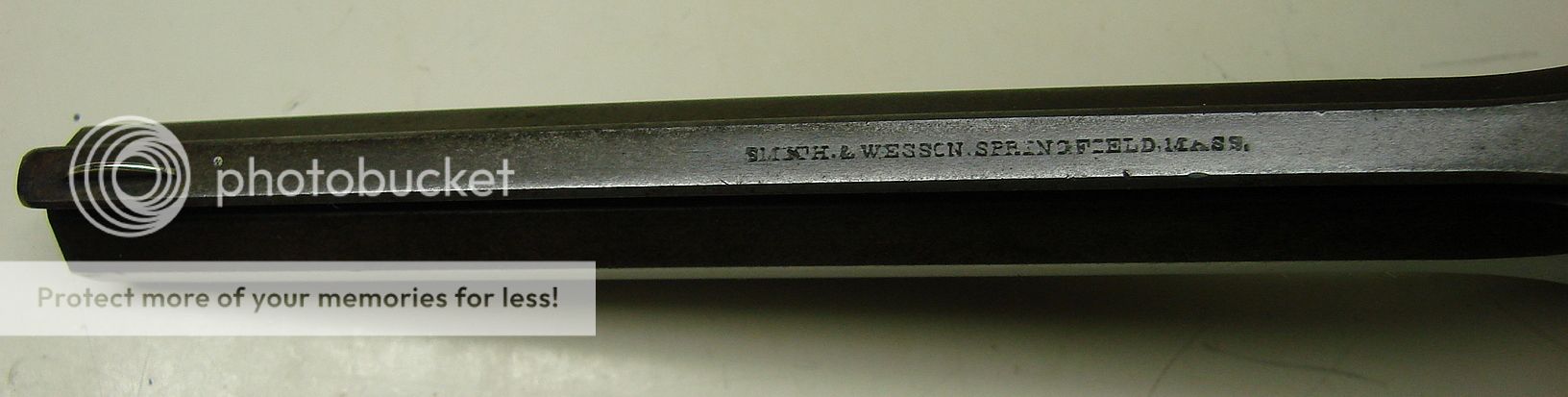
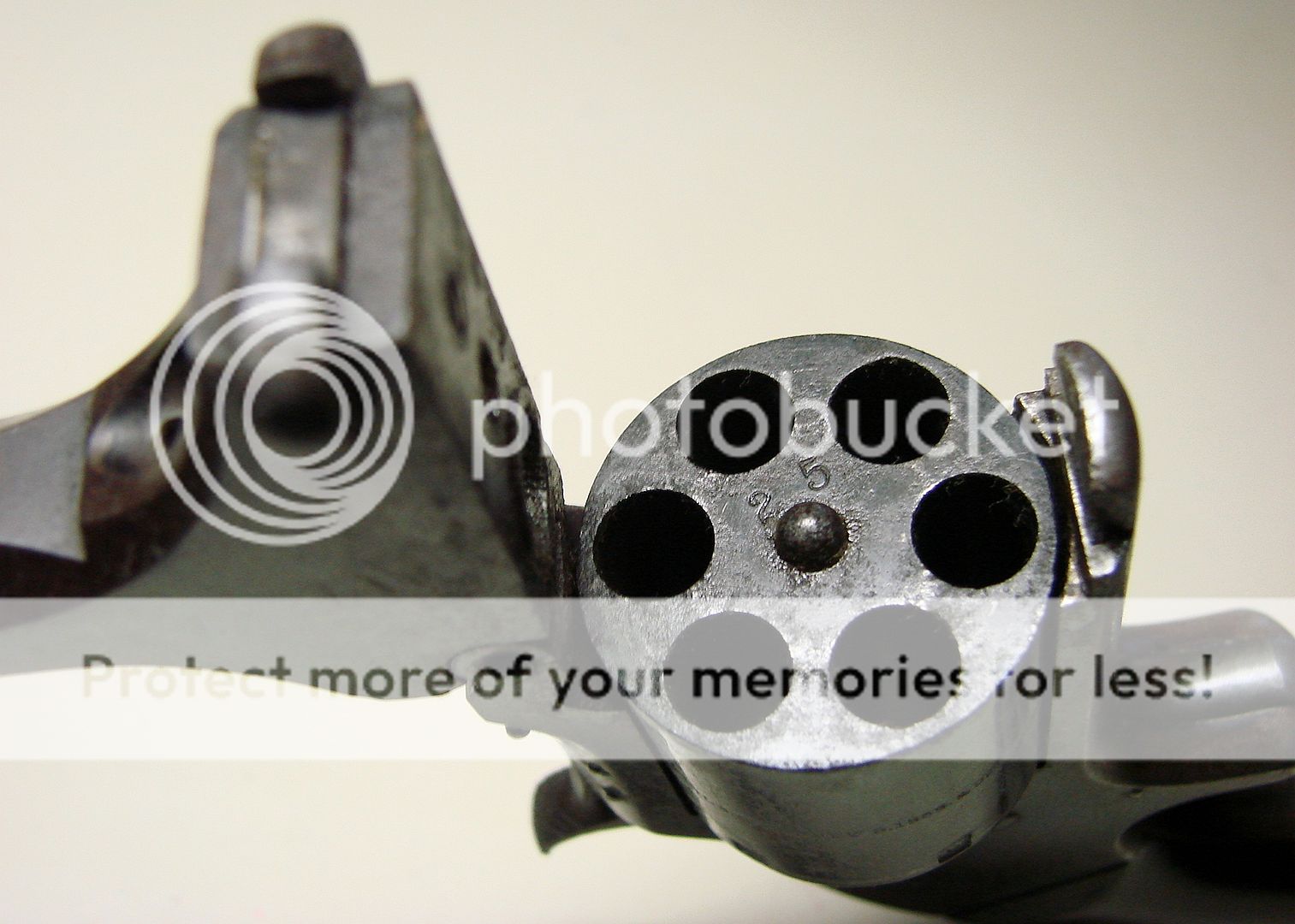
I inherited this S&W Model No.2 Old Model revolver (a.k.a. Model No.2 Army)
.32 caliber Long Rim Fire, (Smith & Wesson Number 2 cartridge.)
from my father in-law in 1991.
These guns were manufactured between 1861 & 1872.
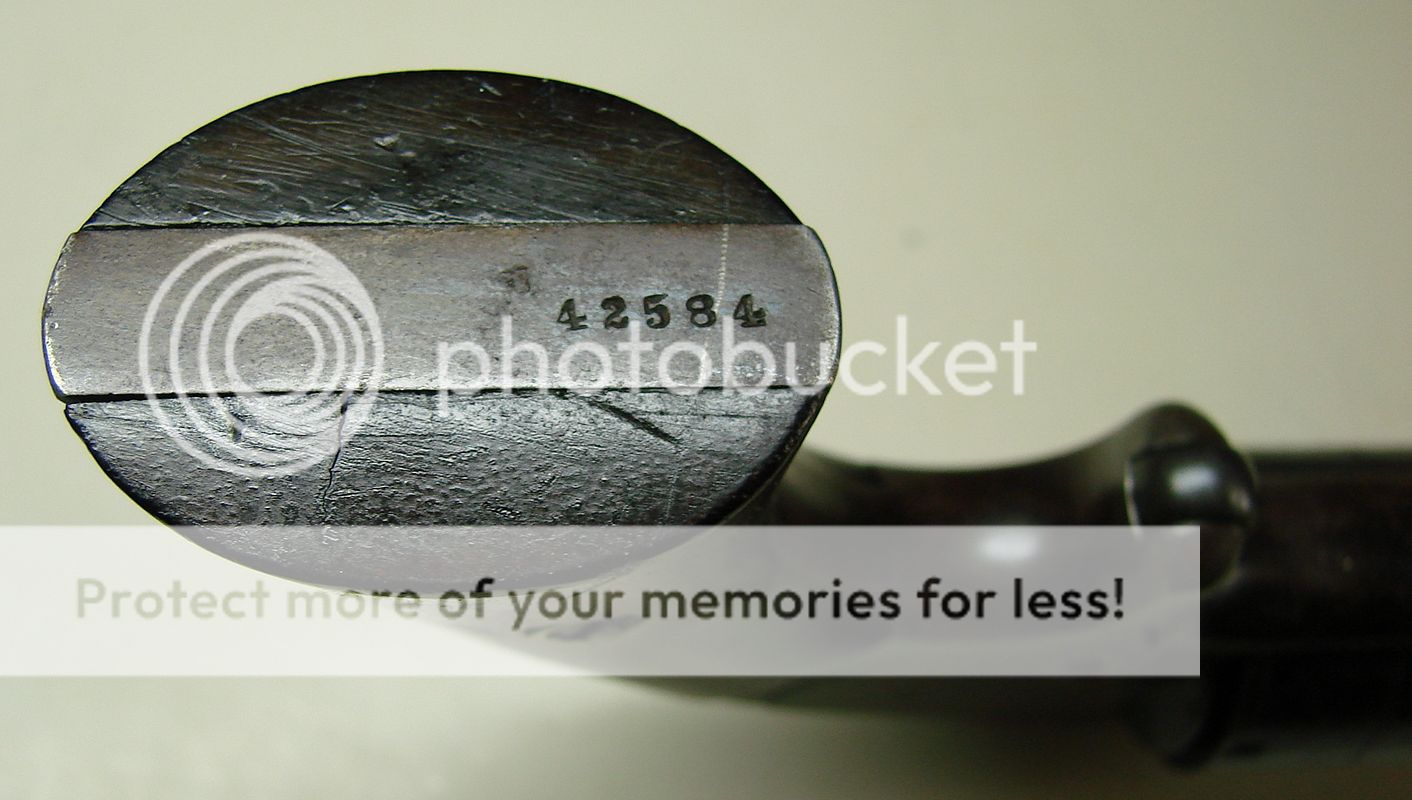
The serial number on this gun is 42584 and was probably manufactured around 1868.
On April 17th 1960 a man showed up at his front door to rob him using this Smith & Wesson revolver…the gun was wrestled away from the intruder …
who then fled and was captured by the police a few blocks away.
Sometime after the court case the police gave the revolver back to my father in-law as a souvenir….after filing down the hammer to prevent firing.
According to reports from the family ….the gun was loaded.
My father in-law was a man that was close to his money…the wrong guy to try and steal from….he went on to become the mayor of
this Ontario town for thirteen years.
I believe the police decided to commemorate the event by scratching the date of
the event on the gun...otherwise it is in pretty decent condition.
I have been looking for an ejection lug which is missing….I doubt I will ever find an original replacement part.
The stories that come with some pieces.....this bandito must have had a weakness for black powder vintage firearms????
NOTE;
The Model No.2 Old Model was a popular personal sidearm with many officers and enlisted men during the Civil War.
General George Armstrong Custer is known to have owned a pair of these guns.
”Wild Bill” Hickok while marshal of Deadwood was carrying a Model 2 “Army” the night he was shot in August 1874.
The guns produced (by May 1, 1865) with serial numbers under 35731 could have seen use during the Civil War.
The total production was approx. 77,155 by the time this model was discontinued in 1872.
If your grandfather’s gun is meaningful to you, do your best to make a deal with him....if not let it go.
--------
In the story above....if I had a chance to purchase my great great grandfather's Ballard....I would make a serious effort to do so.
My family has kept an old rifle that for years they thought was his rifle....not even close.
The passing of time with an inaccurate understanding of the specific history can have a tendency .... of distorting reality.
His old Ballard rifle is out there somewhere????
D.
This is the rifle that the family thought James Pell used at the Battle of Eccles Hill.
It may well have been one of his guns....but it is definitely not one of the Ballard rifles that he went to the U.S. to purchase for the "Red Sashes" Home Guard.
The scratched markings on the stock refer to the event.
These were not gun people and I am sure many stories of grandpa's old gun get confused over the years.
-----------------------
Scratched history on guns is not really what collectors want to see…generally.
I inherited this S&W Model No.2 Old Model revolver (a.k.a. Model No.2 Army)
.32 caliber Long Rim Fire, (Smith & Wesson Number 2 cartridge.)
from my father in-law in 1991.
These guns were manufactured between 1861 & 1872.
The serial number on this gun is 42584 and was probably manufactured around 1868.
On April 17th 1960 a man showed up at his front door to rob him using this Smith & Wesson revolver…the gun was wrestled away from the intruder …
who then fled and was captured by the police a few blocks away.
Sometime after the court case the police gave the revolver back to my father in-law as a souvenir….after filing down the hammer to prevent firing.
According to reports from the family ….the gun was loaded.
My father in-law was a man that was close to his money…the wrong guy to try and steal from….he went on to become the mayor of
this Ontario town for thirteen years.
I believe the police decided to commemorate the event by scratching the date of
the event on the gun...otherwise it is in pretty decent condition.
I have been looking for an ejection lug which is missing….I doubt I will ever find an original replacement part.
The stories that come with some pieces.....this bandito must have had a weakness for black powder vintage firearms????
NOTE;
The Model No.2 Old Model was a popular personal sidearm with many officers and enlisted men during the Civil War.
General George Armstrong Custer is known to have owned a pair of these guns.
”Wild Bill” Hickok while marshal of Deadwood was carrying a Model 2 “Army” the night he was shot in August 1874.
The guns produced (by May 1, 1865) with serial numbers under 35731 could have seen use during the Civil War.
The total production was approx. 77,155 by the time this model was discontinued in 1872.
Last edited:

Spencer
Take a look at Rock Island Auctions upcoming sales.They have a few spencers as they usually do.I have purchased a few items from them.Here is a link.If you do decide to sell it let me know.Graham
http://www.rockislandauction.com/view_item.aspx?aid=48&iid=245745
Take a look at Rock Island Auctions upcoming sales.They have a few spencers as they usually do.I have purchased a few items from them.Here is a link.If you do decide to sell it let me know.Graham
http://www.rockislandauction.com/view_item.aspx?aid=48&iid=245745






















