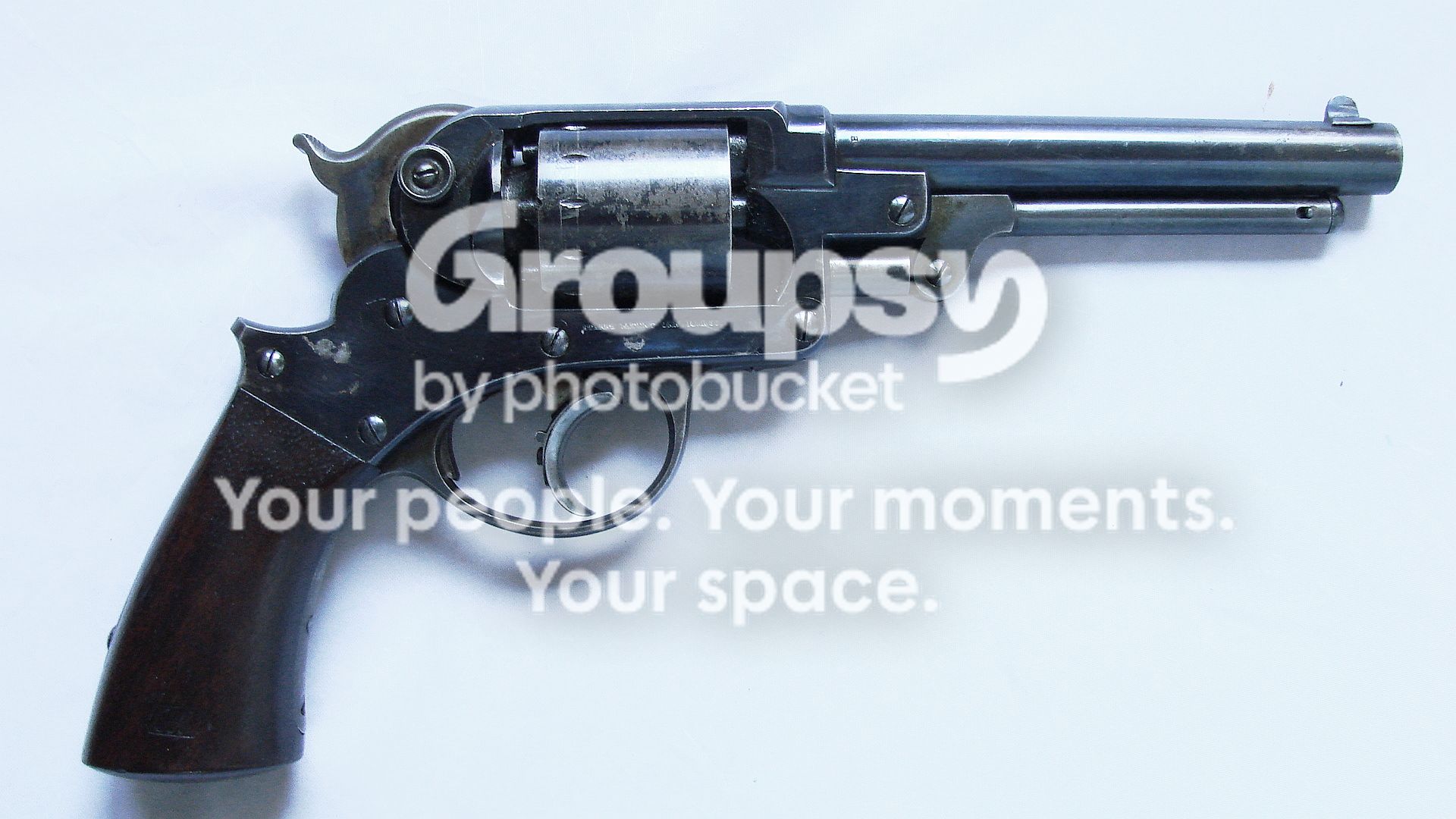
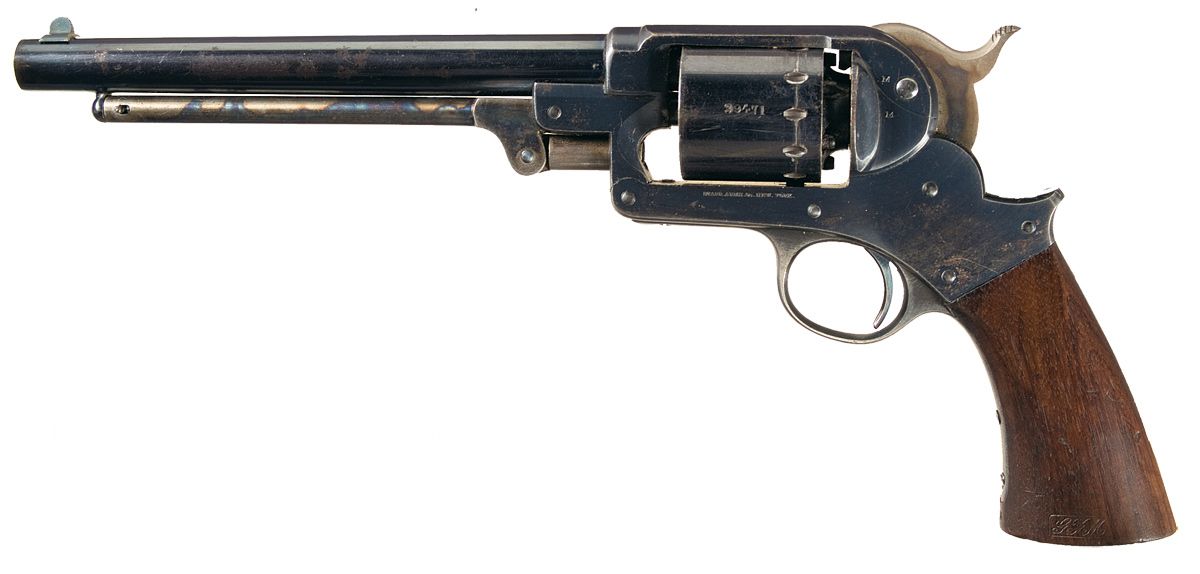
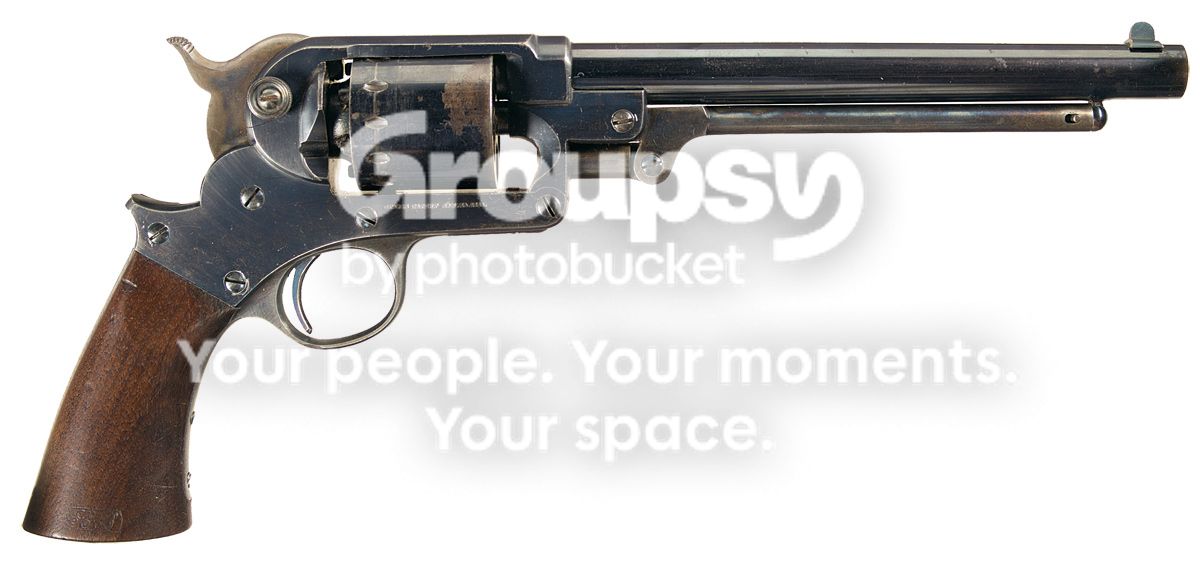
A while back I decided I had to have a Starr revolver and being frugal, bought one in almost working condition. The hammer would not #### when the replacement cylinder lock was in place (single action Starr). After endless cogitating, I decided one of the problems was that the hand started moving the cylinder before the lock was out of its notch. On a Colt or a Remington I think that would be an easy fix; shorten the hand a bit to allow the cylinder lock to disengage first. The hand on my gun appears to be original but repaired and so I decided to make a new one about .050" shorter. Seemed easy at the time :>( The hand is sort of paddle shaped and the part which engages the cylinder is just a tiny little finger so I figured I would make mine wider and therefore stronger. Did not work at all. After great cursing and swearing and cogitating, I did what I should have done in the first place. cut a ole in a piece of paper and drew lines on it representing the recess in the frame of the gun as well as a line illustrating the orientation when one cylinder is in position to fire.
The whole problem with making a working hand revolves around the fact that the hand is almost centered on the cylinder and the little finger which engages the ratchet of the cylinder is barely engaged at all when the hammer is down and you are preparing to recock the gun and rotate a fresh cylinder to the top. If the finger is too wide it digs into ridges in the cylinder and these ridges are almost at the center of the cylinder and the hand jams. Filing the finger narrower has it almost working and hopefully in the near future the gun will be complete and in shooting order again.
Starrs are strange guns; I don't think I would describe them as having the smooth rounded curves of a Colt or Remington and many of the guns features seem to be to make it easier to manufacture. Somewhat puzzlying why they did not adopt a cylinder pin which goes through the cylinder supported front and back. You have to be a little careful when opening the frame up, that the cylinder does not fall out; it is held in only by a tapered point in the front and the ratchet assembly in a recess in the back
cheers mooncoon


The whole problem with making a working hand revolves around the fact that the hand is almost centered on the cylinder and the little finger which engages the ratchet of the cylinder is barely engaged at all when the hammer is down and you are preparing to recock the gun and rotate a fresh cylinder to the top. If the finger is too wide it digs into ridges in the cylinder and these ridges are almost at the center of the cylinder and the hand jams. Filing the finger narrower has it almost working and hopefully in the near future the gun will be complete and in shooting order again.
Starrs are strange guns; I don't think I would describe them as having the smooth rounded curves of a Colt or Remington and many of the guns features seem to be to make it easier to manufacture. Somewhat puzzlying why they did not adopt a cylinder pin which goes through the cylinder supported front and back. You have to be a little careful when opening the frame up, that the cylinder does not fall out; it is held in only by a tapered point in the front and the ratchet assembly in a recess in the back
cheers mooncoon