












































You are using an out of date browser. It may not display this or other websites correctly.
You should upgrade or use an alternative browser.
You should upgrade or use an alternative browser.
Steel shot for Geese.
- Thread starter USP
- Start date


the spank
CGN Ultra frequent flyer
- Location
- Planet Earth Wearing My Tinfoil Hat
Today's steel loads unlike those of just a few years ago are extremely effective. Alot of todays steel loads in fact can and do outperform their old lead counterparts from way back. You will be hard pressed to find another steel load that performs as well as Federal Ultra Shok and it kills cleanly out to 40 yards.
Sounds to me like it is more a case of the shooter not being able to centre the birds in the pattern. The biggest problem is that most hunters haven't figured out how to #1, judge range to a goose and #2, lead the head! Most hunters stare at that big body with the wings beating and in shotgunning, if that is where you are looking that is where the shot will be going if you do it right, do it wrong and you are even further off if on at all. Pattern edges DON'T KILL!!. I look at nothing when birds are working us but that cheek patch once the shot is called. It is about the size of a mini sporting clays target. Yes I have wounded birds at times too, however not near the number I hear guy's complaining about on forums or that I witness from other hunters in the field.
Sounds to me like it is more a case of the shooter not being able to centre the birds in the pattern. The biggest problem is that most hunters haven't figured out how to #1, judge range to a goose and #2, lead the head! Most hunters stare at that big body with the wings beating and in shotgunning, if that is where you are looking that is where the shot will be going if you do it right, do it wrong and you are even further off if on at all. Pattern edges DON'T KILL!!. I look at nothing when birds are working us but that cheek patch once the shot is called. It is about the size of a mini sporting clays target. Yes I have wounded birds at times too, however not near the number I hear guy's complaining about on forums or that I witness from other hunters in the field.

Get yourself a box of 3 inch Winchester Xpert 1550fps 4 shot.
I use the Xpert 3 inch #4's for ducks & the Xpert 3.5 inch #2's for geese. If they are within range, say inside 35 yards, the Xpert shells @ 1550 fps work well for me. With steel, speed kills! It's 30% lighter than lead, so you have to push it 30% faster...
Cheers
Jay

USP... I've been guiding waterfowl for 9 years and have seen every combination of shot, gun choke imagineable. What I have seen is this....a normal shot within 40 yards - setting birds etc., you should have no issue with even the cheap Winchester Xperts. What I have seen as the best combination is a 3" shell with 2's and a Patternmaster choke. There are tons of forums that discuss the patternmaster and the biggest thing that they seemingly do is shorten the shot string. If you hit any waterfowl with a shorter string with a decent number of pellets, you will kill them, period. 99 percent of the hunters I see shoot too far behind the bird and therefore cripple. For those who figure the lead, they are usually very effective.
In my opinion the Hevi shots etc. can produce more knock down but calling the right shot and executing it properly will kill birds without spending 3 bucks per shell. I watched nearly 600 ducks fall last year while guiding and 95+ percent of guys were using the Winchester "xperts". Check out the patternmaster chokes and call 30-40 yard shots with a good lead and you will kill ducks and geese.
Any recommendations on lead distance or choke combinations? I use a combo LM and Skeet Choke on my gun. I typcially try and shoot approaching birds, otherwise with profile shots in the air I aim centre at about 6-8 inches from head leading. I know I hit them each time as they either pause abit or drop abit ...but they keep on going.
The majority of my shots were up in the air type, although I did have more success with shots on them running across the sand dunes.
Heres my gun.
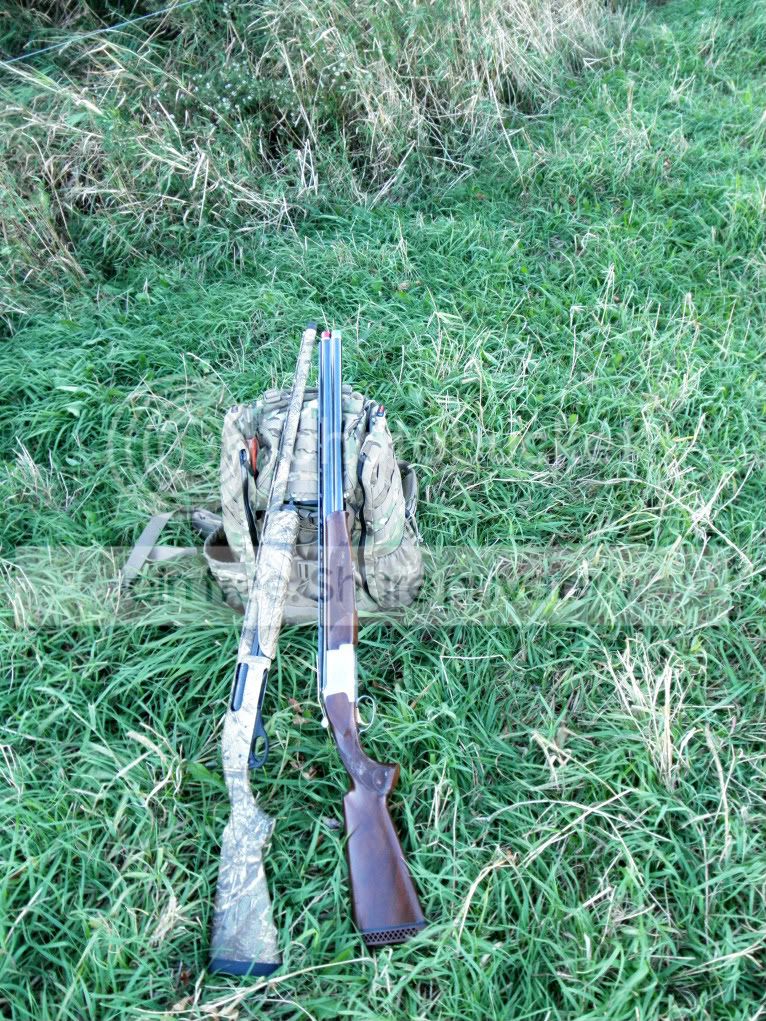

and the big haul!
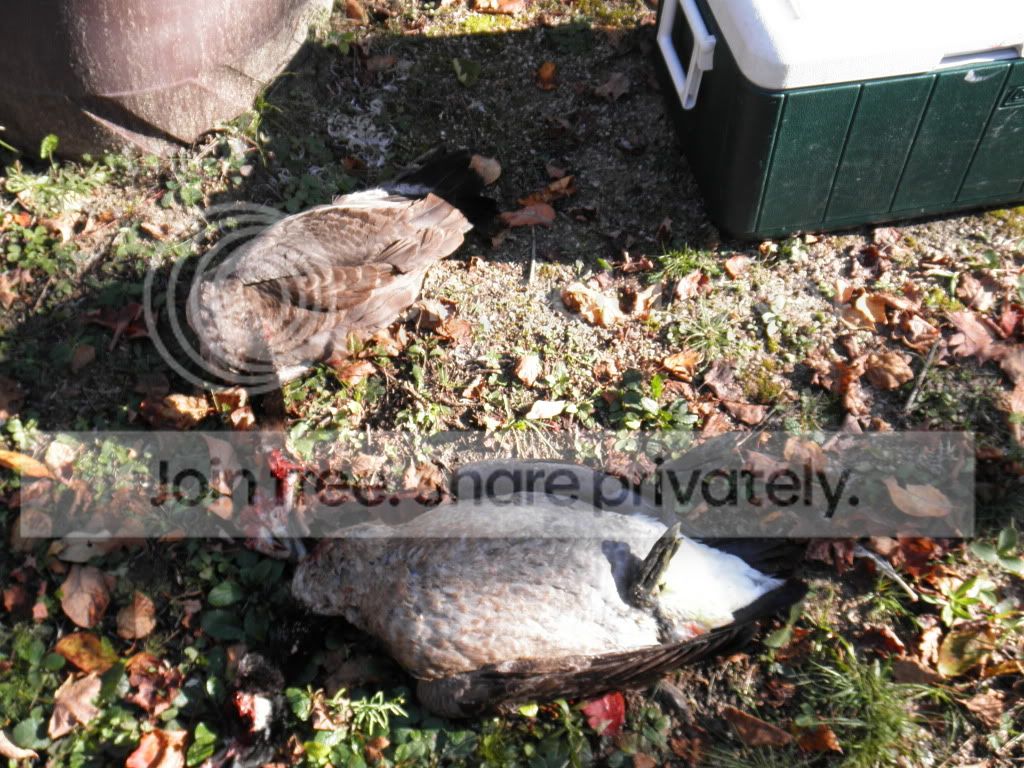
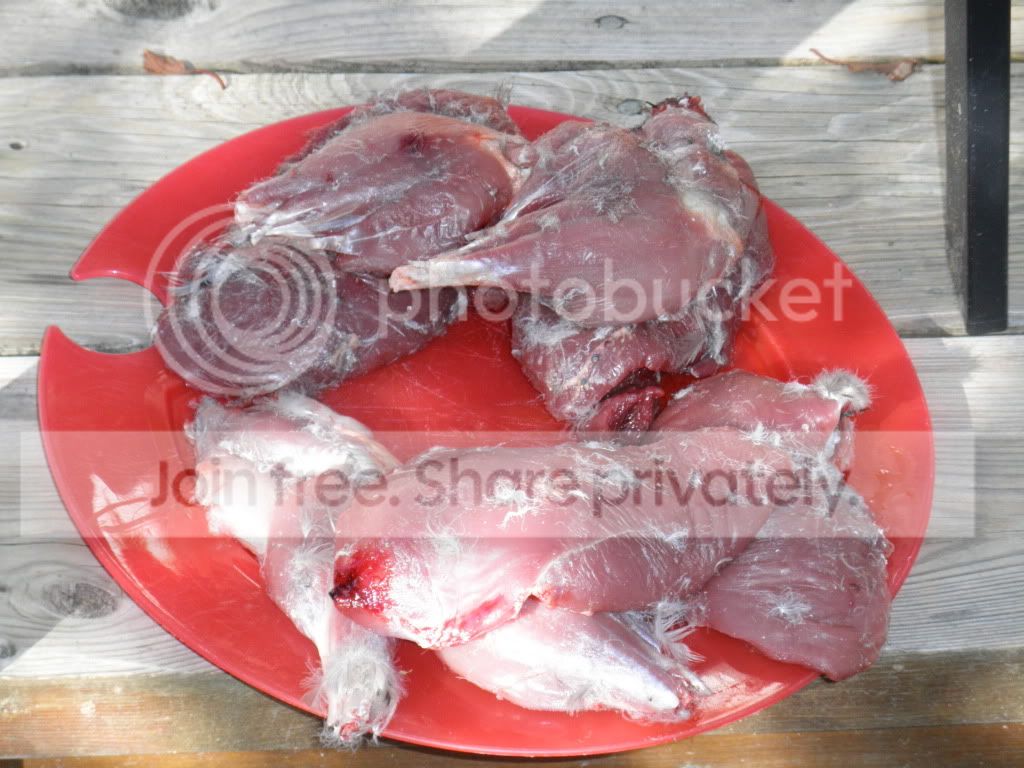

Turkeyslayer 1300
CGN Ultra frequent flyer
- Location
- Russell, Ontario
Your set up and location I would bet are contributing to your poor kill ratio. I doubt many birds decoy at 10 yards unless you are hunting the X and even then.....
Invest in two dozen flocked head shell type decoys.
We run a realistic and large spread and shoot our birds at close range most of the time.
Never shoot at a goose that is getting closer.
Invest in two dozen flocked head shell type decoys.
We run a realistic and large spread and shoot our birds at close range most of the time.
Never shoot at a goose that is getting closer.

- Location
- kensington, pei
Today's steel loads unlike those of just a few years ago are extremely effective. Alot of todays steel loads in fact can and do outperform their old lead counterparts from way back. You will be hard pressed to find another steel load that performs as well as Federal Ultra Shok and it kills cleanly out to 40 yards.
Sounds to me like it is more a case of the shooter not being able to centre the birds in the pattern. The biggest problem is that most hunters haven't figured out how to #1, judge range to a goose and #2, lead the head! Most hunters stare at that big body with the wings beating and in shotgunning, if that is where you are looking that is where the shot will be going if you do it right, do it wrong and you are even further off if on at all. Pattern edges DON'T KILL!!. I look at nothing when birds are working us but that cheek patch once the shot is called. It is about the size of a mini sporting clays target. Yes I have wounded birds at times too, however not near the number I hear guy's complaining about on forums or that I witness from other hunters in the field.
as a guide for the last 8 years and having hunted waterfowl for the last 25+ years , i couldn't agree more with the above statement. steel just plain shoots different than lead and the shooter has to adapt to the properties of steel . for the record i shoot kent faststeel 31/2" bb for geese and have no complaints . as a guide i am faced with dispatching the flying cripples which result from poor shooting as most clients take the shotgun from the closet where they put it after last years hunt. i bought a wad wizard choke and that has really made steel more effective for me as well .
Your set up and location I would bet are contributing to your poor kill ratio. I doubt many birds decoy at 10 yards unless you are hunting the X and even then.....
Invest in two dozen flocked head shell type decoys.
We run a realistic and large spread and shoot our birds at close range most of the time.
Never shoot at a goose that is getting closer.
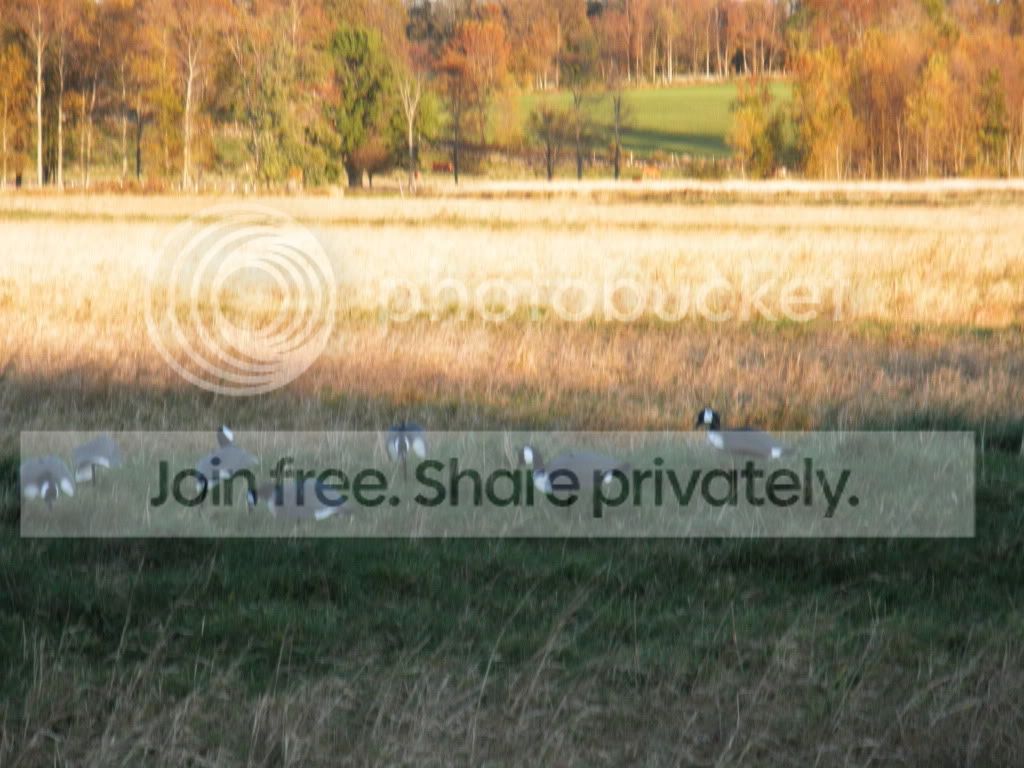
What is wrong with the location? There were several hundred geese in that field, just on the other side of the fence. Its a known wetlands area. Thats all the decoys we had.
THe position of the decoys was taken by camera, we were actually about 30 yards away hidden underneath some trees and bushes. Perhaps we could use more cover and more decoys.
I went for them at first light when they flew in from the water and then at last light when the left the field. Decoys only in the morning. At night they were not needed.
Turkeyslayer 1300
CGN Ultra frequent flyer
- Location
- Russell, Ontario
The other side of the fence is pretty darn far. Better to have the birds right on top of you. You can kill them with a handful of rice if they are close.
I am not trying to belittle your set-up we all have to start somewhere, but if you tweaked it a bit and hunted the wind and covered up better you should be 10 yards from the birds not 30, this will help you alot more than all the Wonderkind shells and chokes out there.
I am not trying to belittle your set-up we all have to start somewhere, but if you tweaked it a bit and hunted the wind and covered up better you should be 10 yards from the birds not 30, this will help you alot more than all the Wonderkind shells and chokes out there.
the other side of the fence is private property unfortunately. They fly in during the morning right over us. We did get some to come to the decoys but our setup wasnt quite right and they turned away just fractionally out of shot range.
So for decoys what is best setup? Is there a standard pattern to use? You need what 1 guard/lookout and the rest eating and stuff?
Do you mix type of decoys? Bag ones and shells?
So for decoys what is best setup? Is there a standard pattern to use? You need what 1 guard/lookout and the rest eating and stuff?
Do you mix type of decoys? Bag ones and shells?
The thing people are not comprehending with steel and why steel is not as effective as lead/Hevi/TM has to do with density. As someone said, steel is 30% less dense than lead and needs to move 30% faster for the same energy.
What is not mentioned is that steel's lack of density and hardness makes for a pellet that is more easily deflected than lead -- lack of density makes it inferior to Hevi (Hevi's greater than lead density compensates for its lack of softness). Because a lead pellet is relatively soft it has more time to expend its energy as it encounters bones and tissue. Hevishot has more inertia and is less easily deflected from its path. Both lead and Hevi are more likely to break bones and less likely to deflect off them than is steel.
Because you can fire smaller sized shot of lead and Hevi and have less deflection and more energy transfer than a similar load of larger steel -- those shots are superior --- and if we invested as much technology into the lead shot and Hevi as we have on trying to make steel a good hunting load -- we'd have amazing shells that would reliably kill beyond 50 yds.
Steel shot requires well placed shots and has forced waterfowlers to shoot better than they needed to in the past. It can be frustrating for both newcomers and those who spent most of their lives shooting lead. The shells now are way better than what I was forced to use 20 years ago -- but they are nowhere near as good as lead or Hevi for dropping birds with somewhat marginal shots. Anyone who says otherwise never hunted for very long with lead -- or has improved their shot placement to such a degree that it doesn't matter.
What is not mentioned is that steel's lack of density and hardness makes for a pellet that is more easily deflected than lead -- lack of density makes it inferior to Hevi (Hevi's greater than lead density compensates for its lack of softness). Because a lead pellet is relatively soft it has more time to expend its energy as it encounters bones and tissue. Hevishot has more inertia and is less easily deflected from its path. Both lead and Hevi are more likely to break bones and less likely to deflect off them than is steel.
Because you can fire smaller sized shot of lead and Hevi and have less deflection and more energy transfer than a similar load of larger steel -- those shots are superior --- and if we invested as much technology into the lead shot and Hevi as we have on trying to make steel a good hunting load -- we'd have amazing shells that would reliably kill beyond 50 yds.
Steel shot requires well placed shots and has forced waterfowlers to shoot better than they needed to in the past. It can be frustrating for both newcomers and those who spent most of their lives shooting lead. The shells now are way better than what I was forced to use 20 years ago -- but they are nowhere near as good as lead or Hevi for dropping birds with somewhat marginal shots. Anyone who says otherwise never hunted for very long with lead -- or has improved their shot placement to such a degree that it doesn't matter.
Hey Sjemac do you think alot of it has to do with the lighter steel being unable to maintain speed and shedding velocity to fast once the distance starts to pick up?
Anybody have any chrony data on shot lead vs. steel at 10-40 yard ranges? Was trying to figure out how to do this without blowing up the chrony.
I bet it would be informative to look at it.
Anybody have any chrony data on shot lead vs. steel at 10-40 yard ranges? Was trying to figure out how to do this without blowing up the chrony.
I bet it would be informative to look at it.
Hey Sjemac do you think alot of it has to do with the lighter steel being unable to maintain speed and shedding velocity to fast once the distance starts to pick up?
Anybody have any chrony data on shot lead vs. steel at 10-40 yard ranges? Was trying to figure out how to do this without blowing up the chrony.
I bet it would be informative to look at it.
Absolutely. Even big steel with the same mass as smaller lead has a larger surface area which is a MAJOR factor in the shedding of velocity.
Not only that, but smaller shot is more likely to penetrate through the outer layer of feathers than larger shot. So shooting steel 2's as compared to lead 4's means that at longer ranges, the steel will hang up in the feathers whereas lead (or Hevi) will punch on through.
Everybody talks SPEED SPEED SPEED but that isn't the most important factor.

USP...lead distances are difficult to predict due to a bunch of factors including distance, direction of travel (passing, feet down or flying away) as well as the type and speed or round you are using. I almost invairable use 2's across the board. I hate having to move through shells if a flight of geese are coming vs a flock of ducks. As previously mentioned the view from a guides seat behind hunters is remarkable. With the exception of a few really proficient shooters, 99 percent of guys shoot behind the bird. I actually tell my guys to shoot so far in front of the bird that it seems foolish (within reason) and they tend to start folding birds. Always remember the equation in physics of force + masss x acceleration. Steel is much lighter than lead but I don't ever recall a lead shell doing 1550+ fps. The moral of the story is within 40 yards the common steel shells on the market will kill anything that flies. I can also attest that we shoot a bunch of sandhill cranes with xperts at 40+ yards and they die....quickly.
Without sounding crass etc. my motto has always been shoot the bird in the face. A decoying bird should be easily shot in the head / neck / upper body if you allow them to come in far enough. With that being said, each hunters set up (decoys location etc) will dictate how close the bird gets.
either way keep shooting and you will figure out the lead.
Without sounding crass etc. my motto has always been shoot the bird in the face. A decoying bird should be easily shot in the head / neck / upper body if you allow them to come in far enough. With that being said, each hunters set up (decoys location etc) will dictate how close the bird gets.
either way keep shooting and you will figure out the lead.
In relation to your lead, I would suggest that if you are shooting a passing shot you change from 6-8 inches to 18-20 inches at 30 yards. If the birds are decoying with their feet down then you're clsoer toa 10-12 inch lead. Again, those are suggested numbers in a sterile environment. We shot some birds last week in a wicked wind and without a word of a lie it was 10-12 foot leads at 30 yards if they were with the wind. It is very difficult for wingshooters to swing properly which usually requires an additional lead.
6-8"? Are we talking about perceived lead or 6" in front of the bird? Seems a little short for long birds. Also take into account complex leads after the first shot because some birds that looks like they are climbing straight up, is also angling away some.
the spank
CGN Ultra frequent flyer
- Location
- Planet Earth Wearing My Tinfoil Hat
What is wrong with the location? There were several hundred geese in that field, just on the other side of the fence. Its a known wetlands area. Thats all the decoys we had.
THe position of the decoys was taken by camera, we were actually about 30 yards away hidden underneath some trees and bushes. Perhaps we could use more cover and more decoys.
I went for them at first light when they flew in from the water and then at last light when the left the field. Decoys only in the morning. At night they were not needed.
There is nothing wrong with your location if it is where the birds want to be. If they don't want to be there then all the greatest calling and best of decoys in the world usually won't convince them to go there.
If you are hunting a location they have been using and are comftorable there, have not been receiving much pressure from shooting or hunting then by all rights you should be able to draw them in with what you are running.
The type of decoys you are using are fine, you, just like as any of us have killed birds over them. As pressure increases on the birds they get used to a certain "look" and learn to avoid it. That look is referred to as the toy soldier look and it comes from this, a lack of motion. Realistic motion at that. No decoy wheteher they are top of the heap DSD full bodies or bottom of the spectrum Carry-Lite shells can mimic that motion or realism but realistic looking decoys with flocked heads, tails, and or bodies at least up the odds in your favour a little.
My personal feeling is that I would rather invest my $$ in a smaller more realistic spread than a larger unrealistic one. I still own and run other lower end decoys. If you run nothing but your good stuff from day one and you are hunting the same birds over and over then they will come to shy from them too. We run with everything to start on most days, including shells, silo's and full bodies and as the season progresses then take out the not so realistic stuff as the season progresses use only the better stuff and owing to the primary factor, $$$ our spread is of course smaller but no less effective. If you hunt with 2 or 3 other guys as I do, then if each invested in a dozen high end decoys the burden of affordability doesn't fall squarely on one guy's shoulders.
However don't throw out your original decoys, hang onto them and use them. They can be great for building or bulking up a spread if needed or for just hunting over alone early on with unpressured birds.
Next! CALLING!! If you DO NOT KNOW HOW TO CALL PROPERLY.........THEN DON'T!!! Learn how to call before you put it to use. You don't need to be a Shawn Stahl or Hunter Grounds to call and kill birds but you do need to make at least a realistic goosey sounding HONK if nothing else. You are better off to not call than call if you can't sound like the quarry you are after.
Covering up.......if you can blend into the surroundings as best you can so you are not seen or picked out you got it made. Use available cover from where you are hiding. In other words don't lay covered up in a field with a camo material that imitates say.....Corn when you are laying in a green pasture field. You are standing out like a diamond in a goats _ _ _!
In other words the more you can blend in the better off you will be....and no there is no set pattern to decoys , just place them out to look as natural as possible, with the wind and sun at your back if possible and forget the sentry to feeder ratios. Just do what looks like a real flock to you..
Last edited:
The spank is right all around and especially right on the concelament aspect. I tend to use family groups to disguise my blinds and almost exclusively use layouts. If you use a layout do yourself the favour and use the stubble straps to their fullest extent. But....don't pick up all new chaff in one area and leave everything else around it untouched. If you stubble strap your blinds with barley chaff that has faded and you leave a nice new gold colour undernmeath...your concealment is for naught. Spend a few extra minutes tirring up all the straw in a hundred + yard radius or similar and your blinds will blend in really well. Then your steel shot question will be much easier as the geese will be in tight.






















