
Hello I recently got 2 rifles that are close to orginal except for the length of the stock. An 1868 Snider Enfield and a 1896 Sparbrook Lee Metford. Both stocks have been shortened and I would like to bring them back to original length by replacing the missing piece to the original forend. The problem is I am by no means a wood worker. Where and how do I start with this? Any avenue of help or advice would be appreciated.













































You are using an out of date browser. It may not display this or other websites correctly.
You should upgrade or use an alternative browser.
You should upgrade or use an alternative browser.
Stock restoration for 2 Antiques
- Thread starter DaveM
- Start date

- Location
- West coast of Vancouver Island
The best way to scarf a for-end on is to make sure the joint is hidden behind a barrel band. Photos would help.
Last edited:
gunsaholic
CGN Ultra frequent flyer
- Location
- Winnipeg, Manitoba
Yes, hidden behind a band if possible. I repaired a mannlicher stock by selecting the same type of wood as the rest of the stock. I then got the joint as flat and even as possible. I inserted a dowel and epoxied the new piece to the old. I then found a close matching stain and applied a little tung oil after the stain dried. One really has to look to see it. (This couldn't be hidden behind a band).
The best way to do this is to sell the cut down rifles and buy unaltered rifles. Just a thought. You will spend too much time and trouble and, if you don't do it your self, too much money and end up with nothing but an altered rifle which will never be worth more than what cut down rifles go for. From a guy who has been there and has seen the pitfalls. Good luck and give it some thought. Dave
Rather than dowels, I reinforce the joint with a couple of pieces of threaded rod.
A butt joint isn't all that strong, so reinforcement is essential.
Stretching a stock when the joint cannot be hidden by a band can be done, but requires sophisticated woodworking skill.
It is best to look around for a piece of wood that is close to the original in grain structure, colour, and ideally, species.
Both your rifles are stocked using European thinshell walnut. North American black walnut isn't the same. Often a decent match can be made, though, after careful experimentation with stain.
Doing restorations like this are a labour of love; as mentionned they may not be cost effective.
A butt joint isn't all that strong, so reinforcement is essential.
Stretching a stock when the joint cannot be hidden by a band can be done, but requires sophisticated woodworking skill.
It is best to look around for a piece of wood that is close to the original in grain structure, colour, and ideally, species.
Both your rifles are stocked using European thinshell walnut. North American black walnut isn't the same. Often a decent match can be made, though, after careful experimentation with stain.
Doing restorations like this are a labour of love; as mentionned they may not be cost effective.

Make sure that the piece of wood that you add on is significantly oversize; you can shape it after the glue dries. Fastening on an exact piece means very good odds that something will be out of line and difficult to cover up. One source of similar coloured wood is old discarded gunstocks (ones that are damaged and have been replaced with new) assuming you know someone with some laying around
cheers mooncoon
cheers mooncoon
antiqueguy
CGN Ultra frequent flyer
- Location
- windsor ontario
well good thing is with the snidr you can buy a p1853 enfeld stock(quite a few different repo's out there of them) and use it as a donor you will want to geta good one makde from walnut
then go over the whole thing with boild linseed oil dont and sand the butt as there should be markings on it
then go over the whole thing with boild linseed oil dont and sand the butt as there should be markings on it
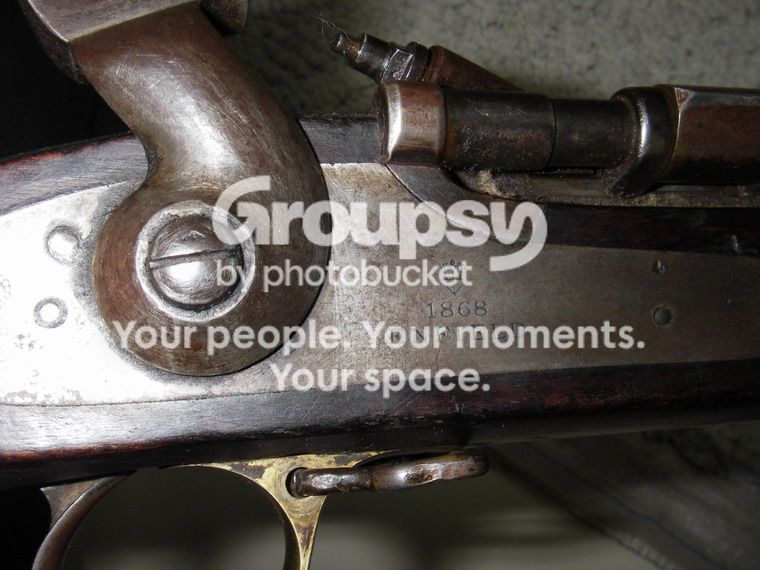
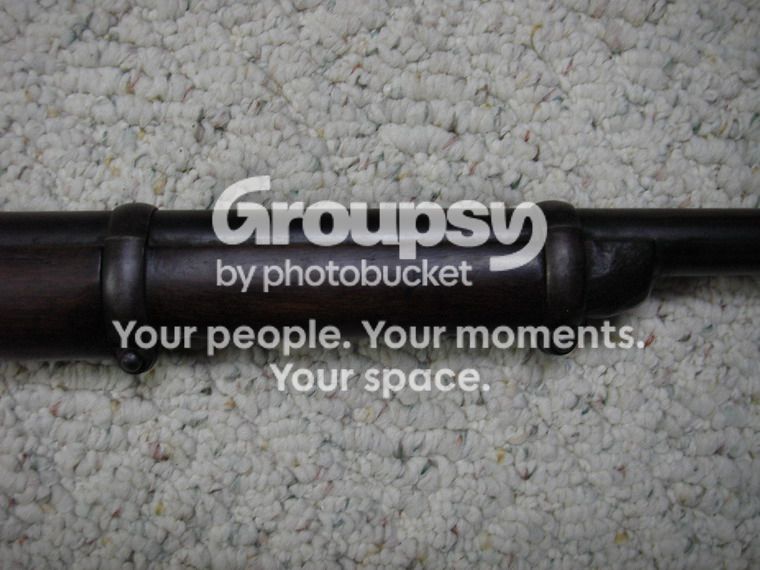
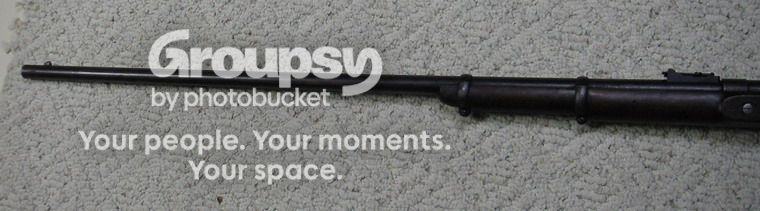
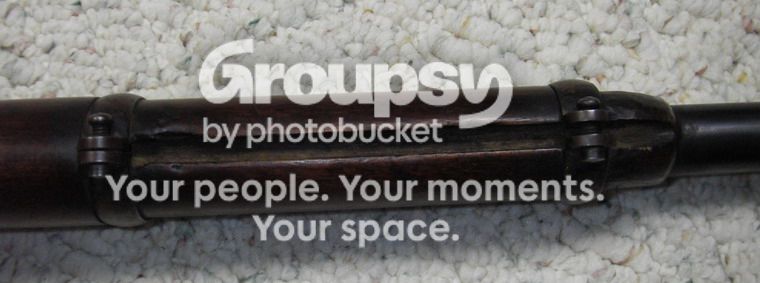
Here is the procedure I use.
I find a suitable piece of wood - grain similarity, possibility of staining to match. (You don't want to refinish the original to match the replacement wood).
Inlet the piece to fit the barrel. Do most of the shaping, get the new wood close to being finished. Cut the stock under the band. Note: if the stretch doesn't work out, you can always replace the cut off piece, and return the gun to the appearance it had before you started. Locate and drill matching holes for reinforcing pins. Apply release agent to the barrel and epoxy the joint. The barrel will keep everything straight and aligned. Use elastic tube or strips to pull everything together. The outer bands will have to be final fitted, along with the nosecap. You'll need these parts before you start. Stain and finish to match. You will likely have to experiment with scrap pieces to get a good colour and surface match.
If you do a good job, it should not be evident that the work has been done.
There are those who believe that this sort of restoration should not be done. The configuration that the gun is in is part of its history, and by doing this work you are denying and destroying part of the history of the piece.
I find a suitable piece of wood - grain similarity, possibility of staining to match. (You don't want to refinish the original to match the replacement wood).
Inlet the piece to fit the barrel. Do most of the shaping, get the new wood close to being finished. Cut the stock under the band. Note: if the stretch doesn't work out, you can always replace the cut off piece, and return the gun to the appearance it had before you started. Locate and drill matching holes for reinforcing pins. Apply release agent to the barrel and epoxy the joint. The barrel will keep everything straight and aligned. Use elastic tube or strips to pull everything together. The outer bands will have to be final fitted, along with the nosecap. You'll need these parts before you start. Stain and finish to match. You will likely have to experiment with scrap pieces to get a good colour and surface match.
If you do a good job, it should not be evident that the work has been done.
There are those who believe that this sort of restoration should not be done. The configuration that the gun is in is part of its history, and by doing this work you are denying and destroying part of the history of the piece.

There are a several of companies offering repop stocks for the P53 rifle. A couple offer just the front section to splice onto your original, hide the joint under the barrel band. Get Googling and you will find them.






















