strongest/ most durable long gun?

I've owned two Sniders, a carbine and a two bander Mk III. That was before I owned a Shiloh Sharps or a RB in 45-70 and now .43 Spanish. Never warmed up to them or the M-H and have no intentions of ever acquiring another.

Waiting on a new Shiloh now expected mid February. I like the simplicity of the RB, but I'm a dyed in the wool Sharps fan.
 
I had a beautiful Rolling Block in 45/70 and regret ever selling it. I also had a New York State Militia Roller in 50/70. We couldn't find a tree big enough to stop a slug from it. Currently I have an H&R Trapdoor officers carbine. Not my first choice but it is beautiful. Also have a few Martini's. I find them butt ugly and clumsy. If I was you I'd get a Roller or a Sharps. I haven't seen anyone mention a Snider yet.

Cat was one a few guys shooting sniders, back when I lived in Mcmurray.
.577 caliber, and they did like shooting black or trail boss powder, as I recall.

Perhaps Cat will chime in on this...
 
Last edited:
Remington rolling block.

I shot a few years on the BPCR circuit.
Sharps falling block rifles were most common.
And in falling block rifles Shiloh Sharps were dominant.
Followed at distance by C Sharps and Pedersoli.

The BPCR guys called the "rollers" Mexican Army Rifles...
There was a guy out of Regina who was consistently most competitive with his.
Guys who shot them had Mexican Army Rifle sweat shirts made up for themselves.
All in fun though...

BPCR folks were the nicest bunch of people I ever had the pleasure of shooting with.
 
either of the Winchester 1885 or 1886. '85 if you like single shots, the '86 if you like a few more fast rounds available. 45-70 or 45-90

Count me in for this combo. The high wall is generally considered to be the best designed and built and strongest action single shot of the era and the 86 was the first to be designed for the bigger high power cartridges of that time and lead to the later smokeless powder designs.
 
Count me in for this combo. The high wall is generally considered to be the best designed and built and strongest action single shot of the era and the 86 was the first to be designed for the bigger high power cartridges of that time and lead to the later smokeless powder designs.

Just be aware that a lot of these antique and old high walls have been perminantly damaged by loading them too hot. Even if the design is strong the steel used in them is not and is thin in areas that count.

Below is a .32-40 one -

High_Wall_No_273_010b.jpg

High_Wall_No_273_009b.jpg

High_Wall_No_273_006b.jpg


And another High Wall that failed -

 
either of the Winchester 1885 or 1886. '85 if you like single shots, the '86 if you like a few more fast rounds available. 45-70 or 45-90

I often wondered why the military didn't adopt lever guns. They were light years ahead of the Springfields, I thought. Then, when I picked up a 92 repro, I had to take it apart to clean it. Now I know why. Nice as they are, and handy as it is to have 10 and more shots, they simply are too complicated and delicate for military use. Breaks my heart to admit it, but...
 
Remington rolling block.

X2. There is a reason it was one of the most produced Military Rifle actions of it's era. My current goto long range rifle is a Pedersoli Rolling Block in 45/70. It currently has a long range Soule sight, but my old eyes are waiting on the 32 inch Malcom Scope and mount, that's on order.
 
Last edited:
Lever actions repeaters are awkward to operate in the military prone shooting position. The Swiss modified the Winchester 1866 action to operate as a bolt action to correct that problem, that design was the basis of the Vetterli 1866/71 rifle.
 
I often wondered why the military didn't adopt lever guns. They were light years ahead of the Springfields, I thought. Then, when I picked up a 92 repro, I had to take it apart to clean it. Now I know why. Nice as they are, and handy as it is to have 10 and more shots, they simply are too complicated and delicate for military use. Breaks my heart to admit it, but...

That and military tactics of the time rarely allowed free fire. Watch the movie Zulu, that is how fire is controlled in the military at that time.
 
When it comes to black powder long guns the single shot is easy to clean. Repeaters are a pain to take apart for cleaning such as lever actions.

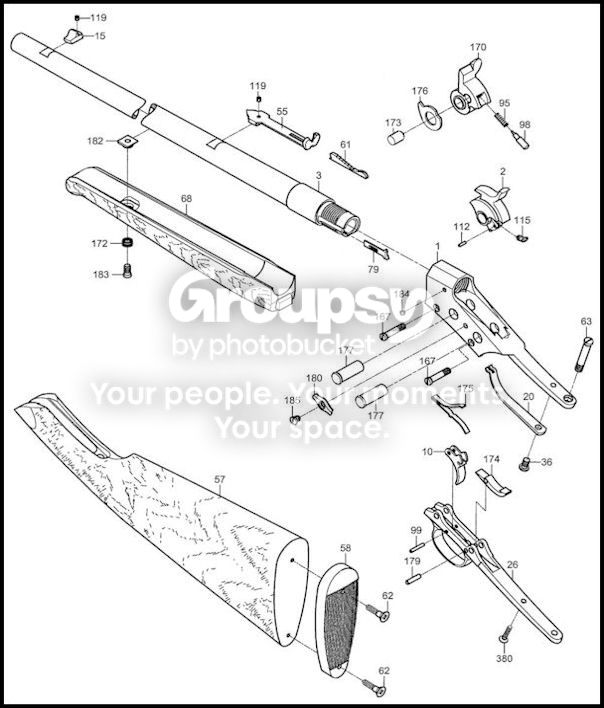
Another vote for the sharps and rolling block. I think the rolling block is the simplest and more reliable of the two.

ROLLINGBLOCKCARBINEHUNTINGSCHEMATIC.jpg
 
Last edited:
A smoothbored snider would be a very handy useful arm, ball for deer, bear,moose and shot for small game. Whet ever I would pick I would want a arm able to shoot ball or shot.
 
I often wondered why the military didn't adopt lever guns. They were light years ahead of the Springfields, I thought. Then, when I picked up a 92 repro, I had to take it apart to clean it. Now I know why. Nice as they are, and handy as it is to have 10 and more shots, they simply are too complicated and delicate for military use. Breaks my heart to admit it, but...

The NWMP adopted the M1876 Winchester and had great difficulties keeping them serviceable. Got a second hand story of the NWMP at target practice c1895 when one carbine was repeatedly malfunctioning. The OC smashed it against a tree with the words that we won't have to worry about that one anymore.
Personal choice for a BP rifle is the US trapdoor 45-70. Sturdy, action sealed from dust and fouling or easy to clean, powerful extractor, amply strong for its intended ammo.
 
From what I understand various militaries tried to use lever guns but under combat conditions they tended to get dirty and jamb. Single shots pretty much always worked, relatively speaking. I guess kind of like the Ross. Not a bad gun just had to stay clean.
 
^The main problem was cycling the lever rifle when prone, a secondary issue was many of these designs were simply too fragile to be considered for military usage.

With no offense to CF personnel of course; how were Natives able to keep them functioning, with '0' training? Yet the US / Canadian armed forces were not to be trusted to maintain them, were the recruits not that gifted or the ' instructors' ?
 
^The main problem was cycling the lever rifle when prone, a secondary issue was many of these designs were simply too fragile to be considered for military usage.

That and most of the rounds were anemic as all hell compared to the the 45-70, 450 Martini ect.... Prior to the marlin 1881 (tested and rejected by the US army), and the 1886, the choices for lever actions were pretty pathetic.

Really in the 1870s, you had the choice of something between the power of a 44 rimfire, to the 45-75, rounds that dont even come close to the range and power of the average BP military round at the time.
 
Back
Top Bottom